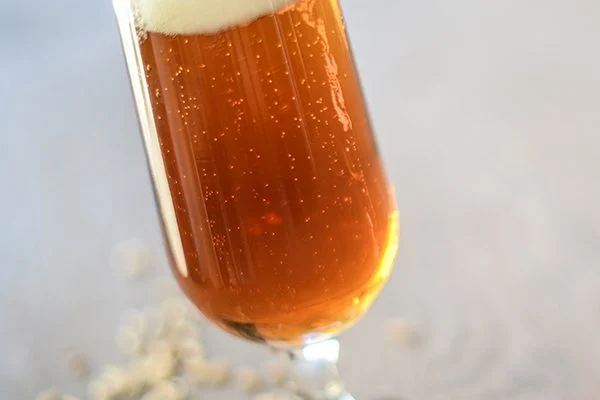

The American Homebrewers Association has officially released the complete technical specifications and brewing parameters for a highly celebrated award-winning beer style, providing craft brewing enthusiasts and home fermentation hobbyists with a precise blueprint for replication. The featured recipe, which highlights a remarkably balanced profile denoted by a 5.1% alcohol by volume, a substantial 43 international bitterness units, and a very pale 3 SRM color rating, showcases the meticulous standards required to secure top honors in competitive homebrewing circles. By making these precise metrics public—including an original gravity of 1.046 and a final gravity of 1.007—the organization continues its long-standing tradition of elevating the technical proficiency of amateur brewers across the globe.
The publication of these precise technical metrics comes at a time of significant growth and sophistication within the domestic and international craft beverage sectors. Amateur brewing, once viewed strictly as a niche agrarian hobby, has evolved over the past several decades into a highly technical discipline characterized by precise temperature control, water chemistry adjustments, and rigorous yeast management. Organizations like the American Homebrewers Association, established under the broader umbrella of the Brewers Association, have played a pivotal role in this evolution by standardizing recipe formulations, hosting prestigious national competitions, and fostering an open-source culture of knowledge sharing among practitioners. The decision to highlight a gold-medal-winning formulation underscores the organization’s commitment to recognizing excellence and providing tangible educational resources to its membership base.
Understanding the Anatomy of a Gold Medal Brew
Achieving a gold medal in competitive homebrewing requires far more than mere adherence to basic fermentation principles; it demands absolute precision across every phase of the brewing process. The technical parameters released for this specific award-winning formulation offer a fascinating look into the delicate chemistry required to produce a world-class beverage. With an alcohol by volume (ABV) of 5.1 percent, the beer strikes a harmonious balance between drinkability and structural complexity, positioning it firmly within a sessionable yet flavorful category.
Furthermore, the 43 International Bitterness Units (IBU) indicate a pronounced, assertive hop presence designed to counterbalance the subtle malt sweetness imparted by the specified original gravity of 1.046. In brewing science, the ratio of bitterness to initial fermentable sugars—often referred to as the BU/GU ratio—is a critical metric for determining overall flavor balance. An original gravity of 1.046 (equivalent to 11.5 degrees Plato) provides a moderate malt foundation, while the final gravity dropping all the way down to 1.007 (1.7 degrees Plato) reveals an exceptionally high degree of attenuation. This significant drop from start to finish indicates a clean, highly efficient fermentation process, resulting in a crisp, dry finish that prevents the beer from tasting heavy or cloying on the palate.
In addition to these gravity and bitterness metrics, the Standard Reference Method (SRM) rating of 3 places the beer squarely in the ultra-pale spectrum. Achieving this exceptionally light color requires brewers to utilize base malts with minimal kilning, such as premium Pilsner or pale ale malts, while carefully managing mash parameters to prevent Maillard reactions that can darken the wort during the boiling stage.
The Evolution of Competitive Homebrewing and Recipe Sharing
The practice of documenting and sharing award-winning recipes has a rich history rooted in the collaborative spirit of the homebrewing community. In the early decades of the modern craft beer movement, successful formulations were frequently guarded secrets or passed informally between members of local brewing clubs. However, as regional and national competitions grew in scale—most notably events like the National Homebrew Competition—the demand for transparent, peer-reviewed, and validated recipes increased exponentially.

Organizations recognized that the democratization of brewing knowledge was essential for lifting the overall quality of craft beer produced both at home and eventually within the commercial sector. Many professional craft breweries operating today trace their foundational origins back to amateur competitions, where founders honed their skills by analyzing winning formulations, experimenting with grain bills, and refining hop utilization schedules. By publishing detailed analytical data alongside conceptual brewing frameworks, institutions provide a vital bridge between theoretical brewing science and practical application.
Technical Analysis of the Specified Parameters
A closer examination of the published statistics reveals the meticulous nature of the recipe’s design. The starting gravity of 1.046 ensures a manageable sugar concentration for the yeast strain, reducing osmotic stress during the initial pitching phase. This thoughtful design choice typically leads to a healthy, vigorous primary fermentation without the production of unwanted off-flavors such as excessive higher alcohols or solvent-like fusel oils.
The attenuation rate, calculated by the drop from 1.046 to 1.007, translates to an apparent attenuation of approximately 85 percent. Such a high degree of attenuation suggests either the utilization of a highly efficient, highly attenuative yeast strain—such as certain clean-fermenting ale strains—or the incorporation of specific mash techniques designed to maximize fermentable sugars, such as a prolonged rest at lower saccharification temperatures.
The bitterness level of 43 IBUs, when paired with a light body and dry finish, ensures that the hop character remains prominent without becoming astringent. In contemporary brewing, achieving clean bitterness requires careful management of hot-side processes, including precise timing of hop additions and rapid cooling of the wort post-boil to minimize unwanted isomerization and harsh vegetal characteristics.
Broader Industry Implications and Educational Initiatives
The dissemination of validated, high-level brewing resources serves a dual purpose within the broader alcoholic beverage landscape. For the individual enthusiast, access to professional-grade data points transforms the brewing experience from an imprecise culinary experiment into a repeatable scientific endeavor. By comparing their own brewing logs against established gold-medal benchmarks, practitioners can systematically identify flaws in their equipment, sanitation procedures, or fermentation controls.
From an industry-wide perspective, the continuous education of homebrewers directly benefits the commercial craft beer market. Consumers who understand the complexities of attenuation, IBU calculations, and SRM color scales tend to be more discerning patrons of local taprooms and independent breweries. They appreciate the technical craftsmanship behind a well-executed pint, thereby driving commercial brewers to maintain high standards of quality control and recipe consistency.
Furthermore, initiatives that curate and lock specialized content behind membership models highlight the economic sustainability required to maintain comprehensive educational archives. While foundational information remains widely accessible, advanced technical assets, proprietary troubleshooting guides, and fully validated competition recipes provide tangible value that sustains member-supported institutions. As the craft beverage industry continues to navigate shifting market trends and evolving consumer preferences, the fundamental commitment to technical excellence, rigorous data analysis, and open community collaboration remains a steady anchor for brewers at every level of expertise.