
The landscape of modern artisanal baking is undergoing a quiet revolution, moving away from rigid industrial uniformity toward hyper-crafted, regionally inspired techniques. Among the most recent developments in this culinary shift is the refinement of the traditional sourdough bagel. While classic New York-style bagels have long defined the American standard with their dense crumbs and thick, chewy skins, a new iteration known colloquially as the "new wave" sourdough bagel is capturing the attention of professional bakers and home enthusiasts alike.
Main Facts and the Shift Toward Artisanal Innovation
Developed through extensive iterative testing by professional bakers and culinary researchers—with contributions from prominent bread artisans such as Portland-based baker Josh Fairbanks—this updated formula bridges the gap between traditional sourdough breadmaking and contemporary bagel craftsmanship. Unlike standard recipes that prioritize dense, uniform structures, the new wave approach draws inspiration from avant-garde West Coast bakeries like Los Angeles’s Courage Bagels.
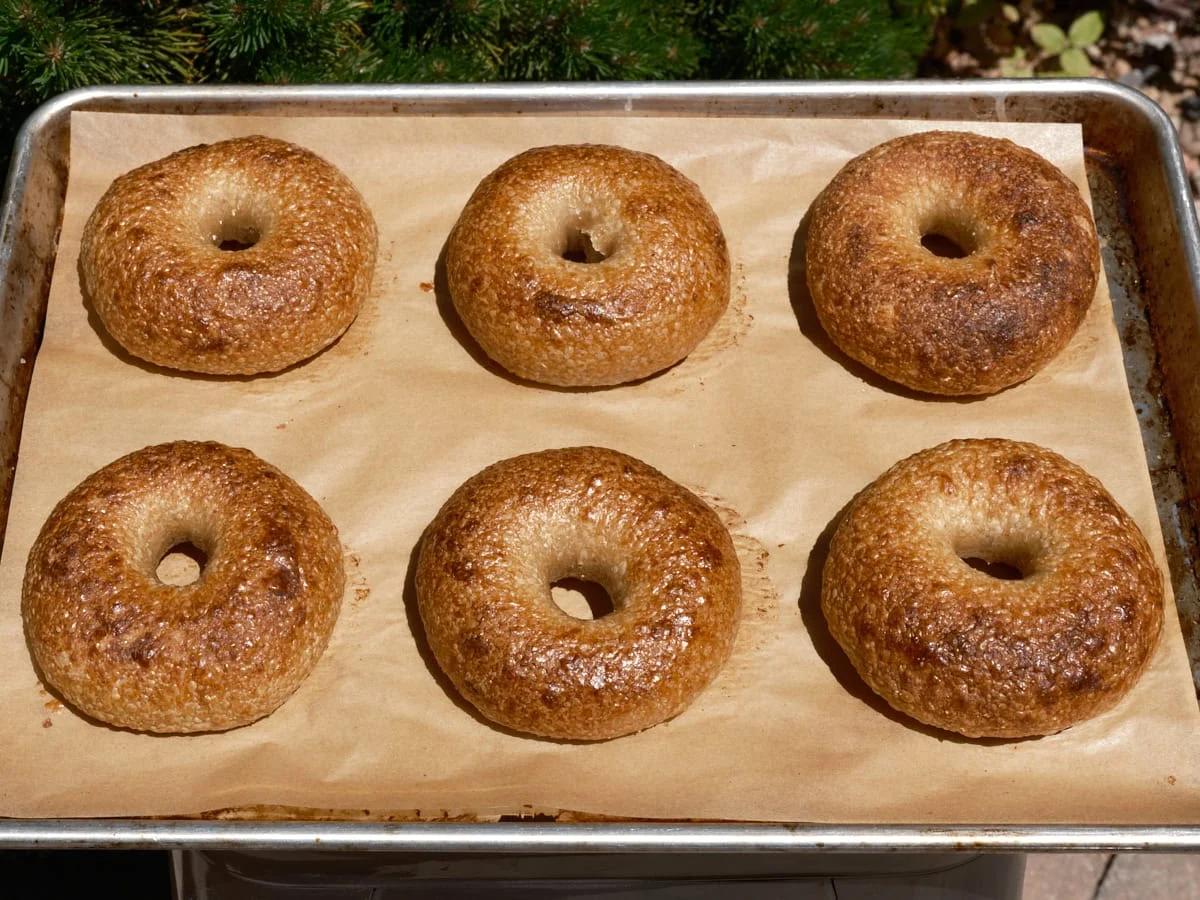
The resulting product features a lighter, more open crumb structure, a delicate and blistered crust, and a complex flavor profile that minimizes aggressive sourness while maximizing malty undertones. By integrating a multi-grain flour blend, a sugar-enriched levain, a simplified poke-shaping method, and a traditional barley malt boiling bath, the updated technique addresses common structural limitations of high-hydration doughs.
Chronology and the Three-Day Production Timeline
Executing this precision-driven recipe requires a meticulously managed timeline spanning approximately three days. The process is engineered to optimize fermentation, flavor development, and textural contrast.
On Day One, preparation begins at 9:00 p.m. with the creation of the levain. Bakers combine medium-protein white flour, water, superfine caster sugar, and a ripe 100% hydration sourdough starter. The addition of sugar alters the microbial balance, encouraging yeast activity to maximize oven spring while suppressing the accumulation of sharp acetic acid, ensuring a milder flavor profile in the final baked goods.
Day Two begins at 9:00 a.m. with the primary mixing phase. High-protein white flour (12% to 14% protein content), medium-protein white flour, whole wheat flour, and whole rye flour are combined with barley malt syrup, diastatic malt powder, salt, and water. Following a structured mixing and bassinage process—where secondary water is incorporated gradually to develop gluten strength—the dough undergoes a three-hour bulk fermentation at a controlled room temperature of 74°F to 76°F (23°C to 24°C).
By 12:30 p.m. on Day Two, the dough is divided into precise 130-gram portions, pre-shaped into tight spheres, and subjected to the "poke method." Rather than rolling the dough into long ropes and sealing the ends—a technique prone to failure with higher-hydration formulas—bakers press an index finger through the center of each dough ball, gently stretching it into a uniform ring.
The shaped rings are transferred to cornmeal-dusted sheet pans and placed into the refrigerator for an overnight cold retard, lasting from 1:00 p.m. on Day Two until 9:00 a.m. on Day Three. This cold rest is critical; it slows yeast fermentation while allowing enzymatic activity to enhance crust blistering and flavor complexity.
Supporting Data and Scientific Parameters
The chemical and physical success of the new wave bagel relies on specific hydration, protein, and thermal metrics:
- Total Dough Weight: 1,620 grams, yielding twelve 130-gram bagels.
- Hydration Rate: 68.0% total hydration, balancing structural integrity with interior tenderness.
- Flour Composition: 45% high-protein white flour, 40% medium-protein white flour (such as Central Milling Artisan Bakers Craft), 10% whole wheat flour, and 5% whole rye flour. The whole grains do not serve a purely nutritional role; instead, whole wheat supplies nutty depth, while rye contributes earthiness and enzymatic support for crust coloration.
- Enzymatic Additives: The inclusion of 1% diastatic malt powder introduces active enzymes that break down starches into fermentable sugars, directly improving oven spring and crust coloration.
- Boiling Parameters: A solution of one gallon of water, one teaspoon of baking soda (to increase alkalinity), and five tablespoons of barley malt syrup brought to a vigorous rolling boil. Bagels are boiled for precisely 20 to 25 seconds per side to gelatinize the outer starch layer without creating a leathery skin.
Baking Execution and Thermal Dynamics
On Day Three, the operational sequence culminates with proofing, boiling, and hearth baking. Following a two-hour ambient proof after refrigeration, the oven and a preheated baking steel are brought to thermal equilibrium at 500°F (260°C) with convection, or 525°F (270°C) without.
The boiled and seasoned bagels—adorned with traditional toppings such as poppy seeds, sesame seeds, or flaky salt applied to the tacky, wet surface—are loaded onto the baking steel. The initial bake is conducted at high heat for 10 minutes to secure maximum oven spring, followed by a temperature reduction to 450°F (230°C) for an additional five minutes to develop a deep golden-brown crust.
Broader Impact and Industry Implications
The dissemination of this refined recipe reflects a broader trend within the global baking community: the democratization of high-end, commercial-grade techniques for home kitchens. By publishing detailed formulas, precise bakers’ percentages, and troubleshooting frameworks, contemporary artisanal bakers are lowering the barrier to entry for complex hearth baking.
Industry analysts note that consumer interest in functional, gut-friendly sourdough products has surged post-2020. Recipes that successfully merge traditional techniques—such as long cold fermentation and malt boiling—with modern preferences for open crumbs and lighter textures demonstrate the commercial viability of home-scale artisanal production. As culinary enthusiasts continue to experiment with variable hydration and grain blends, the definition of regional staples like the bagel will likely continue to expand, proving that even centuries-old culinary traditions remain open to thoughtful, science-backed innovation.