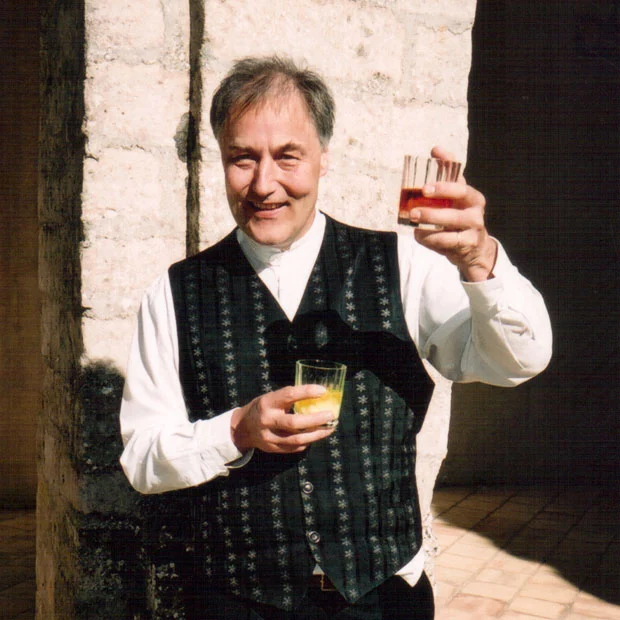

The intersection of culinary arts and hard science has reached a significant milestone with the public release of a comprehensive summary documenting twenty years of molecular gastronomy seminars held in Paris, France. Spearheaded by renowned physical chemist Hervé This—a foundational figure in the discipline—the newly published documents offer an unprecedented look into two decades of rigorous kitchen-based experimentation, culinary myth-busting, and biochemical inquiry.
The findings, made available to the public in both French and English translations, represent a massive repository of empirical data designed for professional chefs, food scientists, educators, and curious amateurs alike. By systematically dissecting traditional cooking techniques and old wives’ tales through the lens of physical chemistry, the Paris seminars have spent the last twenty years redefining how humanity understands the preparation and transformation of food.
Background and Origins of Molecular Gastronomy
To understand the weight of this twenty-year retrospective, one must examine the origins of the field itself. The term "molecular gastronomy" was officially coined in the early 1990s by Hervé This and the late Oxford physicist Nicholas Kurti. Recognizing that while exact sciences like thermodynamics and organic chemistry were rigorously applied to industrial food manufacturing, domestic and restaurant cooking relied largely on transmitted tradition, folklore, and unverified assumptions, Kurti and This sought to bridge the gap.
In 1992, they established the framework for the International Workshops on Molecular Gastronomy, famously hosted in Erice, Sicily. These workshops brought together world-class physicists, chemists, and pioneering chefs to discuss the physical and chemical mechanisms underlying traditional and avant-garde culinary processes. While the Erice workshops set the international stage, Hervé This institutionalized this spirit of inquiry closer to home by launching a continuous series of monthly seminars in Paris, hosted primarily under the auspices of AgroParisTech (formerly INA P-G).
For twenty years, these monthly gatherings served as an intellectual crucible. Participants—ranging from academic researchers and culinary students to professional pastry chefs and passionate amateurs—gathered to propose culinary adages, design controlled experiments, execute them, and document the outcomes. The newly released summary documents encapsulate the cumulative output of these exhaustive monthly sessions.
Structure and Accessibility of the New Documentation
The newly released PDF documents, now circulating freely online following distribution by Hervé This, serve as an executive summary of a much larger, highly detailed body of work. While the English translation provides concise overviews of the findings, the primary French documentation hosted on the AgroParisTech archives contains the exhaustive methodologies, experimental conditions, and exact parametric data for each trial.
Academics and culinary professionals who have reviewed the documents note that while some individual findings address seemingly niche or trivial kitchen phenomena, the overarching methodology is profoundly rigorous. The seminars operated on a simple yet revolutionary premise: no culinary claim, regardless of how deeply ingrained in traditional practice, is too small to be tested, quantified, and either validated or debunked.
Among the subjects frequently revisited across the twenty-year span are the denaturation of proteins in meats and eggs, the emulsification properties of lipids and starches, the mechanics of leavening agents in baking, and the optical and textural changes that occur during complex thermal processing. By isolating single variables—such as the exact impact of salt timing on the boiling point of water or the structural integrity of vegetable cell walls under varying pH levels—the seminars stripped away the mysticism of the kitchen and replaced it with reproducible science.
Chronology of the Paris Seminars: Milestones in Culinary Science
The evolution of the Paris seminars mirrors the broader public and scientific fascination with molecular gastronomy over the last two decades.
Phase One: Foundation and Conceptualization (1990s – Early 2000s)
Following the initial coining of the term and the establishment of the Erice workshops, the early years of the Paris seminars focused heavily on defining the boundaries of the discipline. During this period, Hervé This and his colleagues concentrated on demystifying basic culinary mysteries, such as why custards curdle, how to prevent mayonnaise from breaking, and the true role of resting meat after roasting. These sessions laid the groundwork for a standardized vocabulary that united chefs and scientists.
Phase Two: Expansion and Public Engagement (Mid-2000s – 2010s)
As the global food scene experienced a surge of interest in avant-garde cooking—championed by chefs like Ferran Adrià at El Bulli and Heston Blumenthal at The Fat Duck—the Paris seminars gained international visibility. The monthly meetings expanded their scope to include novel hydrocolloids, spherification techniques, and the physics of foams and gels. Concurrently, This championed "note-by-note" cooking, a futuristic culinary concept where dishes are constructed entirely from pure chemical compounds rather than traditional plant and animal tissues.
Phase Three: Consolidation and Retrospective Analysis (2020s – Present)
The release of the 20-year summary marks the current phase of the movement: institutional consolidation and educational democratization. Recognizing that the immense volume of data generated over two decades risked remaining siloed within academic archives, This orchestrated the synthesis of these findings into accessible, shareable formats. This move ensures that the pedagogical value of the seminars extends far beyond the lecture halls of Paris.
Implications for Culinary Professionals and Scientific Education
The publication of these findings carries significant implications for multiple industries, most notably professional gastronomy and secondary science education.
In the professional kitchen, the line between art and science has grown increasingly thin. Modern modernist and contemporary kitchens routinely employ techniques born from molecular gastronomy, utilizing precision thermal circulators, centrifuge separation, and texturizing agents. However, culinary educators emphasize that the true value of the Paris seminars lies not in the adoption of fancy gadgets, but in the cultivation of a scientific mindset. When line cooks and head chefs understand the underlying physical chemistry of heat transfer and protein coagulation, they are better equipped to troubleshoot recipes, invent new dishes, and adapt to supply chain inconsistencies or dietary restrictions.
In the realm of education, the findings offer an extraordinary resource for science teachers. Chemistry and physics curricula often struggle to maintain student engagement due to abstract theoretical models. By utilizing kitchen-based experiments derived from the Paris seminars—such as analyzing the starch retrogradation in bread staling or measuring the osmotic pressure changes in pickled vegetables—educators can demonstrate fundamental scientific principles using familiar, accessible materials. As noted by early reviewers of the documents, the synergy between gastronomy and science provides a seamless bridge for interdisciplinary learning.
Official Responses and Broader Academic Reception
The academic community and prominent figures in the food science world have warmly received the publication of the summary documents. Food scientists note that while industrial laboratories have long possessed proprietary data on food physics, the open-source nature of the AgroParisTech seminars democratizes this knowledge, making it freely available to independent restaurateurs and home cooks who lack corporate research and development budgets.
Culinary historians have similarly praised Hervé This for his lifelong dedication to demystifying the kitchen. Unlike commercial cookbooks that focus solely on aesthetic outcomes, the body of work accumulated in Paris emphasizes reproducibility, falsifiability, and peer review within a culinary context.
Looking Forward: The Future of Kitchen Science
As the culinary world looks past the initial hype and commercialization of "molecular gastronomy" as a restaurant trend, the underlying science remains as vital as ever. The publication of the twenty-year Paris seminar summary serves as a reminder that cooking is, fundamentally, applied chemistry.
By inviting ongoing scrutiny of traditional techniques and encouraging a culture of open experimentation, Hervé This and his fellow seminar participants have permanently altered the landscape of food preparation. As these translated summaries circulate globally, they are expected to inspire a new generation of culinary innovators and student scientists to ask the most important question a cook can pose: Why does this happen, and how can we prove it?