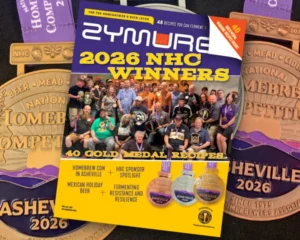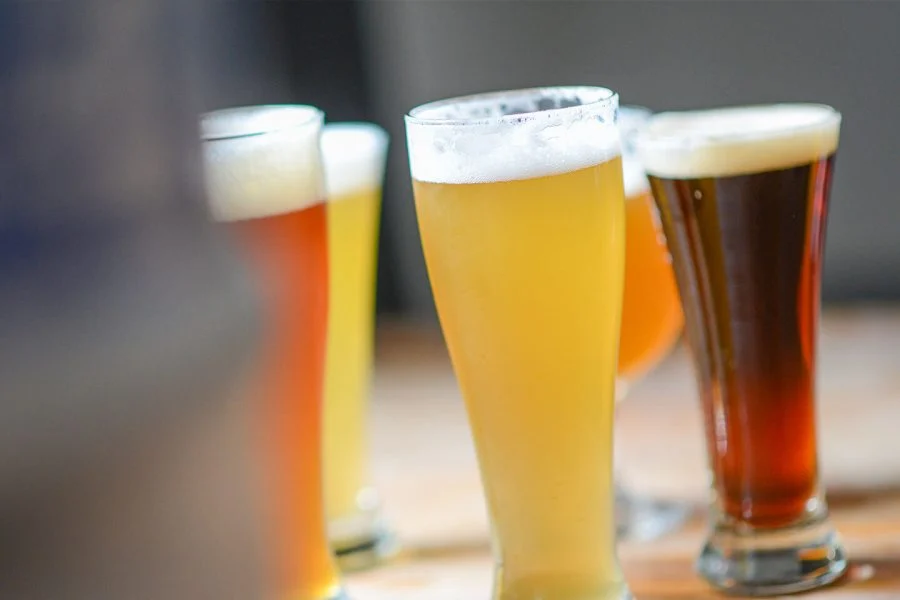

The world of competitive homebrewing has long served as an incubator for commercial craft beer innovation, setting benchmarks for quality, creativity, and technical precision. At the heart of this movement is the National Homebrew Competition, widely recognized as the largest amateur-scale beer, mead, and cider competition in the world. Administered annually by the American Homebrewers Association (AHA), the competition evaluates thousands of entries from across the globe, submitted by passionate practitioners refining their craft in home kitchens, garages, and makeshift backyard laboratories. Among the treasure trove of documentation produced by this event, the archive of medal-winning recipes stands out as a definitive roadmap for brewers seeking to understand the mechanics of exceptional beer formulation.
Analyzing these award-winning blueprints reveals a fascinating intersection of traditional brewing science and modern culinary artistry. A prime example of this synthesis is found in the formulation of "Cabo," a Mexican-style pale lager that recently captured the attention of judges and peers alike. Designed as an homage to the crisp, highly attenuated lagers traditionally enjoyed in warmer climates, Cabo represents a departure from standard adjunct brewing. Instead of relying on conventional commercial shortcuts, its creator engineered a malt bill centered on high-quality continental Pilsner malt paired with flaked corn. This specific grain selection achieves a delicate equilibrium: the Pilsner malt imparts a soft, refined malt character with robust fermentability, while the corn lightens the body to deliver the effortless drinkability characteristic of the style.
The Genesis and Evolution of the National Homebrew Competition
To understand the value of these medal-winning formulas, one must examine the institutional history of the National Homebrew Competition. Established in the late 1970s during the nascent stages of the modern craft beer revolution, the competition provided a formal structure for homebrewers to benchmark their creations against rigorous, standardized guidelines. Before the explosion of commercial microbreweries in the 1980s and 1990s, homebrewing was the primary engine of recipe development in the United States. Many of today’s most iconic craft breweries—ranging from pioneers like Sierra Nevada to contemporary regional powerhouses—trace their foundational recipes and techniques back to the garage experiments of award-winning homebrewers.
Over the decades, the competition has expanded exponentially. What began as a localized gathering of enthusiasts has transformed into a massive international tournament featuring dozens of distinct categories, ranging from classic European ales and lagers to experimental wild ales and traditional meads. Entries are judged by certified beer judges through the Beer Judge Certification Program (BJCP), ensuring that every submission is evaluated against strict sensory and stylistic criteria. The competition process is notoriously grueling, often requiring entries to advance through multi-tiered local and regional judging panels before reaching the final national round. Consequently, a recipe that secures a medal at the National Homebrew Competition has weathered a gauntlet of hyper-critical evaluation, proving its technical flawlessness and stylistic accuracy.
Anatomy of a Medal-Winning Recipe: The Case of Cabo
The technical notes behind recipes like Cabo offer a masterclass in ingredient selection and process control. Crafting a superior Mexican pale lager requires navigating a narrow stylistic window. If the beer is too heavy, it loses its refreshing, quenching quality; if it is too light or poorly fermented, it risks tasting watery or revealing off-flavors.

The formulation of Cabo addresses these challenges through intentional malt manipulation. By utilizing continental Pilsner malt as the foundational base, the brewer secures a high degree of enzymatic power and a subtle, bready malt complexity that domestic six-row or standard pale malts often fail to provide. However, continental Pilsner malt alone can sometimes yield a heavier body than what is traditionally desired in a Mexican lager. To mitigate this, the inclusion of flaked corn acts as an adjunct that contributes starches easily converted into fermentable sugars during the mash. This reduces the proportion of complex proteins and unfermentable dextrins, resulting in a drier, highly attenuated finish that dances across the palate without lingering heaviness.
Furthermore, achieving high attenuation in a lager requires meticulous management of fermentation parameters. Brewers operating at the home scale must carefully control yeast health, pitching rates, and fermentation temperatures to prevent the production of undesirable byproducts such as diacetyl or excess sulfur, which can easily mar the clean profile of a delicate pilsner. The success of recipes archived by the association underscores the importance of rigorous process execution, proving that superior ingredients must be matched by precise technical execution in the brewhouse.
The Economic and Cultural Impact of Homebrew Innovation
The influence of homebrewing extends far beyond individual hobbyist kitchens; it exerts a profound gravitational pull on the broader commercial beverage industry. Commercial breweries frequently monitor homebrewing trends, ingredient innovations, and competition results to gauge consumer preferences before investing capital into large-scale production runs. Styles that gain traction at the national homebrew level—such as New England IPAs, pastry stouts, and innovative interpretations of traditional lagers—frequently find their way into taprooms and retail shelves within a matter of years.
Moreover, the dissemination of medal-winning recipes serves an educational purpose that fortifies the entire industry. By studying the proportions, hop schedules, and mash profiles of award-winning beers, amateur and professional brewers alike can troubleshoot their own systems, refine their water chemistry, and experiment with new grain combinations. This open-source ethos of knowledge sharing is a cornerstone of the homebrewing community, heavily championed by organizations like the American Homebrewers Association.
Accessing Resources and Continuing Education
For aspiring brewers looking to replicate or adapt these championship formulations, institutional support remains crucial. Membership-based platforms provide access to expansive databases of vetted recipes, technical articles penned by industry veterans, and forums for peer-to-peer troubleshooting. These resources bridge the gap between raw enthusiasm and brewing mastery, offering structured guidance on everything from basic sanitation to advanced yeast propagation.
As the craft beverage landscape continues to evolve in response to shifting consumer tastes and supply chain dynamics, the value of rigorous recipe design remains constant. Whether an enthusiast is attempting to formulate a backyard-friendly Mexican pale lager or preparing an entry for the next iteration of the National Homebrew Competition, the blueprint provided by past medal winners remains an indispensable guide. Through a combination of quality ingredients, respect for traditional styles, and unwavering attention to technical detail, the homebrewing community continues to redefine the boundaries of what is possible in a glass.