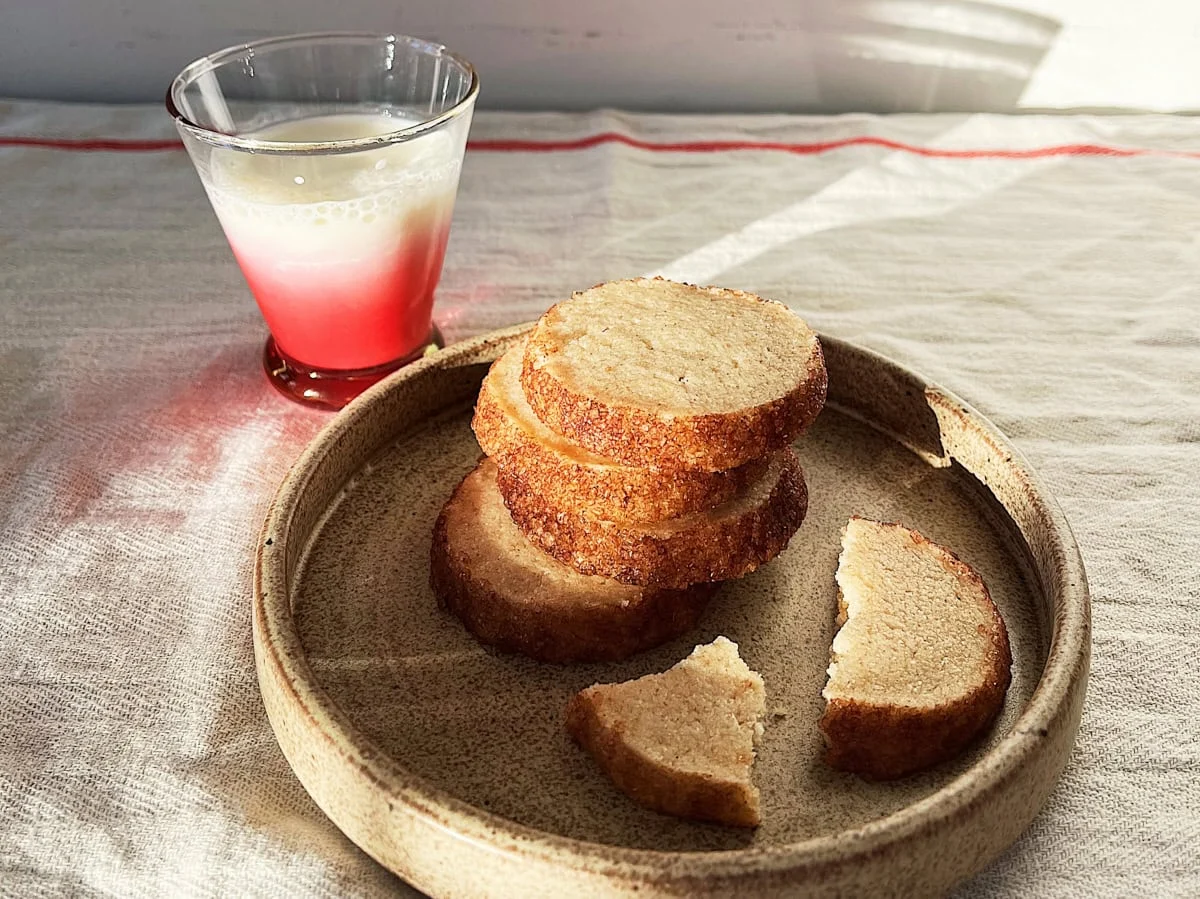

The global baking community has long grappled with a delicious dilemma: what to do with the excess starter generated during routine sourdough maintenance. While artisanal bread bakers once relied on traditional discard-heavy flatbreads or simple crackers, contemporary home-baking trends have increasingly pivoted toward sweet, accessible pastry applications. The latest addition to this movement is a streamlined, high-yield dessert formula designed specifically for the busy winter holiday season: the vanilla sourdough discard cinnamon toast slice-and-bake cookie. This innovative recipe marries the tangy complexity of fermented flour with the nostalgic, buttery comfort of childhood cinnamon toast, offering a practical solution for both novice and experienced bakers looking to optimize their holiday baking logistics.
The culinary mechanics behind slice-and-bake cookies have historically favored convenience. Unlike traditional drop cookies that require meticulous portioning with scoops, or rolled cookies that demand rolling pins and cookie cutters, the slice-and-bake method relies on a single, efficient workflow. Bakers can mix the dough in a single vessel, shape it into uniform logs, and store it in refrigeration or freezers for days or even weeks. This modular approach allows families and holiday hosts to break down the intensive baking process into manageable shifts, ensuring freshly baked goods are always available with minimal active labor during high-stress festive gatherings.
At the heart of this specific recipe is a deliberate structural shift away from the traditional culinary ratios that govern standard shortbread and sugar cookies. Standard commercial and home baking formulas typically dictate a rigid ratio of one part sugar, two parts fat, and three parts flour by weight. However, professional recipe developers have found that strict adherence to this classic formula yields an excessively stiff and floury product when applied to slice-and-bake formats lacking the structural aeration of eggs or the high sugar content of chewy varieties.
By adjusting the formulation to feature 250 grams of all-purpose flour supplemented by an additional 35 grams of flour equivalent derived from un-fed 100% hydration sourdough starter discard, alongside 150 grams of sugar and 226 grams of butter, the resulting mass achieves an optimized ratio of roughly 1 to 1.5 to under 2. This calculated reduction in flour density prevents the baked rounds from becoming heavy or chalky, maintaining a tender crumb that dissolves smoothly on the palate.
The role of foundational ingredients in minimalist baking cannot be overstated. Because this dough relies on a remarkably short list of components—primarily high-grade butter, sugar, flour, and a touch of vanilla bean paste or extract—the distinct flavor profile of each element shines through with absolute clarity. Culinary experts strongly advocate for the use of high-fat, European-style butters for this application. European butter contains less water and a higher percentage of butterfat compared to standard domestic varieties, contributing directly to a richer mouthfeel, enhanced flakiness, and a more robust, aromatic depth that pairs harmoniously with the fermented notes of the sourdough discard.
While sourdough starter discard introduces a minor amount of hydration through its liquid water content—a variable that differentiates it from traditional dry shortbread doughs—it provides a subtle, background tang that cuts through the rich butter and sweet Demerara sugar crust. Culinary testing indicates that bakers seeking an even more pronounced flavor profile can experiment with browned butter techniques. By melting and gently caramelizing the butter to evaporate excess moisture before returning it to room-temperature consistency, bakers can unlock nutty, toffee-like undertones without altering the core measurements of the recipe, provided they monitor the final oven baking times closely.
The operational timeline and chilling protocols required for these cookies are crucial to their structural integrity. Because the adjusted butter-to-flour ratio creates a remarkably soft and pliable dough, immediate baking without proper chilling will cause the rounds to spread uncontrollably in the oven, losing their defined circular geometry.
Professional bakers recommend executing a rigorous timeline:
- Preparation Phase: Cream the room-temperature butter and granulated sugar using an electric hand mixer or stand mixer until light and fluffy, then incorporate the sourdough discard, vanilla bean paste, and a measured amount of kosher salt.
- Mixing and Shaping: Gently fold in the all-purpose flour until just combined, roll the soft dough into uniform logs, wrap them securely, and prepare them for storage.
- Chilling Phase: Rest the wrapped dough logs in refrigeration for a minimum of two hours—or up to several months in a frozen state—to completely resolidify the dairy fats.
- Finishing and Coating: Brush the chilled logs lightly with a beaten egg white to ensure maximum adhesion, then roll them generously in a mixture of coarse Demerara sugar, ground cinnamon, and flaky sea salt.
- Baking Phase: Slice the coated logs into clean, even rounds using a sharp chef’s knife, arrange them on parchment-lined sheet pans, and bake in a preheated oven for a minimum of 14 minutes to ensure complete moisture evaporation from the sourdough hydration.
Customization and flavor adaptation have become defining characteristics of modern home baking, and this versatile base recipe accommodates a wide array of experimental enhancements. Bakers looking to elevate the flavor profile beyond traditional cinnamon toast can incorporate up to two tablespoons of fresh citrus zest—such as lemon, grapefruit, or orange—directly into the granulated sugar before the creaming process begins. Alternatively, substituting or supplementing the vanilla extract with quarter-teaspoon measurements of potent floral extracts like rose water, orange flower water, or almond extract introduces sophisticated aromatic dimensions.
For those interested in textural contrasts, folding up to 130 grams of finely chopped dark chocolate or toasted nuts into the dough offers a satisfying bite. International flavor profiles can also be achieved by integrating instant espresso powder, finely ground Japanese matcha or hojicha green teas, or pulverized Earl Grey tea leaves. In the exterior coating stage, substituting ground cinnamon with warming spices like cardamom or sumac, or rolling the exterior in toasted black and white sesame seeds, provides an unexpected and contemporary culinary twist.
From a practical logistics standpoint, the recipe’s freezer-friendly nature offers significant advantages for holiday meal planning. Once the dough logs are sliced and coated, the individual rounds can be arranged on a parchment-lined sheet pan and flash-frozen for approximately two hours. Once solid, they can be transferred to airtight containers separated by parchment paper, where they maintain optimal quality for up to three months. When unexpected guests arrive during the holiday season, these frozen portions can be baked directly from the freezer with only a minor two-to-four-minute extension in total bake time, delivering fresh, artisanal pastries with industrial-level efficiency.
As the popularity of sourdough baking continues to inspire zero-waste culinary practices in domestic kitchens worldwide, recipes that seamlessly integrate discard into familiar, comforting formats represent a vital evolution in home economics. By transforming routine kitchen byproducts into sophisticated, highly shareable holiday confections, bakers can reduce food waste while producing professional-grade results that rival artisanal patisseries. Whether served alongside a morning cup of coffee or presented as a thoughtful, handmade gift during festive gatherings, these cinnamon toast slice-and-bake cookies exemplify the perfect intersection of heritage fermentation techniques and modern culinary convenience.