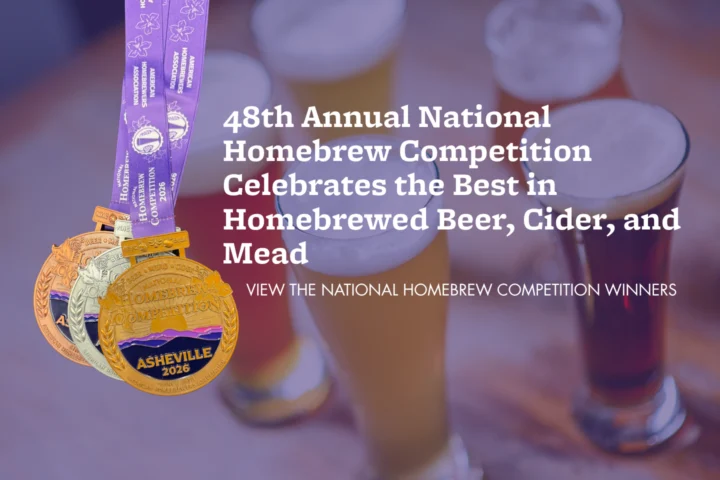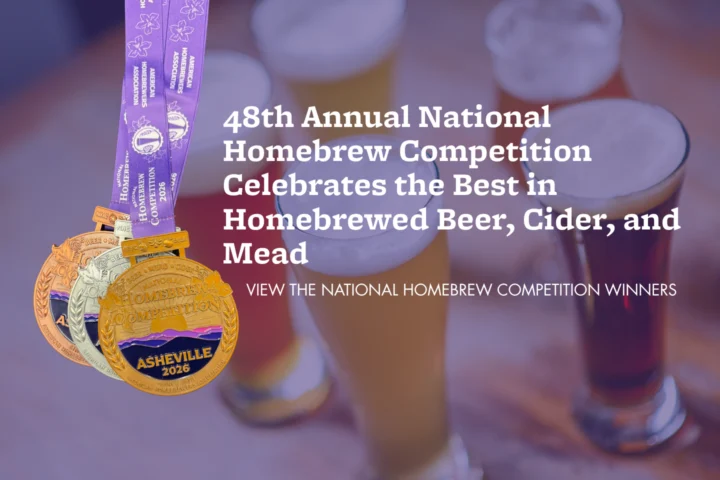

The American Homebrewers Association (AHA) officially concluded its 48th annual National Homebrew Competition (NHC) on June 20, 2026, marking a significant milestone for the global homebrewing community. Held in conjunction with the annual Homebrew Con in Asheville, North Carolina, the awards ceremony recognized the pinnacle of amateur brewing, fermentation science, and community advocacy. This year’s competition, which remains the largest and longest-running event of its kind in the world, saw 120 medals awarded across 40 distinct categories, encompassing beer, mead, and cider.
The 2026 iteration of the NHC serves as a testament to the enduring appeal of fermented beverages and the sophisticated technical skills of modern hobbyists. A total of 3,575 entries were submitted by 1,054 AHA members, representing 46 U.S. states, Washington, D.C., and seven different countries. The diversity of the entries reflects the global reach of the American Homebrewers Association, a nonprofit organization that has been the primary advocate for the hobby since its founding in 1978.
The Road to Asheville: Competition Chronology and Logistics
The path to the podium in Asheville began months prior with a rigorous first round of judging conducted across the United States. To manage the high volume of entries and ensure regional accessibility, the AHA organized preliminary judging sessions in nine hub cities: San Diego, California; Chicago, Illinois; Indianapolis, Indiana; Kansas City, Missouri; Longmont, Colorado; Philadelphia, Pennsylvania; San Francisco, California; Seattle, Washington; and Tampa, Florida.
Following the preliminary rounds, the highest-scoring entries advanced to the Final Round, which took place in Asheville on June 17 and 18, 2026. Asheville, frequently cited as one of the premier "beer cities" in the United States, provided a fitting backdrop for the final evaluation. The judging process was supported by the Beer Judge Certification Program (BJCP), an organization that provides standardized training and certification for evaluators to ensure that every entry is judged objectively against specific style guidelines.
The culmination of these efforts was the awards ceremony held at the Renaissance Hotel, where hundreds of attendees gathered to celebrate the technical mastery required to produce world-class beverages in a non-commercial setting. The logistical success of the event was bolstered by local partnerships, including Hi-Wire Brewing, which served as the receiving site for Final Round entries, and a massive cohort of volunteers who managed cold storage, flight preparation, and data entry.
Analyzing Competitive Trends: Popular Styles and Technical Mastery
The 2026 competition data highlights a shifting landscape in homebrewing preferences, with a notable return to traditional European styles. While American-style India Pale Ales (IPAs) have historically dominated homebrew competitions, the 2026 results suggest a growing appreciation for the nuance and discipline required to brew lagers and complex Belgian ales.
The top three most-entered categories in the 2026 competition were:
- Dark European Lager (Table 7): With 152 entries, this category was the most contested. Dark lagers, such as Munich Dunkel and Schwarzbier, require precise temperature control and a delicate balance of malt sweetness and clean fermentation, making them a favorite for brewers looking to prove their technical proficiency.
- Pale European Beer (Table 2): This category followed closely with 137 entries. Including styles like Helles and German Pilsner, this category demands perfection, as there are no aggressive hop or malt profiles to hide fermentation flaws.
- Strong Belgian Ale (Table 26): Rounding out the top three with 123 entries, this category showcases the "artistic" side of brewing, where yeast-driven esters and phenols play a primary role in the flavor profile.
The high volume of entries in these categories suggests that the modern homebrewer is increasingly focused on technical "cleanliness" and historical accuracy. Beyond beer, the competition also saw robust participation in mead and cider categories, reflecting the broadening scope of the fermentation hobby.
Major Awards and Community Recognition
While the category medals celebrate specific recipes, the NHC also presents major awards that recognize overall brewing excellence and contributions to the homebrewing ecosystem. Six major brewing awards were presented to individuals who demonstrated consistent quality across multiple entries or achieved the highest scores in their respective divisions.
Among the most prestigious honors is the Cidermaker of the Year Award, which recognizes the individual who has best mastered the fermentation of pomaceous fruits. Additionally, the AHA utilized the platform to honor the structural pillars of the community. The Homebrew Shop of the Year Award was presented to a retail establishment that has gone above and beyond in providing education, supplies, and a gathering space for local hobbyists.
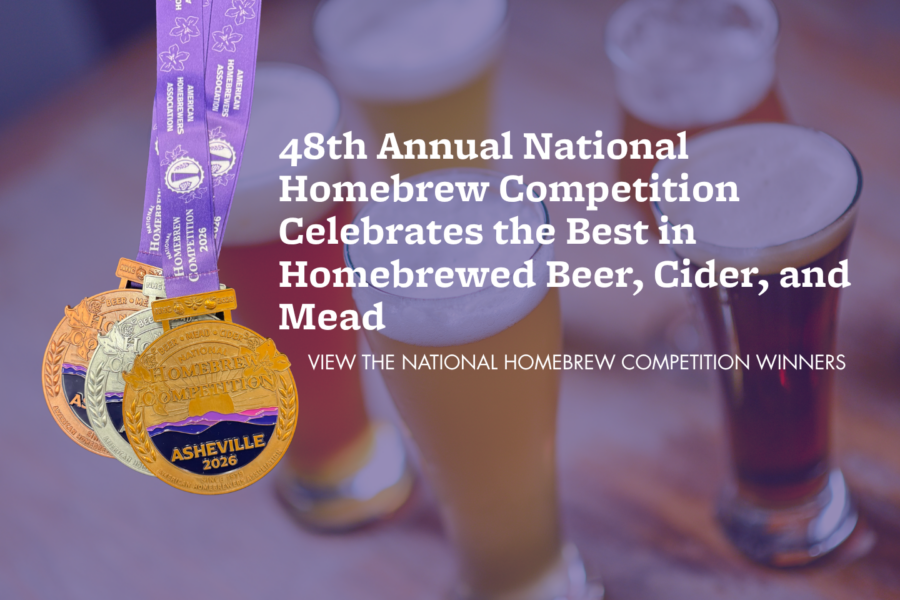
The American Homebrewers Association Advocacy Award was also a highlight of the evening. This award is given to individuals or organizations that have worked to protect the rights of homebrewers, whether through legislative lobbying, public education, or community outreach. These recognition awards emphasize that homebrewing is not merely a solitary pursuit but a vibrant industry supported by retail, advocacy, and social organizations.
Official Statements and Industry Perspective
Charlie Harr, Chair of the National Homebrew Competition, spoke to the high standards observed during this year’s judging. "Every year, I continue to be impressed by the rising quality of entries in the National Homebrew Competition," Harr remarked. "The creativity, technical skill, and care that homebrewers, meadmakers, and cidermakers bring to this competition is remarkable. Earning a medal at the NHC is an incredible achievement, but every entrant should be proud to have brewed and shared their work on this stage."
Harr also emphasized the collaborative nature of the event, noting that the NHC is made possible by a vast network of experts and enthusiasts. "This competition is the most prestigious in homebrewing, and it is made stronger by the community behind it: the entrants who push the hobby forward, the judges who lend their expertise, and the volunteers who make the competition happen. That shared passion is what makes the AHA and NHC so special."
The sentiment shared by Harr reflects the broader industry view that homebrewers are the "R&D department" of the craft beer world. Many of the most successful professional breweries in the United States were founded by former NHC medalists, and the techniques perfected in home kitchens often find their way into commercial production.
Historical Context: From Boulder to the Global Stage
The National Homebrew Competition has come a long way since its inception in 1979. The first competition, held in Boulder, Colorado, featured only 34 entries. At that time, homebrewing had only recently been legalized at the federal level in the United States, following the signing of H.R. 1337 by President Jimmy Carter in 1978.
Since those humble beginnings, the NHC has evaluated more than 170,000 entries. This historical trajectory mirrors the growth of the craft beer movement itself. In the 1980s and 1990s, the NHC served as one of the few places where brewers could receive objective feedback on their work. Today, it serves as a rigorous proving ground where the standards often rival or exceed those of professional competitions.
The 2026 event in Asheville continues this legacy, proving that even as the professional craft beer market matures, the amateur sector remains a hotbed of innovation and dedication. The AHA, which operates as both a 501(c)(6) membership organization and a 501(c)(3) supporting organization via the A-Ha Foundation, continues to provide the resources—such as Zymurgy magazine and validated recipe databases—that allow this growth to persist.
Broader Impact and the Future of Fermentation
The success of the 2026 National Homebrew Competition has implications that extend beyond the awards ceremony. The event provides a significant economic boost to the host city, with over a thousand members traveling to Asheville for Homebrew Con. More importantly, the competition reinforces the standards of the Beer Judge Certification Program, ensuring a high level of sensory literacy among enthusiasts.
Looking forward, the AHA remains focused on inclusivity and education. The 2026 data, showing entries from seven countries, suggests that the American model of homebrewing advocacy is being adopted globally. As homebrewers continue to experiment with sustainable ingredients, ancient grains, and modern fermentation technology, the NHC will likely remain the primary barometer for the health of the hobby.
The conclusion of the 2026 National Homebrew Competition marks the beginning of the next cycle for thousands of brewers. As the winners return home with their medals, the search for the next award-winning recipe begins, fueled by the feedback of world-class judges and a shared commitment to the joy of fermentation. For the American Homebrewers Association, the 2026 event was not just a celebration of beer, mead, and cider, but a celebration of the community that has sustained the organization for nearly half a century.