

The American Homebrewers Association (AHA) has officially released the May/June 2026 edition of Zymurgy, its flagship publication dedicated to the art and science of home fermentation. This latest installment serves as a comprehensive global survey of the current state of homebrewing, bridging the gap between ancient European traditions and cutting-edge biotechnological applications. As the craft beer movement continues to mature globally, this issue highlights the diversification of styles and the increasing sophistication of amateur brewers who are now influencing both commercial markets and scientific research.
The publication arrives at a pivotal moment for the international brewing community. According to recent industry reports, the interest in heritage styles and localized brewing techniques has seen a 15% uptick in the past two years, driven largely by a desire for "terroir" in beer—a concept traditionally reserved for wine. The May/June issue of Zymurgy captures this zeitgeist by featuring detailed explorations of regional specialties from Ukraine, Italy, Germany, and Turkey, while also providing 14 tested recipes for members of the AHA.

The Evolution and Recognition of Ukrainian Golden Ale
One of the central features of the May/June issue is an in-depth analysis of Ukrainian Golden Ale, authored by Lana Svitankova. Svitankova, a prominent voice in the Eastern European beer scene and a recognized beer judge, provides a definitive look at a style that has been fighting for international recognition for nearly two decades.
Ukrainian Golden Ale occupies a unique sensory space in the ale category. As Svitankova notes, the style is characterized by a higher alcohol by volume (ABV) than the standard British Golden Ale, yet it maintains a more restrained phenolic and ester profile compared to the Belgian Golden Strong Ale. Historically, the style emerged in the early 2000s, gaining traction in the craft breweries of Kyiv and Lviv. The Zymurgy feature details the technical parameters of the style, which often includes the use of coriander and a specific malt backbone that provides a fuller mouthfeel without the cloying sweetness found in some high-gravity ales.
The inclusion of this style in Zymurgy marks a significant milestone in its journey toward being codified by the Beer Judge Certification Program (BJCP). For the homebrewing community, the recognition of Ukrainian Golden Ale is not merely an academic exercise; it represents the resilience of the Ukrainian brewing culture and the successful efforts of local brewers to export their traditions despite significant geopolitical challenges.

Biotechnology in the Brewhouse: The Vaccine Beer Project
In a departure from traditional brewing narratives, the May/June issue profiles American virologist and homebrewer Chris Buck. His work represents a significant intersection of amateur fermentation and high-level medical research. Buck has successfully demonstrated a method for using Saccharomyces cerevisiae—the standard brewer’s yeast—to produce vaccines for polyomaviruses, a group of viruses that can cause severe disease in immunocompromised individuals.
This "Vaccine Beer" project highlights the versatility of yeast as a model organism. While the brewing process typically focuses on the production of ethanol and CO2, Buck’s research utilizes the yeast’s cellular machinery to synthesize viral proteins that can trigger an immune response. This breakthrough suggests a future where low-cost, food-grade production methods could potentially be adapted for public health initiatives in resource-limited settings.
The Zymurgy report provides a timeline of Buck’s research, tracing his experiments from a standard homebrew setup to a laboratory environment. This narrative reinforces the long-standing connection between the brewing industry and microbiology, a relationship that dates back to Louis Pasteur and Emil Christian Hansen.
Traditionalism and Innovation in Western Europe
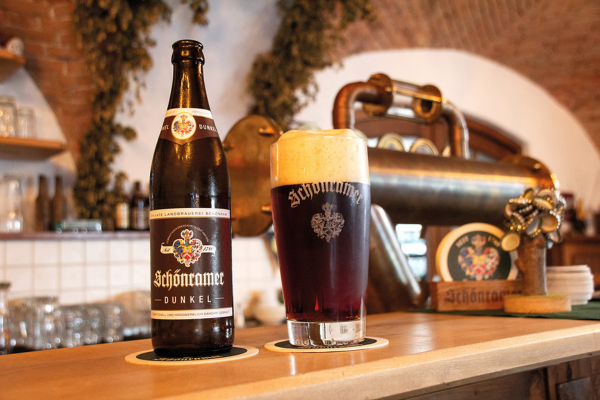
The issue also turns its focus to the heart of Europe, examining the technical nuances of German and Italian brewing. A feature on German Dunkel emphasizes the delicate balance required to brew this ancient Bavarian style. The article argues that the secret to a world-class Dunkel lies in the management of the Maillard reaction—balancing the rich, toasted notes of Munich malt with a clean fermentation profile that ensures drinkability. This focus on "drinkability" (or Süffigkeit) is a recurring theme, as modern homebrewers move away from over-hopped "extreme" beers in favor of balanced, sessionable classics.
In Italy, the magazine highlights the work of Carlo Sesia, a gold medalist in the National Homebrew Competition. Sesia provides a masterclass on brewing Belgian-style Saisons in Northern Italy. His approach emphasizes the importance of temperature control during fermentation to manage the expressive yeast strains characteristic of the style.
Complementing Sesia’s technical advice is a report on the Homebrewers Fiorentini, a club based in Tuscany. This group exemplifies the "terroir" movement by incorporating local agricultural products into their recipes. The use of grape must from local vineyards, honey from Tuscan apiaries, and oak staves soaked in regional wines illustrates how homebrewers are blurring the lines between beer and wine, creating a distinctively Italian brewing identity.
Technical Resources and the 2026 Recipe Suite
At the core of Zymurgy’s mission is the dissemination of actionable data for brewers. The May/June issue includes 14 meticulously vetted recipes that range from traditional European lagers to experimental ales using the aforementioned Tuscan ingredients. Each recipe is accompanied by water chemistry profiles, mash schedules, and fermentation logs, providing a roadmap for brewers of all skill levels.
The inclusion of these recipes is backed by the AHA’s commitment to "validated recipes," a standard that ensures the formulations have been tested and peer-reviewed by experienced brewers. This focus on quality control has helped Zymurgy maintain its status as a primary resource for the approximately 1.1 million homebrewers currently active in the United States.
Editorial Leadership and the Future of the AHA
The issue is curated under the direction of Editor-in-Chief Dave Carpenter. Carpenter, who began his brewing journey in 2009, has led the magazine through a period of digital transformation and increased global outreach. His editorial philosophy emphasizes the "gerunds" of the hobby—brewing, hiking, and traveling—reflecting a lifestyle approach to the craft that resonates with a younger, more mobile demographic of hobbyists.

Under Carpenter’s tenure, Zymurgy has expanded its digital footprint, offering online previews and interactive content for members. This strategy is part of a broader effort by the American Homebrewers Association to stabilize membership numbers in an era where commercial craft beer is more accessible than ever. By focusing on the "DIY" aspect and the community-building power of local homebrew clubs, the AHA aims to sustain the hobby as a vital component of the broader beer industry.
Broader Implications for the Brewing Industry
The content of the May/June 2026 issue of Zymurgy reflects several broader trends in the beverage industry:
- Global Style Diffusion: Styles that were once hyper-local, such as the Ukrainian Golden Ale or the Italian Saison, are now being brewed and perfected by hobbyists globally. This creates a feedback loop where homebrewers push commercial brewers to innovate and explore forgotten or niche categories.
- Scientific Literacy: The profile of Chris Buck’s vaccine research underscores the high level of scientific literacy within the homebrewing community. Homebrewers are increasingly comfortable with advanced concepts in genetics, microbiology, and organic chemistry.
- Sustainability and Localism: The focus on Tuscan ingredients highlights a shift toward sustainable brewing practices, where brewers look to their immediate environment for fermentables and flavoring agents, reducing the carbon footprint associated with importing hops and malts from distant regions.
As the American Homebrewers Association looks toward the second half of 2026, the May/June issue of Zymurgy stands as a testament to the enduring relevance of the hobby. It is no longer just about making beer at home; it is about participating in a global cultural exchange and contributing to the advancement of fermentation science. For the members of the AHA, this issue provides the tools, the inspiration, and the technical data required to continue pushing the boundaries of what can be achieved in a five-gallon carboy.