
The modern landscape of health and wellness is undeniably shaped by a technological revolution, where personal data trackers have become ubiquitous. From wrist-worn smartwatches to sophisticated ring devices, these gadgets offer an unprecedented window into our physiological states, tracking everything from heart rate and sleep cycles to step counts and exercise intensity. This shift represents a profound evolution from purely subjective self-assessment to a realm where personal feelings are increasingly validated, or challenged, by objective data.
The Rise of the Quantified Self: Bridging Subjectivity and Objectivity
The proliferation of wearable technology signifies a cultural embrace of the "quantified self" – a movement dedicated to self-knowledge through numbers. In the best scenarios, these devices serve as a crucial bridge, connecting what an individual subjectively feels about their health and activity levels with verifiable, objective measurements. This capability is, for many, a remarkable advancement. Humans, by nature, are often imprecise at quantifying their own experiences and behaviors. Our perceptions can be skewed by fatigue, mood, desire, or even simple oversight.
Consider the common scenario of dietary estimation. A colleague, confident in his adherence to a strict caloric intake, discovered through meticulous tracking that he was inadvertently consuming an extra 500 calories daily, largely from an overlooked ingredient: barbecue sauce. This anecdote highlights a fundamental human limitation: our internal "sensors" are often prone to error when it comes to cold, hard data. While some individuals, like the legendary Canadian sprinter Ben Johnson, reportedly possessed an extraordinary ability to gauge their 100-meter sprint times within a tenth of a second, such precision is an extreme outlier. For the vast majority, the question remains: How accurate are we at assessing ourselves, and how can technology facilitate better, more informed health decisions?
Accuracy Under Scrutiny: What the Data Reveals About Trackers
The utility of fitness trackers hinges critically on the accuracy of the data they collect. It is imperative to acknowledge that not all data is created equal, nor are all devices equally reliable. The market is saturated with products from various brands, each differing not only in hardware quality but also in the sophistication of their software algorithms and reference datasets. Furthermore, some physiological metrics are inherently easier to quantify than others.
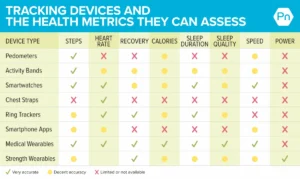
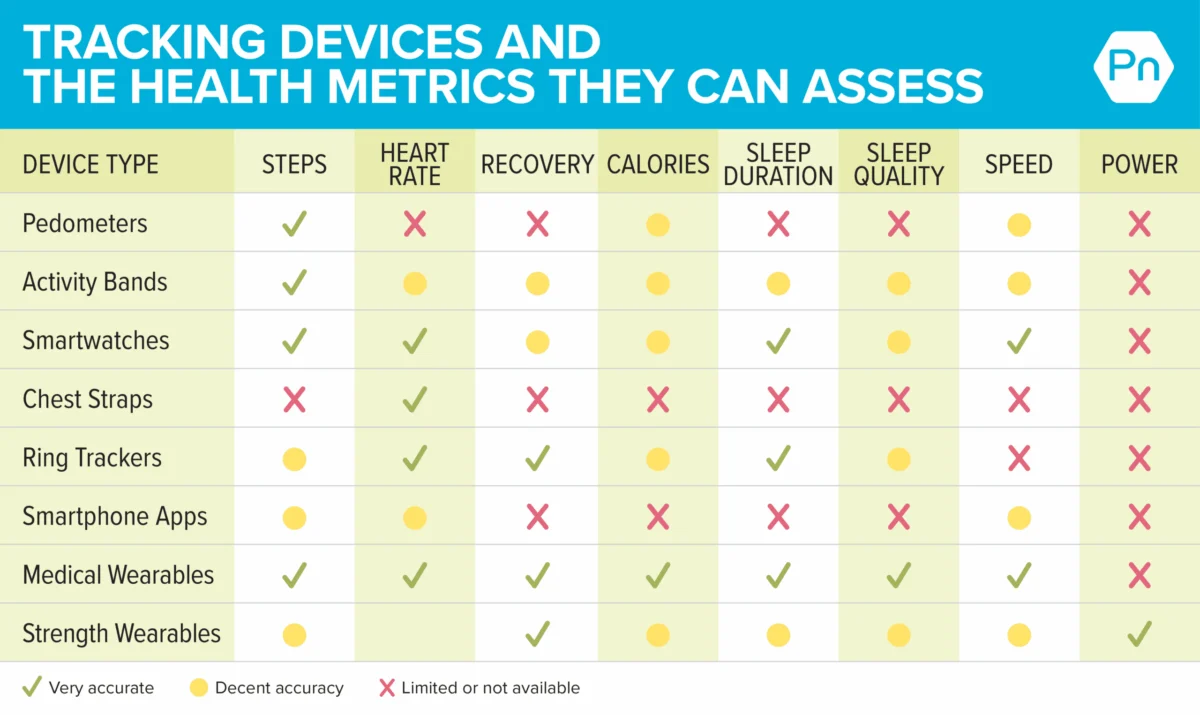
For instance, heart rate and step-count data are generally considered highly reliable across a wide range of popular devices. Studies, including those published in prestigious medical journals, have largely affirmed the accuracy of these core metrics. However, other outputs, such as calories burned, movement velocity, or detailed sleep stages, often carry substantial margins for error. Calorie expenditure estimations, in particular, can be highly variable due to the complex interplay of individual metabolic rates, exercise intensity, and environmental factors, making them less precise across different devices and algorithms.
A comprehensive analysis of various tracking devices, encompassing pedometers, activity bands, smartwatches, chest straps, ring trackers, smartphone apps, medical wearables, and strength wearables, reveals a spectrum of accuracy. While chest straps consistently offer superior heart rate data, and dedicated pedometers excel at step counting, metrics like recovery, specific sleep quality parameters, and power output often show decent to limited accuracy depending on the device type and its underlying technology. This variability underscores the importance of understanding the limitations of one’s chosen device and focusing on metrics known for higher reliability if precision is paramount.
The Information Overload Paradox: Too Much Data Can Be Detrimental
While the promise of more data is alluring, a critical paradox emerges: too much information can be as unhelpful as too little. Samantha Kleinberg, a computer scientist specializing in decision-making, notes that even a slight surplus of information can significantly impede our ability to make sound choices. This concept is often depicted as an inverted U-shaped curve, illustrating that decision-making ability peaks at an optimal amount of relevant information, declining sharply when there’s either insufficient or overwhelming data.
In today’s data-rich environment, it is surprisingly easy to cross the threshold into information overload. This phenomenon, often termed "analysis paralysis," is familiar to anyone who has struggled to choose a restaurant after sifting through hundreds of reviews, ultimately feeling more confused than enlightened. In the health and fitness sector, this challenge is amplified by a constant drive to offer more science, more customization, and greater complexity. When a deluge of information blurs together without a clear path forward, it can lead to inaction and frustration.

A simple yet profound question can guide individuals through this labyrinth: "Does tracking genuinely enhance my well-being and performance?" A clear "yes" or "no" provides immediate direction. For those in a fuzzy middle ground, observing specific signs can help clarify whether tracking is a beneficial tool or a counterproductive burden.
Navigating the Digital Health Landscape: When Tracking Becomes an Asset
Fitness trackers, when used judiciously, can become powerful allies in one’s health journey. Their utility is most pronounced in specific scenarios where they effectively bridge gaps in self-perception, motivation, or understanding.
1. Reducing Stress and Validating Efforts: Data from trackers can serve as a potent validator, alleviating self-doubt and confirming the efficacy of chosen methods. Consider Zak, a high-achieving individual who initially struggled to trust the seemingly "easy" zone 2 cardio his coach recommended. Despite the subjective feeling that he wasn’t working hard enough, his heart rate monitor provided irrefutable evidence: his resting heart rate dropped, and his recovery times improved. This objective data built confidence, allowing him to relax into the process, which paradoxically further improved his physiological markers. For coaches, leveraging reliable data to spotlight existing performance in clients who may underestimate their capabilities can significantly build self-efficacy and reduce anxiety.
2. Enhancing Motivation and Behavior Change: According to behavioral science, for a behavior to occur, three elements are essential: motivation, ability, and a prompt. Fitness trackers excel at providing the "prompt" when motivation and ability are already present. Margaret, a client who believed her nightly glass of wine aided sleep, experienced a transformative shift after wearing a sleep tracker. The data consistently showed poorer sleep quality on nights she drank. This clear, objective feedback served as a powerful prompt, leading her to adjust her behavior. By highlighting crucial data points, trackers can illuminate the consequences of actions, making the path toward healthier choices undeniably clearer. Once such a pattern is observed, it often becomes "un-seeable," driving sustained change.
3. Fostering Deeper Self-Understanding: The common adage "the harder you work, the better your results" is not always true. Many individuals, particularly "grinders," can fall into the trap of overtraining, believing they are making progress when they are, in fact, inhibiting performance and recovery. Conversely, others chronically underestimate their capacity. Data can illuminate these blind spots, helping individuals understand their true potential and limitations. For example, in high-intensity interval training (HIIT), recovery periods are often fixed estimates. Heart rate data, however, can provide an individualized picture of actual recovery needs, which may be faster or slower than anticipated. This real-time metric allows for more efficient training, preventing unproductive "junk volume" that accumulates fatigue without improving performance. By integrating real-time output, fatigue, and recovery metrics, individuals and their coaches can gain a nuanced understanding of physiological responses, optimizing training strategies.
The Downside: When Data Becomes a Detriment
While the benefits are significant, an overreliance on tracking can also lead to negative outcomes, turning a helpful tool into a source of stress or even counterproductive habits.
1. Increasing Stress and Anxiety: Data, particularly poor scores on metrics beyond immediate control, can become a significant stressor without any compensatory upside. A new parent, for example, already grappling with fragmented sleep due to a newborn, might experience unnecessary anxiety from a "poor sleep quality" score on a tracker. In such circumstances, where priorities lie elsewhere or factors are beyond immediate influence, tracking can be counterproductive, fostering stress rather than health. It’s crucial to recognize when circumstances warrant a temporary pause from data collection.
2. Decreasing Intrinsic Motivation: When the focus shifts excessively to numbers, the inherent enjoyment and meaning derived from an activity can diminish. Jan, an avid recreational cyclist, initially found motivation in demolishing local trail records. However, his relentless pursuit of speed, driven by performance metrics, eventually led to under-recovery and burnout. His rides became solely about the numbers, eroding his ability to ride for pleasure. When workouts transform from an experience to a mere data-gathering exercise, tracking may no longer be serving its intended purpose.
3. Disconnection from Internal Signals: An over-reliance on external data risks dulling one’s innate ability to tune into internal bodily signals – hunger, fullness, energy levels, fatigue, or even emotional states. The "My Fitness Pal Blackout" of 2019, when the popular calorie-tracking app went offline, served as a stark reminder for many users. The mild panic some experienced highlighted a disconnection from their own internal cues, leaving them adrift without external guidance on how much to eat. This phenomenon, sometimes linked to "nomophobia" (the fear of being without a mobile phone), underscores the importance of maintaining a healthy relationship with technology, ensuring it augments, rather than replaces, intrinsic self-awareness.
Cultivating Sensory Awareness in a Data-Driven World

To truly harness the potential of fitness trackers, individuals must learn to calibrate their objective data with their subjective, felt experience. This integrated approach fosters both analytical insight and intuitive wisdom, leading to more resilient and enjoyable health practices.
1. Check In Before Checking the Data: A foundational practice is to pause and self-assess before consulting any device. Whether estimating distance biked, calories consumed, or heart rate, consciously tuning into internal sensations allows the brain’s powerful (though sometimes inaccurate) prediction-making capabilities to engage. Only after this internal check should one compare their assessment with the tracker’s output. Over time, this consistent comparison can significantly narrow the gap between subjective feeling and objective reality, refining one’s interoceptive abilities. Regular app updates, which refine algorithms, also contribute to better predictive accuracy.
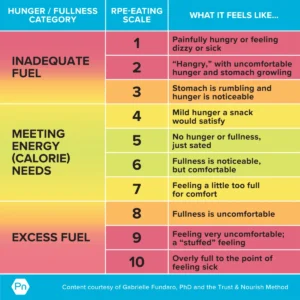
2. Develop Mental Shortcuts and Leverage RPE: Coaches often ask clients to estimate their physical limits, such as reps to failure at a given weight. While novices may be significantly off, objective tracking can calibrate their understanding. Beyond purely objective measures, the Rate of Perceived Exertion (RPE) stands as one of the most validated sensory-driven approaches. RPE involves subjectively rating the intensity of physical activity. While not everyone is inherently skilled at estimating RPE, consistent mapping of felt experience against occasional objective data (like heart rate or power output) can dramatically improve this skill, providing a reliable "mental shortcut" for gauging effort even without a device.
3. Keep Developing Your Ability to Dial Into Your Senses: Humans possess an incredibly rich and complex network of sensory information that even the most advanced technology cannot fully replicate. Beyond the five traditional senses, we have:
- Proprioception: The sense of self-movement and body position.
- Interoception: The sense of the internal state of the body (e.g., hunger, thirst, heart rate, respiration).
- Nociception: The sense of pain.
- Thermoreception: The sense of temperature.
- Balance (Vestibular sense): The sense of equilibrium and spatial orientation.
This vast array of information is constantly fed into the nervous system’s powerful pattern-recognition machine. To continue honing the ability to utilize this network, regular "check-ins" with how one feels – energetically, emotionally, and physically – are paramount. By learning to calibrate these intrinsic senses with objective data, individuals can leverage the cutting-edge advances in wearable technology while steadfastly keeping their own lived experience front and center, fostering a truly holistic approach to health.
The Future of Self-Assessment and Wearable Technology
The trajectory of wearable technology suggests an even deeper integration into daily life, with advancements in AI and machine learning promising more personalized and predictive insights. However, this evolution also brings ethical considerations, particularly regarding data privacy and the potential for increased health anxiety. The challenge for the future lies in designing and utilizing these tools in a way that empowers individuals without fostering dependency or eroding the invaluable connection to one’s own body. The ultimate goal remains a balanced approach: leveraging the power of objective data to inform and guide, while simultaneously nurturing and trusting the profound wisdom of our intrinsic human senses for sustainable well-being and a richer, more meaningful life.
References
[Click here to view the information sources referenced in this article.]
For Health and Wellness Professionals:
For coaches seeking to guide clients in building sustainable nutrition and lifestyle habits that significantly improve physical and mental health, while also building a fulfilling career, consider the PN Level 1 Nutrition Coaching Certification. This program provides the tools and knowledge to effectively integrate data-driven insights with client-centered, intuitive approaches.