
The American Homebrewers Association (AHA) has officially entered a transformative phase in its nearly five-decade history, transitioning into a fully independent, standalone nonprofit organization. This move, finalized in 2025, marks a significant departure from its previous organizational structure and signals a renewed focus on grassroots advocacy, community expansion, and member-led governance. As the association moves into the final quarter of the year, the AHA leadership has unveiled a comprehensive strategic plan aimed at revitalizing the hobby of homebrewing across the United States and beyond.
The transition to independence is the culmination of a multi-year effort to provide the AHA with the autonomy necessary to navigate a changing craft beverage landscape. Historically, the AHA operated under the umbrella of the Brewers Association (BA), an organization primarily focused on professional craft breweries. While the partnership was mutually beneficial for decades, the 2025 separation allows the AHA to dedicate 100% of its resources, staff, and advocacy efforts exclusively to the needs of amateur brewers. This independence is viewed by industry analysts as a critical step in ensuring the long-term sustainability of the hobby, which serves as the primary pipeline for professional brewing talent.
A New Strategic Vision for 2026 and Beyond
Central to the AHA’s new identity is a refined strategic vision: "A homebrewer in every neighborhood and a homebrew club in every community." This mission statement reflects a shift from centralized administration to localized empowerment. By prioritizing the growth of neighborhood-level brewing and community-based clubs, the AHA seeks to lower the barriers to entry for new hobbyists while strengthening the social fabric that has traditionally defined the homebrewing culture.
To achieve this, the AHA Founding Board has outlined a series of initiatives designed to modernize the association’s infrastructure. Since the initial board update in April 2025, the organization has successfully migrated its operations to an independent framework, established a new governance model, and initiated a total overhaul of its digital member services. These efforts are aimed at improving the user experience for the association’s tens of thousands of members, providing them with more accessible resources, recipes, and educational content.
Chronology of the 2025 Transition
The road to independence has been marked by several key milestones throughout the 2025 calendar year:
- January 2025: Formal separation from the Brewers Association begins, with the AHA establishing its own administrative and financial systems.
- April 2025: The AHA Board provides its first major update to the membership, outlining the preliminary goals for independent operation and the formation of a "Founding Board" comprised of veteran homebrewers and industry experts.
- June 2025: The National Homebrew Competition (NHC) serves as the first major event under the new independent banner, seeing a surge in participation and validating the association’s new direction.
- September 2025: The AHA releases its 2025–2028 Strategic Plan, detailing the "homebrewer in every neighborhood" initiative and setting specific targets for club recruitment and retention.
- November 2025: The association hosts a special "Zymurgy Live" event, opening its doors to the general public for the first time in an effort to demonstrate transparency and recruit a new generation of brewers.
Supporting Data: The State of Homebrewing in the United States
The AHA’s push for growth comes at a pivotal time for the hobby. According to historical data provided by the association, there are an estimated 1.1 million homebrewers in the United States. These individuals produce more than 1.4 million barrels of beer annually, accounting for roughly 1% of the total beer production in the country. Furthermore, the homebrewing industry contributes significantly to the economy, with hobbyists spending an estimated $700 million annually on equipment, ingredients, and supplies.
Despite these strong numbers, the hobby faced challenges during the early 2020s as retail trends shifted and professional craft beer became more ubiquitous. The AHA’s new independent status is specifically designed to address these headwinds. By focusing on the "community" aspect of brewing, the association aims to reverse a slight decline in formal club memberships. Internal surveys suggest that brewers who belong to a local club are 40% more likely to continue the hobby for more than five years compared to those who brew in isolation.
Operational Upgrades and Enhanced Member Benefits
A primary focus of the 2025–2026 roadmap is the modernization of the AHA’s technological stack. For years, members have requested more streamlined access to the association’s vast archives of recipes and technical articles. As part of the independence move, the AHA is investing in a new member service platform. This upgrade will include:
- Improved Digital Access: A revamped mobile-friendly interface for Zymurgy Magazine, the association’s flagship publication.
- National Homebrew Competition (NHC) Integration: A more robust platform for managing competition entries, judging feedback, and historical data for participants.
- Enhanced Member Deals: A broadened network of discounts at local homebrew supply shops and professional taprooms, incentivizing local commerce.
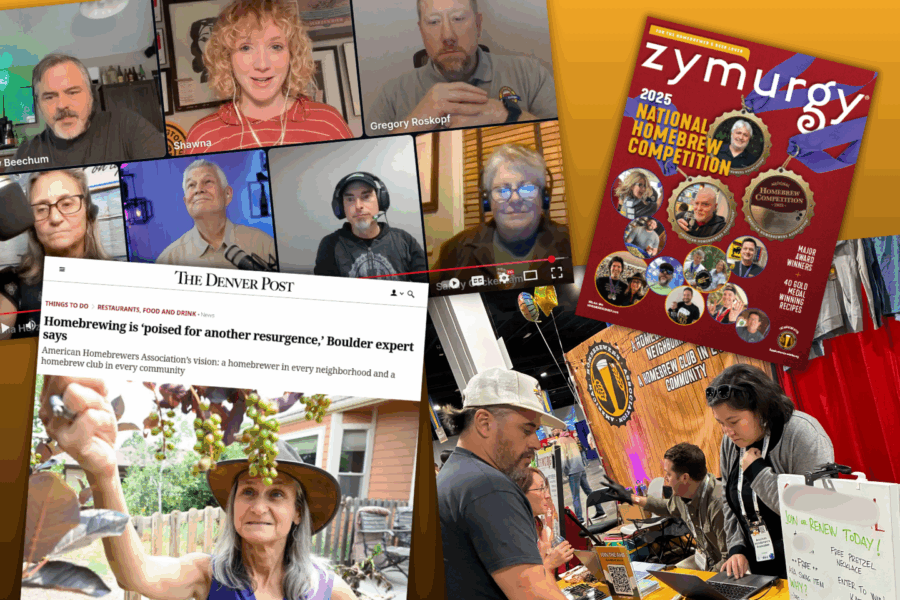
- Educational Resources: New video-based tutorials and live-streamed technical seminars (Zymurgy Live) featuring world-class brewers and scientists.
The AHA has also reaffirmed its commitment to the National Homebrew Competition, the world’s largest stage for amateur brewers. By maintaining the rigorous standards of the NHC, the association ensures that homebrewing remains a respected discipline that contributes to the broader world of fermentation science.
Official Responses and Industry Implications
The move to independence has been met with widespread support from both the amateur and professional brewing communities. "The AHA has always been the heartbeat of the craft beer movement," stated a spokesperson for a leading homebrew supply retailer. "Their transition to a standalone nonprofit allows them to be more agile and responsive to the specific needs of the hobbyist. When homebrewing thrives, the entire craft beer industry benefits."
Founding Board members have emphasized that the AHA exists "for the members, by the members." By removing the layers of corporate oversight associated with larger trade organizations, the AHA can now pivot more quickly to address legislative issues, such as the protection of homebrewing rights at the state level. While homebrewing has been federally legal since 1978, local regulations regarding competitions and the transport of homebrewed beverages remain a patchwork of complexity that requires dedicated advocacy.
Broader Impact and Future Outlook
Looking ahead to 2026, the AHA plans to intensify its recruitment efforts through a "Member Get a Member" campaign. The logic is simple: the more members the association has, the more resources it can pour into advocacy, innovation, and community building. The association is also exploring partnerships with educational institutions to further the study of fermentation science, potentially creating bridge programs for homebrewers looking to enter the professional workforce.
The upcoming "Zymurgy Live" session on November 5 is expected to provide further clarity on the 2026 fiscal budget and specific project timelines. In an unusual move, this session will be open to non-members, reflecting the board’s commitment to growing the "neighborhood" footprint of the association.
As the AHA navigates its first full year as an independent entity, the focus remains squarely on the fermenter. By leveraging its rich history—founded by Charlie Papazian in 1978—with a modern, independent administrative structure, the American Homebrewers Association is positioning itself to lead the next great era of American fermentation. The success of this transition will likely be measured not just in membership numbers, but in the vibrancy of the local clubs and the quality of the beer being brewed in garages and kitchens across the nation.
The association’s leadership has expressed profound gratitude for the patience and support of the brewing community during this transition. With a clear vision, a dedicated board, and an energized membership base, the AHA is no longer just a department within a larger trade group; it is a self-sustaining movement dedicated to the art and science of homebrewing. As the organization likes to remind its followers, more members mean more advocacy, more resources, and ultimately, more homebrewing. Through this independence, the AHA ensures that the hobby will not only survive but thrive for generations to come.