The global lockdowns of recent years triggered unexpected shifts in consumer behavior across the globe, none more visible than the sudden, overwhelming surge in home baking. As populations retreated indoors to navigate sweeping public health restrictions, supermarkets experienced unprecedented supply chain disruptions. Among the most sought-after and rapidly depleted commodities were commercial baking supplies, particularly active dry and instant yeast. In countries such as Norway, grocery store shelves remained entirely stripped of yeast for weeks and even months at a time. This widespread scarcity forced home cooks to fundamentally rethink their culinary methodologies, relying less on brute-force ingredient quantities and far more on the biological principles governing microbial proliferation. At the heart of this kitchen revolution lies a mathematical phenomenon that has simultaneously defined our understanding of public health crises and successful bread fermentation: exponential growth.
The Hidden Power of Microbial Proliferation
While public discourse throughout the pandemic was dominated by discussions of exponential growth in the grim context of SARS-CoV-2 transmission rates, the exact same mathematical curve governs the life cycle of Saccharomyces cerevisiae, commonly known as baker’s yeast. Exponential growth is notoriously counterintuitive to human perception. As historical cautionary tales like the ancient wheat and chessboard problem illustrate, exponential expansion typically appears stagnant for an extended duration, creating a false sense of security or inactivity, before seemingly exploding overnight.
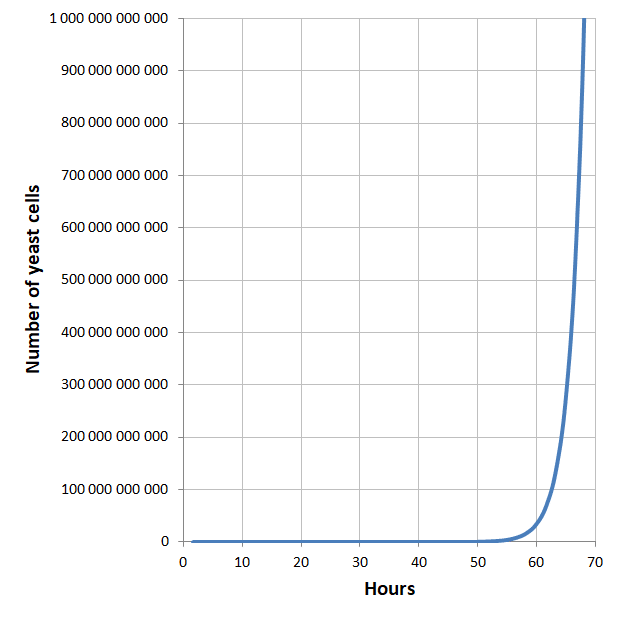
Under ideal laboratory or commercial manufacturing conditions—characterized by optimal temperatures, abundant oxygen, and a rich supply of nutrients—a single yeast cell undergoes budding to split into two distinct daughter cells approximately every 100 minutes. This rapid biological cycle means a single cell effectively doubles its population in under two hours.
The compounding mathematics escalate at a staggering rate. After 24 hours of continuous, ideal growth, a single microscopic cell multiplies into roughly 16,000 cells. By the 48-hour mark, that number surges to approximately 268 million. Within less than 72 hours, a single founding cell can yield an astronomical one trillion individual cells—roughly equivalent to the total cell count found in a standard 50-gram commercial block of compressed yeast. While such uninterrupted, explosive replication is primarily reserved for specialized industrial production environments rather than actual home bread doughs, understanding this trajectory fundamentally alters how bakers approach ingredient management.
Rethinking Yeast Economy Through Precision Technology
Faced with persistent store shortages and restricted mobility during lockdown periods, resourceful home bakers sought innovative ways to maximize their existing pantries. Rather than adhering to traditional, heavy-handed recipes that called for entire packets of instant dry yeast for a single loaf of bread, culinary enthusiasts began adopting professional techniques centered around minimal inoculation and extended fermentation times.
To achieve consistent results without risking over- or under-proofing, many bakers turned to digital precision tools originally designed for professional pizzerias. Applications such as PizzApp+ for Android devices emerged as indispensable assets for home kitchens. These digital calculators allow users to input precise variables—including flour weight, ambient room temperature, and desired bulk fermentation duration—to compute the exact fraction of yeast required.
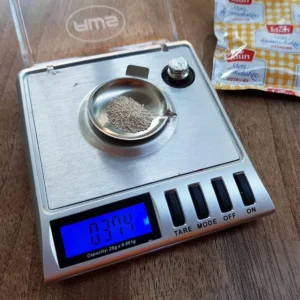
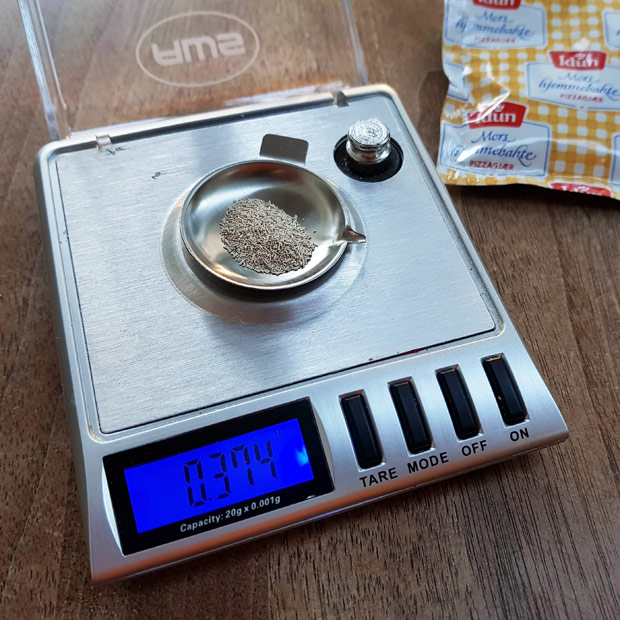
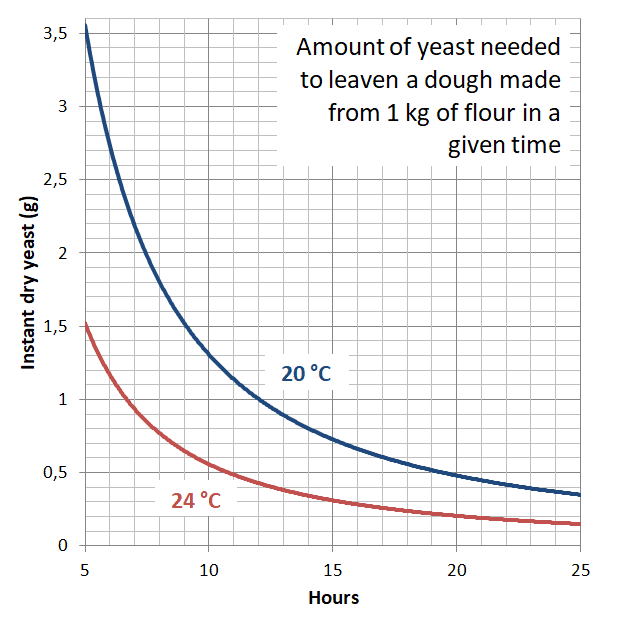
For instance, a standard direct dough formulated with one kilogram of wheat flour requires a mere 0.48 grams of instant dry yeast when subjected to a slow, 20-hour bulk fermentation at a stable room temperature of 20 degrees Celsius. Measuring fractions of a gram, however, demands instrumentation beyond traditional mechanical kitchen scales. Consequently, consumer demand surged for affordable, highly sensitive digital pocket balances capable of reading down to 0.001 grams. These laboratory-grade-adjacent instruments, which became widely accessible through online marketplaces for modest prices, bridged the gap between industrial baking precision and domestic cooking.
Biochemical Implications of Slow Fermentation
The shift toward minuscule yeast quantities paired with extended fermentation windows yielded benefits that extended far beyond mere pantry conservation. In traditional rapid-rise baking, high concentrations of commercial yeast rapidly consume available sugars to produce carbon dioxide and ethanol, forcing the dough to rise within an hour or two. While efficient, this accelerated timeline often sacrifices complex flavor development.
When bakers reduce the yeast inoculation rate and extend bulk fermentation to 20 or 24 hours, the biochemical landscape of the dough shifts dramatically. The extended timeline provides a supportive environment for naturally occurring lactic acid bacteria and acetic acid bacteria present in the flour and ambient air. These microbes metabolize starches and sugars into organic acids, lowering the pH of the dough. This mild acidification significantly enhances the overall flavor profile of the final baked loaf, introducing complex, subtle sour notes reminiscent of artisanal sourdough without requiring the daily maintenance of a wild yeast starter. Furthermore, enzymatic activity during extended fermentation breaks down complex proteins and starches into more digestible components, potentially improving the texture and crumb structure of the bread.
The Convenience Dilemma: Instant Yeast Versus Sourdough
The broader culinary cultural movement during the pandemic saw a massive polarization in home baking methodologies. On one side stood the sourdough revival, characterized by the daily feeding, hydration management, and microbial stewardship of wild starters. Sourdough baking served as a psychological anchor for millions, offering a comforting daily ritual during a period of profound uncertainty and isolation.
However, despite the romantic appeal and self-sufficiency of wild sourdough cultures, the convenience of commercial instant dry yeast retained a powerful allure. Sourdough maintenance demands regular attention, specific flours, and a tolerance for inconsistent rise times influenced by ambient kitchen conditions. In contrast, instant dry yeast offers predictable, high-performance leavening power that can be deployed instantaneously. By combining the speed and reliability of commercial dry yeast with the controlled, long-term mathematics facilitated by modern digital calculators, home bakers successfully solved the chronic shortage dilemma. A single standard 12-gram sachet of instant dry yeast, when portioned out in fractions of a gram using precise digital scales and allowed to work over extended timelines, proved capable of producing dozens of artisan-quality loaves over many months.
Broader Economic and Culinary Legacy
The unexpected convergence of pandemic lockdowns, supply chain bottlenecks, and domestic resourcefulness left an enduring mark on modern home culinary practices. Supermarket analytics from major distribution hubs confirmed that sales of specialty baking implements, digital scales, and bulk flours remained elevated long after initial lockdown restrictions eased.
Food scientists and culinary historians note that this period of enforced domesticity accelerated a broader trend toward kitchen literacy. Home cooks who previously relied entirely on pre-packaged convenience foods gained a deeper, intuitive appreciation for food science, microbial ecology, and the foundational mathematics of cooking.
Ultimately, the yeast shortage crisis served as an unintended masterclass in applied biology. By learning to harness the staggering potential of exponential growth through precise measurement and patient timing, home bakers transformed a restrictive supply shortage into an opportunity for culinary refinement. The techniques popularized during this era—ranging from micro-dosing instant yeast to utilizing digital fermentation calculators—have permanently altered how everyday consumers approach baking, proving that profound culinary results often emerge not from using more ingredients, but from understanding the invisible, compounding power of the few.