
In an era dominated by rapid-fire social media trends and often conflicting health advice, few topics have ignited as much fervent debate as the humble cooking oil. From the scrolling feeds of TikTok to the pages of best-selling diet books, vegetable and seed oils have become a central — and polarizing — subject of discussion. Terms like "toxic sludge," "motor oil," "the hateful eight," and "the biggest cause of chronic disease that nobody knows about" are now commonly hurled at these ubiquitous kitchen staples, fueling widespread public concern.
This intense scrutiny is not entirely new; the merits of vegetable oils have been debated almost since their commercial introduction. However, the current resurgence of anti-seed oil sentiment has been amplified by modern dietary movements, notably the carnivore diet, which advocates for an almost exclusive animal-based food intake and often demonizes plant-derived fats. Proponents of this view argue that animal fats have nourished humanity for millennia, while vegetable fats are a recent, profit-driven invention designed to sell cheap-to-grow foods. They draw parallels to margarine, which was once marketed as a healthier alternative to butter but later revealed to contain harmful trans fats. Critics of vegetable oils link them to a host of modern ailments, including obesity, anxiety, depression, and inflammatory conditions like ulcerative colitis, claiming they are unequivocally worse than traditional fats like butter.
Conversely, a significant body of scientific and nutritional expertise maintains that many vegetable oils are harmless, or even health-promoting, and often superior to animal-derived saturated fats. This stark dichotomy leaves consumers adrift, grappling with conflicting information and struggling to discern scientific fact from popular pseudoscience. The reality, as is often the case in nutrition, is far more nuanced than a simple "good" or "bad" label, demanding a deeper exploration of their origins, processing, and impact on human health.
A Century of Controversy: The Origins of Modern Vegetable Oils
The widespread adoption of vegetable and seed oils marks a significant shift in the human diet, largely occurring over the last century. Prior to the early 20th century, dietary fats primarily came from animal sources such as butter, lard, and tallow, alongside traditional plant oils like olive oil, which had been pressed for millennia. The industrial revolution, coupled with agricultural advancements, opened the door for new methods of food production and preservation.
The turning point arrived with the development of technologies to extract oil from seeds that were not traditionally considered sources of dietary fat, such as corn, soybeans, and cottonseed. These crops were abundant and cheap to grow, presenting a lucrative opportunity for food manufacturers. The initial impetus was not necessarily health-driven, but rather an economic one: to find stable, inexpensive alternatives to animal fats. The introduction of hydrogenation in the early 1900s further revolutionized the industry, allowing liquid vegetable oils to be solidified into products like Crisco and margarine. These products were initially hailed as healthier, more modern alternatives to animal fats, particularly butter, which at the time was being scrutinized for its saturated fat content.
This historical context is crucial. The marketing campaigns of the mid-20th century successfully positioned vegetable oils and margarine as heart-healthy choices, often in direct opposition to butter. While some of these initial claims were based on incomplete science (particularly regarding trans fats in hydrogenated products), the narrative of "vegetable oils good, animal fats bad" became deeply ingrained in public consciousness. Today, the pendulum has swung back, with a new wave of nutritional advocates challenging this very premise, often framing the entire industry as a grand deception perpetrated by profit-seeking corporations. The carnivore diet movement, in particular, views these oils as a primary deviation from an "ancestral" diet, asserting that their modern prevalence is a root cause of contemporary health crises.
Understanding the Players: What Are "Vegetable Oils"?
To navigate this complex landscape, it is essential to define what we mean by "vegetable oils," often interchangeably called "seed oils." These terms generally refer to oils extracted from the seeds of various plants. Common examples found in grocery aisles include corn oil, soybean oil, sunflower oil, safflower oil, cottonseed oil, grapeseed oil, and rice bran oil. It is important to distinguish these from oils derived from the fruit of plants, such as extra virgin olive oil (from olives), avocado oil (from avocados), or palm and coconut oils (from their respective fruits). These fruit-derived oils typically have different fatty acid profiles and processing methods.
The fundamental difference lies in their initial fat content and, consequently, their extraction processes. Fruits like olives and avocados are naturally rich in oil, making mechanical pressing a straightforward and often sufficient method for extraction. Theoretically, one could make olive oil at home with basic equipment. In contrast, seeds like corn or soybeans have a comparatively low fat content. For example, a cup of green olives contains approximately 20 grams of fat, whereas a cup of corn only offers about 2 grams. Extracting a usable quantity of oil from these less oily seeds necessitates an extensive, multi-step industrial process.
This processing typically involves several stages:
- Cleaning and Grinding: Seeds are cleaned and then ground into a meal to increase the surface area for oil extraction.
- Pre-pressing (Optional): For some seeds, a mechanical press (expeller press) might be used to remove a portion of the oil, reducing the amount of solvent needed later.
- Solvent Extraction: The meal is then treated with a chemical solvent, most commonly hexane, to dissolve and extract the remaining oil. This step is highly efficient but raises concerns about chemical residues.
- Degumming: Water is added to remove phospholipids (gums), which can make the oil cloudy and cause foaming during cooking.
- Refining (Neutralization): The oil is treated with an alkali solution (like sodium hydroxide) to remove free fatty acids, which contribute to off-flavors and odors.
- Bleaching: Activated clays are used to absorb pigments and impurities, lightening the oil’s color.
- Deodorizing: The oil is heated to high temperatures under a vacuum to remove volatile compounds that cause undesirable flavors and odors, resulting in a neutral-tasting and scentless product.
This rigorous process, while efficient for mass production, comes at a cost. Many beneficial compounds naturally present in the seeds, such as health-promoting polyphenols, vitamin E, and other stabilizing antioxidants, are significantly diminished or entirely lost. Furthermore, the high heat and chemical treatments involved in refining can transform small amounts of the unsaturated fatty acids into trans fatty acids. This partial hydrogenation, though often unintentional in modern refined oils (unlike in older margarines), still contributes to the overall trans fat load. It’s an interesting parallel that this transformation also occurs during prolonged deep-frying, where oils are repeatedly exposed to high temperatures. The presence of even small amounts of trans fats is a significant concern, given the consensus among nutrition scientists that these fats should be avoided, a stance solidified by the U.S. Food and Drug Administration’s 2018 ban on manufacturers adding artificial trans fats to processed foods. While calling these oils "toxic" might be an overstatement, the refining process undeniably alters their chemical composition and nutrient profile in ways that warrant scrutiny.

The Scientific Showdown: Head-to-Head Fat Fights
To make informed choices, it’s crucial to evaluate different fats based on their scientific evidence, fatty acid profiles, and processing methods.
Extra Virgin Olive Oil (EVOO) vs. Expeller-Pressed Canola Oil
These two oils represent some of the least refined options within their respective categories, offering insights into the benefits of minimal processing.
-
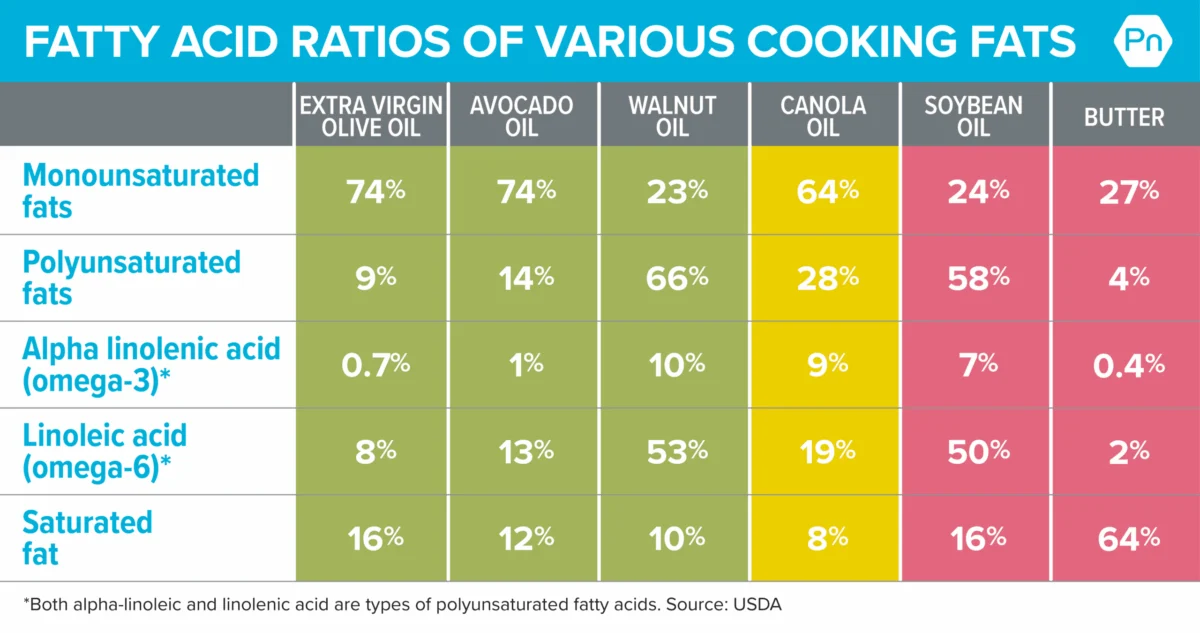
The Case for Extra Virgin Olive Oil (EVOO): EVOO is produced by simply grinding and mechanically pressing olives without heat or chemical solvents. This minimal processing preserves the olive fruit’s natural compounds. EVOO is exceptionally rich in monounsaturated fatty acids (MUFAs), particularly oleic acid, which are known for their heart-healthy properties. Crucially, it retains a high concentration of polyphenols, powerful plant-based antioxidants that combat inflammation, protect cells from oxidative damage, and contribute to its distinctive flavor. The body of research supporting EVOO’s health benefits is vast and robust, arguably more extensive than for any other cooking fat. Studies, such as one involving over 22,000 adults in Southern Italy, have shown that higher olive oil consumption is associated with a significantly reduced risk of mortality. Further research consistently links olive oil consumption to a lower risk of cardiovascular disease, stroke, certain cancers, Alzheimer’s disease, and type 2 diabetes. It also demonstrably reduces LDL ("bad") cholesterol, especially when it replaces saturated fats.
A common misconception once held that EVOO’s relatively low smoke point (350-410°F or 175-210°C) made it unsuitable for cooking. However, modern research has largely debunked this "smoke point myth." EVOO’s high content of MUFAs and protective polyphenols makes it remarkably stable under heat. A study comparing various cooking oils found that EVOO remained more stable than any other oil tested, including canola oil, even when heated to 464°F (240°C) and held at 356°F (180°C) for several hours. This means EVOO is perfectly suitable for most home cooking, including sautéing and roasting. -
The Case for Expeller-Pressed Canola Oil: Canola oil is derived from a hybrid of the rapeseed plant, developed in Canada (hence "Canola" for "Canadian oil, low acid"). Expeller-pressed canola oil is mechanically pressed without the use of chemical solvents or high heat, similar to EVOO. Among common seed oils, it boasts a favorable fatty acid profile, being relatively high in MUFAs and containing alpha-linolenic acid (ALA), a plant-based omega-3 fatty acid. It also contains phytosterols, plant compounds that can help lower blood cholesterol, particularly when used to replace saturated fats. Its neutral flavor and affordability make it a popular choice for various culinary applications, including baking, where EVOO’s strong flavor might be undesirable.
-
The Winner: While expeller-pressed canola oil is a respectable option, Extra Virgin Olive Oil is the clear winner in terms of overall scientific backing and beneficial nutrient profile. EVOO’s superior fatty acid composition and rich antioxidant content make it a cornerstone of healthy diets like the Mediterranean diet. Avocado oil, with its similar MUFA richness and antioxidant profile, also falls into the "eat more" category. However, for those on a budget, expeller-pressed canola oil provides a cost-effective alternative that is considered health-neutral, if not slightly beneficial, when consumed in moderation.
The Omega-6 Controversy: Refined Seed Oils and Inflammation
One of the most persistent criticisms leveled against many vegetable oils, particularly those high in polyunsaturated fatty acids (PUFAs) like soybean or corn oil, revolves around their omega-6 fatty acid content. The typical Western diet is characterized by a high ratio of omega-6 to omega-3 fatty acids, often ranging from 16:1 to 20:1, far exceeding the theoretical "ideal" ratio (historically suggested as 1:1 to 4:1). Some experts hypothesize that this imbalance promotes a pro-inflammatory state in the body, potentially increasing the risk of chronic diseases such as diabetes, obesity, and cardiovascular issues.
However, the scientific consensus on the "inflammatory" nature of omega-6s has evolved significantly. While early research suggested a problematic imbalance, more recent studies and expert opinions have nuanced this view. It is now widely accepted that omega-6 fatty acids are essential nutrients, and their effects depend heavily on their source. For instance, nuts and seeds, which are naturally rich in omega-6 fats, are consistently associated with a range of health benefits, including reduced blood cholesterol and lower inflammation markers. In 2019, Harvard Health published an article titled "No need to avoid healthy omega-6 fats," reflecting this shift. A comprehensive 2019 study in the American Heart Association journal Circulation even concluded that, if anything, the consumption of omega-6 fats was associated with a reduced risk for stroke, heart disease, and early death.
The crucial distinction lies between omega-6s consumed in whole foods and those found in highly refined vegetable oils. Whole foods like nuts and seeds come packaged with a complex matrix of beneficial nutrients: fiber, polyphenols, protein, vitamins, and minerals. These compounds work synergistically, potentially mitigating any pro-inflammatory effects of omega-6s and contributing to overall health. In contrast, highly processed vegetable oils are largely stripped of these protective compounds, leaving behind mostly isolated fatty acids that are more susceptible to oxidation. It is this oxidation, rather than the omega-6 content itself, that is a primary concern with refined oils.
Refined Vegetable Oils vs. Butter: A Nuanced Tussle
This matchup often generates the most heated arguments, largely due to historical dietary advice and the strong cultural associations with both fats.

-
The Case for Butter: Proponents of butter argue that saturated fats, its primary component, have been unfairly demonized. They frequently point to the disastrous advice of the 1980s and 1990s that encouraged replacing butter with trans-fat-laden margarine, leading to unforeseen health consequences. Some also claim that the scientific evidence against saturated fats is weak or overblown.
However, the prevailing scientific consensus, supported by major health organizations, suggests that excessive consumption of saturated fat (typically defined as more than 10 percent of total calories) can indeed elevate LDL cholesterol levels and increase the risk of heart disease. Studies have consistently shown that replacing even 5 percent of dietary saturated fats with monounsaturated fats can reduce heart disease risk by 15 percent, and replacing them with polyunsaturated fats (including some from vegetable oils) can reduce risk by 10 percent.
Not all saturated fats are equal in their impact on cholesterol. Some dairy products contain a protective structure called a milk fat globule membrane (MFGM), which encases saturated fats and appears to limit their cholesterol-raising effects. Butter, however, is relatively low in this protective membrane, and consequently tends to raise blood cholesterol more than other high-fat dairy items like full-fat milk, cream, or cheese. With a tablespoon of butter containing roughly 7 grams of saturated fat – about one-third of the recommended daily limit for a 2000-calorie diet – moderation is key. -
The Case for Refined Vegetable Oils: The primary concern with refined vegetable oils, particularly those high in PUFAs like soybean or corn oil, is their inherent instability. Polyunsaturated fats, due to their chemical structure, are more prone to oxidation than saturated or monounsaturated fats. The extensive refining process strips these oils of their natural antioxidants and protective phytochemicals, making them even more vulnerable to oxidative damage. The theory is that this oxidation, both during processing and when consumed, can increase inflammation in the body and contribute to various health conditions. There is some evidence suggesting that diets rich in PUFAs from refined vegetable oils are associated with increased levels of oxidized blood lipids and other markers of inflammation.
Crucially, for the vast majority of people, the largest source of refined vegetable oils is not home-cooked meals, but ultra-processed foods. These industrial food products undergo extensive processing, often involving repeated heating and chemical treatments, which further oxidizes the oils within them. Beyond the oils, ultra-processed foods are typically laden with other potentially harmful ingredients like excessive added sugars, sodium, and artificial additives, while being severely lacking in beneficial nutrients such as fiber, vitamins, minerals, and phytonutrients. They are also engineered to be hyper-palatable, calorie-dense, and difficult to stop eating, significantly contributing to obesity and related health problems.
A large review encompassing nearly 10 million individuals found a strong association between ultra-processed food consumption and a higher risk of premature death. Additionally, high intake of these foods has been linked to an increased risk of type 2 diabetes, hypertension, cardiovascular disease, various cancers, and even depression. Therefore, while using a refined corn or safflower oil to lightly coat vegetables for roasting might pose minimal risk, the pervasive presence of these oils in the broader context of an ultra-processed diet is a major public health concern. Limiting ultra-processed foods to approximately 20 percent of one’s total intake, and prioritizing minimally processed whole foods for the remaining 80 percent, will naturally reduce refined vegetable oil consumption to safer levels. Moreover, consuming these oils within a diet rich in colorful plants, fiber, and antioxidants can help offset the concerns about oxidation. -
The Winner: This matchup results in a draw. Both refined vegetable oils and butter present dietary considerations that suggest they should be limited, and neither can be definitively labeled as "health-promoting" in isolation. Refined vegetable oils are often high in omega-6 PUFAs and are stripped of protective compounds, with some containing small amounts of trans fats from processing. Butter, while less processed and theoretically amenable to home production, is high in saturated fat and low in protective MFGM, making it more impactful on cholesterol levels than other dairy fats. Ultimately, the context of consumption and overall dietary pattern are far more significant than either fat in isolation.
Informed Choices: Crafting a Healthier Fat Intake Strategy
Given the complexities, making informed choices about dietary fats requires a nuanced approach that prioritizes whole foods and considers processing methods.
-
Prioritize Minimally-Processed Whole Foods: This is perhaps the most critical piece of advice. Obtain the majority of your fats from whole, unprocessed or minimally processed foods. Sources like avocados, olives, nuts, seeds, and fatty fish (such as salmon) are rich in health-promoting monounsaturated and omega-3 fats. Crucially, they come bundled with a wide array of other beneficial nutrients, including fiber, protein, vitamins, minerals, and antioxidants, which work synergistically to support overall health. These whole food fats are generally less calorie-dense than pure oils and offer greater satiety.
-
Smart Oil Selection for Cooking and Dressings:
- "Eat More" (Foundational Choices): Extra virgin olive oil, cold-pressed avocado oil, and walnut oil (for dressings) stand out as superior choices. They are rich in MUFAs or beneficial PUFAs (in the case of walnut oil), packed with antioxidants, and minimally processed. While often more expensive, their health benefits are well-supported.
- "Eat Some" (Moderate & Budget-Friendly Options): Expeller-pressed canola oil, high-oleic sunflower oil, and high-oleic safflower oil can be part of a healthy diet. They offer a more favorable fatty acid profile than their highly refined counterparts and are more affordable. High-oleic varieties, specifically, are bred to have a higher monounsaturated fat content, making them more stable and beneficial than conventional sunflower or safflower oils. When used in moderation, especially for cooking applications where a neutral flavor is desired, they are considered health-neutral to slightly beneficial.
- "Eat Less" (Minimize Consumption): Conventional, refined seed oils like corn, soybean, regular sunflower, regular safflower, cottonseed, grapeseed, and rice bran oils, along with butter, should be limited. Their processing, fatty acid profiles, and potential for oxidation or high saturated fat content make them less ideal for regular, high-volume consumption.
-
Beyond the Oil Bottle: The Broader Dietary Context: The impact of any single fat or oil is largely determined by the overall dietary pattern. A diet rich in fruits, vegetables, whole grains, and lean proteins, which naturally provides an abundance of fiber, phytochemicals, and antioxidants, can help mitigate the potential downsides of occasional consumption of less-ideal oils. Conversely, even the "best" oil will not compensate for a diet dominated by ultra-processed foods.
-
Practical Recommendations for Daily Living:
- Limit Deep-Fried Foods: Regardless of the oil used, deep-frying exposes fats to extreme, prolonged heat, increasing the formation of undesirable compounds, including trans fats. Classify all deep-fried foods into the "eat less" category.
- Reduce Ultra-Processed Food Intake: This is perhaps the most impactful change one can make. Aim to have 80% or more of your diet consist of whole, minimally processed foods. When evaluating packaged foods, ask: Does it have a short ingredient list? Are the ingredients recognizable? Does it contain artificial flavors, colors, or excessive sugar/sodium? If the answers are mostly "no," it’s likely highly processed.
- Get Most Fats from Food, Not Oils: While a reasonable intake of 1-3 servings of oils or butter per day is acceptable, prioritize whole food sources for your fat intake. They offer a broader spectrum of nutrients and satiety.
Conclusion: A Call for Nuance in Nutritional Discourse
The debate surrounding vegetable and seed oils vividly illustrates the complexities of nutrition science and the challenges of communicating nuanced information in a soundbite-driven world. Labeling an entire category of food as "toxic" or "harmless" oversimplifies intricate biochemical processes and dietary contexts. The truth lies not in sensationalized claims, but in a careful consideration of scientific evidence, understanding processing methods, and recognizing the critical role of an overall dietary pattern.
Moving forward, consumers and health professionals alike must champion critical thinking, seeking information from reputable scientific sources rather than succumbing to fear-mongering or overly simplistic narratives. By focusing on whole, minimally processed foods, making judicious choices about cooking oils, and understanding the detrimental impact of ultra-processed items, individuals can craft a dietary strategy that is truly supportive of long-term health and well-being. The goal is not to eliminate entire food groups based on unproven claims, but to empower individuals to make informed, balanced decisions that align with the best available scientific evidence.