
Dough hydration, a fundamental concept in sourdough bread baking, transcends a simple numerical value found in recipes. It represents a dynamic interaction between the baker, the flour, and the environment, influencing every aspect of the final loaf. This comprehensive guide delves into the intricacies of dough hydration, drawing on years of practical experience to illuminate its science, practical applications, and impact on bread characteristics.
At its core, dough hydration is the measure of water content relative to flour weight, expressed as a percentage. The calculation is straightforward: (Weight of Water / Total Flour Weight) x 100. For instance, a recipe calling for 1,000 grams of flour and 700 grams of water yields a 70% hydration dough. This percentage serves as a crucial indicator for bakers, offering an initial understanding of the dough’s expected behavior before mixing even begins.
However, the experienced baker quickly learns that this percentage is a guideline, not an immutable rule. Flour itself is a variable ingredient, its water absorption capabilities differing significantly between types, mills, and even batches. Environmental factors, particularly ambient humidity, also play a role, though their impact is generally less pronounced unless there are dramatic shifts in weather. A dough that feels perfectly manageable on a dry day might require adjustments when humidity levels rise.
The Pivotal Role of Water in Dough Development
Water is the transformative agent that converts dry flour into a pliable dough, enabling it to capture and retain the gases produced during fermentation. The quantity of water directly dictates the dough’s characteristics and, consequently, the final bread’s texture, crumb, and crust.
Under-Hydrated Dough (Approximately 60-68%): Doughs at this lower hydration level tend to be stiff and dense. They are easier to handle and shape, making them a good starting point for beginners. However, they often result in a thicker, chewier crust and a tighter crumb structure. While some bread styles, such as bagels or pretzels, benefit from this lower hydration for their characteristic chew, it can lead to a less open crumb in artisan loaves.
Moderately Hydrated Dough (Approximately 68-75%): This range offers a balance between manageability and desirable bread characteristics. Doughs here are typically easier to work with than their higher-hydration counterparts, yet they can still achieve a relatively open crumb and a thinner crust. This is often considered the sweet spot for many classic country loaves and even baguettes, providing a forgiving yet rewarding baking experience.
Highly Hydrated Dough (Approximately 75-85%+): Pushing hydration beyond 75% leads to doughs that are significantly wetter and can be more challenging to handle. These high-hydration doughs are capable of producing loaves with exceptionally open, airy crumbs and a delicate, almost custardy interior. The crust tends to be thinner and more brittle. However, achieving success with these doughs requires greater skill in mixing, shaping, and fermentation management. Overly high hydration can lead to a gummy crumb, a loss of structural integrity, and a tendency for the bread to stale more rapidly.
Understanding Baker’s Percentages and Hydration Levels
The concept of baker’s percentages is fundamental to understanding hydration. In this system, all ingredients are measured as a percentage of the total flour weight. For example, if a recipe calls for 1000g flour and 700g water, the hydration is 70%. This standardized approach allows bakers to easily compare and adjust recipes.
- Lower Hydration (60-68%): Often preferred for breads requiring a more substantial crust and a chewy interior. This includes items like bagels, pretzels, and some pizza doughs where a less airy crumb is desired. The dough is generally stiff and easy to handle.
- Moderate Hydration (68-75%): This range is a common starting point for many artisan sourdoughs. It offers a good balance between ease of handling and achieving an open crumb. Classic country loaves and baguettes often fall into this category.
- High Hydration (75-80%): Doughs in this range require more careful handling and longer mixing times. They are capable of producing very open, airy crumbs and a tender interior, characteristic of breads like ciabatta and focaccia. Sandwich loaves also benefit from this hydration for a softer crumb.
- Very High Hydration (80%+): This level pushes the boundaries and demands significant skill. These doughs yield extremely open, custard-like crumbs but are challenging to shape and manage. They are typically reserved for specialized high-hydration loaves.
Factors Influencing Water Absorption
Several critical factors influence how much water a dough can absorb and retain:
Flour Type and Protein Content
The protein content of flour is a primary determinant of its water absorption capacity. Higher-protein flours (typically 12-14% protein, common in American bread flours) develop stronger gluten networks, enabling them to absorb and hold more water without becoming excessively slack. This is why such flours often require higher hydration levels to achieve optimal texture. Conversely, flours with lower protein content, prevalent in many European countries, are "softer" and may require reduced hydration to prevent the dough from becoming unmanageably sticky.
Whole Grain Flours
The presence of whole grains, such as whole wheat or rye, significantly increases a dough’s water absorption needs. The bran and germ components within whole grains are highly absorbent. A sourdough recipe incorporating 50% whole wheat, for instance, will likely require a hydration level of around 82% to achieve a desirable dough consistency, a level that would be unwieldy with 100% white flour.
Freshly Milled Flour
Flour milled at home, even if sifted, often requires a higher hydration percentage than commercially processed flour. The freshly ground particles, even without bran and germ, seem to have an enhanced capacity to absorb moisture, necessitating an increase in water to achieve proper dough development.
Climate and Environment
Environmental conditions, particularly altitude and humidity, play a noticeable role. Bakers in arid, high-altitude regions, such as New Mexico, may find they need higher hydration levels to compensate for the dry air. Conversely, in humid climates, flour can absorb ambient moisture, potentially requiring a slight reduction in added water. While this environmental impact might seem minor, it can become significant during dramatic weather shifts.
The Technique of Bassinage: A Game Changer
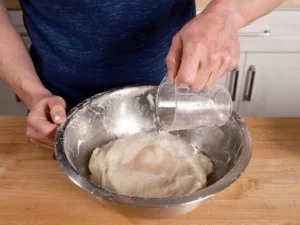
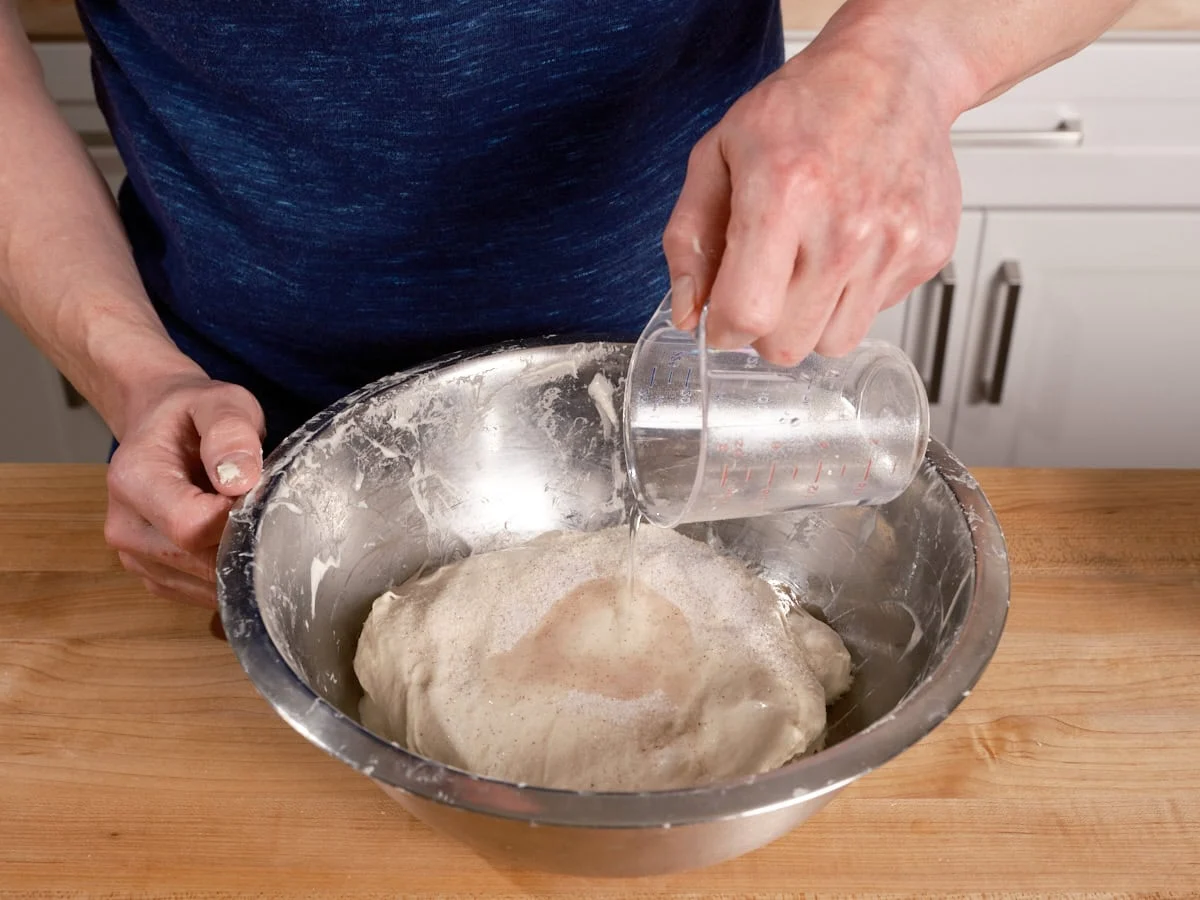
A transformative technique for managing higher hydration doughs is bassinage, often referred to as "double hydration." Instead of adding all the water at the initial mixing stage, a portion is reserved and gradually incorporated later in the process. This method offers several distinct advantages:
-
Facilitated Gluten Development: Adding all the water upfront, especially in high-hydration recipes, can make it difficult to develop a strong gluten network. The high water content can hinder the friction needed for gluten strands to align and strengthen. By adding most of the water initially (around 80-90%) and then gradually incorporating the remainder after some gluten development has occurred, bakers can achieve higher hydration levels without excessively long mixing times or risking under-developed dough.
-
Dough Strength Assessment: Holding back a portion of the water provides a crucial opportunity to assess the dough’s developing strength. Near the end of mixing, the baker can determine if the reserved water is necessary to achieve the desired consistency or if it can be omitted. Many recipes incorporate this by specifying "Water 1" for initial mixing and "Water 2" as a reserve for fine-tuning the dough’s hydration. If the dough feels excessively slack after the initial water addition, the reserved water can be skipped. If it feels robust and capable of incorporating more liquid, Water 2 is added slowly.
Identifying Dough Hydration Levels: A Visual Guide
Developing the ability to "read" the dough is paramount, often more so than rigidly adhering to numerical hydration percentages. The feel and appearance of the dough in the mixing bowl provide the most reliable indicators.
- Under-Hydrated Dough (~62% or less): This dough will feel stiff and resistant. It may be crumbly, difficult to bring together, and show a lack of elasticity. It will likely resist stretching and tear easily.
- Just Right Dough (~68-75%): This dough strikes a balance. It will be smooth and elastic, with a pleasant tackiness but not excessive stickiness. It should stretch without tearing easily and hold its shape reasonably well.
- Over-Hydrated Dough (~75%+): This dough will appear very wet and slack. It will be difficult to handle, clinging persistently to hands and surfaces. It may spread out significantly and struggle to maintain structure.
Addressing Sticky Dough: Common Causes and Solutions
Sticky dough is a frequent source of frustration for bakers and is often linked to hydration, dough strength, or a combination of both. The most common reasons for overly sticky dough include:
- Excessive Hydration: Simply put, too much water has been added relative to the flour’s absorption capacity.
- Under-Developed Gluten: The gluten network hasn’t been sufficiently strengthened, meaning it can’t effectively trap the water. This can be due to insufficient mixing, short fermentation times, or using a flour with low protein content.
- Flour Type: Certain flours, particularly those with lower protein or different milling characteristics, absorb water differently. What might be a manageable hydration for one flour could result in sticky dough with another.
- Environmental Factors: High humidity can cause flour to absorb atmospheric moisture, making the dough feel stickier than expected.
When faced with sticky dough, bakers have a few options:
- Adjust Water Gradually: If the dough is only slightly too sticky, adding a small amount of flour (e.g., 1-2 tablespoons) can help. However, this alters the recipe’s balance, so it’s best to note this for future bakes.
- Develop Gluten Further: Continue mixing or kneading. With time and proper technique, the gluten network can strengthen and better incorporate the water, reducing stickiness.
- Embrace the Stickiness (with caution): For higher hydration doughs, some level of stickiness is expected. Using wet hands, a bench scraper, and a light dusting of flour on the work surface can help manage the dough during shaping.
Managing High-Hydration Doughs: Essential Tips
As hydration levels increase, dough stability decreases, pushing the gluten matrix to its limits. Successful management of high-hydration doughs requires specific strategies:
- Gentle Handling: Avoid aggressive kneading or shaping that can tear the delicate gluten structure.
- Use of a Bench Scraper: This is an indispensable tool for lifting, folding, and shaping wet doughs.
- Wet Hands: Keeping hands slightly damp can prevent dough from sticking excessively.
- Adequate Fermentation: Proper fermentation is crucial for developing the strength needed to support higher hydration.
- Strategic Shaping: Techniques like coil folds or gentle coil folds are often more effective than traditional kneading for building structure.
- Proofing and Baking: High-hydration doughs often require careful proofing and baking to maintain their structure and achieve optimal oven spring.
Hydration Quick Reference Chart
| Hydration Level | Characteristics | Best For |
|---|---|---|
| 60-65% | Stiff, easy to handle, potentially thicker crust | Bagels, pretzels, pizza, some pan loaves |
| 65-70% | Balanced, manageable, good structure | Classic breads, beginner-friendly sourdough |
| 70-75% | Moderately open crumb, thin crust | Classic country loaves, baguettes |
| 75-80% | Requires longer mixing, tender crumb, skill needed | Ciabatta, focaccia, open-crumb loaves, sandwich loaves |
| 80%+ | Requires longer mixing, more open crumb, custard-like | High-hydration loaves, demanding skill in handling and shaping |
Common Questions About Dough Hydration
Why can’t I just add more flour if my dough is too wet?
While it might seem like a simple solution, adding flour significantly alters the balance of all ingredients in a recipe, which are calculated using baker’s percentages. Adjusting water, however, only affects the hydration level in isolation. If a dough is completely unmanageable, adding a small amount of flour as a last resort is acceptable, but this deviation should be carefully noted for future reference.
Does higher hydration automatically mean a more open crumb?
Not necessarily. Hydration is a significant factor, but it’s one piece of a complex puzzle. Proper fermentation, precise shaping, and appropriate baking conditions are equally vital for achieving an open crumb structure. An exceptionally open crumb can be achieved at 68% hydration, just as a tight crumb can result from an 80% hydration dough if other factors are not optimized.
What hydration level should a beginner start with?
For novice sourdough bakers, a hydration level of 68-70% with a quality bread flour is highly recommended. This provides a dough that is forgiving and manageable, allowing for practice in handling and understanding dough behavior, while still yielding a beautiful loaf. As confidence grows, gradual increases in hydration can be explored.
What is the ideal hydration for bread dough?
There is no single "ideal" hydration. The optimal level is contingent on the specific flour being used and the desired characteristics of the final bread. Generally, bread doughs fall within the 60%-80% hydration range, though some specialized recipes may venture outside these bounds.
Cultivating Baker’s Intuition
Ultimately, mastering dough hydration is about developing "baker’s intuition." This involves learning to interpret the dough’s cues – its feel, its appearance, its elasticity – rather than blindly following numerical guidelines. Each bag of flour, each kitchen environment, and each baking day presents unique conditions. The most accomplished bakers treat recipes as starting points for a dialogue with their ingredients.
A practical approach to developing this intuition is to meticulously record baking notes. Document the hydration percentage used, the dough’s consistency during mixing and shaping, prevailing weather conditions, and the outcome of the final loaf. Over time, this practice cultivates a deep, intuitive understanding of hydration that transcends any written guide.
As the journey of sourdough baking unfolds, the nuanced relationship between water and flour emerges as a cornerstone of success. By understanding the science, practicing diligently, and learning to "listen" to the dough, bakers can unlock the potential for truly exceptional bread.