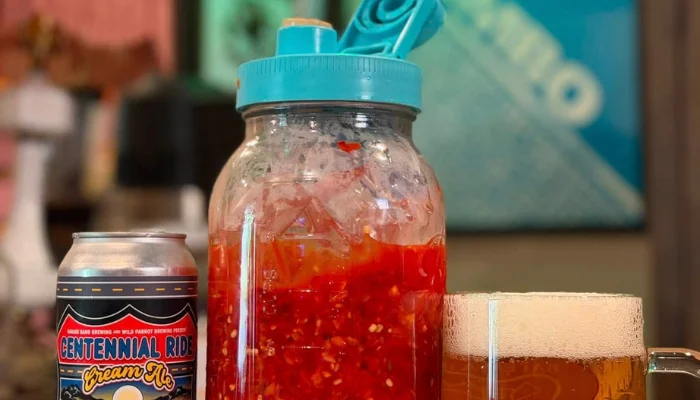

The intersection of home fermentation and craft beverage production has long been a creative outlet for culinary enthusiasts, and the culinary landscape continues to expand beyond traditional boundaries. For Learn to Homebrew Day 2026, sponsored by Grainfather, organizers and culinary contributors sought to bridge the gap between traditional brewing techniques and artisanal condiment creation. Among the standout culinary contributions featured for the annual celebration is the Super Rooster Hot Sauce, a recipe developed by renowned homebrewer and author Drew Beechum of the Maltose Falcons brewing club based in Pasadena, California. Inspired by an abundant harvest of super-ripe jalapeños in the garden and the seasonal imperative to preserve fresh produce, this fermented hot sauce offers a sophisticated, amped-up variation of classic pepper sauces. By utilizing lacto-fermentation principles common in both brewing and vegetable preservation, the recipe provides participants with an accessible yet technically engaging project that mirrors the precision required in craft brewing.
Background Context of the Event and Culinary Integration
Learn to Homebrew Day, established by the American Homebrewer Association (AHA) in 1999, has traditionally served as an international celebration designed to encourage new participants to enter the hobby of homebrewing beer, mead, and cider. Over more than two decades, the event has grown from a localized grassroots initiative into a globally recognized observance, featuring organized brew-ins at commercial craft breweries, local clubs, and private backyards. In recent years, event organizers have deliberately expanded the curriculum to embrace adjacent fermentation arts, recognizing that skills such as sanitation, temperature control, precise measurement, and microbial management are universally applicable across multiple culinary disciplines. Fermented hot sauces share a direct lineage with brewing science, relying on lactic acid bacteria to convert sugars into organic acids, thereby lowering pH, preserving the product, and developing complex flavor profiles. The inclusion of the Super Rooster recipe as an official feature of the 2026 event underscores this cross-pollination of fermentation hobbies, giving homebrewers a tangible way to apply their existing equipment—such as airlocks, scales, and sanitizing agents—to garden-to-table food preservation.
Detailed Recipe Specifications and Ingredients
Crafting a balanced, shelf-stable fermented hot sauce requires careful proportioning of raw ingredients to ensure safe pH levels and desirable organoleptic qualities. The Super Rooster recipe yields approximately 0.380 gallons, or roughly 1.44 liters, making it an ideal volume for home kitchen experimentation without requiring commercial-grade processing equipment.
The ingredient selection emphasizes a robust blend of Capsicum varieties designed to deliver both heat and structural depth.
- Peppers: 40 oz. (1.134 kg) of mixed jalapeños, habaneros, and Thai bird’s-eye chiles. This triad balances the thick, vegetal fruitiness of ripe jalapeños with the searing, tropical heat of habaneros and the sharp, immediate bite of Thai bird’s-eye chiles.
- Culture: 1 fl. oz. (30 mL) of Cleveland Classic kraut brine, utilized to jump-start the lacto-fermentation process by introducing a dominant strain of beneficial lactic acid bacteria, alongside additional brine reserved for post-fermentation blending adjustments.
- Additional Items: 1 oz. (28 g) of kosher salt, carefully calculated to represent approximately 2.5% of the total pepper weight by mass, which creates an osmotic environment that inhibits spoilage organisms while selecting for halotolerant lactobacilli. Optional functional additions include vinegar for final acid titration, honey, sugar, or alternative sweeteners to balance capsaicin heat, xanthan gum to stabilize the emulsion and prevent liquid-solid separation, and ascorbic acid powder to protect the vibrant red carotenoid pigments from oxidative degradation over time.
Chronology and Fermentation Methodology
The production process for Super Rooster hot sauce follows a strict chronological methodology that mirrors standard vegetable fermentation protocols.
Phase One: Preparation and Weighing (Day 1)
The process begins with the precise measurement of the 40 ounces of mixed peppers. Thorough sanitation of all cutting boards, knives, and fermentation vessels is paramount to prevent wild mold or pathogenic contamination. The peppers are typically stemmed and roughly chopped to facilitate packing into the fermentation vessel. The total mass of the prepared peppers is recorded to calculate the exact 2.5% salt addition (1 oz. kosher salt).
Phase Two: Inoculation and Anaerobic Incubation (Days 2 through 14–21)
The chopped peppers are combined with the salt and the 1 fluid ounce of Cleveland Classic kraut brine, which provides an immediate active culture and lowers the initial pH to deter undesirable bacterial growth. The mixture is packed tightly into a clean fermentation vessel—such as a glass mason jar fitted with a fermentation weight and an airlock, or a specialized vacuum-sealed fermentation bag—to ensure strictly anaerobic conditions. The vessel is stored at standard room temperature, ideally between 65°F and 72°F (18°C–22°C), for a period ranging from one to three weeks. During this window, active bubbling indicates heterofermentative and homofermentative lactic acid production, consuming natural plant sugars and generating carbon dioxide and lactic acid.
Phase Three: Blending, Adjustment, and Bottling (Post-Fermentation)
Once active fermentation subsides and the mash achieves a pleasantly tart flavor profile and a safe pH level (typically below 4.6, and ideally below 4.0 for shelf stability), the contents are transferred to a high-powered blender. The reserved kraut brine is added incrementally to achieve the desired pouring consistency. At this stage, the creator evaluates the sauce for balance, introducing vinegar for a sharp acetic brightness, honey or sugar to temper the aggressive heat of the habaneros and bird’s-eye chiles, and optional xanthan gum or ascorbic acid to ensure uniform suspension and bright color retention. The finished sauce is strained if a smoother texture is desired, then poured into sanitized glass bottles for refrigeration or long-term storage.
Statements and Industry Reactions
Organizers and participants of Learn to Homebrew Day have expressed widespread enthusiasm for the diversification of official recipes associated with the annual event. Industry analysts note that home fermentation categories, including sourdough baking, kombucha brewing, cheese making, and hot sauce fermentation, experienced exponential growth during the early 2020s and have since maintained a stable, highly engaged demographic of hobbyists. Representatives from the American Homebrew Association observed that incorporating culinary projects like Drew Beechum’s Super Rooster hot sauce helps demystify fermentation science for beginners. By demonstrating that the same scientific principles governing yeast propagation in beer production—such as strict sanitation, controlled environment incubation, and pH monitoring—apply directly to capsaicin preservation, the initiative successfully broadens the educational mandate of the organization.
Drew Beechum, commenting on the conceptualization of the recipe through the Maltose Falcons, highlighted the cultural synergy between craft brewing clubs and home kitchen experimentation. "When you find yourself with an overwhelming surplus of garden peppers, the natural instinct of a homebrewer is to ferment them," Beechum noted. "Hot sauce creation allows us to exercise our brewing muscles—managing microbes, calculating precise salt percentages, and balancing acidity—without waiting weeks for secondary conditioning or carbonation."
Broader Economic and Culinary Implications
The formal recognition of hot sauce formulation within international homebrewing events reflects a broader convergence within the modern artisanal food and beverage economy. Craft breweries and independent condiment producers increasingly share overlapping consumer bases, distribution channels, and retail spaces. Many regional craft breweries now produce house-branded hot sauces utilizing spent brewing grains or yeast slurry, while homebrew supply shops have steadily expanded their inventories to include pH meters, fermentation crocks, airlocks, and sanitizing agents marketed toward multi-craft culinary practitioners.
Furthermore, the emphasis on lacto-fermentation in recipes like Super Rooster highlights a growing consumer preference for foods and beverages that offer functional health benefits alongside intense sensory experiences. Fermented hot sauces, rich in live organic acids and lacking artificial chemical preservatives, appeal directly to the contemporary market demand for clean-label, probiotic-adjacent culinary items. As educational events like Learn to Homebrew Day continue to evolve, the integration of diverse fermentation projects ensures that the home production movement remains dynamic, inclusive, and closely tied to sustainable, garden-to-table food practices for generations of makers to come.