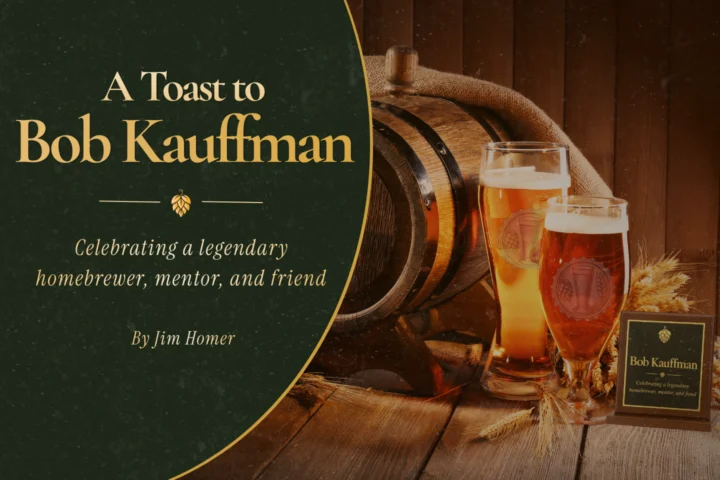

The homebrewing community is mourning the loss of Bob Kauffman, a foundational figure in the American Homebrewers Association (AHA) and a beloved mentor to countless brewers, who passed away on Tuesday, April 28, at the age of 71. Known for his technical expertise, selfless leadership, and a "devious twinkle" in his eye, Kauffman’s contributions spanned decades, helping to shape the modern landscape of amateur and professional brewing in the United States. A resident of Boulder, Colorado, Kauffman was not only a decorated homebrewer but also a vital architect of the community structures that sustain the hobby today.
From his early days in the 1990s to his influential tenure on the AHA Governing Committee, Kauffman was a fixture at major industry events, including the National Homebrewers Conference and the Great American Beer Festival (GABF). His passing has elicited a wave of tributes from industry icons, including AHA co-founder Charlie Papazian, who simply described Kauffman as "a legend." As the craft beer movement continues to evolve, the impact of Kauffman’s dedication to education and community building remains a cornerstone of the culture.
A Catalyst for the Boulder Brewing Scene
Bob Kauffman’s journey into the heart of the brewing world began in earnest in the early 1990s when he joined "Hop Barley and the Alers," the premier homebrew club in Boulder, Colorado. At the time, Boulder was becoming a focal point for the American craft beer revolution, serving as the headquarters for the AHA and the Association of Brewers (now the Brewers Association). Kauffman quickly rose to prominence within the club, serving several terms as president and introducing organizational systems that are still in use today.
One of his most enduring contributions to the local scene was a formalized system for sharing meeting responsibilities. This innovation ensured that the club remained sustainable and inclusive, preventing burnout among leaders and encouraging newer members to take active roles. Janis Gross, former National Homebrew Competition Director, noted that while Kauffman’s beer was excellent, his greatest achievement was fostering a sense of community. "He was a great club president… but the best thing he did was to foster the brewing community, and I am very grateful for that," Gross stated.
Kauffman’s influence extended directly into the professional realm. Jeff Griffith, a brewer at Twisted Pine Brewing in Boulder, credited Kauffman with launching his 21-year career. In a poignant recollection, Griffith described how Kauffman brought a lunch to his house specifically to teach him the intricacies of all-grain brewing. This transition from extract brewing to all-grain is often considered a "rite of passage" for serious hobbyists, and Kauffman’s willingness to mentor others facilitated the growth of many professional careers in the Colorado beer industry.
Technical Mastery and the Legend of the "Kitchen Floor Tripel"
In the world of homebrewing, Kauffman was respected for his technical proficiency, particularly in all-grain brewing—a process that involves mashing malted grains to extract fermentable sugars, rather than using pre-made malt extract. His dedication to the craft was exemplified by an anecdote that has since become part of homebrewing lore: the "Kitchen Floor Tripel."
Early in his all-grain brewing career, Kauffman was preparing a Belgian-style Tripel in his kitchen when a equipment failure caused the hot, sweet wort to spill across the floor. Rather than abandoning the batch, Kauffman used clean terry-cloth towels to soak up the liquid, wringing them back into his brew kettle. In a testament to his skill (and perhaps a bit of "brewer’s luck"), the resulting beer not only survived but went on to win an award at a local competition. While he recreated the recipe many times afterward—notably without the floor-soaking step—the story remains a favorite among those who knew him, symbolizing his resilience and experimental spirit.
Julia Herz, the Executive Director of the AHA, recalled Kauffman’s forward-thinking approach to brewing technology. During a "shadow brew" session at his home, Kauffman demonstrated the use of pumps to move liquid, explaining that such tools were essential "so when I’m old I can still brew!" This blend of practicality and passion was a hallmark of his approach to the hobby.
National Leadership and the AHA Governing Committee
Kauffman’s influence was not limited to Colorado. From 2008 to 2013, he served on the AHA Governing Committee, the predecessor to the current AHA Board of Directors. This body is responsible for representing the interests of tens of thousands of homebrewers nationwide and advising the association on its mission to promote the hobby.
During his tenure, Kauffman was known as a quiet but powerful advocate for the "common homebrewer." His colleagues on the committee remember him as someone who avoided political posturing in favor of practical decisions that benefited the membership. Crispy Frey, a member of the Homebrew Con Committee, described Kauffman as "gentle, deep, and quiet," noting that he always sided with what was best for the community. Susan Ruud, a fellow committee member, echoed this sentiment, stating that Kauffman never sought the center of attention but always provided the "good insight" necessary to move the organization forward.
Kauffman’s leadership was also instrumental in the success of the 2007 National Homebrewers Conference in Denver. Serving as co-chair alongside Jim Homer, Kauffman managed the complex logistics of an event that draws thousands of attendees from across the globe. His ability to balance the technical needs of the conference with a welcoming atmosphere for hobbyists was a key factor in the event’s success.
A Legacy of Service: GABF and the World Beer Cup
For many years, Kauffman was a staple of the judging staff at two of the world’s most prestigious beer competitions: the Great American Beer Festival (GABF) and the World Beer Cup. His role as a table captain was a position of significant responsibility, requiring a deep understanding of beer styles and a meticulous attention to detail.
As a table captain, Kauffman was responsible for managing volunteers and ensuring that the judging process remained blind and accurate. This involved verifying that every beer reached the judges in the correct numbered cup and that the feedback forms were handled according to strict protocols. In a competition where a gold medal can change the trajectory of a professional brewery, Kauffman’s integrity and organizational skills were invaluable. His long-term commitment to these events helped maintain the high standards of sensory evaluation that the industry relies upon.
Chronology of Bob Kauffman’s Brewing Career
- Early 1990s: Joins "Hop Barley and the Alers" homebrew club in Boulder, CO.
- 1996: Attends his first National Homebrewers Conference in New Orleans, beginning a streak of attendance that would last over two decades.
- 1999: Serves as a panelist on homebrew clubs at the National Homebrewers Conference, sharing his organizational expertise.
- 2007: Co-chairs the National Homebrewers Conference in Denver, CO, one of the most successful iterations of the event.
- 2008–2013: Serves on the AHA Governing Committee, advocating for club resources and member benefits.
- 2018: Attends his final Homebrew Con in Portland, OR, concluding 22 years of active participation in the national brewing community.
- April 28: Passes away at the age of 71, leaving behind a legacy of mentorship and community service.
Broader Impact and Industry Implications
The passing of Bob Kauffman represents more than the loss of a single individual; it highlights the vital role that "super-volunteers" play in the American craft beer ecosystem. The transition of the United States from a country with only a handful of breweries in the 1970s to one with over 9,000 today was fueled by the passion of homebrewers like Kauffman. By teaching others, organizing clubs, and ensuring the integrity of competitions, these individuals built the infrastructure upon which the professional industry was raised.
Kauffman’s focus on all-grain brewing education helped elevate the quality of home-produced beer, which in turn raised consumer expectations and provided a pipeline of talent for professional breweries. His work with the AHA Governing Committee ensured that the voice of the hobbyist was heard at the highest levels of the Brewers Association, protecting the rights of homebrewers and promoting the hobby as a legitimate and sophisticated pursuit.
Furthermore, the "Kauffman model" of club leadership—emphasizing shared responsibility and community engagement—has been replicated by clubs across the country. This decentralized, volunteer-led structure is what allows the homebrewing community to remain vibrant and adaptable in the face of changing trends.
Final Tributes and Personal Reflections
In the days following his passing, the brewing community has shared numerous reflections on Kauffman’s character. Drew Beechum, a well-known brewing author and AHA personality, recalled Kauffman’s "slightly devious twinkle to the eye," a trait that endeared him to his peers and suggested a man who found immense joy in the camaraderie of the craft. Mark Scheitlin and Jack Zuzack, fellow homebrewers, remembered him not only for his brewing prowess but as a "legendary" friend and a dedicated fan of Denver sports.
Kauffman is survived by his wife, Caroline, and his daughters, Angie and Crystal. As the AHA and the "Hop Barley and the Alers" club look toward the future, they do so on a foundation that Bob Kauffman helped build. His "Kitchen Floor Tripel" may be a story of the past, but the community he fostered continues to ferment and grow, a living toast to a man who truly made the world—and its beer—better.