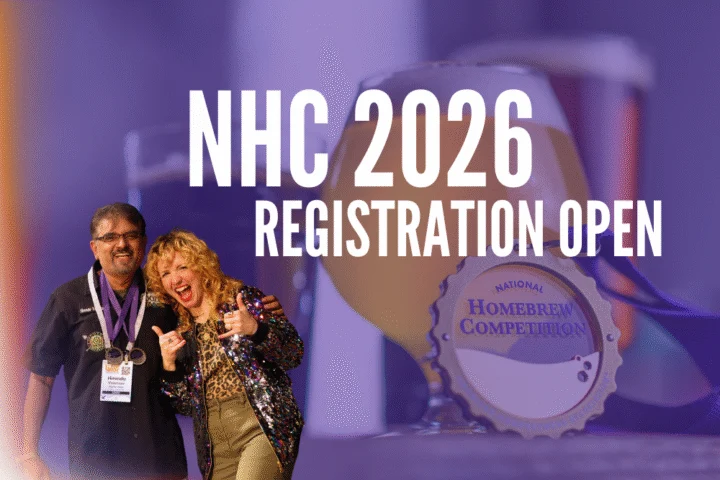

The American Homebrewers Association has officially opened registration for the 2026 National Homebrew Competition, setting the stage for the 48th annual installment of the world’s largest and most prestigious event of its kind. Running continuously since 1979, the competition offers amateur brewers of beer, cider, and mead an unparalleled platform to showcase their craft, receive rigorous sensory evaluations, and compete for global recognition. With a registration deadline set for February 25, 2026, at 8:00 AM Mountain Time, participants from across the country are expected to submit thousands of entries spanning dozens of distinct fermentation styles.
The historical significance of the National Homebrew Competition cannot be overstated within the broader craft beverage landscape. Founded at a time when homebrewing was still federally restricted in the United States—a legislative hurdle that was ultimately overcome through advocacy culminating in legalization in 1978—the competition has served as both a mirror and a driving force for the American craft beer revolution. Over the past 48 years, the event has processed more than 170,000 entries, functioning simultaneously as a testing ground for experimental recipes and an incubator for professional brewers who later transitioned to commercial operations.
Comprehensive Competition Structure and Logistics
The 2026 competition is structured to accommodate widespread geographical participation while maintaining rigorous judging standards. The event is divided into eleven total components, consisting of nine First Round judging sites distributed strategically across various regions, followed by a Final Round and a formal awards ceremony. Organizers emphasize that participants are not obligated to select the physical location closest to their place of residence; instead, brewers may choose any of the nine First Round sites according to their logistical preferences.
To ensure quality control and manage the massive logistical undertaking, organizers have established a strict capacity limit of 750 entries per First Round location. Given historical demand and the prestige associated with the competition, slots are expected to fill rapidly. Judging dates will vary depending on the specific regional site chosen. Following the conclusion of the initial judging phase, participants will receive detailed, constructive feedback via the competition’s online management portal, utilizing standardized scoresheets provided by the Beer Judge Certification Program.
The judging panels themselves represent one of the primary draws for serious homebrewers. Entries are evaluated by some of the most highly credentialed palates in the industry, including top-tier BJCP judges, certified Cicerones, and seasoned community experts. For many entrants, the value of the competition extends far beyond the medals awarded, lying instead in the granular, actionable feedback that helps refine future brewing techniques, water chemistry adjustments, and recipe formulations.
Advancement, Finals, and the Homebrew Con Integration
The progression from the regional rounds to the national stage follows a strict competitive threshold. Only entries that capture a Gold, Silver, or Bronze medal in their respective categories during the First Round will successfully advance to the Final Round. Entrants whose creations make this elite cut will be formally notified prior to May 1, 2026.
The culmination of the 2026 competition will take place in June in Asheville, North Carolina, serving as a centerpiece of the annual Homebrew Con. The Final Round judging will occur on-site, leading directly into the highly anticipated awards ceremony where national champions across all beer, cider, and mead categories will be crowned. Asheville, long recognized as a vibrant hub for craft brewing and fermentation culture in the southeastern United States, provides an appropriate backdrop for a convention that brings together thousands of enthusiastic hobbyists, industry professionals, and trade suppliers.
Specific delivery dates for First Round and Final Round entries are heavily regulated to ensure optimal freshness and integrity of the beverages upon arrival. Detailed schedules regarding shipping windows, drop-off locations, and packaging guidelines are maintained directly through the official National Homebrew Competition web portal. Final round receiving and judging dates will have their specific timelines confirmed by organizers no later than May 1.
Eligibility, Membership Requirements, and Support Systems
Participation in the National Homebrew Competition is an exclusive benefit reserved for active members of the American Homebrewers Association. Hobbyists who are not currently members must either join or renew their membership prior to submitting entries. This policy not only supports the ongoing advocacy and educational missions of the AHA but also ensures a committed community of participants who are invested in the standards of the craft.
To assist participants with the technical aspects of registration, label generation, and category placement, the AHA has instituted robust support channels. Brewers encountering technical difficulties with the competition management software or seeking clarification on competition rules can reach out directly to the AHA staff via telephone or email. Furthermore, to foster transparency and community engagement, organizers have launched an interactive Q&A forum on the AHA platform, featuring direct participation from the competition’s Chair and Deputy Chair, running concurrently with the open registration window.
Broader Economic and Cultural Implications
The launch of the 2026 National Homebrew Competition arrives at a mature yet dynamic moment for the broader fermented beverage sector. While the commercial craft beer industry navigates shifting consumer preferences, supply chain evolutions, and market saturation, the homebrewing community remains a vital engine for grassroots innovation. Many of the flavor trends that eventually dominate commercial taps—such as hazy IPAs, pastry stouts, kettle sours, and experimental botanical meads—were first perfected in residential kitchens and basements by hobbyists experimenting with new techniques.
Moreover, events like the NHC play a critical role in consumer education and palate development. By training hundreds of judges and exposing thousands of hobbyists to rigorous sensory evaluation standards, the competition elevates the general discourse surrounding beer quality, fault identification, and style guidelines. As the competition enters its 48th year, it continues to validate the dedication of homebrewers who view brewing not merely as a pastime, but as a precise intersection of art, agriculture, and science.