
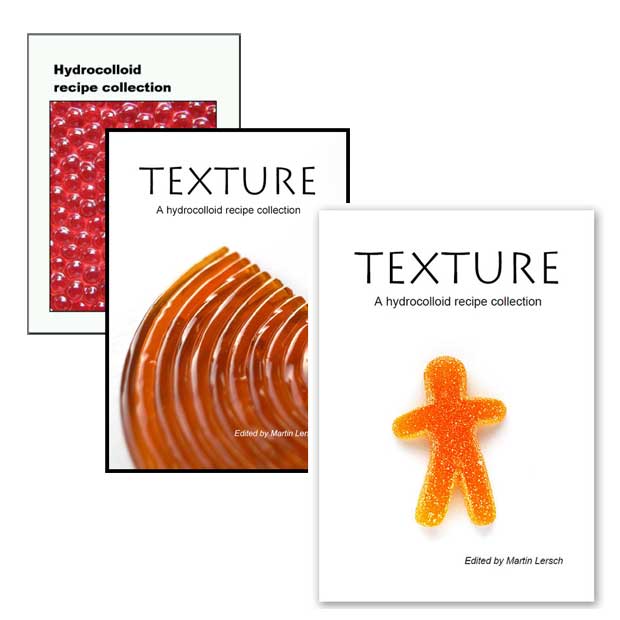
The acclaimed digital compendium, "Texture – A hydrocolloid recipe collection," is set to receive its highly anticipated v3.1 update, marking the first revision in six years since the release of v3.0 in 2014. This incremental revision, aimed at refining existing content and incorporating new insights, underscores the enduring commitment to providing a comprehensive, community-driven resource for culinary professionals and enthusiasts exploring the intricate world of food science and texture modification. The project’s author has extended an open invitation for feedback, recipe submissions, and photographic contributions to ensure the forthcoming version is as accurate and expansive as possible.
The Legacy of "Texture": A Culinary Landmark
First published in 2007 as v1.0, "Texture" quickly established itself as a foundational text within the burgeoning field of molecular gastronomy and progressive cuisine. Its initial release provided an unprecedented compilation of recipes and techniques utilizing hydrocolloids—a class of substances that form gels, thicken liquids, or stabilize emulsions and foams—which had previously been largely confined to industrial food production or academic research. The subsequent v2.0 in 2008 and v3.0 in 2014 further cemented its status, expanding its scope and refining its practical applications for the kitchen.
The significance of "Texture" lies in its demystification of complex food science principles, making advanced culinary techniques accessible to a wider audience. Prior to its publication, detailed information on working with hydrocolloids like agar-agar, gellan gum, xanthan gum, and carrageenan was often fragmented, scattered across academic papers, obscure cookbooks, or industry manuals. "Texture" aggregated this knowledge into a user-friendly format, complete with practical recipes that illustrated the unique properties of each ingredient. This approach resonated deeply within the culinary community, particularly among chefs experimenting with avant-garde dishes and home cooks seeking to understand the science behind their food. The collection became an invaluable tool for understanding how to manipulate ingredients to create novel textures, from delicate foams and stable emulsions to resilient gels and fluid gels, fundamentally changing the landscape of modern cooking.
The Impending Update: Version 3.1
The upcoming v3.1 is described as an "incremental revision," focusing on "ironing out wrinkles" rather than introducing wholesale changes. This suggests a meticulous process of reviewing existing entries for accuracy, clarity, and consistency. The author’s statement indicates a deep appreciation for the community’s role in this refinement process. "I may not have replied to you all during the last couple of years, but rest assured that your feedback has been read, is greatly appreciated and will be incorporated!" the author stated, highlighting the collaborative spirit that has defined the project since its inception. This continuous feedback loop is crucial for a resource dealing with scientific principles applied in a practical setting, where slight variations in ingredients, equipment, or technique can yield different results.
The update comes at a time when culinary innovation continues to accelerate, with chefs and food scientists constantly discovering new applications for existing ingredients and exploring novel ones. The six-year gap between versions 3.0 and 3.1 represents a significant period in the fast-paced world of food science, accumulating a wealth of new insights, practical tips, and ingredient applications that can now be systematically integrated into the collection.
Community-Driven Content: A Call for Collaboration
A cornerstone of the "Texture" project has always been its reliance on community input. The author’s call for contributions is not merely a formality but an integral part of the update process. Specific requests include:
- Feedback on Recipes: Users are strongly encouraged to report any recipes that did not work as described. This direct, empirical feedback from diverse kitchens worldwide is invaluable for troubleshooting and ensuring the reliability of the instructions. The scientific method, at its core, relies on reproducibility, and this crowdsourced validation helps to strengthen the collection’s integrity.
- Photographic Submissions: The author emphasizes the importance of accompanying photos, stating that "If a recipe is accompanied by a photo it’s a good sign that it has been tested with a successful outcome." Visual evidence not only enhances the aesthetic appeal and instructional clarity of the recipes but also serves as a critical indicator of successful execution. Detailed instructions for photo submission have been available since a 2010 blog post and are also found on page 8 of the existing "Texture" document. This visual verification process ensures that the recipes are not only theoretically sound but also practically achievable, guiding users towards successful outcomes.
This collaborative model distinguishes "Texture" from many traditional cookbooks or scientific texts, fostering a dynamic ecosystem where shared knowledge continually improves the resource.
Expanding the Hydrocolloid Horizon
One of the key objectives for v3.1 is to address the underrepresentation of certain hydrocolloids and to potentially include entirely new ones. The author specifically noted several ingredients that require more attention:
- Guar Gum: Derived from guar beans, guar gum is a powerful thickener and stabilizer, often used in dairy products, sauces, and gluten-free baking. Its ability to create high viscosity at low concentrations makes it economically attractive for industrial use, but its specific applications in gourmet cooking could be further explored.
- Gum Arabic (Acacia Gum): Extracted from the acacia tree, gum arabic is known for its emulsifying and stabilizing properties, particularly in confectionery, beverages, and flavor encapsulation. Its relatively low viscosity compared to other gums makes it useful for subtle texture modification without excessive thickening.
- Konjac: From the konjac plant, glucomannan, the primary component of konjac flour, forms heat-stable gels and is widely used in Asian cuisine for noodles and jellies. Its unique firm, elastic texture offers distinct culinary possibilities.
- Locust Bean Gum (Carob Gum): Sourced from the carob tree, locust bean gum acts as a thickener and stabilizer, often used synergistically with xanthan gum or carrageenan to form stronger, more elastic gels. It contributes a creamy mouthfeel, making it valuable in ice creams and desserts.
- Tara Gum: Similar in structure and function to locust bean gum and guar gum, tara gum, from the tara plant, offers good thickening and stabilizing properties. It is increasingly being explored as an alternative due to its similar performance and potential cost-effectiveness.
The request for recipes highlighting the "range of foods each of these hydrocolloids can be used for" is crucial for demonstrating their versatility and specific textural contributions. Users are encouraged to share their insights via comments or directly to [email protected].
Furthermore, the author acknowledges "accidental omissions" of rare or novel hydrocolloids, distinguishing these from intentional exclusions of proprietary products like Ultra-Tex (a modified starch), Pure Cote (another modified starch), and Trisol (a wheat fiber). These proprietary ingredients, while texturizing agents, are typically not pure hydrocolloids and often involve complex formulations or intellectual property, making their inclusion beyond the scope of a general hydrocolloid reference. This distinction underscores the resource’s focus on fundamental, widely accessible ingredients and principles.
Beyond Traditional Gels: The "Non-Hydrocolloid" Category
A particularly innovative aspect of "Texture" is its dedicated category for "non-hydrocolloid recipes." This section explores gels and foams created through mechanisms other than added hydrocolloids, showcasing the inherent gelling or foaming properties of natural ingredients and traditional culinary processes. Examples cited include:
- Junket: A milk dessert coagulated by rennet (an enzyme).
- Cuajada: A Spanish dairy product, similar to junket, also coagulated enzymatically.
- Ginger Milk Custard: A Chinese dessert where ginger proteases coagulate milk proteins.
- Aiyu Jelly and Grass Jelly: Asian jellies derived from plant extracts with natural gelling properties.
- Gelled Seafood Sauce: Often gelling due to natural gelatin released from bones or connective tissues during cooking and cooling.
- Tofu: Coagulated soy milk proteins, typically with calcium sulfate or magnesium chloride.
- Hominy: Nixtamalized corn, whose starches can contribute to thickening and gelling.
The inclusion of these examples broadens the understanding of texture formation, moving beyond chemical additives to embrace traditional methods and inherent ingredient properties. The author is actively seeking more examples of such naturally occurring gels and foams, recognizing the rich tapestry of global culinary traditions that employ these techniques.
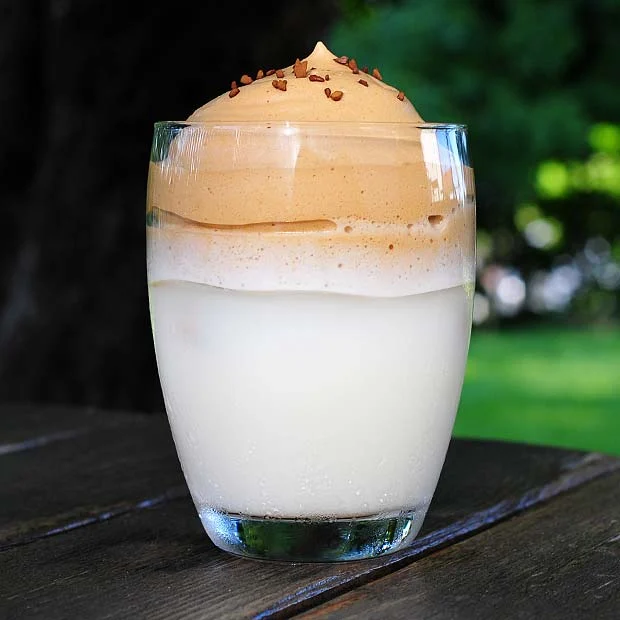
A notable addition to this category in v3.1 will be the Dalgona coffee foam. This frothy, whipped coffee beverage gained immense popularity globally during early 2020, becoming a social media phenomenon. Its inclusion is highly relevant as it exemplifies a stable foam created through mechanical aeration and the inherent emulsifying properties of instant coffee and sugar, without the addition of traditional hydrocolloids. The science behind Dalgona coffee involves the denaturation of coffee proteins and the creation of a stable air-in-liquid emulsion, much like a meringue, making it a perfect fit for this section. Its widespread recognition also serves as a contemporary example of how texture can define a culinary trend.
The Science of Texture: Why it Matters
The focus on texture in "Texture – A hydrocolloid recipe collection" reflects a broader shift in culinary appreciation. While taste and aroma have long been paramount, the sensory experience of food is profoundly influenced by its texture—its mouthfeel, consistency, and how it behaves under mastication. Food scientists understand that texture impacts everything from satiety to flavor release. For instance, a smooth, creamy sauce might enhance the perception of richness, while a crisp component can add an exciting contrast.
Molecular gastronomy, the scientific discipline that investigates the physical and chemical transformations of ingredients that occur in cooking, has championed the deliberate manipulation of texture as an artistic and scientific endeavor. Pioneers like Ferran Adrià of elBulli and Heston Blumenthal of The Fat Duck famously experimented with foams, spheres, and gels, pushing the boundaries of what food could be. "Texture" provides the practical toolkit for chefs and home cooks to engage in similar explorations, offering a roadmap to understanding and controlling these transformations.
The publication’s impact extends beyond haute cuisine. Understanding hydrocolloids is vital for food product development, catering to dietary restrictions (e.g., gluten-free, vegan thickeners), and improving the stability and shelf-life of commercial products. By making this knowledge accessible, "Texture" contributes to a more informed public discourse about food, empowering individuals to experiment and innovate in their own kitchens.
The Author’s Vision and the Future of Food Science
The continued dedication to updating "Texture" after more than a decade reflects a profound commitment to open-source knowledge sharing and community engagement. In an era where specialized information can often be proprietary or behind paywalls, "Texture" stands out as a freely available, high-quality resource. This approach not only democratizes access to advanced culinary science but also fosters a global community of curious cooks and innovators.
The ongoing evolution of "Texture" signifies that the journey of culinary discovery is never truly complete. As new ingredients emerge, existing ones are better understood, and cultural culinary practices gain wider recognition, resources like "Texture" must adapt and grow. The incremental v3.1 update is not just a revision; it is a reaffirmation of the project’s foundational principles: accuracy, accessibility, and collaboration.
Impact on the Culinary Landscape
The release of "Texture" v3.1 is anticipated to have several key implications for the culinary landscape:
- Enhanced Culinary Education: The updated resource will serve as an even more robust educational tool for culinary students, professional chefs, and amateur cooks alike, offering refined guidance and expanded content on texture manipulation.
- Stimulated Innovation: By consolidating new information on hydrocolloids and non-hydrocolloid gelling mechanisms, v3.1 will likely inspire further experimentation and innovation in recipe development, pushing the boundaries of taste and texture.
- Global Culinary Exchange: The emphasis on regional non-hydrocolloid recipes fosters a greater appreciation for diverse culinary traditions and their scientific underpinnings, encouraging cross-cultural learning and adaptation.
- Reinforced Community Engagement: The collaborative nature of the update process strengthens the bond within the food science and culinary community, establishing a model for collective knowledge building.
As the culinary world continues its dynamic evolution, "Texture – A hydrocolloid recipe collection" remains a pivotal guide, demonstrating that the pursuit of perfect texture is as much an art as it is a science. The upcoming v3.1 promises to further enrich this invaluable resource, providing the tools and inspiration for the next generation of culinary explorers. The call for contributions is open, inviting all those passionate about food science to play a part in shaping this essential reference.