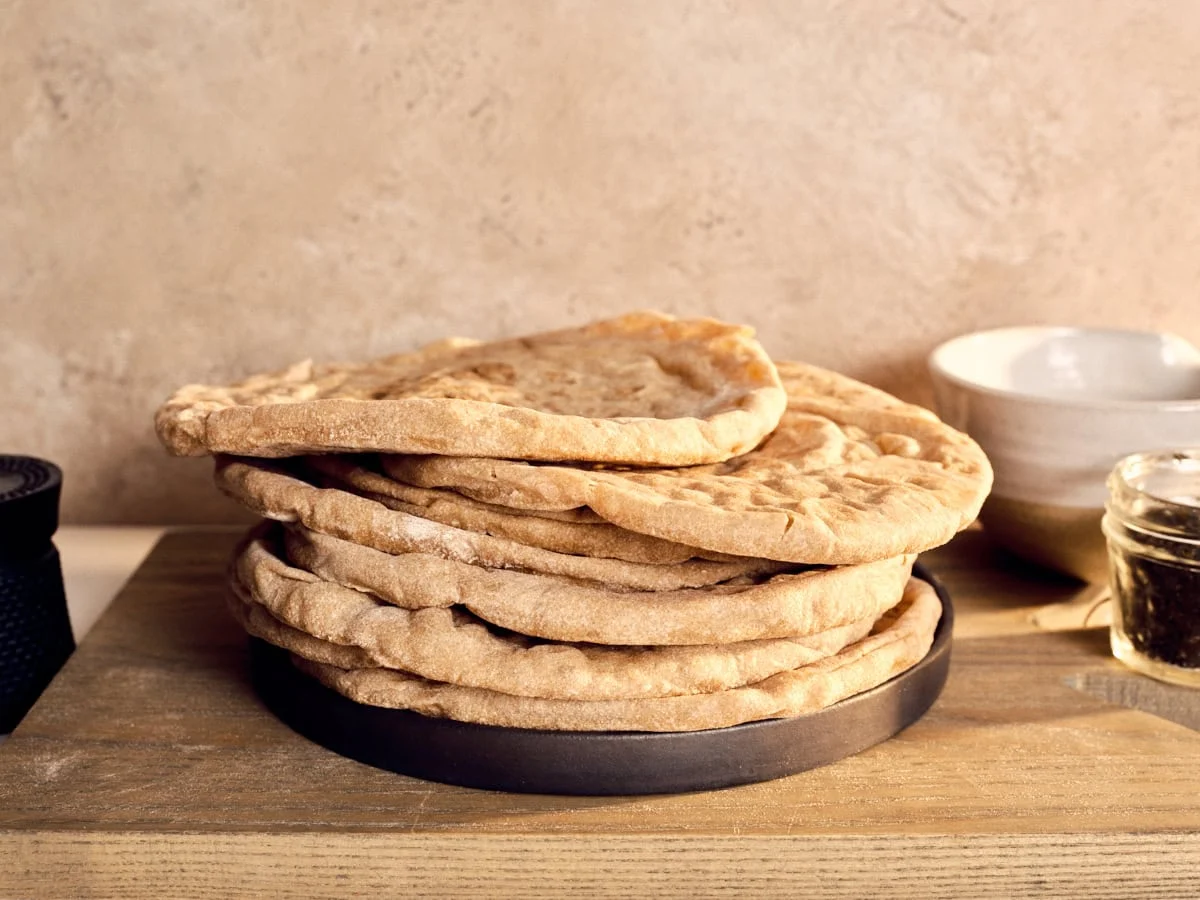

The landscape of artisan baking continues to evolve as bakers merge traditional fermentation techniques with locally sourced whole grains. A notable advancement in this culinary movement is the development of a 100% whole-grain sourdough pita, inspired by a collaborative baking class held at the Chimacum Valley Grainery in Washington state. Co-taught by notable baking educator Graison Gill and fellow artisan bread makers, the session featured a regionally inspired barley and whole-wheat flatbread that prompted a deeper exploration into high-hydration whole-grain formulations.
This comprehensive guide examines the methodology, technical specifications, and nutritional implications of producing a soft, reliable, whole-wheat sourdough pita that maintains structural integrity and an optimal oven puff without relying on refined white flours.
Background Context and Artisan Collaboration
The inspiration for this specific whole-grain pita stems from educational workshops designed to connect modern home and professional bakers with regional grain economies. The Chimacum Valley Grainery, situated in the Pacific Northwest, serves as a hub for locally grown and freshly milled grains. Freshly milled flour retains the germ and bran layers, which impart a natural sweetness and distinct nutritional profile absent in heavily processed commercial flours.
While sourdough pitas are not entirely new to the baking community—having evolved from light, ethereal iterations featured in foundational baking literature to complex ancient-grain variants—the challenge has historically lain in achieving a consistent pocket. Whole-grain doughs are dense by nature due to the presence of sharp bran flakes that can sever gluten strands and weigh down the crumb. Overcoming this structural hurdle required a careful recalibration of hydration levels, mixing protocols, and fermentation timelines.
Technical Baking Specifications and Formula
Achieving a successful whole-wheat sourdough pita requires strict adherence to baker’s percentages and precise dough temperatures. The formula is structured to yield ten individual pitas, each weighing approximately 120 grams, resulting in a total dough weight of 1,320 grams.
Total Formula Metrics:
- Total Dough Weight: 1,320 grams
- Prefermented Flour: 9.5%
- Levain in Final Dough: 22.0%
- Hydration: 84.0%
- Target Final Dough Temperature: 77°F to 78°F (25°C to 26°C)
Ingredient Breakdown:
- Whole Wheat Flour (Chimacum Valley Grainery Bread Flour or equivalent): 699 grams (100.0%)
- Water (Part 1 – Levain and Mix): 503 grams (72.0%)
- Water (Part 2 – Mix): 84 grams (12.0%)
- Extra-Virgin Olive Oil: 14 grams (2.0%)
- Fine Sea Salt: 14 grams (2.0%)
- Ripe Sourdough Starter (100% hydration): 7 grams (0.95%)
Substitutions and Grain Variations:
While the standard formula calls exclusively for 100% whole-wheat flour, bakers can customize the flavor profile by substituting up to 20% of the primary flour with alternative whole-grain options. Whole triticale and whole spelt have proven successful in trials, each introducing unique nutty and earthy characteristics to the finished crumb.
Chronological Baking Schedule
To accommodate both professional production schedules and home bakers managing busy workweeks, the process is streamlined to balance extended fermentation benefits with operational efficiency.
Phase 1: Levain Preparation (Evening Prior, 9:00 PM)
The process begins by combining 66 grams of whole wheat flour, 66 grams of water, and 7 grams of ripe sourdough starter. This mixture is covered and left to ripen overnight at a controlled room temperature of 74°F to 76°F (23°C to 24°C). Alternatively, bakers may utilize a mature sourdough starter directly in the morning, bypassing the separate levain preparation step, though this introduces trace amounts of white flour if the maintenance starter is not 100% whole grain.
Phase 2: Mixing (Morning, 9:00 AM)
The main dough incorporates 632 grams of whole wheat flour, the prepared levain (139 grams), fine sea salt (14 grams), extra-virgin olive oil (14 grams), and the split water additions (437 grams for Water 1 and 84 grams for Water 2).
When using mechanical spiral mixers, the process is executed in gradual phases to develop adequate gluten strength without tearing the developing bran matrix. For hand-mixing, the flour, levain, salt, and initial water are combined thoroughly until a shaggy mass forms. The dough is kneaded for 6 to 8 minutes using a slap-and-fold method, allowed to rest for 5 minutes, and then slowly fed the remaining water (Water 2) during an additional 6 to 7 minutes of kneading until a smooth, cohesive texture is achieved.
Phase 3: Bulk Fermentation (9:30 AM to 12:30 PM)
Bulk fermentation spans three hours at an ambient temperature of 74°F to 76°F (23°C to 24°C). During the first hour, the dough undergoes two sets of stretches and folds at 30-minute intervals. This mechanical realignment of the gluten network builds elasticity and gas retention capabilities. For bakers seeking to split the process across multiple days, the dough may be placed into cold retardation in a refrigerator after two hours of bulk fermentation, to be divided and shaped the following day.
Phase 4: Division and Shaping (12:30 PM)
Upon the completion of bulk fermentation, the dough should exhibit a volume increase of approximately 25% and a smooth, puffy exterior. The dough is tipped onto a heavily floured work surface and divided into ten equal portions of 120 grams each. Each piece is pre-shaped into a tight ball by degassing lightly, folding the edges inward, and dragging the seam across the un-floured surface to build outer surface tension before pinching the base closed.
Phase 5: Final Proofing (1:00 PM to 2:00 PM)
The shaped dough balls are arranged on a floured half-sheet pan, covered to prevent surface drying, and proofed for one hour. During this window, the oven is preheated to its maximum capacity—ideally 550°F (290°C)—equipped with a baking steel or heavy stone positioned on the middle rack to maximize radiant thermal transfer.
Phase 6: Rolling and Baking (2:00 PM)
Proofing is considered complete when the dough balls have expanded by roughly 30% and yield gently to a fingertip poke test. Because 100% whole-wheat doughs can degrade structurally if over-proofed, timing is critical.
Each dough round is lightly flattened and rolled out evenly using a dowel-style rolling pin to a diameter of 7 inches and a thickness of approximately 1/8 inch. Maintaining uniform thickness is essential; uneven rolling will cause the pita to bake unevenly or fail to form an internal steam pocket.
The rolled dough is transferred via pizza peel directly onto the preheated baking steel. Baking occurs rapidly, taking between one to two minutes on the first side until the dough balloons with steam. A fish spatula is then used to invert the pita for an additional minute. The finished breads are stacked inside a towel-lined container to retain softness.
Troubleshooting Oven Spring and Puff Failures
In commercial and home baking applications alike, failure to achieve a proper oven spring in flatbreads typically points to specific operational errors:
- Incorrect Thickness: If the dough is rolled too thick, the internal moisture cannot vaporize fast enough to inflate the structure. Conversely, rolling the dough thinner than 1/8 inch compromises the structural boundary required to trap steam.
- Insufficient Thermal Mass: An inadequately preheated oven or baking stone fails to deliver the shock heat necessary for rapid internal gas expansion.
- Surface Desiccation: Allowing the dough balls to form a dry skin during proofing or rolling prevents the gluten matrix from stretching uniformly, resulting in localized blowouts or flat flatbreads.
- Overproofing: When fermentation exceeds optimal limits, yeast activity declines and gas escapes through degraded gluten walls, producing large, irregular surface blisters reminiscent of naan rather than a cohesive internal pocket.
Nutritional Implications and Market Impact
The commercial and artisanal shift toward whole-grain sourdough applications reflects broader consumer demand for nutrient-dense, functional foods. Traditional long fermentation via sourdough cultures initiates enzymatic activity—principally phytase activation—which breaks down phytic acid present in the bran of whole grains. This biochemical process enhances the bioavailability of essential minerals such as iron, zinc, and magnesium, making whole-wheat products easier to digest compared to their commercially yeasted counterparts.
By proving that nutrient-dense whole grains can be successfully transformed into soft, versatile products like pita bread without sacrificing traditional textures, bakers continue to validate regional grain networks and inspire sustainable culinary practices across the broader baking sector.