
This seemingly innocuous statement, uttered by Anna, a highly accomplished legal professional, recently unveiled a common, yet often overlooked, paradox in the pursuit of health and wellness. Anna, a critical thinker renowned for her ability to discern substance from superficiality in her demanding career, was, in her personal life, navigating a labyrinth of complex health trends while seemingly bypassing fundamental, proven strategies for her long-standing goal of losing 15 pounds. Her declaration about new BPA-free containers came amidst discussions of her struggles with consistent gym attendance, frequent reliance on takeout meals, and the pervasive habit of sacrificing restorative sleep for late-night "doom scrolling."
The stark contrast between Anna’s professional acumen and her personal approach to health highlights a widespread phenomenon: the human inclination to seek intricate, niche solutions, often involving new products or highly specific regimens, over the consistent application of basic, established health practices. When questioned about prioritizing consistent workouts or home-cooked meals, Anna’s response echoed a sentiment familiar to many: "Yeah, but I’ve tried that a thousand times. If it were that simple, it would have worked already." This dismissive attitude towards foundational habits reveals a deeper psychological interplay at work, one that leads individuals down paths of perceived innovation while neglecting the undeniable efficacy of the mundane.
The Allure of the "Magic Bullet" and Perceived Progress
The human psyche is remarkably adept at devising mechanisms to circumvent difficult, albeit necessary, actions. Investing in new gear, purchasing popular supplements, or consuming endless content about novel health trends often feels like progress. This "pseudo-action" provides temporary psychological comfort and a sense of moving forward, without the immediate demand for actual behavioral change. Similarly, the act of waiting for the "perfect" time—more inspiration, heightened motivation, or a less hectic schedule—serves as a powerful delaying tactic, allowing individuals to defer the discomfort of initiating hard-but-worthwhile habit shifts.
However, the reality remains: genuine, sustainable change in health and well-being is predicated on consistent, real-world action. The widespread pursuit of "cutting-edge" or "industry-secret" strategies often distracts from the unsexy, often challenging, daily behaviors that truly drive transformative results. This article delves into the underlying reasons for this diversion and outlines a structured approach to foster impactful and realistic action.
Defining the Undeniable Fundamentals of Health
The bedrock of good health is built upon a surprisingly straightforward set of habits, universally acknowledged yet infrequently mastered. These include:
- Regular Physical Activity: Ideally, a minimum of 30 minutes daily of moderate-to-vigorous exercise, incorporating a blend of aerobic and resistance training, is recommended by health organizations globally. The U.S. Department of Health and Human Services’ Physical Activity Guidelines for Americans, for instance, advocates for at least 150 minutes of moderate-intensity aerobic activity or 75 minutes of vigorous-intensity activity per week, alongside muscle-strengthening activities on two or more days.
- Nutrient-Dense Eating: A diet predominantly composed of whole, minimally processed foods is crucial. Experts suggest that if approximately 80% of one’s diet consists of such foods, an excellent foundation is laid. This principle emphasizes progress over perfection, acknowledging that occasional indulgences can coexist within a healthy eating pattern.
- Adequate Protein Intake: Sufficient protein supports muscle mass, aids in appetite regulation, and is vital for body recomposition goals. A general guideline recommends 1.2 to 2.2 grams of protein per kilogram of body weight, often translating to 4-6 palm-sized portions of lean protein daily for most adults.
- Prioritizing Quality Sleep: Aiming for seven to eight hours of quality sleep per night is paramount. While sleep quality can be influenced by many factors, establishing a consistent sleep schedule and a wind-down routine significantly contributes to better rest. The Centers for Disease Control and Prevention (CDC) consistently highlights sleep deprivation as a major public health concern, linked to increased risks of chronic diseases.
- Moderation or Avoidance of Harmful Substances: Reducing or eliminating excessive consumption of alcohol, illicit drugs, and tobacco products is a fundamental pillar of long-term health. The long-term health consequences of these substances are extensively documented by institutions like the World Health Organization (WHO).
Beyond these core physiological habits, factors like fostering positive social relationships and effective stress management are equally critical. However, even the basic list above presents a significant challenge for the majority. Data from various studies, including those cited by the original article, suggest that a strikingly low percentage of adults consistently adhere to all these foundational health behaviors. For instance, only about 6% of Americans consistently perform five basic health behaviors, implying that nearly 94% are not. This statistic underscores the profound gap between knowledge and consistent action, even for simple, high-impact habits.
The Societal and Individual Implications of Neglecting Fundamentals
The widespread failure to adhere to basic health practices carries significant individual and societal implications. From an individual perspective, this leads to persistent struggles with weight management, increased susceptibility to chronic diseases (like type 2 diabetes, cardiovascular disease, and certain cancers), reduced energy levels, and diminished quality of life. The psychological toll includes cycles of frustration, self-blame, and a sense of being "stuck," often perpetuated by the very search for complex solutions that distracts from the basics.
On a broader societal level, the neglect of fundamental health habits contributes to escalating healthcare costs, decreased workforce productivity, and a diminished public health outlook. Governments and health organizations invest vast resources in promoting health awareness, yet the translation of this awareness into consistent action remains a formidable challenge. The rise of the multi-billion dollar wellness industry, while offering beneficial products and services, also inadvertently contributes to the "magic bullet" mentality by constantly introducing new trends, supplements, and devices, often overshadowing the simple efficacy of proven behaviors.
Psychological Barriers to Fundamental Action
Understanding why individuals struggle with these basics is crucial for developing effective strategies. Behavioral science identifies several common barriers:
The Normalcy of Ambivalence and Resistance
The internal push-and-pull experienced when contemplating change is a natural human response known as ambivalence. This feeling of simultaneously wanting a change (e.g., to eat healthier) and wanting to maintain current comforts (e.g., to enjoy favorite treats without restriction) is inherent to the change process. Similarly, resistance—the desire for change coupled with an aversion to its perceived drawbacks (e.g., wanting to reduce screen time but fearing the anxiety of being alone with one’s thoughts)—is equally common. These contradictory emotions are not signs of illogical thinking or inherent weakness, but rather fundamental parts of human psychology when faced with significant shifts. Their presence often signals that the contemplated change is deeply meaningful to the individual.
Barrier 1: Ambition Overload
Many individuals, when inspired to improve their health, embark on ambitious, comprehensive overhauls. This might involve declaring simultaneous commitments to daily hour-long workouts, "clean eating" at every meal, and eight hours of sleep per night, often starting from a baseline of minimal exercise, inconsistent nutrition, and late nights. While such grand plans offer temporary psychological relief and a sense of proactive engagement, they are often unsustainable.
This tendency is fueled by cognitive biases such as the planning fallacy and optimism bias, where individuals systematically underestimate the time, effort, and resources required for future tasks, while overestimating their future capacity, time, and motivation. The immediate comfort derived from designing an idealistic future plan can blind individuals to the practical complexities of integrating radical changes into an already busy life. When these overly ambitious plans inevitably falter, individuals often attribute failure to a lack of willpower or discipline, rather than recognizing the unrealistic nature of the initial endeavor. This self-blame perpetuates a cycle of frustration and reinforces the belief that consistency is an insurmountable struggle.
Barrier 2: The Belief in "Hardcore," "Industry-Secret" Solutions
A prevalent misconception is that if basic health behaviors were truly effective, everyone would be healthy. This leads to a dismissal of simple advice—like "eat your vegetables" or "get enough sleep"—as insufficient or simplistic. The wellness industry, with its constant stream of "new and improved" diets, supplements, and biohacking techniques, inadvertently reinforces this mindset. The marketing often implies that there are hidden secrets or cutting-edge breakthroughs necessary for optimal health, appealing to the human desire for novelty and extraordinary results.

This attraction to the novel is particularly strong when individuals have previously attempted basic changes without achieving their desired outcomes, or when they perceive those outcomes as not "working" in the expected dramatic fashion. The promise of a new solution offers the tantalizing possibility of a "new you" and a different, more exciting trajectory. However, many "hardcore" or "cutting-edge" strategies are often unsustainable, inaccessible to the average person, or lack robust scientific evidence for their efficacy. They divert valuable time, effort, and financial resources away from the proven fundamentals that, while perhaps "boring," are undeniably effective when applied consistently.
Barrier 3: The Pursuit of Perfection
The narrative perpetuated by certain segments of the health and fitness industry often suggests that achieving and maintaining excellent health requires a state of "perfection"—an unwavering adherence to organic diets, intense athletic feats, and meticulous morning routines involving meditation and gratitude journaling. This ideal, however, is an illusion. Human beings, even those exceptionally healthy, are inherently imperfect and subject to illness, stress, physical ailments, and periods of reduced motivation.
The belief in "perfect health" can be a coping mechanism, offering a false sense of immunity from life’s inherent vulnerabilities. It is more comforting to believe that a specific routine or supplement can shield one from painful human experiences than to accept the unpredictable nature of life. Paradoxically, achieving one’s realistic "best self" often necessitates accommodating the "worst self"—the part that prefers immediate gratification over long-term goals, or struggles with discipline during challenging times. Life is replete with obstacles, distractions, and competing demands that make sustained perfection impossible. Releasing the illusion of a perpetually energetic, disciplined, and ideal self is crucial for developing sustainable health habits that can adapt to the messy, unpredictable reality of human existence.
A Framework for Effective and Realistic Action
Moving beyond these barriers requires a conscious shift in approach, focusing on introspection, prioritization, flexibility, and environmental design.
Step 1: Explore the "Why" Before the "How"
Before embarking on any health change, a deeper understanding of one’s motivations is essential. Engaging in self-inquiry, perhaps through techniques like the "5 Whys" (repeatedly asking "why" to uncover deeper drivers), can illuminate the core reasons for seeking change and the consequences of inaction. Questions like "Why is this goal important to me?" or "What will my life look like if I achieve/don’t achieve this?" can tap into intrinsic motivation, providing a more robust and sustaining impetus when challenges arise. This foundational understanding acts as a compass, guiding efforts even through periods of low external motivation.
Step 2: Prioritize the Most Effective Actions
The trap of ambition overload can be circumvented by prioritizing essential actions. Effective change is not about doing everything at once, but rather focusing on a few high-leverage behaviors that align with one’s goals and are realistically achievable. For most health objectives, these essentials typically fall into the domains of movement, nutrition, and recovery (sleep and stress management).
Tools like a "Skills, Practices, and Daily Actions Cheat Sheet" can help individuals break down broad goals into manageable steps. This involves identifying a specific domain (e.g., "Nutrition"), then a skill within that domain (e.g., "Eat well intuitively"), a practice (e.g., "Eat to satisfied"), and finally, a concrete daily action (e.g., "Record hunger and fullness levels before and after meals"). This systematic approach ensures that efforts are directed towards impactful behaviors rather than diffuse, unprioritized tasks.
Step 3: Implement Flexible Action: The "Dial" Concept
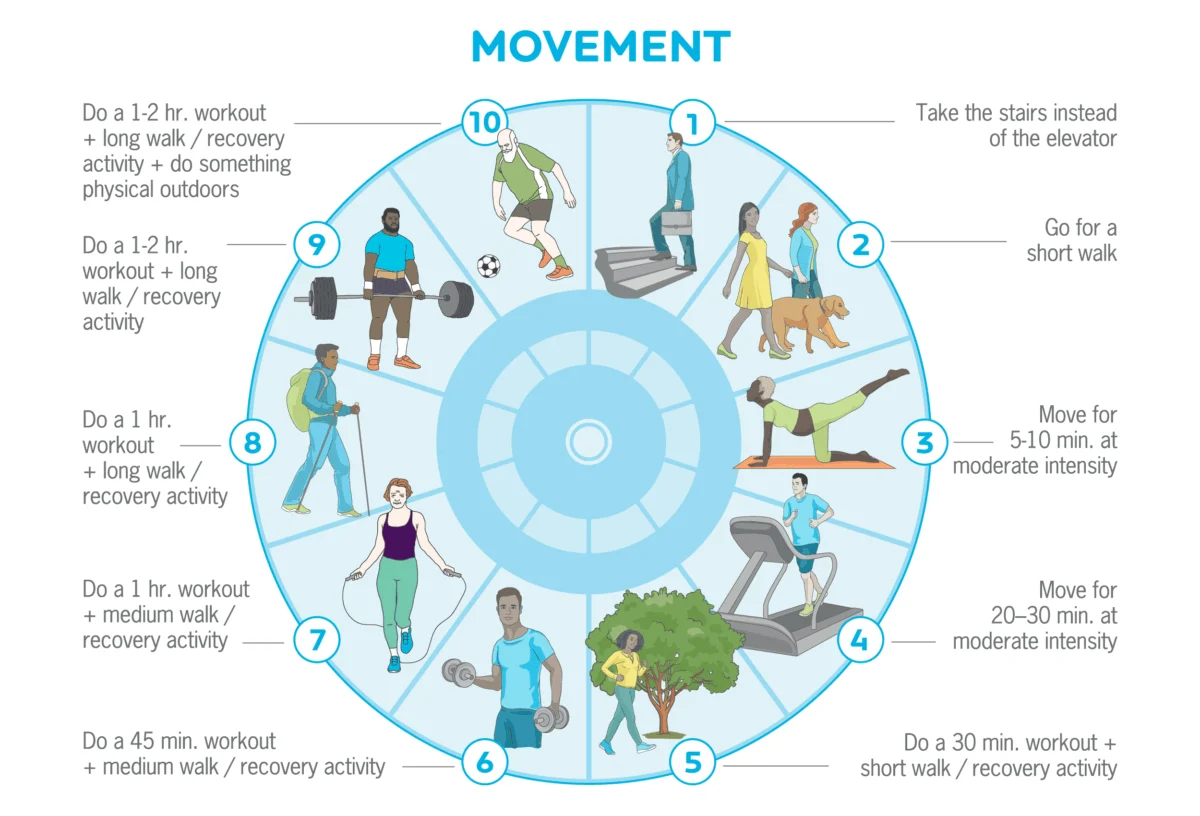
A key to sustainable consistency is embracing flexibility rather than rigidity. This involves defining a "floor" and a "ceiling" for each desired behavior. The "floor" represents the absolute minimum action one can commit to, even on the worst day (e.g., five minutes of walking, one extra portion of vegetables, three conscious deep breaths). The "ceiling" represents the ideal, maximal effort (e.g., an hour of intense gym work, two hours of meal prep, a 45-minute meditation).
This framework transforms health habits from an "on/off" switch to a "dial." When life is smooth, the dial can be turned up towards the ceiling. When life becomes chaotic, stressful, or demanding, the dial can be turned down to the floor, ensuring that some action is still taken, rather than abandoning the habit entirely. The critical insight here is that doing the bare minimum is not a failure; it is a success in the context of a real, imperfect life. This sustained, even minimal, effort builds resilience and maintains momentum, preventing the complete derailment often associated with all-or-nothing approaches.
Step 4: Create a Supportive Ecosystem
Relying solely on willpower for behavior change is a recipe for inconsistency. A more effective strategy involves designing one’s environment to nudge desired behaviors and make undesired ones more difficult. This principle is supported by research in behavioral science, which highlights environmental factors like "access" as primary influencers of behavior. A review published in Nature Reviews Psychology, for instance, ranked access as the number one predictor of behavior change, noting that proximity to healthy food options correlates with better dietary habits, and convenient access to gyms increases physical activity.
While changing neighborhoods may not be feasible for all, individuals often have significant control over their immediate environments. Examples include a "kitchen makeover," where healthy foods are prepped and prominently displayed, while less healthy options are removed or made less accessible. Similarly, placing workout clothes by the bed or setting up a home exercise area can reduce friction for physical activity. This proactive investment in environmental design—modifying physical spaces, managing social influences, and optimizing digital interactions—makes the desired actions the "obvious" or easiest choice, requiring less conscious effort and willpower over time.
Embracing C+ Effort: The Path to Sustainable Health
The journey to sustainable health is rarely linear or perfect. For those accustomed to striving for excellence, the concept of "C+ effort" can be challenging. However, this philosophy embodies compassion and acceptance towards inherent human imperfection. It recognizes that consistent, "good enough" action, adapted to life’s inevitable fluctuations, is far more effective in the long run than sporadic bursts of "perfect" effort followed by periods of inaction.
Public health messaging often grapples with this delicate balance. While aspirational goals inspire, the practical implementation requires a realistic understanding of human behavior. Experts increasingly advocate for strategies that prioritize consistency and adaptability over intensity and perfection. By working with one’s vulnerabilities rather than constantly battling against them, individuals can build resilient health habits. There will be times for "A" level performance, but crucially, dialing down to a "C+" during challenging periods is not a failure—it is a strategic success that keeps the momentum going.
Ultimately, living a healthy, meaningful life is a continuous dance between striving for improvement and allowing for flexibility, mistakes, and challenging seasons. The profound impact of "good enough" should not be underestimated; its cumulative effect over time far surpasses the fleeting achievements of perfectionism.
References
- U.S. Department of Health and Human Services. (2018). Physical Activity Guidelines for Americans, 2nd edition.
- Centers for Disease Control and Prevention (CDC). (Ongoing). Sleep and Sleep Disorders.
- World Health Organization (WHO). (Ongoing). Health topics: Alcohol, Drugs, Tobacco.
- Dolan, P., Hallsworth, M., Halpern, D., King, D., & Vlaev, I. (2012). MINDSPACE: Influencing behaviour through public policy. Institute for Government.
- Nature Reviews Psychology (Specific article citation would be needed for accuracy; general reference to the type of findings).