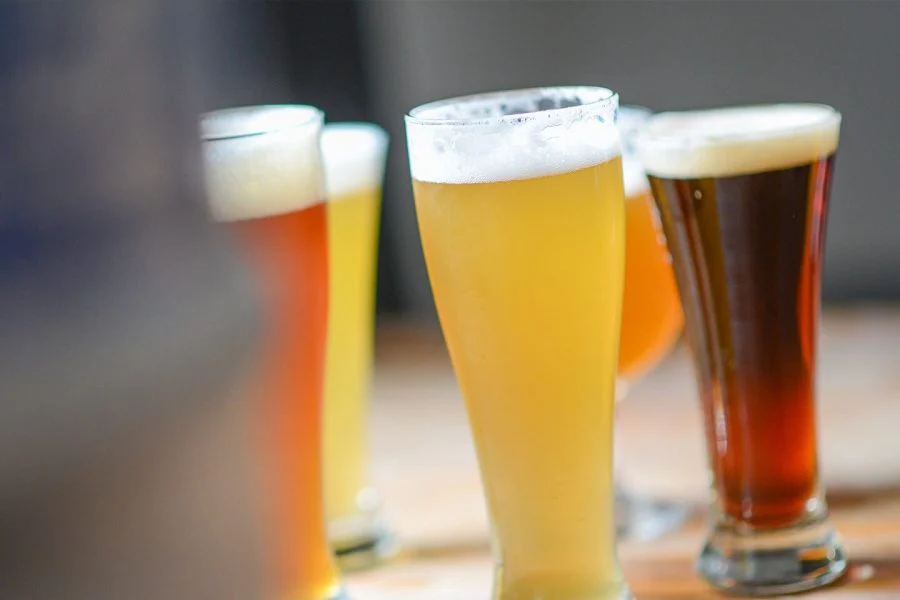

The annual National Homebrew Competition stands as the world’s largest premier beer competition, celebrating the dedication, creativity, and technical precision of amateur brewers from across the globe. In the highly anticipated 2026 final round, the competition reached new heights of participation, drawing thousands of meticulously crafted entries evaluated by certified judges from the Beer Judge Certification Program (BJCP). Among the thousands of hopefuls, Adam Wyss of Alamo, California—a proud and active member of the Diablo Order of Zymiracle Enthusiasts (DOZE) homebrewing club—distinguished himself by capturing a prestigious gold medal. Wyss secured the top honor in Category 8: American Wheat and Blonde, triumphing over a fiercely competitive pool of 60 exceptional entries in his specific division. This victory not only highlights Wyss’s adept technical brewing skills but also underscores the remarkable innovation flourishing within regional California homebrewing communities.
The journey to gold was far from conventional, born out of a sudden pivot prompted by household brewing logistics. Wyss initially intended to craft a hop-forward India Pale Ale (IPA) utilizing leftover ingredients he had on hand. However, a critical inventory check revealed that all the available yeast strains stored in his refrigerator were past their expiration dates. Rather than abandoning his brewing session, Wyss cleverly pivoted his strategy. He decided to brew a lighter, more forgiving blonde ale specifically designed to revive the sluggish, out-of-date yeast culture. What began as an improvised rescue mission yielded surprisingly spectacular results, culminating in a brilliantly clean and crisp blonde ale that not only impressed judges on a national scale but also produced a robust, highly active yeast cake that later powered a subsequent, equally fantastic batch of IPA. Wyss’s accidental triumph serves as a living testament to the timeless wisdom of legendary homebrewing pioneer Charlie Papazian: "Relax, don’t worry, have a homebrew."

To achieve the immaculate flavor profile required to top a national podium, Wyss relied on a precise formulation of high-quality malts, targeted hop additions, and careful water chemistry adjustments. The grain bill for the 6.5-gallon (24.6-liter) yield was anchored by 8.5 pounds (3.86 kg) of pale 2-row malt, providing a clean, biscuity base. This was complemented by 1 pound (454 grams) of white wheat malt to add a subtle cloudiness, body, and head retention, alongside 8 ounces (227 grams) of dextrin malt to enhance mouthfeel without significantly increasing fermentability. The resulting original gravity (OG) was measured at 1.048 (12°P), which fermented down to a final gravity (FG) of 1.011 (2.7°P), achieving an approachable and sessionable 5% Alcohol by Volume (ABV). The bitterness was carefully calibrated to 25 International Bittering Units (IBU), utilizing a modest 0.25-ounce (7-gram) addition of high-alpha-acid Warrior hops (15% a.a.) at the 60-minute mark of the boil, complemented by 1 ounce (28 grams) of Mandarina Bavaria hops (11.3% a.a.) added with five minutes remaining to impart a delicate, fruit-forward aromatic complexity.
The execution of the brew day required strict adherence to technical parameters, particularly given the unconventional yeast management strategy. Wyss mashed the grains at a steady 150°F (66°C) for 60 minutes to achieve a balanced fermentability profile. Recognizing the viability challenges posed by the expired yeast, Wyss pitched multiple packs of the out-of-date culture and aggressively supplemented the wort with pure oxygen after observing a 24-hour lag phase with no initial fermentation activity—though he notes that modern brewers attempting to replicate the recipe could easily achieve similar results by simply utilizing a single fresh pack of Imperial House Ale yeast. The primary fermentation was initiated at 67°F (19°C) and allowed to slowly free-rise to 70°F (21°C) as the fermentation process progressed, ensuring a clean flavor profile free of unwanted off-flavors. Water chemistry played an equally vital role in the beer’s success, with a mineral profile precisely adjusted to Ca 51 ppm, Mg 9 ppm, Na 21 ppm, Cl 74 ppm, SO4 74 ppm, and HCO3 36 ppm. Finally, a single Whirlfloc tablet was introduced at the five-minute mark of the boil to ensure optimal clarity before chilling and packaging.
The broader implications of Wyss’s gold medal victory extend far beyond a single homebrewer’s personal achievement, shining a positive light on the vibrant and collaborative culture of American homebrewing clubs. Organizations like the Diablo Order of Zymiracle Enthusiasts (DOZE) play an indispensable role in fostering local brewing talent, providing peer-to-peer feedback, and maintaining the educational framework necessary for amateurs to refine their craft to a professional standard. As craft beer consumers increasingly seek out authentic, locally produced beverages, the innovations born in backyard garages and kitchen basements continue to serve as a vital incubator for the broader commercial brewing industry. Wyss’s unexpected success demonstrates that technical adaptability, combined with a willingness to experiment under imperfect conditions, remains one of the greatest assets an ambitious brewer can possess.