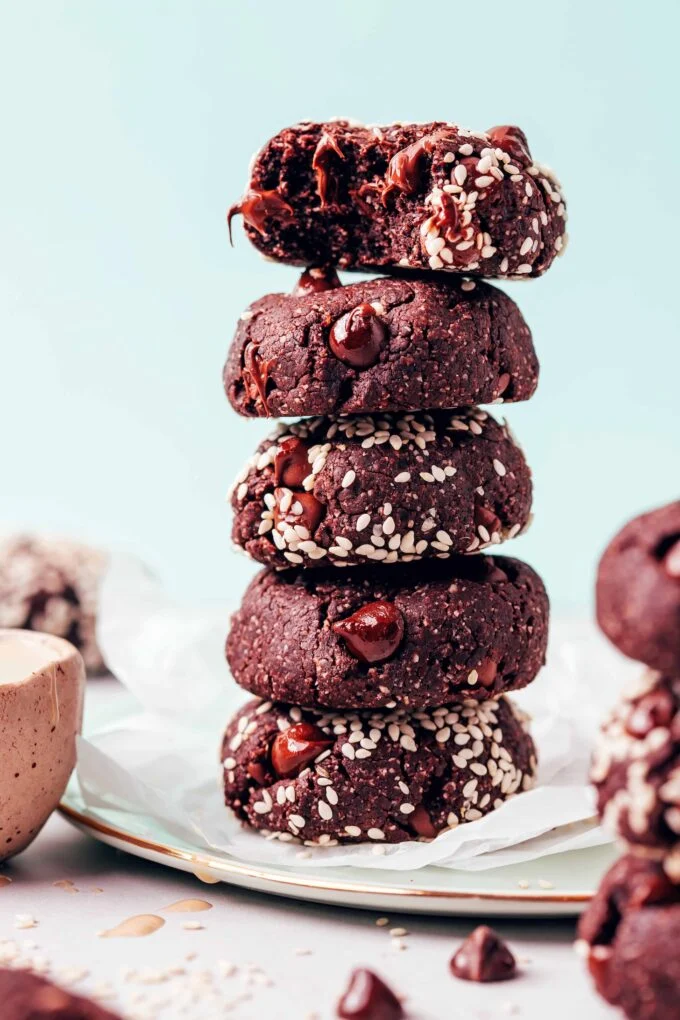

The cookies are characterized by a pillowy, fudgy interior and a crisp outer shell, a structural combination often difficult to achieve in vegan and gluten-free baking. The formulation relies on the emulsifying properties of tahini and the moisture-binding capabilities of maple syrup, creating a nutrient-dense dessert that provides 5.2 grams of protein per serving. This development follows the success of the brand’s previous "Easy Tahini Cookies," signaling a trend toward "double chocolate" variations that cater to the high-intensity cocoa preferences of modern consumers.

The Evolution of Tahini in Modern Baking: A Chronological Overview
The development of the Fudgy Chocolate Tahini Cookie is the result of iterative testing within the Minimalist Baker test kitchen. The chronology of this recipe’s creation began with the established popularity of the "Easy Tahini Cookie," a staple in the vegan community for its oil-free and grain-free composition. According to the development notes, the team sought to "add chocolate to the party" after repeated successful iterations of the original sesame-based cookie.
In the early stages of development, the primary challenge was maintaining the structural integrity of the cookie while introducing cocoa powder, which can often lead to a dry or crumbly texture in gluten-free applications. By mid-2024, the team finalized a ratio of almond flour to tapioca starch that ensured a "brownie-like" consistency. The final testing phase involved the integration of semisweet chocolate chips, providing localized pockets of melted chocolate that contrast with the earthy bitterness of the tahini.

This product launch fits into a broader timeline of tahini-based innovations by the brand, which has previously released Tahini Sweet Potato Blondies, Tahini Chocolate Chip Skillet Cookies, and Chocolate Tahini Caramels. Each of these releases has contributed to the mainstreaming of tahini as a versatile fat source and flavor enhancer in sweet, rather than just savory, dishes.
Technical Specifications and Ingredient Methodology
The efficiency of the Fudgy Chocolate Tahini Cookie is rooted in its streamlined ingredient list. Each component serves a specific functional role in the final product’s chemical makeup:

- Tahini (Sesame Paste): Acts as the primary fat source, replacing traditional butter or oil. Its high mineral content and natural emulsifiers contribute to the cookie’s "tender" crumb.
- Maple Syrup: Serves as the liquid sweetener. When whisked with tahini, it creates a "caramel-like" base that stabilizes the dough.
- Almond Flour: Provides the bulk of the structure. As a gluten-free flour, it offers a high protein-to-starch ratio, contributing to the 5.2 grams of protein per cookie.
- Tapioca Starch: Essential for the "chewy" factor. It mimics the elasticity of gluten, preventing the cookies from becoming overly fragile.
- Cocoa Powder: Adds the deep chocolate flavor and contributes to the fudgy color.
- Baking Soda: The leavening agent that reacts with the natural acids in the cocoa and syrup to provide a slight lift.
- Sea Salt: Enhances the sweetness and balances the potential bitterness of the tahini.
- Chocolate Chips: Provides texture and a secondary layer of chocolate intensity.
The preparation process follows a logical, linear progression. The "wet" ingredients (tahini and maple syrup) are whisked first to ensure a smooth base. The "dry" ingredients are then folded in, followed by the chocolate chips. The baking window is narrow—exactly 10 minutes at a standard oven temperature—to prevent the almond flour from drying out, followed by a five-minute cooling period to allow the starches to set.
Nutritional Profile and Dietary Implications
From a nutritional standpoint, the Fudgy Chocolate Tahini Cookie offers a denser profile than traditional sugar cookies. Each serving (one cookie) contains approximately 202 calories. The macronutrient breakdown is as follows:

- Total Fat: 12.9g (with only 2.8g of saturated fat)
- Carbohydrates: 20.9g
- Fiber: 3.3g
- Sugar: 11.3g
- Protein: 5.2g
The inclusion of 1.4mg of iron and 200mg of potassium per cookie highlights the mineral density of the ingredients used. Because the recipe is naturally egg-free, dairy-free, and oil-free, it caters to a wide demographic of consumers with dietary restrictions, including those following Paleo, Vegan, or Celiac-friendly diets. The high protein content, derived primarily from sesame seeds and almonds, positions these cookies as a more "energizing" alternative to traditional empty-calorie desserts.
Market Context: The Rise of Plant-Based Confectionery
The release of this recipe coincides with a significant shift in the global snack market. According to recent market analysis, the gluten-free and vegan bakery market is projected to grow at a compound annual growth rate (CAGR) of over 8% through 2030. Consumers are increasingly seeking "clean label" treats that utilize whole-food fats like nut and seed butters instead of processed margarines or palm oils.

Tahini, in particular, has seen a surge in Western markets. Once relegated to hummus and dressings, it is now a sought-after ingredient in high-end pastry shops in New York, London, and Los Angeles. The "salty-sweet" trend has played a major role in this transition, as the slight bitterness of roasted sesame seeds provides a sophisticated counterpoint to refined sugars. Minimalist Baker’s approach democratizes this trend, providing a 20-minute home-baking solution that replicates the quality of artisanal bakeries.
Community Reception and Culinary Impact
While official consumer feedback is gathered through digital platforms, the "Minimalist Baker" team has expressed high confidence in the recipe’s versatility. "The result was even better than we imagined," the developers stated during the launch. The recipe is also designed for high-volume home "meal prepping," with specific instructions for freezing the dough. This allows users to bake smaller batches on demand, a feature that aligns with modern waste-reduction goals.

Industry observers note that the "one-bowl" method is more than just a convenience; it is a psychological tool that lowers the barrier to entry for novice bakers. By removing the need for electric mixers or complex folding techniques, the recipe encourages a wider audience to experiment with plant-based ingredients.
Analysis of Storage and Sustainability
The longevity of the Fudgy Chocolate Tahini Cookie is another factor in its design. The cookies remain shelf-stable for three to four days, but they are specifically optimized for freezing. The dough can be stored for up to two months, provided it is scooped and pressed prior to freezing. This "bake-from-frozen" capability is a direct response to the "fast-casual" home cooking trend, where consumers want high-quality results with minimal immediate effort.

Furthermore, the reliance on shelf-stable ingredients like tahini, almond flour, and maple syrup reduces the reliance on perishable dairy products, which can contribute to food waste. The use of plant-based proteins also carries a lower carbon footprint compared to traditional dairy-based baking, aligning the recipe with broader environmental sustainability initiatives.
Final Implications for the Baking Industry
The Fudgy Chocolate Tahini Cookie serves as a case study for the future of the baking industry: a move toward "functional indulgence." As consumers become more educated about ingredient labels, the demand for treats that offer fiber and protein while remaining "irresistibly delicious" will continue to rise.

By combining the simplicity of a 20-minute preparation with the nutritional benefits of sesame and almonds, Minimalist Baker has created a recipe that is both a practical solution for busy households and a sophisticated dessert for social gatherings. As the line between "health food" and "comfort food" continues to blur, the chocolate-tahini combination is likely to become a permanent fixture in the modern baker’s repertoire. The success of this recipe reinforces the idea that dietary restrictions—whether vegan, gluten-free, or oil-free—do not have to limit culinary creativity or sensory satisfaction.