
The culinary landscape of the Levant has long been celebrated for its emphasis on fresh produce, aromatic herbs, and a sophisticated balance of acidic and savory flavors. Among the most enduring staples of this tradition is Fattoush, a vibrant "bread salad" that serves as a cornerstone of Eastern Mediterranean gastronomy. Recently, a streamlined 20-minute, one-bowl iteration of this classic dish has emerged, reflecting a broader global trend toward making traditional ethnic cuisines more accessible to the modern, time-constrained home cook. This simplified version retains the essential profile of the original—characterized by its signature crunch and tart dressing—while optimizing the preparation process for weeknight efficiency.
Historical and Cultural Context of Levantine Bread Salads
Fattoush belongs to the "fatteh" family of dishes, a term derived from the Arabic word meaning "crushed" or "crumbs." Historically, these dishes originated as a practical solution for utilizing stale or leftover flatbreads, ensuring that no food was wasted in agrarian societies. While the specific ingredients can vary by region and season, the core identity of Fattoush is defined by the inclusion of toasted or fried pita bread combined with seasonal vegetables.
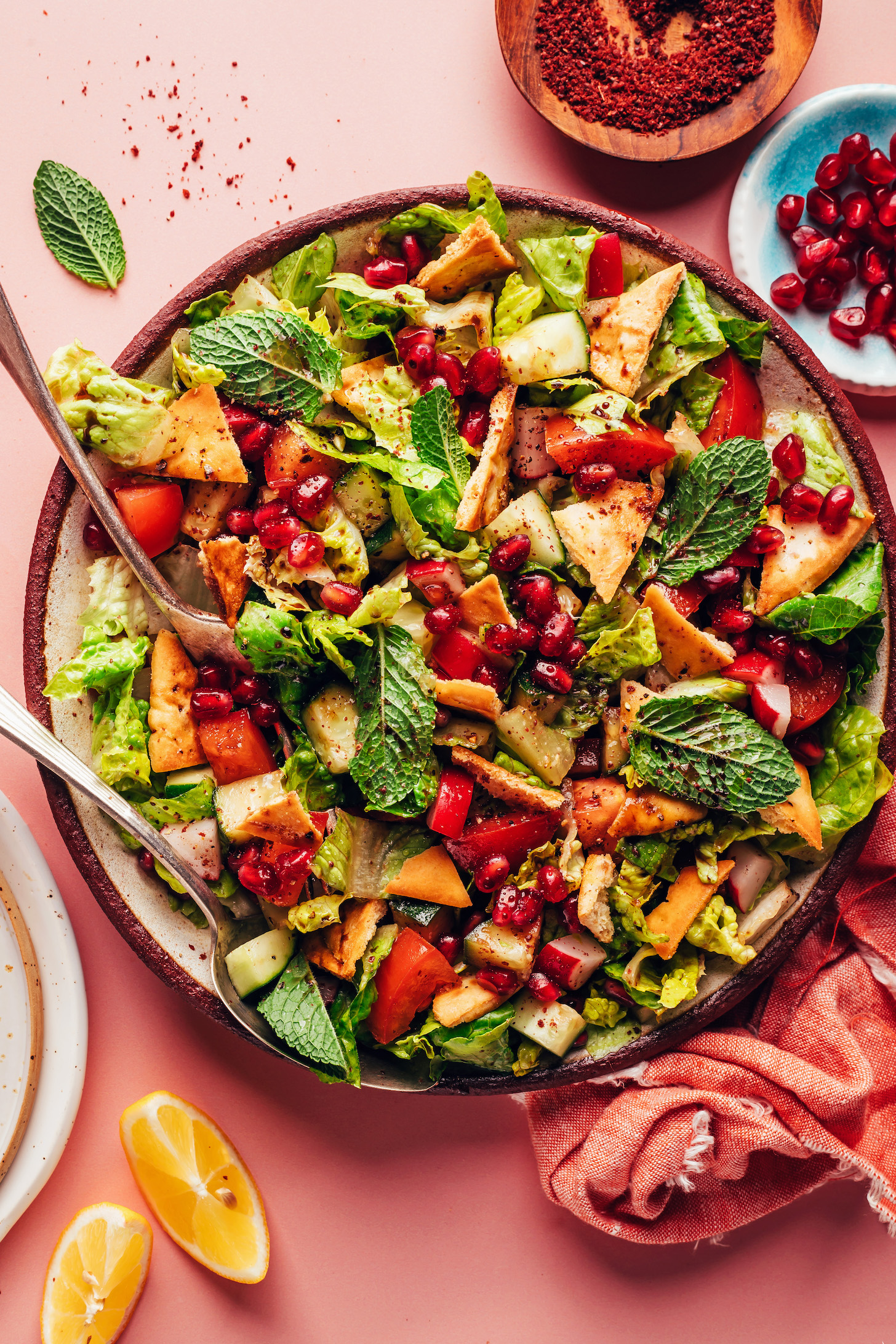
The dish is native to the Levant region, which encompasses modern-day Lebanon, Syria, Jordan, Palestine, and Israel. In these cultures, Fattoush is more than a simple side dish; it is a testament to the "peasant kitchen" philosophy, where humble ingredients are elevated through the strategic use of spices and acids. Unlike the Tabouli salad, which relies heavily on parsley and bulgur, Fattoush is prized for its larger, rustic vegetable chunks and the distinctive sour notes provided by sumac and pomegranate molasses.
The Science of Flavor: Essential Ingredients
The 20-minute adaptation of Fattoush relies on a specific hierarchy of ingredients to achieve its complex flavor profile. Each component serves a functional role in the balance of texture and taste.
The Aromatic Base and Vegetables
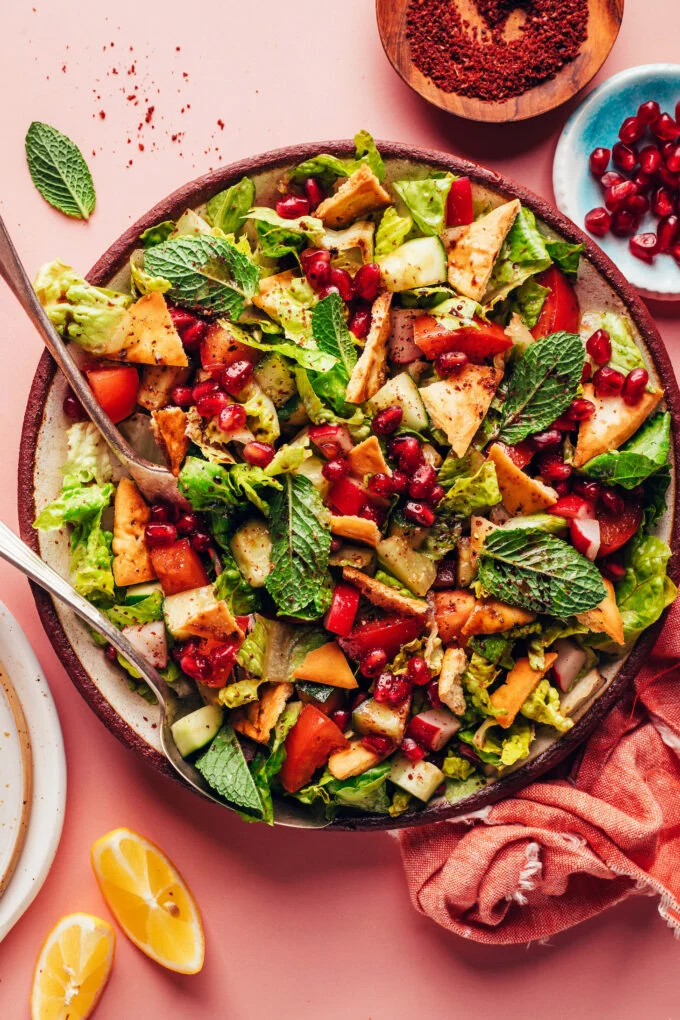
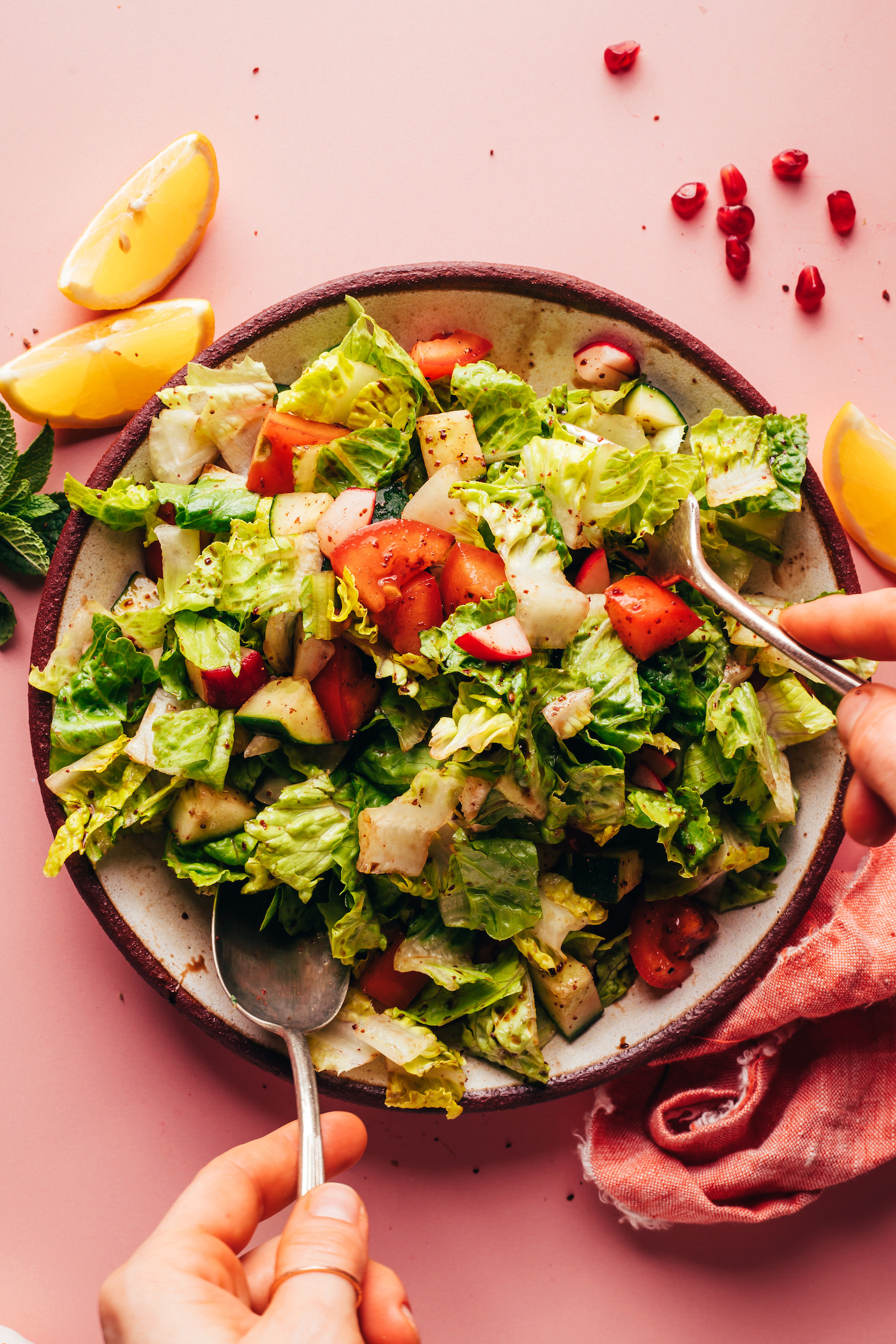
The foundation of the salad is chopped romaine lettuce, chosen for its high water content and neutral, crunchy spine. This is supplemented by a trio of essential vegetables:
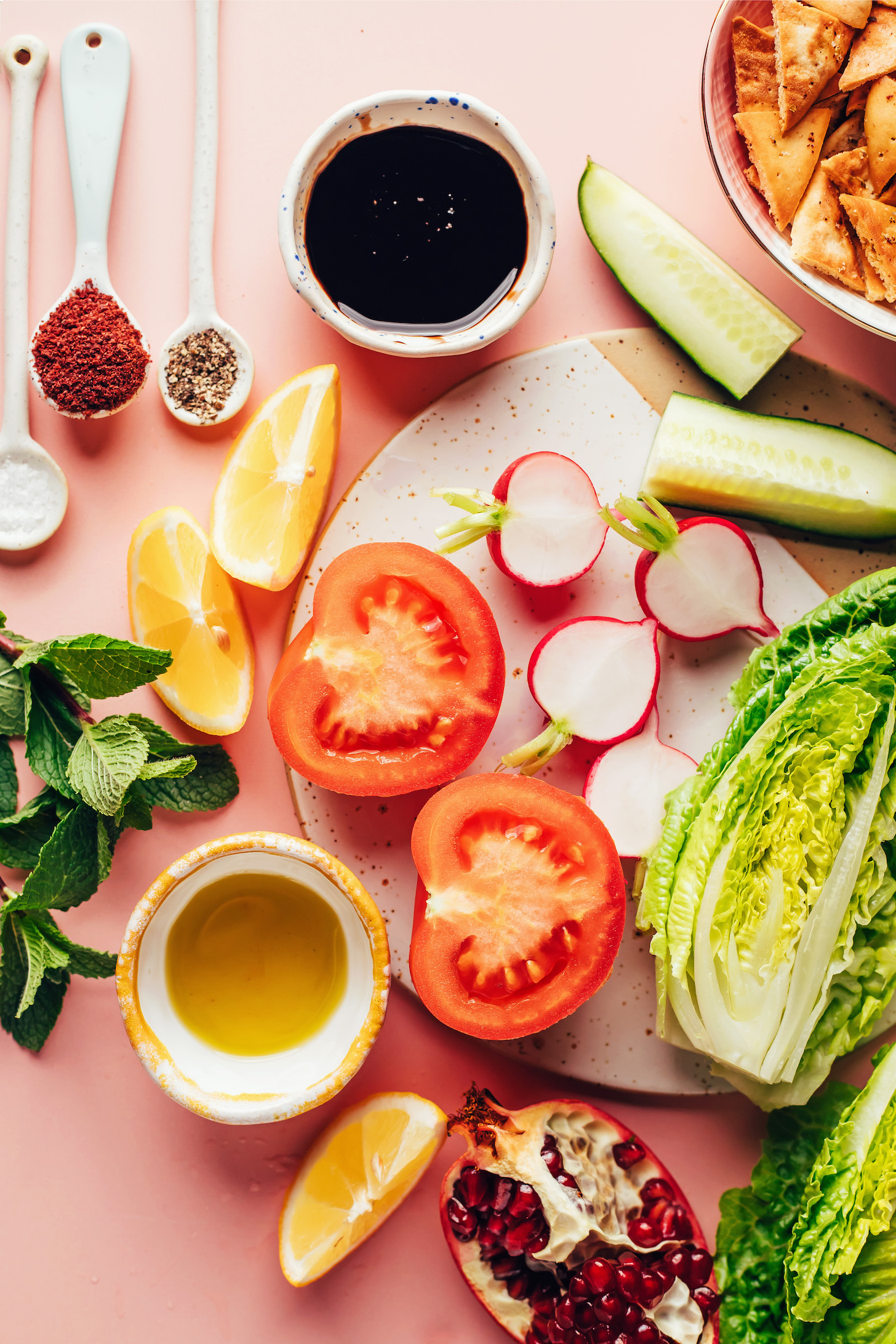
- Cucumbers: Ideally Persian or Lebanese varieties, which possess a thinner skin and more concentrated flavor than standard garden cucumbers.
- Radishes: These provide a sharp, peppery bite that contrasts with the cooling nature of the greens.
- Tomatoes: These contribute acidity and sweetness, acting as a natural binder for the dressing.
The Role of Sumac and Pomegranate Molasses
The defining characteristic of a true Fattoush is its tartness. This is achieved through two specific ingredients that are non-negotiable in the Levantine pantry. Sumac, a spice made from the dried and ground berries of the Rhus coriaria shrub, offers a dry, fruity acidity that is less volatile than lemon juice. Pomegranate molasses, a syrup made by reducing pomegranate juice, adds a deep, syrupy tart-sweetness that provides the "major yum" factor cited by culinary enthusiasts.
Textural Contrast: The Pita Element
The "fattoush" or "crumbs" are represented by pita chips. While traditional recipes often involve deep-frying pieces of old khubz (flatbread), modern healthy iterations utilize baked pita chips. These act as sponges for the dressing while maintaining enough structural integrity to provide a satisfying crunch.
Chronology of Preparation: The One-Bowl Method
The efficiency of the 20-minute Fattoush lies in its chronological assembly, which minimizes cleanup and maximizes flavor infusion.
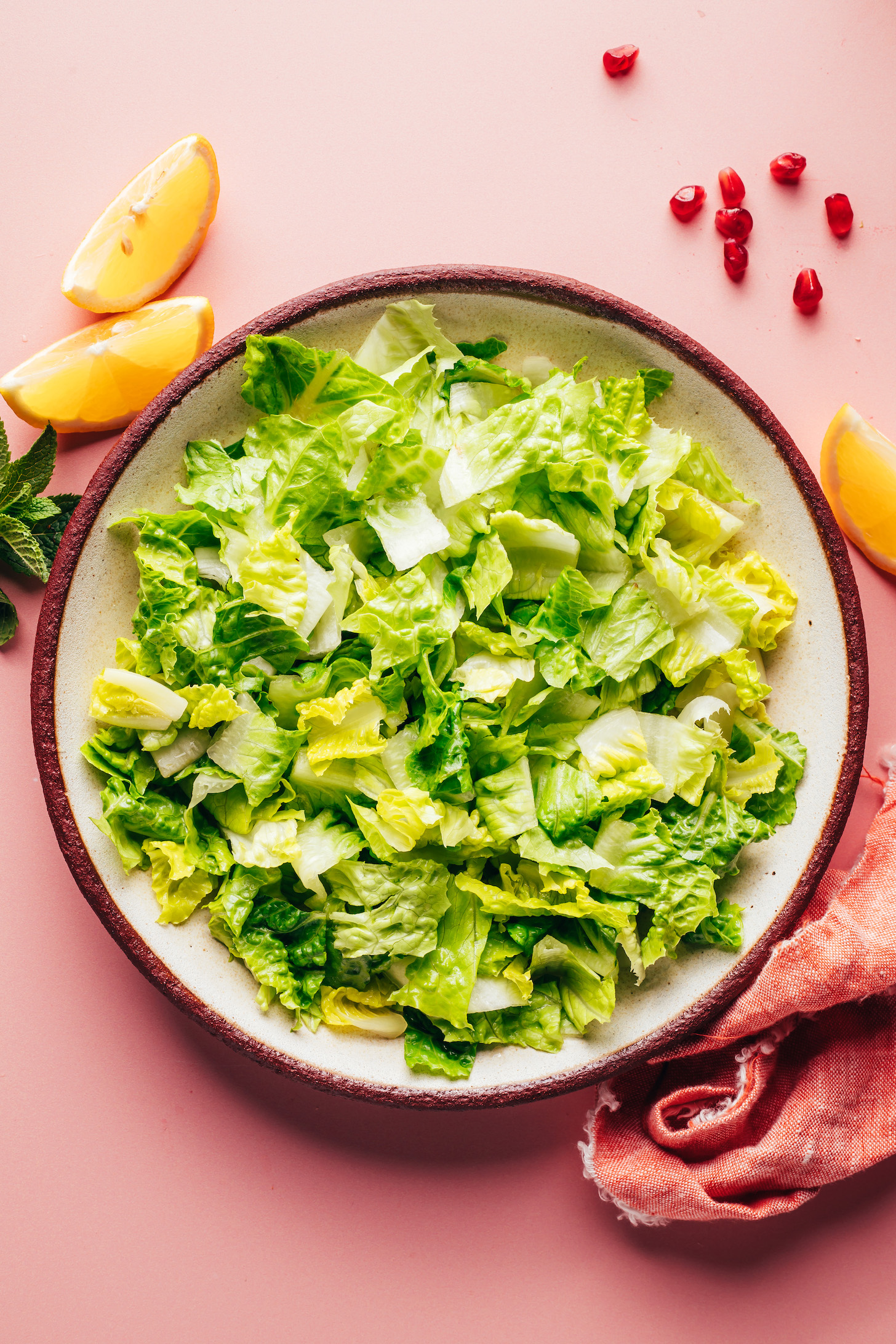
- Base Assembly: The process begins with the chopping of romaine lettuce and the dicing of cucumbers, tomatoes, and radishes. These are placed directly into a large serving bowl.
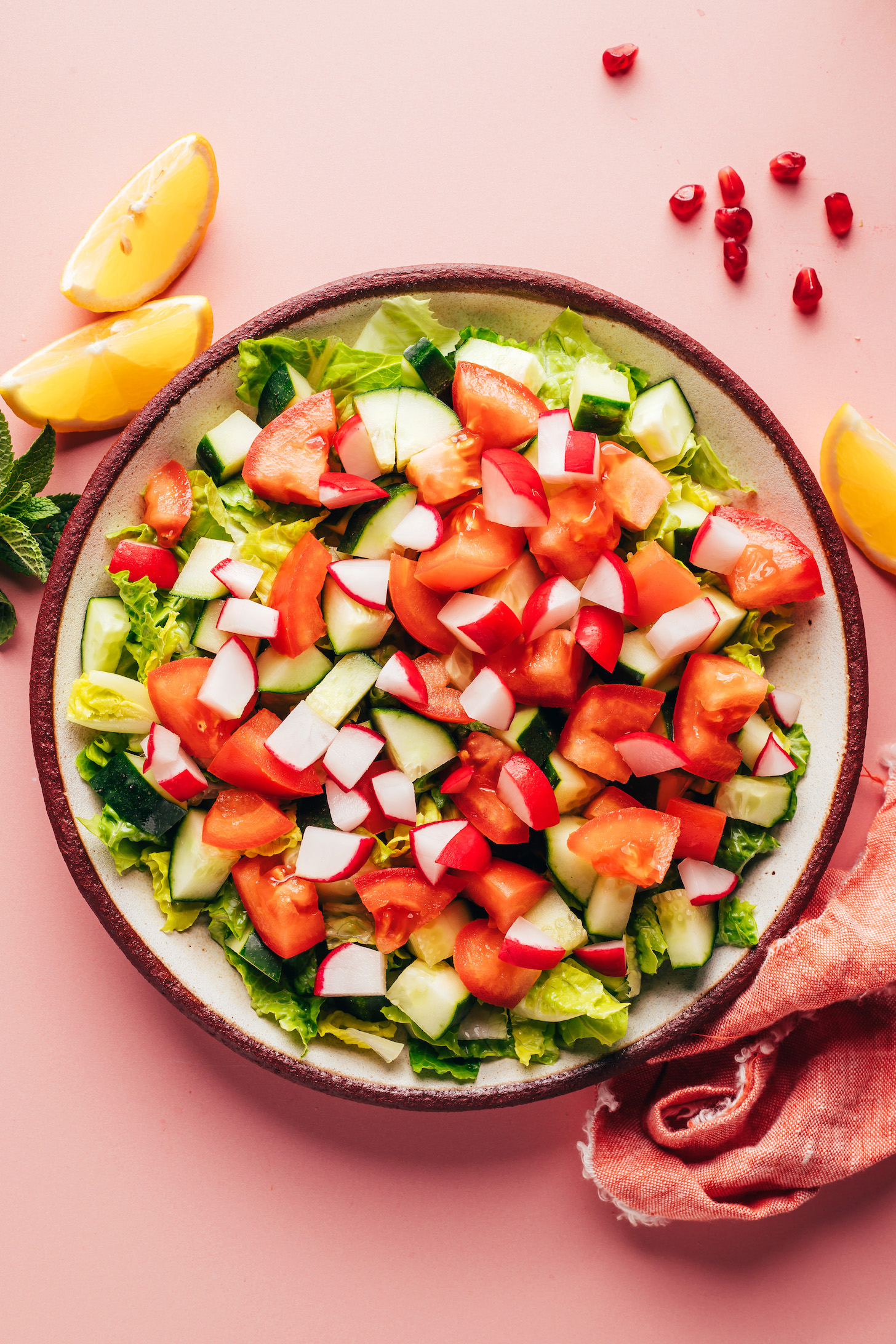
- The "No-Mix" Dressing Technique: In a departure from traditional vinaigrette preparation, the dressing ingredients—lemon juice, pomegranate molasses, sumac, salt, and pepper—are added directly over the vegetables. This allows the salt to macerate the tomatoes and cucumbers, drawing out their natural juices to create a more integrated dressing.
- Herbal Integration: Fresh mint leaves are added next. Keeping the leaves whole or roughly torn preserves the volatile oils, ensuring that the herby flavor is released only upon consumption.
- Final Textural Layering: Immediately before serving, pita chips and pomegranate arils are tossed into the bowl. This timing is critical; adding the bread too early results in sogginess, which is considered a technical failure in Levantine cooking.
Nutritional Analysis and Health Implications
From a nutritional standpoint, the Easy Fattoush Salad aligns with the principles of the Mediterranean Diet, which has been extensively studied for its cardiovascular benefits.
According to nutritional data for a standard side serving, the salad contains approximately 127 calories, making it a low-energy-density food that is high in volume. It provides 4 grams of dietary fiber and 2.8 grams of protein. The inclusion of diverse vegetables ensures a high intake of Vitamin A (562 IU) and Vitamin C (14 mg), while the pomegranate components contribute polyphenols and antioxidants.
Dietary experts note that the use of sumac is particularly beneficial, as the spice is known for its anti-inflammatory properties. Furthermore, the salad is naturally vegan and can be rendered gluten-free by substituting traditional pita with grain-free crackers or gluten-free flatbread, making it highly compatible with modern dietary restrictions.
Market Trends and the Globalization of Middle Eastern Flavors
The rise of recipes like the 20-minute Fattoush reflects a broader shift in the global food market. Data from culinary trend reports indicates a 15% year-over-year increase in the consumer demand for Middle Eastern spices like sumac and za’atar in Western supermarkets.
This globalization of flavor is driven by the "Minimalist" cooking movement, which prioritizes short ingredient lists and rapid preparation times without sacrificing authenticity. Professional chefs observe that as consumers become more educated about regional cuisines, they seek out specific ingredients like pomegranate molasses, which was once considered an exotic specialty item but is now a staple in many household pantries.
Broader Implications for Sustainable Eating
The Fattoush tradition offers a blueprint for sustainable domestic food management. By centering a meal around "day-old" bread and seasonal vegetables, it encourages a reduction in household food waste. In the context of rising food costs, the ability to transform inexpensive staples into a nutrient-dense, flavorful meal has significant economic implications for the average consumer.
Furthermore, the versatility of the dish—allowing for the addition of chickpeas or grilled proteins—demonstrates how a simple salad can be scaled into a complete entree. This flexibility supports the "plant-forward" eating movement, which seeks to reduce meat consumption by making vegetable-based dishes more palatable and filling.
Conclusion and Future Outlook
The Easy Fattoush Salad is more than a convenient recipe; it is a bridge between ancient culinary traditions and contemporary lifestyle needs. By simplifying the preparation to a single bowl and twenty minutes, the dish ensures that the vibrant flavors of the Levant remain a viable option for modern families.
As the culinary world continues to move toward a fusion of speed and authenticity, the principles of the Fattoush—acidity, crunch, and freshness—are likely to inspire further adaptations of classic dishes. For now, this one-bowl version stands as a definitive example of how "peasant food" continues to evolve and thrive in the 21st century, offering a refreshing, tart, and deeply satisfying experience that remains, as the original text suggests, "so delicious."