
The landscape of the American restaurant industry is undergoing a paradigm shift, moving away from generalized dining experiences toward hyper-specialized, narrative-driven concepts that prioritize supply chain transparency. At the forefront of this movement in the Intermountain West is Sean Huggard, the founder and CEO of Shucking Good Hospitality. Huggard is currently navigating the complex transition from executive chef to corporate strategist, a move punctuated by his ambitious "20 in 10" plan—a goal to open 20 restaurant locations across the United States within the next decade. Central to this expansion is a unique vertical integration model that connects Denver’s landlocked dining rooms directly to the oyster beds of Long Island, New York.
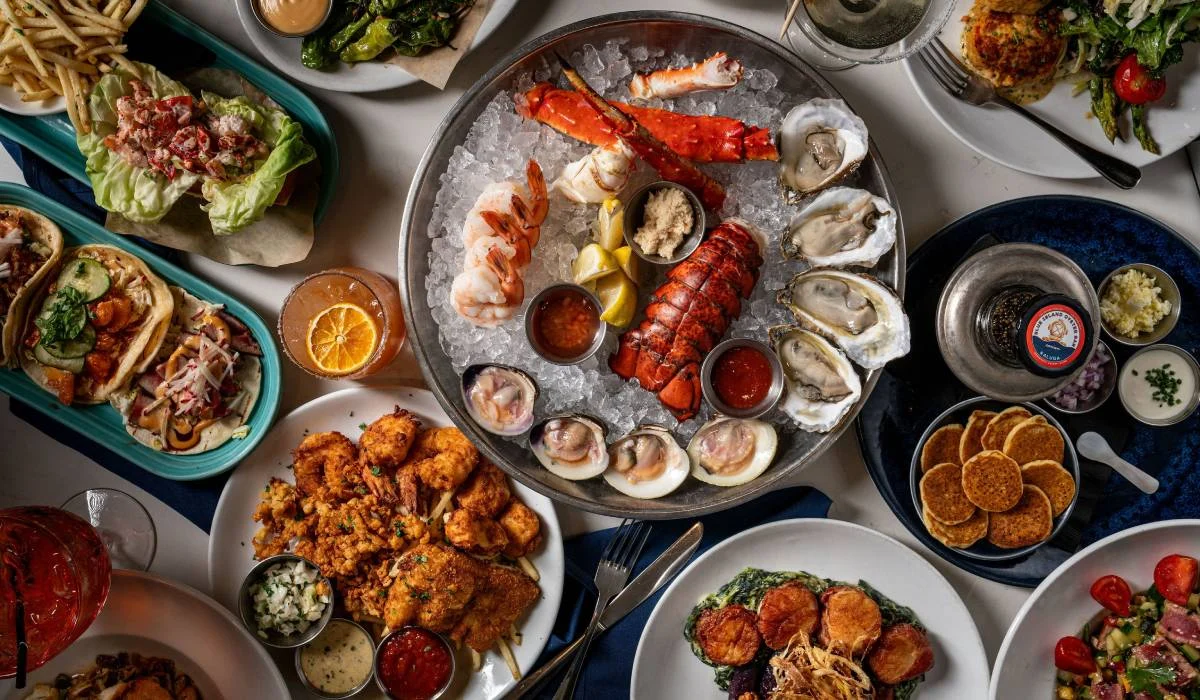
Huggard’s approach is a calculated bet on the "dock-to-dish" philosophy, a term that has become a cornerstone of his brand identity. While many restaurateurs rely on third-party distributors to source their proteins, Huggard has secured a competitive moat by partnering directly with the source of his product. This strategy is most evident in his flagship concept, Blue Island Oyster Bar & Seafood, which leverages a direct partnership with Blue Island Shellfish Farms. This relationship allows Huggard to bypass traditional supply chain delays, ensuring that seafood harvested in the Atlantic reaches Denver plates with a speed that often rivals coastal establishments.
The Evolution of a Culinary Entrepreneur: A Chronology
Sean Huggard’s trajectory in the hospitality sector is a classic study in industry immersion. His career began in the kitchens of Boston, where as a teenager he performed the foundational tasks of a dishwasher and prep cook. This early exposure to the "back of house" mechanics provided the groundwork for his future leadership style, which he describes as "forever evolving" between the roles of creative director and operational executive.
By the age of 19, while most of his peers were beginning their collegiate journeys, Huggard opened his first restaurant, Keepers, on Cape Cod. This venture served as a real-world laboratory while he pursued formal training at the prestigious Culinary Institute of America (CIA) in Hyde Park, New York. Graduating in 2002, he further refined his technical skills as the executive chef at The Summer House on Nantucket Island. It was during this period that his affinity for seafood matured from a professional requirement into a personal obsession.
The mid-2000s marked a strategic shift in Huggard’s career as he moved to Los Angeles to join the Hillstone Restaurant Group, specifically working with the Houston’s brand. Hillstone is widely regarded in the industry as a "finishing school" for high-volume, high-standard operations. This experience provided Huggard with the corporate discipline necessary to manage multi-unit portfolios.
In 2005, Huggard relocated to Denver, Colorado, taking on the role of Director of Operations for Concept Restaurants. In this capacity, he oversaw a diverse portfolio of boutique hotels and dining establishments. However, his entrepreneurial ambitions led him to partner with Steve White to open Black Pearl in Denver’s South Pearl Street district. While Black Pearl gained national media attention, it struggled with volume, eventually closing in 2016. Huggard views this period as a vital educational phase, noting that the restaurant’s legacy persists through loyal patrons who still request menu items from the defunct concept nearly a decade later.

Vertical Integration: The Blue Island Competitive Advantage
The founding of Shucking Good Hospitality in 2016 represented the culmination of Huggard’s New England roots and his operational expertise. The cornerstone of the group is Blue Island Oyster Bar & Seafood, a concept that addressed a significant gap in the Denver market: the demand for ultra-fresh, East Coast-style seafood in a landlocked environment.
The defining characteristic of Blue Island is its relationship with Chris Quartuccio, a diver who founded Blue Island Shellfish Farms in Long Island in 1995. Unlike traditional restaurant-vendor relationships, this partnership involves a deep level of scientific and logistical integration. The farm utilizes a hatchery where marine biologists breed and grow oyster seeds, which are then nurtured in the farm’s beds until they reach maturity.
"We’re a restaurant group that’s attached to scientists," Huggard noted during a recent strategy discussion. This connection allows Shucking Good Hospitality to control the narrative of the product from the moment of conception in a lab to the moment of service at the bar. Industry analysts suggest that this level of vertical integration is rare, with perhaps only a handful of other restaurant groups in the United States maintaining such a rigorous "seed-to-stomach" oversight.
This model serves as an effective rebuttal to the common perception that seafood in the Mountain West is inherently less fresh than that found on the coasts. Huggard frequently points out the logistical reality of modern air freight: seafood destined for Los Angeles from the East Coast often flies over Colorado first. By streamlining the distribution process, Huggard’s restaurants often receive Atlantic catches 24 hours earlier than coastal competitors who rely on standard wholesale channels.
Financial Performance and Market Expansion
The financial growth of Blue Island Oyster Bar & Seafood serves as a testament to the viability of the "dock-to-dish" narrative. In its inaugural year, the Cherry Creek location generated approximately $1.5 million in revenue. Through a combination of brand building, consumer education, and operational refinement, that same concept is projected to reach $12 million in annual revenue this year.
This growth has emboldened Huggard to diversify the Shucking Good Hospitality portfolio. While Blue Island remains the primary growth vehicle due to its unique supply chain advantage, the group has introduced two other distinct concepts:
- Oliver’s Italian: A concept focused on elevated Italian-American classics, designed to provide a "cozy" and consistent neighborhood dining experience.
- Ash and Agave: Launched in April in Denver’s Cherry Creek neighborhood, this concept blends Huggard’s love for the ocean with wood-fired Mexican cuisine. The menu features a signature raw bar alongside mezcal- and tequila-centric beverage programs, emphasizing the "smoky" profiles of agave spirits.
A second location for Ash and Agave is already in development for the Denver Tech Center (DTC) area, signaling a strategy of clustering different concepts within high-traffic metropolitan hubs.

Supporting Data: The Rising Demand for Traceability
Huggard’s focus on storytelling and origin is supported by broader consumer trends in the United States. According to data from the National Restaurant Association’s "What’s Hot" 2024 report, "sustainability" and "source transparency" remain top priorities for diners, particularly in the premium casual and fine-dining segments. Furthermore, the U.S. oyster market has seen a resurgence, with domestic production valued at over $200 million annually, driven largely by the "half-shell" market in high-end oyster bars.
The arrival of the Michelin Guide in Colorado in 2023 further validated the state’s culinary maturation. As Denver transitions from its historical reputation as a "meat and potatoes" town to a sophisticated foodie destination, Huggard’s emphasis on marine biology and niche sourcing aligns with the criteria used by international critics to judge culinary excellence: quality of ingredients, mastery of flavor, and the chef’s personality as expressed in the dining experience.
Analysis of Implications and Future Outlook
The "20 in 10" plan is not without its risks. The restaurant industry continues to grapple with fluctuating labor costs and inflationary pressures on food supplies. However, Huggard’s strategy of leaning into Blue Island as his primary national growth vehicle is a move to mitigate these risks through differentiation. As he observed, while many markets have excellent Italian or Mexican restaurants, few possess a boutique seafood brand with a direct link to a dedicated hatchery and farm.
By positioning Blue Island as a "hip and buzzy" brand that transforms its atmosphere throughout the day, Huggard is targeting the "experiential dining" demographic. This group is less sensitive to price increases if the experience includes a compelling, authentic story.
As Shucking Good Hospitality scales, Huggard faces the perennial challenge of the founder: delegating operational control without losing the "pain in the ass" attention to detail that defined his early success. His transition from the kitchen to the boardroom requires a shift from managing recipes to managing cultures.
The broader impact of Huggard’s success may be felt in how other landlocked restaurant groups approach sourcing. If Shucking Good Hospitality successfully completes its national expansion, it will serve as a blueprint for how specialized supply chains can overcome geographic limitations. For now, Huggard remains focused on the intersection of science and service, ensuring that even as he dons his CEO hat, the "cook" within him continues to obsess over the perfect oyster shooter. His bet is clear: in an era of digital disconnection, customers will pay a premium for a real connection to the ocean, even in the heart of the Rockies.