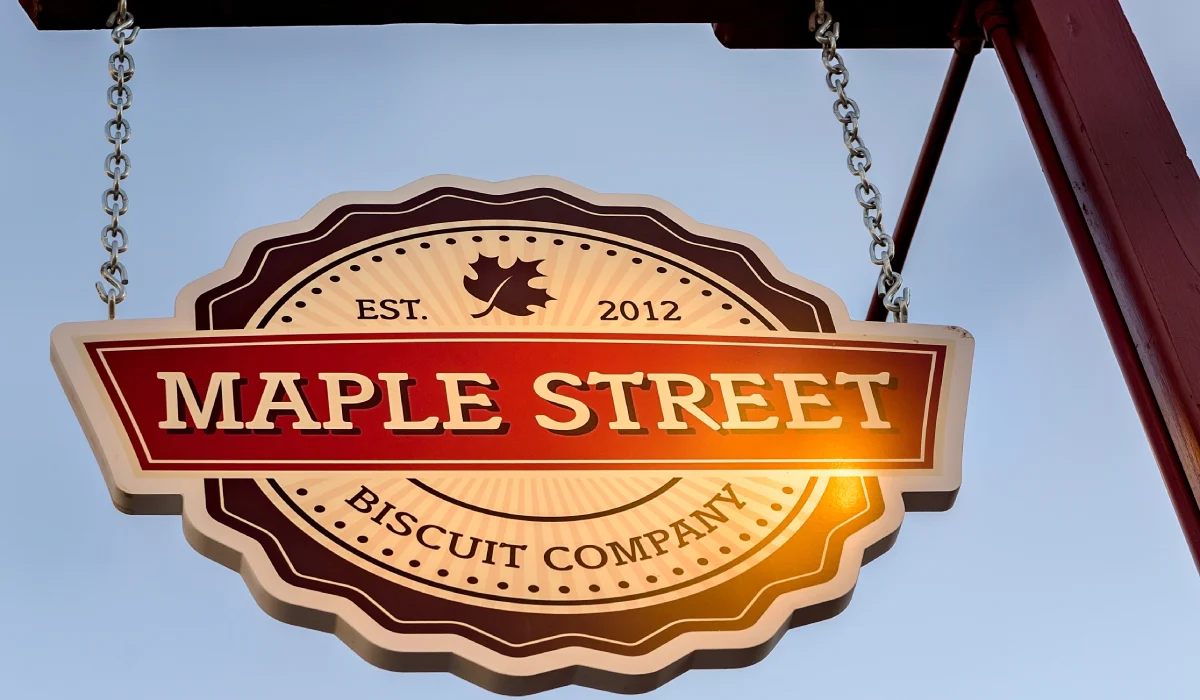

In a decisive move to refocus on its core brand identity and streamline its operational portfolio, Cracker Barrel Old Country Store, Inc. has officially announced its exit from the fast-casual breakfast sector. The Lebanon, Tennessee-based company confirmed on Monday that it has entered into a definitive agreement to sell the trademark, intellectual property, and assets of 35 Maple Street Biscuit Company locations to Biscuit Belly, an emerging competitor in the fast-casual breakfast and brunch space. As part of this sweeping organizational restructuring, the company also confirmed that the remaining 16 Maple Street locations not included in the sale will be permanently shuttered.
The divestiture marks the end of a five-year experiment for Cracker Barrel, which had initially acquired the Jacksonville-based Maple Street brand with the intention of capturing a younger, more urban demographic through a fast-casual model. However, under the leadership of CEO Julie Masino, the company has increasingly prioritized a "strategic transformation" of the flagship Cracker Barrel brand, which has faced headwinds from shifting consumer preferences and a challenging macroeconomic environment.
Financial Implications and Exit Costs
The financial impact of the divestiture is significant, reflecting both the costs of exiting lease obligations and the impairment of assets. Cracker Barrel management expects to record non-cash charges ranging between $37 million and $39 million in the fourth quarter of the current fiscal year. These charges are primarily tied to the write-down of intangible assets and property associated with the Maple Street brand.
In addition to these non-cash impairments, the company anticipates incurring approximately $6 million to $8 million in direct cash costs. These expenses are related to employee severance packages, lease termination fees for the 16 closing units, and other administrative exit expenses. While a portion of these costs will be recognized immediately, the company noted that some payments and accounting adjustments will extend into fiscal 2027.
Despite the immediate financial hit, the move is projected to be accretive to Cracker Barrel’s long-term profitability. Maple Street currently contributes less than 2 percent of Cracker Barrel’s total annual revenue. By removing the operational drag and overhead associated with the smaller subsidiary, leadership expects to see an improvement in adjusted EBITDA (Earnings Before Interest, Taxes, Depreciation, and Amortization) beginning in the 2027 fiscal year.
A Chronology of the Maple Street Acquisition
To understand the context of this divestiture, one must look back at the trajectory of Maple Street Biscuit Company. Founded in 2012 by Gus Evans and Scott Moore, the brand quickly gained a cult following in Florida for its "community-store" feel and innovative biscuit sandwiches. Its success caught the eye of Cracker Barrel leadership, who were looking for a growth vehicle that operated outside the traditional casual dining format.
In 2019, Cracker Barrel purchased Maple Street for $36 million in an all-cash transaction. At the time of the acquisition, the chain consisted of 28 company-owned restaurants and five franchised locations. The strategy was to leverage Cracker Barrel’s supply chain and real estate expertise to rapidly scale the concept across the Southeastern United States.
For several years, the expansion appeared to be on track. The brand’s footprint grew steadily:
- Fiscal 2020: 35 restaurants
- Fiscal 2021: 37 restaurants
- Fiscal 2022: 51 restaurants
- Fiscal 2023: 59 restaurants
- Fiscal 2024: 66 restaurants
- Fiscal 2025: 68 restaurants
However, despite the increasing unit count, the brand struggled to achieve the margins necessary to justify continued investment amidst a broader downturn in the casual dining sector. By May 2024, the company signaled a shift in strategy, announcing plans to slow development and "refine" the business model. This culminated in a September 2024 announcement that 14 underperforming units would be closed, a precursor to the total divestiture announced this week.
Strategic Realignment Under Julie Masino
The decision to sell Maple Street is a cornerstone of the broader "strategic transformation" initiated by CEO Julie Masino, who took the helm in late 2023. Masino, a veteran executive with experience at Taco Bell and Starbucks, has been vocal about the need to "revitalize" the Cracker Barrel brand, which has struggled with aging infrastructure and a perceived lack of relevance among Gen Z and Millennial diners.
During a February 2024 earnings call, Masino hinted at the eventual fate of the fast-casual subsidiary. While she acknowledged there was "a lot to love about Maple Street," she emphasized that the corporate focus was squarely on returning the $3 billion core business to strength. The company’s transformation plan includes a $700 million investment over the next several years aimed at remodeling stores, updating menus, and improving digital integration. In such a high-stakes environment, the management of a secondary brand was increasingly viewed as a distraction for executive leadership and a dilution of capital resources.
The Sale-Leaseback Strategy and Debt Reduction
Simultaneous with the Maple Street announcement, Cracker Barrel revealed it had completed a significant sale-leaseback transaction. The deal involves 26 company-owned Cracker Barrel properties, which were sold to a third party and subsequently leased back to the company. This transaction generated approximately $77 million in net proceeds.
Management has indicated that the primary use of this cash will be to reduce the company’s outstanding debt. In an era of elevated interest rates, strengthening the balance sheet has become a priority for restaurant groups looking to maintain flexibility. By converting "bricks and mortar" into liquid capital, Cracker Barrel is positioning itself to fund its aforementioned $700 million revitalization plan without overextending its credit lines.
Biscuit Belly: The New Custodian of the Maple Street Legacy
The acquisition of 35 Maple Street locations is a transformative event for Biscuit Belly. Founded in 2019 by Chad and Lauren Coulter, the Louisville-based Biscuit Belly has been a rising star in the "better breakfast" category. Prior to this deal, the chain operated approximately 15 locations across nine states.
By more than doubling its footprint overnight, Biscuit Belly effectively leaps into a new tier of competition. The acquisition provides the brand with immediate entry into high-traffic markets in the Southeast where Maple Street already had established brand equity. For Biscuit Belly, the challenge will be integrating these units into its existing operational framework while maintaining the customer loyalty that the Maple Street brand cultivated over the last decade.
Industry analysts suggest that Biscuit Belly may be better positioned to manage these assets than a large legacy corporation like Cracker Barrel. As a smaller, more nimble organization focused exclusively on the fast-casual breakfast niche, Biscuit Belly can provide the specialized attention and localized marketing that a 600-unit behemoth like Cracker Barrel often finds difficult to execute for a subsidiary brand.
Current Performance and Market Outlook
The announcement comes as Cracker Barrel reports its preliminary performance for the first 11 weeks of the fourth quarter of 2026. The data reflects a mixed bag for the hospitality giant. Same-store sales at the flagship Cracker Barrel locations declined by approximately 2.5 percent compared to the prior year, a sign that consumer traffic remains under pressure as inflationary concerns weigh on household discretionary spending.
Conversely, the company’s retail segment—a unique component of the Cracker Barrel model featuring gift shops attached to restaurants—saw a 0.5 percent increase in comparable sales. This suggests that while dining room traffic is soft, the brand’s "retail-tainment" appeal remains a viable draw for travelers and loyalists.
Despite the decline in same-store sales, Cracker Barrel management remains optimistic about its fiscal 2026 outlook. The company now expects to reach or exceed the high end of its revenue guidance, which is pegged between $3.27 billion and $3.30 billion. Furthermore, the company anticipates surpassing its adjusted EBITDA guidance of $120 million to $125 million, buoyed by cost-cutting measures and the operational efficiencies gained from the Maple Street exit.
Analysis of the Broader Casual Dining Landscape
The divestiture of Maple Street by Cracker Barrel is reflective of a broader trend in the American restaurant industry: the "return to the core." During the mid-to-late 2010s, many legacy casual dining brands sought to diversify by acquiring "bolt-on" fast-casual concepts. The logic was that fast-casual offered higher growth potential and lower labor requirements.
However, the post-pandemic landscape has changed the calculus. Increased labor costs, soaring food inflation, and the "polycrisis" of supply chain disruptions have made operating multiple distinct business models increasingly complex. Competitors like Darden Restaurants and Bloomin’ Brands have also faced scrutiny over their multi-brand portfolios, with some activists pushing for spin-offs to unlock value.
For Cracker Barrel, the exit from Maple Street allows the company to pour its resources into its "Cracker Barrel of the Future" initiative. This includes a massive overhaul of the menu—testing new items like shepherd’s pie and premium burgers—and a redesign of the store interior to feel more modern while retaining its "down-home" charm.
The market’s reaction to the news has been cautiously optimistic. Investors generally favor companies that demonstrate disciplined capital allocation. By cutting ties with a non-core asset that contributed little to the bottom line, Cracker Barrel is signaling to Wall Street that it is serious about its turnaround. The next 18 to 24 months will be critical as the company navigates the execution of its store remodels and attempts to reverse the negative same-store sales trends that have plagued the casual dining sector at large.
As for the 16 Maple Street locations that are closing, the impact on local labor markets will be mitigated by the company’s commitment to severance and transition assistance. The sale to Biscuit Belly, meanwhile, preserves the jobs at the 35 remaining locations, providing those employees with a new path forward under a brand that is fully committed to the fast-casual breakfast mission.