
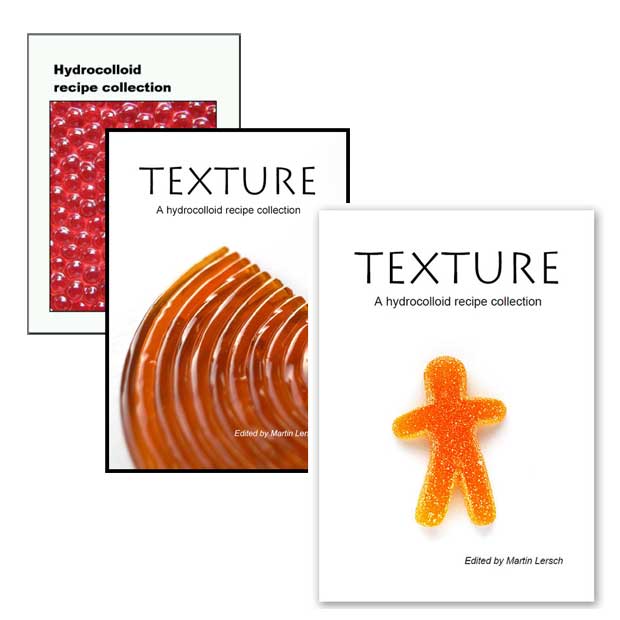
After a six-year hiatus since its last major revision, the esteemed "Texture – A Hydrocolloid Recipe Collection" is set to receive an incremental update, designated v3.1. This significant development was announced by the project’s curator, signaling a renewed push to refine existing content, correct inaccuracies, and broaden the scope of this widely utilized resource in molecular gastronomy and modern food science. The forthcoming revision emphasizes a community-driven approach, actively soliciting feedback, successful recipe photographs, and novel applications for both established and underrepresented gelling and thickening agents.
A Legacy of Culinary Innovation: The "Texture" Project
"Texture" has long stood as a foundational compendium for chefs, food scientists, and culinary enthusiasts exploring the transformative potential of hydrocolloids. These natural or synthetic polymers, which can thicken, gel, emulsify, and stabilize food products, are integral to achieving specific textures, mouthfeels, and structural integrity in a vast array of dishes. From the delicate foams of avant-garde cuisine to the stable emulsions of everyday sauces, hydrocolloids represent a critical interface between chemistry and culinary art. The "Texture" collection demystifies these ingredients, providing practical recipes and guidelines that enable users to experiment and innovate with confidence. Its open-access model has significantly contributed to the democratization of advanced culinary techniques, making knowledge once confined to specialized laboratories accessible to a global audience.
The project’s significance lies not only in its practical recipes but also in its educational value. It provides a structured approach to understanding the functional properties of various hydrocolloids, guiding users through their appropriate applications, optimal concentrations, and potential pitfalls. This systematic compilation helps bridge the gap between theoretical food science and practical kitchen application, fostering a deeper understanding of ingredient functionality. The ongoing commitment to updating and expanding this resource underscores its enduring relevance in a culinary landscape that continues to evolve through scientific inquiry and creative experimentation.
The Evolution of a Benchmark: A Chronology of "Texture" Editions
The "Texture" project has a well-established history of iterative development, reflecting the dynamic nature of food science and culinary trends. The inaugural version, Texture v.1.0, was first published in 2007. This initial release quickly garnered attention for its novel approach to cataloging and explaining the properties of various hydrocolloids, providing a much-needed practical guide for the burgeoning field of molecular gastronomy. It laid the groundwork for a systematic exploration of how these ingredients could be harnessed to create new sensory experiences.
Building on the success of its predecessor, Texture v.2.0 followed shortly thereafter in 2008. This update incorporated early feedback and expanded the collection with new recipes and refined existing entries, solidifying its reputation as a go-to reference. The rapid succession of these early versions highlighted the urgent demand for such a resource and the project curator’s dedication to its continuous improvement.
The last major overhaul, Texture v.3.0, was released in 2014. This version represented a substantial expansion, integrating years of community feedback, new scientific insights, and a broader range of applications. It refined the categorizations, enhanced the clarity of instructions, and likely included an increased number of visual aids, further cementing its status as an indispensable tool for culinary professionals and serious home cooks alike. The six-year period since v3.0 has seen considerable innovation in food science and culinary arts, creating a fertile ground for the upcoming v3.1. The periodic updates demonstrate a commitment to keeping the resource current, accurate, and reflective of the latest advancements and collective knowledge in the field.
Calling All Culinary Scientists: The Quest for New Data
The impending v3.1 update, described as an "incremental revision," aims primarily to "iron out wrinkles" – a testament to the meticulous standards governing the collection. This means addressing identified typos, correcting factual errors, and generally enhancing the precision and clarity of existing recipes and information. Crucially, the curator has extended a heartfelt thank you to the global community of users who have consistently provided invaluable feedback, identified discrepancies, and submitted successful recipe outcomes over the years. This collaborative spirit is fundamental to the project’s integrity and ongoing utility.
A core component of this update initiative is an explicit call for contributions, particularly photographs and reports on recipe functionality. The curator emphasizes that a recipe accompanied by a photo is a strong indicator of its successful testing, providing visual proof and inspiration for other users. Detailed instructions for photo submission, previously outlined in a 2010 blog post and on page 8 of the existing "Texture" guide, remain relevant. This collaborative model transforms the "Texture" collection from a static publication into a dynamic, living document that benefits from the collective experience of its global user base. The open invitation for users to report any recipes that did not yield the expected results also highlights a commitment to accuracy and reliability, crucial for a scientific culinary resource.
Spotlight on Underrepresented Hydrocolloids
A significant focus of the v3.1 update will be to enrich the content surrounding several hydrocolloids that are currently "underrepresented" within the collection. The curator specifically highlighted guar gum, gum arabic, konjac, locust bean gum (LBG), and tara gum as areas needing substantial expansion. This targeted effort acknowledges the diverse functional properties and culinary potential of these ingredients, many of which are staples in industrial food production but may be less explored in experimental or home kitchens.
- Guar Gum: Derived from guar beans, guar gum is a powerful thickener and stabilizer, often used in dairy products, sauces, and baked goods. Its ability to form a viscous solution in cold water makes it versatile, but its full range of applications, particularly in creating specific textures, may not be widely documented in experimental culinary contexts.
- Gum Arabic (Acacia Gum): Extracted from the acacia tree, gum arabic is known for its excellent emulsifying and stabilizing properties, particularly in beverages and confectionery. It also contributes to film formation and controlled flavor release. Exploring its use beyond traditional applications, perhaps in unique foams or gels, could be a valuable addition.
- Konjac (Glucomannan): Sourced from the konjac plant, glucomannan is a highly viscous dietary fiber famous for its strong gelling properties, especially when combined with calcium salts. It is a cornerstone of traditional Asian cuisine (e.g., konjac noodles) and offers intriguing possibilities for firm, heat-stable gels in modern cooking.
- Locust Bean Gum (LBG): Obtained from the carob tree, LBG acts as a thickener and stabilizer, often used in conjunction with other hydrocolloids like xanthan gum or carrageenan to create synergistic gelling effects. Its ability to create elastic gels and improve mouthfeel in ice creams and desserts makes it a prime candidate for further culinary exploration.
- Tara Gum: Derived from the tara plant, this hydrocolloid shares similarities with both guar gum and LBG, offering excellent thickening and gelling properties. It is often lauded for its smooth texture and stability across a range of temperatures and pH levels, suggesting a broader utility in sophisticated culinary applications.
By actively seeking recipes that "highlight the range of foods each of these hydrocolloids can be used for," the project aims to unlock and document the full potential of these ingredients, providing practical insights for their application in novel dishes. The community is encouraged to share such recipes via comments or direct email, fostering a collaborative expansion of knowledge.
The curator also acknowledged that some hydrocolloids might be "completely missing" from the collection. While intentional omissions include proprietary products like Ultra-Tex, Pure Cote (both modified starches), and Trisol (a wheat fiber), to maintain a focus on widely available, non-proprietary ingredients, accidental omissions due to rarity or novelty are also being addressed. This open invitation for suggestions ensures that the "Texture" collection remains as comprehensive and relevant as possible, reflecting the ever-expanding palette of culinary ingredients.
The Art of Traditional Textures: Beyond Industrial Gelling Agents
A particularly intriguing aspect of the upcoming update is the expansion of the "non-hydrocolloid recipes" category. This section delves into traditional culinary practices from various regional kitchens worldwide that achieve distinct gelling or foaming mechanisms without the explicit addition of industrial hydrocolloids. This demonstrates a profound understanding that complex textures have been created for centuries through natural processes, often involving enzymes, proteins, or starches inherent in the ingredients themselves.
Examples currently included in this category, such as Junket, Cuajada, Ginger milk custard, Aiyu jelly, Grass jelly, Gelled seafood sauce, Tofu, and Hominy, showcase a diverse range of natural gelling agents and techniques.
- Junket and Cuajada rely on rennet, an enzyme traditionally derived from animal stomachs, to coagulate milk proteins and form a delicate, custard-like gel.
- Ginger milk custard often uses proteolytic enzymes present in ginger juice to curdle milk, resulting in a smooth, wobbly texture.
- Aiyu jelly and Grass jelly utilize pectin-like substances or starches naturally present in certain plant extracts to form their characteristic gels.
- Tofu is created by coagulating soy milk proteins, typically with calcium sulfate or magnesium chloride, forming a solid curd.
- Gelled seafood sauce might depend on natural collagen released from bones or skin during cooking, or concentrated starches.
The curator’s call for help in identifying "more examples of gels (or foams!)" that fit this criterion highlights an anthropological interest in food science, recognizing that culinary innovation isn’t solely a modern phenomenon but deeply rooted in traditional wisdom. This expansion acknowledges the global heritage of texture creation and provides a fascinating counterpoint to the synthetic and semi-synthetic hydrocolloids.
The Global Phenomenon of Dalgona Coffee: A Case Study
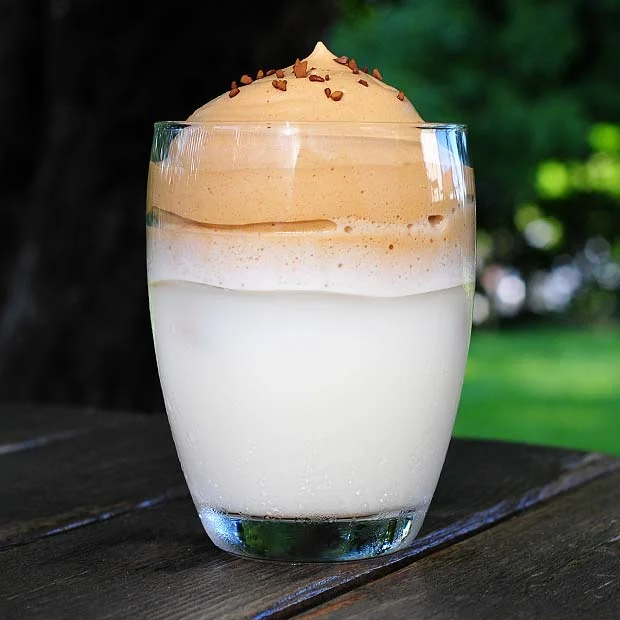
A prominent example explicitly slated for inclusion in the v3.1 update is the Dalgona coffee foam. This choice is particularly timely and culturally resonant. Dalgona coffee, characterized by its whipped, frothy coffee topping served over cold milk, became a global sensation in early 2020 during the initial phases of the COVID-19 pandemic. Its viral spread, largely fueled by social media platforms like TikTok, demonstrated how simple, visually appealing, and easily reproducible recipes could captivate a worldwide audience confined to their homes.
The appeal of Dalgona coffee lies in its simplicity and the dramatic textural transformation achieved with just three ingredients: instant coffee, sugar, and hot water, vigorously whipped. The foam’s stability is largely due to the emulsifying properties of coffee solids and the sugar, which stabilizes the air bubbles and increases the viscosity of the mixture, rather than relying on an added hydrocolloid. Its inclusion in the "non-hydrocolloid" section of "Texture" is highly appropriate, as it exemplifies a naturally occurring foam that achieves desirable textural qualities through mechanical action and ingredient interaction. The Dalgona phenomenon serves as a perfect modern case study for the principles of foam creation without specialized gelling agents, offering an accessible entry point for understanding the physics of aeration and stabilization in everyday ingredients.
The Importance of Community-Driven Research
The "Texture" project stands as a prime example of successful community-driven research and knowledge sharing. By actively soliciting input, recipes, and visual documentation from its user base, the curator fosters a collaborative environment where collective experience enriches the resource. This model not only ensures the accuracy and breadth of the information but also cultivates a sense of ownership and engagement among culinary professionals and enthusiasts worldwide. The process mirrors the open-source movement in software development, where shared contributions lead to robust and continuously improving resources. This approach is particularly valuable in a field like molecular gastronomy, which thrives on experimentation and the rapid dissemination of findings.
Implications for Modern Cuisine and Food Science
The ongoing refinement and expansion of "Texture" carries significant implications for both modern cuisine and the broader field of food science.
Firstly, it continuously empowers chefs and culinary students to push the boundaries of texture creation, enabling them to confidently explore novel ingredient combinations and techniques. A more comprehensive understanding of hydrocolloids and natural gelling mechanisms fosters greater creativity and innovation in recipe development, leading to new sensory experiences and dietary solutions.
Secondly, the resource serves as a vital educational tool, providing practical, real-world applications that complement theoretical food science studies. For aspiring food scientists, it offers tangible examples of how molecular properties translate into functional effects in food. For educators, it provides a well-organized, accessible compendium that can be integrated into curricula focusing on food chemistry, product development, and culinary arts.
Thirdly, by highlighting underrepresented hydrocolloids and traditional gelling methods, the update encourages a more holistic and globally informed approach to food preparation. It promotes an appreciation for both cutting-edge scientific ingredients and time-honored cultural techniques, fostering a fusion of old and new that can lead to truly unique culinary expressions. This blend of scientific rigor and cultural sensitivity enriches the discourse around food texture.
Finally, the project’s open-access nature reinforces the principle of democratizing scientific knowledge. By making such a valuable resource freely available, it removes barriers to entry for individuals and institutions that might not have access to expensive proprietary databases or specialized academic journals. This accessibility ensures that culinary innovation is not limited by economic status or geographic location, but can flourish anywhere there is curiosity and a desire to experiment.
Looking Ahead: The Future of Culinary Textures
The release of "Texture v3.1" is more than just an update; it is a reaffirmation of the project’s commitment to being a dynamic, evolving resource at the forefront of culinary science. As food trends continue to shift towards plant-based diets, sustainable ingredients, and personalized nutrition, the role of hydrocolloids and texture modification will only grow in importance. Future iterations of "Texture" may delve deeper into topics like fat replacement, nutrient encapsulation, or tailored mouthfeel for specific dietary needs, reflecting the ongoing convergence of health, sustainability, and gastronomic pleasure. The collaborative model established by "Texture" ensures its continued relevance and adaptability in addressing these emerging challenges and opportunities in the world of food.
The curator’s meticulous approach, combined with the power of community contributions, guarantees that "Texture – A Hydrocolloid Recipe Collection" will remain an indispensable guide for anyone seeking to master the intricate art and science of food textures for years to come. The invitation for feedback and contributions remains open, urging all passionate culinary explorers to participate in shaping this vital resource for the next generation of food innovators.