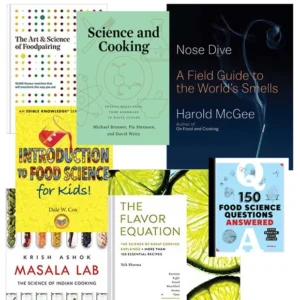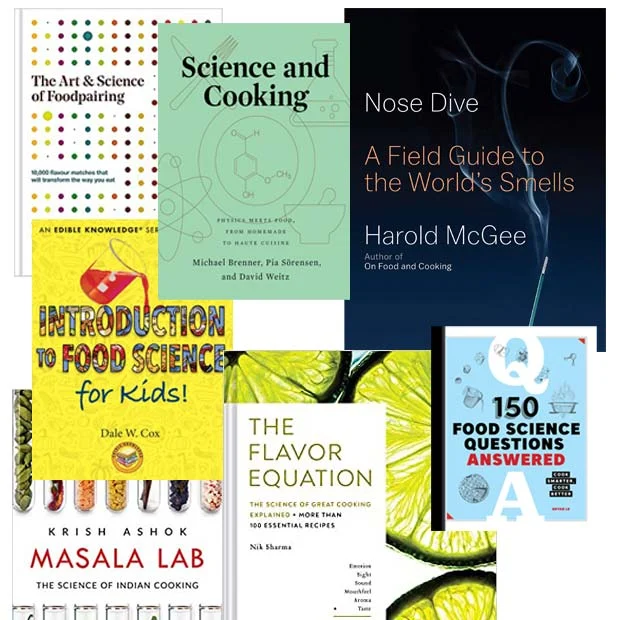

After a significant hiatus from its regular programming, the Khymos blog has reactivated its renowned book recommendation series, focusing on publications that explore the intricate scientific underpinnings of food and cooking. This recommencement, marking the first such update since 2013, highlights a curated selection of seven notable titles published in 2020, signaling a renewed commitment to guiding enthusiasts and professionals through the burgeoning landscape of scientific gastronomy. The blog, known for its discerning eye for works that bridge culinary art with scientific rigor, offers an invaluable resource for those seeking to deepen their understanding of how ingredients behave and flavors interact.
The Enduring Appeal of Scientific Gastronomy and Khymos’s Role
The Khymos blog, founded by Dr. Martin Lersch, a chemist by training, has long served as a pivotal online hub for the molecular gastronomy movement and food science enthusiasts. Its mission has consistently been to demystify culinary processes by applying scientific principles, fostering an environment where curiosity in the kitchen is met with factual explanation. The blog’s previous recommendations, such as those from 2013, played a crucial role in disseminating knowledge about groundbreaking books in the field, including foundational texts that have since become staples in culinary schools and home kitchens alike. The seven-year gap in formal book recommendations underscores the challenges of maintaining such a specialized platform, yet its return reaffirms the sustained and growing public interest in understanding food beyond mere recipes. This renewed focus comes at a time when consumer demand for transparency in food, coupled with a surge in home cooking accelerated by global events, has intensified the search for authoritative information on food science.
Spotlight on 2020’s Premier Scientific Culinary Texts
The 2020 selection reflects a diverse range of topics within food science, from fundamental flavor dynamics to the application of physics and chemistry in advanced culinary techniques, and even tailored approaches for regional cuisines and educational outreach. Each book contributes uniquely to the scientific discourse surrounding food.
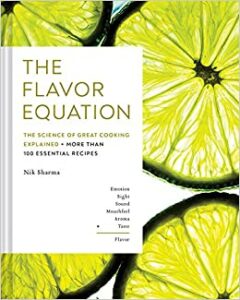
The Flavor Equation by Nik Sharma
Nik Sharma’s The Flavor Equation, a 352-page volume published in 2020, stands out for its innovative integration of scientific principles directly into its approximately 100 recipes. Sharma, a former molecular biologist turned food writer and photographer, employs a unique pedagogical approach by embedding "The Flavor Approach" sections within each recipe. These concise explanations illuminate the scientific rationale behind specific cooking techniques and ingredient combinations, making complex concepts accessible to the home cook. The book delves into various dimensions of flavor—including brightness, saltiness, richness, umami, bitterness, and sweetness—and explores how these elements are manipulated through chemical reactions and physical processes during cooking. A notable feature, particularly for a global audience, is the consistent use of metric units, enhancing its practicality and appeal beyond regions primarily using imperial measurements. Sharma’s work is highly regarded for its ability to empower cooks with a deeper understanding of flavor construction, moving beyond rote instruction to fostering intuitive culinary decision-making based on scientific insight.
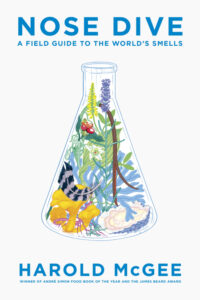
Nose Dive: A Field Guide to the World’s Smells by Harold McGee
Harold McGee, a figure widely recognized for igniting widespread interest in food and cooking from a scientific perspective with his seminal work On Food and Cooking: The Science and Lore of the Kitchen (1984), delivered another monumental contribution in 2020 with Nose Dive: A Field Guide to the World’s Smells. Spanning an impressive 688 pages, this book is an exhaustive exploration of olfaction, extending far beyond the confines of food. McGee meticulously catalogs and describes thousands of volatile molecules responsible for the myriad smells encountered in nature, urban environments, and, crucially, in the kitchen. While the book names specific chemical compounds, McGee’s narrative style ensures that the scientific detail remains engaging rather than intimidating. He connects the molecular structures to their sensory perceptions, providing a comprehensive education on the mechanics and aesthetics of smell. For culinary professionals and enthusiasts, Nose Dive offers an unparalleled resource for understanding how ingredients contribute to aromatic profiles, how cooking transforms these profiles, and how to harness the power of scent to create more compelling dishes. Its release was met with widespread critical acclaim, cementing McGee’s status as a leading authority in food science communication.
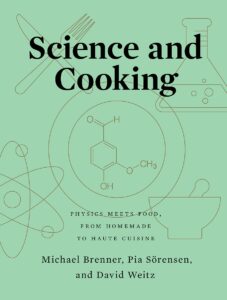
Science and Cooking: Physics Meets Food, From Homemade to Haute Cuisine by Michael Brenner, Pia Sørensen, and David Weitz
Emerging from the highly successful "Science and Cooking" course first taught at Harvard University a decade prior to the book’s publication, this 320-page volume by Michael Brenner, Pia Sørensen, and David Weitz translates academic rigor into practical culinary wisdom. The course itself gained international recognition for its interdisciplinary approach, drawing on physics, chemistry, and applied mathematics to explain everyday cooking phenomena, often featuring guest lectures from celebrated chefs and scientists (many of which are available on YouTube). The book encapsulates this unique curriculum, integrating complex scientific concepts with accessible recipes. The authors, hailing from diverse scientific backgrounds, excel at illustrating how principles such as heat transfer, emulsion stability, and protein denaturation manifest in the kitchen. It caters to both academic curiosity and practical application, appealing to serious home cooks, culinary students, and professional chefs seeking to elevate their craft through scientific understanding. Like Sharma’s book, it commendably includes metric units, reflecting a global perspective in culinary education.
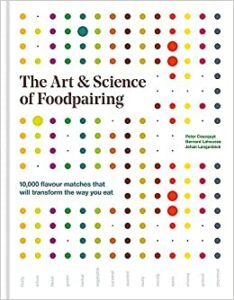
The Art and Science of Foodpairing by Peter Coucquyt, Bernard Lahousse, and Johan Langenbick
This 388-page book, co-authored by Peter Coucquyt, Bernard Lahousse, and Johan Langenbick, represents the culmination of extensive research and application by the company Foodpairing. The concept of food pairing, which posits that ingredients sharing common volatile aroma compounds will pair well together, has been a subject of both fascination and debate within the culinary world. Khymos blog itself previously engaged with Bernard Lahousse, one of the pioneers of this approach, through interviews and reports from The Flemish Primitives conferences. The book systematically explores the scientific basis of flavor compatibility, presenting data-driven insights alongside creative applications. While the scientific framework provides a strong foundation, the authors acknowledge where empirical data gives way to artistic interpretation, emphasizing that science serves as a springboard for culinary innovation rather than a rigid constraint. For chefs and home cooks, it offers a structured yet inspiring method for developing novel flavor combinations, pushing the boundaries of traditional culinary pairings and encouraging experimental gastronomy.
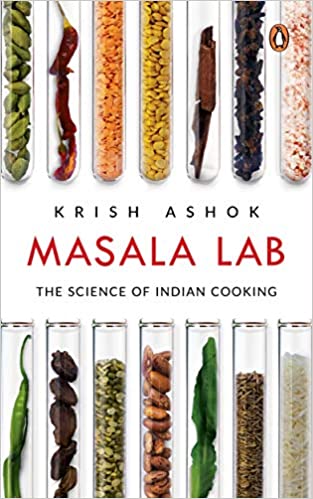
Masala Lab by Krish Ashok
Krish Ashok’s Masala Lab, a 280-page publication, is a significant entry for its focus on applying scientific principles to regional Indian cuisine. The author, an electronic and software engineer, brings a precise, analytical mind to traditional cooking methods, exploring the "why" behind age-old techniques. This approach is particularly noteworthy as scientific gastronomy has often been centered on Western culinary traditions. Ashok’s work serves to democratize scientific cooking by demonstrating its universality and applicability across diverse food cultures. It unpacks the science of tempering, spice blending, fermentation, and other Indian culinary staples, providing explanations that enhance understanding and allow for informed experimentation. While initially facing distribution challenges, primarily being available through Amazon India, its unique contribution to diversifying the scientific culinary literature makes it a highly anticipated read for a global audience interested in the science of South Asian cooking.
150 Food Science Questions Answered: Cook Smarter, Cook Better by Bryan Le
Bryan Le’s 198-page book, 150 Food Science Questions Answered: Cook Smarter, Cook Better, is structured as an accessible Q&A format, making it an ideal resource for those new to the intersection of science and cooking. The book is logically organized into chapters covering cooking basics, flavor fundamentals, various ingredient groups (e.g., proteins, fats, carbohydrates), and crucial aspects of food safety and storage. This layout facilitates quick look-ups and allows readers to delve into specific areas of interest without needing to read the entire text sequentially. Le’s clear and concise explanations empower readers to develop a scientific mindset in the kitchen, enabling them to understand why certain techniques work and how to troubleshoot common culinary issues. It functions as an excellent primer and a handy reference guide, capable of sparking curiosity and enhancing practical cooking skills for beginners and intermediate cooks alike.
Introduction to Food Science for Kids!: A Kitchen-Based Workbook by Dale W Cox
Dale W Cox’s 112-page Introduction to Food Science for Kids!: A Kitchen-Based Workbook targets a crucial demographic: young learners. The title itself succinctly describes its purpose, positioning the kitchen as an interactive laboratory for children to explore fundamental chemical and physical concepts. This workbook encourages hands-on experimentation, turning everyday cooking activities into engaging science lessons. It introduces principles such as states of matter, reactions, density, and sensory perception through simple, safe, and fun experiments that can be conducted with common household ingredients. The educational value of such a resource is immense, fostering early interest in STEM fields while simultaneously developing practical life skills. By making science tangible and relevant to their daily lives, Cox’s workbook helps demystify scientific processes and instills a lifelong appreciation for inquiry and discovery, starting from the very food they eat.
Reflecting on the Broader Landscape of Culinary Science (2014-2019)
While the Khymos blog’s detailed recommendations for the 2014-2019 period were not explicitly provided in the recent update, this span of years represented a period of significant growth and diversification within scientific gastronomy. Following the foundational works of authors like Harold McGee and the rise of modernist cuisine, the field broadened its scope considerably. During these years, there was a noticeable trend towards highly specialized texts, delving into areas such as fermentation science (e.g., Sandor Katz’s influential works), plant-based cooking and its molecular intricacies, and advanced baking science. Publications increasingly combined theoretical knowledge with practical application, often featuring stunning photography and detailed illustrations, exemplified by large-format, multi-volume sets that aimed for comprehensive coverage. The period also saw an increase in academic research translated into accessible formats, moving beyond the niche to engage a wider audience of serious home cooks and culinary students. This expansion underscores a deepening public appetite for the ‘why’ and ‘how’ behind cooking, extending scientific inquiry into every facet of the culinary arts, from ingredient sourcing to plated presentation.
Implications for Culinary Education and Practice
The continuous output of scientifically-oriented culinary literature, as highlighted by Khymos blog’s recommendations, carries profound implications for both professional culinary education and home cooking. For professionals, these books offer tools for innovation, allowing chefs to transcend traditional recipes by understanding the underlying principles that govern ingredient transformation. This knowledge empowers them to create novel dishes, troubleshoot problems systematically, and refine techniques with precision. For instance, understanding the Maillard reaction or protein denaturation provides a scientific framework for achieving desired textures and flavors consistently.
In home kitchens, this genre of literature democratizes complex scientific knowledge, making it accessible to a broader audience. It transforms cooking from a purely empirical activity into an informed practice, enhancing confidence and encouraging experimentation. Books like The Flavor Equation or 150 Food Science Questions Answered provide practical insights that can elevate everyday meals, improve food safety practices, and reduce food waste through a better understanding of ingredient properties and storage.
Furthermore, the emergence of works like Masala Lab and Introduction to Food Science for Kids! signifies a critical expansion of scientific gastronomy. It underscores the universal applicability of food science across diverse cultural cuisines and its potential as an engaging educational tool for all ages. By integrating scientific inquiry into the earliest stages of learning, these resources cultivate critical thinking skills and foster a lifelong appreciation for both science and culinary arts. The Khymos blog’s renewed commitment to curating these essential reads ensures that the discourse on scientific cooking remains vibrant, informed, and accessible, continuing to inspire a deeper, more analytical engagement with the food on our plates.