The intersection of culinary arts and molecular science has reached a new milestone with the public release of Avogadro, a parametric waffle recipe generator developed to commemorate the 250th birth anniversary of the renowned Italian physicist and chemist Amedeo Avogadro. Launched on August 9, 2026, the digital tool aims to deconstruct the traditional approach to baking by allowing users to formulate custom waffle batters through dynamic ingredient selection and adjustable qualitative sliders.
The platform breaks away from static recipe databases, operating instead on real-time computational models. By combining empirical data derived from a corpus of approximately 1,000 Scandinavian and Norwegian waffle traditions with computational fluid dynamics principles applied to baking, the generator seeks to answer a fundamental culinary question: what precisely defines the boundaries of a functional waffle batter?
Main Facts and System Architecture
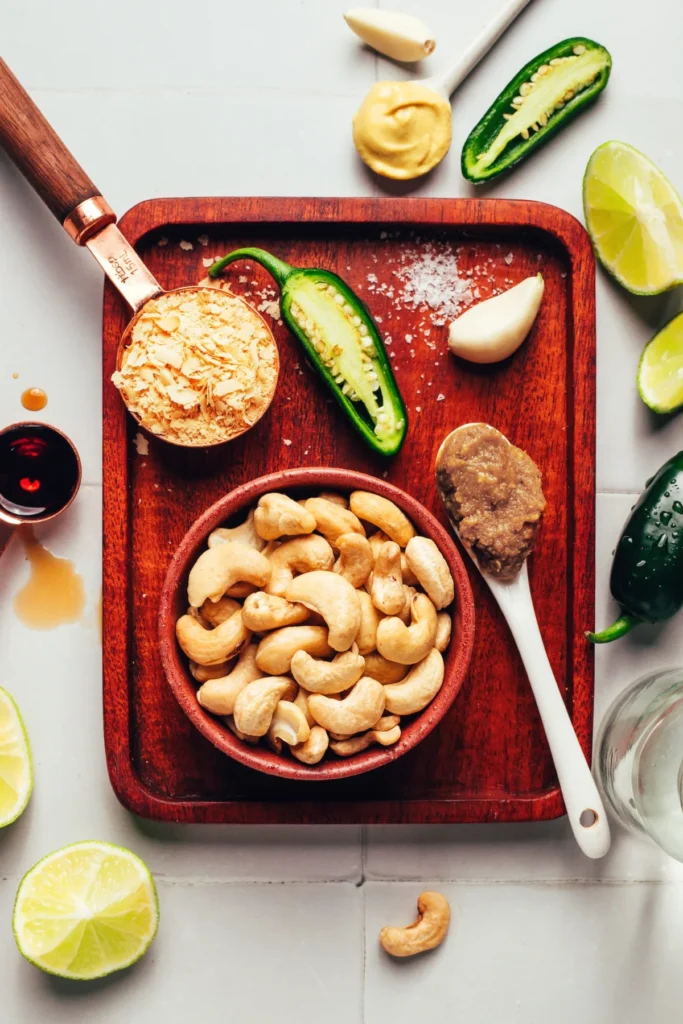
Avogadro operates without a pre-existing library of recipes. Instead, users construct their desired culinary profile from scratch by selecting core components across categories including liquids, dairy products, fats, eggs, starches, and sweeteners. Once the ingredients are chosen, users manipulate a series of parametric sliders that control specific sensory and structural properties, such as sweetness, richness, and tanginess.
The software computes a precise recipe in grams, automatically scaled to the number of eggs designated by the user. A central feature of the interface is the "waffle heart quality indicator," a visual feedback mechanism that instantly evaluates whether a given combination will produce a structurally sound batter and how closely its composition aligns with traditional regional recipes.
The platform offers two distinct user interfaces: a Standard Mode designed for simplicity with constrained options, and an Expert Mode tailored for advanced culinary experimentation. Expert Mode grants access to the full inventory of ingredients, eight independent control sliders, and specialized preset configurations designed to push the boundaries of conventional pastry formulation.

Chronology of Development
The conceptual foundation of Avogadro dates back more than a decade. The project originated in 2014 when the developer sketched preliminary wireframes and constructed a rudimentary Microsoft Excel model to test the feasibility of parametric baking formulas. At the time, technological constraints and competing priorities halted further development, leaving the project dormant for twelve years.
The initiative was revived to coincide with a significant scientific milestone: the 250th anniversary of Amedeo Avogadro’s birth. Born in Turin, Italy, on August 9, 1776, Avogadro is celebrated globally for his eponymous hypothesis formulated in 1811. Avogadro’s law posited that equal volumes of all gases, at the same temperature and pressure, contain the same number of molecules. This foundational concept paved the way for the introduction of the "mole" as a standard unit in chemistry, representing $6.02214076 times 10^23$ elementary entities.
The launch date and naming convention pay direct homage to this scientific constant. By calculating the total number of permutations available through the platform’s ingredient selections and slider positions, the system yields approximately $10^27$ theoretical control settings. Measured against Avogadro’s number, the tool’s output capacity spans roughly 1,660 moles’ worth of distinct theoretical batter combinations.
Supporting Data and Mathematical Scope
While the theoretical matrix of the generator encompasses $10^27$ distinct control settings, the developer notes important practical distinctions between mathematical permutations and actual culinary outputs. Due to rounding protocols and the automated pruning of trace ingredients, many distinct slider configurations resolve into identical final formulas. Furthermore, certain parameter combinations fall outside the parameters of workable physics, a status clearly flagged by the absence of active lobes on the interface’s quality indicator.
Nevertheless, the vast combinatorial space ensures that users have access to an unprecedented variety of formulations. The underlying dataset relies heavily on a meticulously cataloged collection of historical and contemporary Scandinavian recipes. Traditional baking texts frequently omitted precise measurements, relying instead on qualitative instructions such as "add flour until the batter has the right consistency." Avogadro attempts to translate this historical tacit knowledge into rigorous, reproducible metrics.

Culinary Analysis and Implications
The introduction of parametric recipe generators signals a broader methodological shift in modern gastronomy, moving from static instructional texts to dynamic, algorithmic creation. Food scientists and culinary historians have long noted that traditional baking is essentially applied chemistry, governed by precise ratios of proteins, starches, fats, and liquids.
By exposing these ratios to direct user manipulation, tools like Avogadro democratize the process of recipe formulation while highlighting the mathematical parameters that separate successful structural matrices from failures. Commercial mixes often occupy unexpected positions within the quality indicator’s spectrum, demonstrating that consumer appeal does not always align with traditional culinary norms. This observation reinforces the platform’s guiding principle: divergence from historical averages does not inherently indicate a flawed product.
Developer Notes and Community Engagement
Given the sheer scale of the platform’s combinatorial possibilities, developers acknowledge that exhaustive physical testing of all $10^27$ variations is impossible. Instead, the software functions as an informed statistical model of traditional batter consistency.
To refine the algorithm further, the project relies on crowdsourced empirical feedback. Users are encouraged to report edge cases where the model produces dysfunctional batters or anomalous results. Constructive user testing of this nature is intended to guide future updates to the underlying computational logic, ensuring that the software continues to bridge the gap between theoretical chemistry and practical baking.