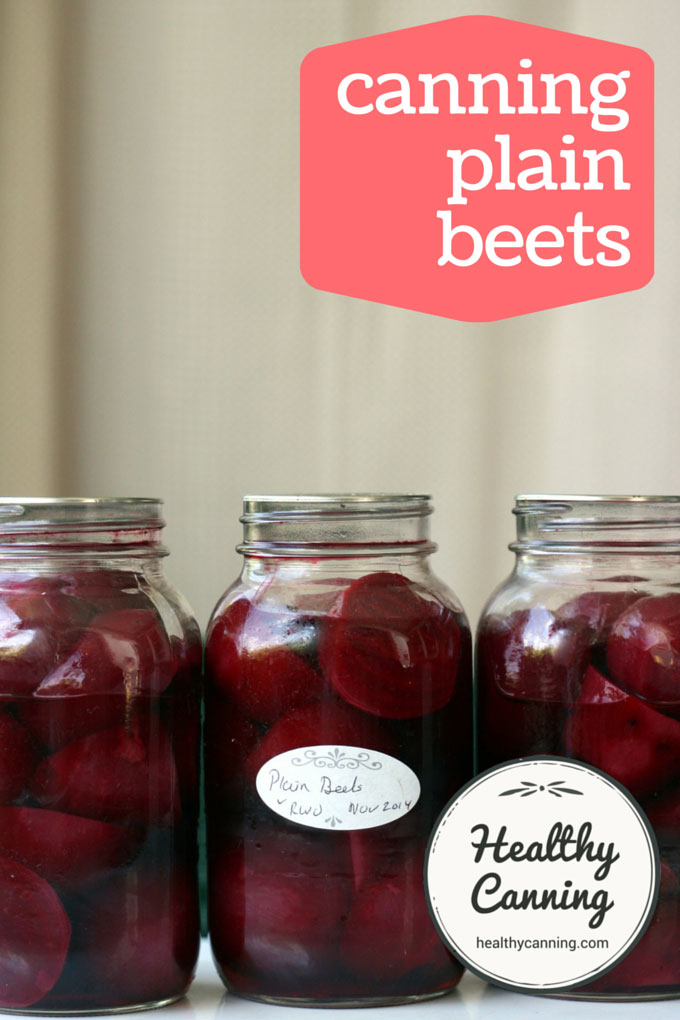
The preservation of seasonal produce has long been a cornerstone of domestic self-reliance, offering a vital link between summer harvests and winter dining tables. Among the array of root vegetables suited for preservation, the garden beet—scientifically known as Beta vulgaris—holds a prominent place. Known as beetroot in the United Kingdom and various other regions, plain canned beets provide a versatile, nutrient-dense pantry staple that can effortlessly transition from a quick microwave-heated side dish tossed with sour cream and dill to a roasted accompaniment finished with olive oil or duck fat on a brisk winter evening.
However, transforming fresh roots into safe, shelf-stable preserved goods demands strict adherence to scientifically validated protocols. Because low-acid vegetables lack the natural acidity required to inhibit the growth of hazardous pathogens naturally, home preservation requires precise methodologies. Following guidelines established by the United States Department of Agriculture (USDA) and supported by agricultural extension offices nationwide, home economists emphasize that pressure canning is the single mandatory method for preserving plain, non-pickled beets.

Essential Safety Protocols and the Non-Negotiable Need for Pressure Canning
When executed with a calibrated pressure canner according to official USDA instructions, home-canned plain beets yield a high-quality, shelf-stable product. Conversely, home cooks who lack a pressure canner must rely on alternative preservation techniques, such as freezing or pickling, to ensure food safety. Pickling—which introduces sufficient acetic acid via vinegar—creates an environment hostile to dangerous bacteria, while freezing bypasses the thermal dynamics of ambient-temperature storage altogether.
Under no circumstances should home canners attempt to process plain beets using a boiling water bath method. The historical documentation linking water-bath-processed low-acid vegetables to severe foodborne illnesses spans generations. Specifically, low-acid environments devoid of oxygen create ideal breeding grounds for Clostridium botulinum, the bacterium responsible for botulinum toxin. Historical data compiled by public health agencies illustrate the tangible risks of deviating from established protocols. Between 1990 and 2012 in the United States alone, at least 10 individuals contracted botulism explicitly from beets that were improperly processed via a water bath instead of a pressure canner.
Food safety experts and master food preservers stress that plain beets belong in the same high-risk category as green beans when it comes to C. botulinum spores. Because beets feature a dense, firm cellular structure, they must always be prepared using a hot-pack method. While the microbiological risks sound alarming, food safety authorities emphasize that proper adherence to pressure-canning instructions eliminates the hazard entirely, allowing home cooks to stock their pantries with absolute confidence.
Historical Context and Evolution of Preservation Guidelines
The regulatory framework governing home canning has evolved significantly over the past century, shaped by scientific research, public health tracking, and socio-economic shifts. As early as 1926, the USDA formally advised against using water bath methods for non-acid vegetables. In Farmers’ Bulletin No. 1471, authored by Louise Stanley, the federal agency explicitly warned of spoilage difficulties and the risk of botulism poisoning associated with water-bath processing, mandating the use of steam-pressure canners for young, tender baby beets.
Despite these early scientific warnings, wartime constraints led to temporary deviations in public safety messaging. During the Second World War, critical metals were heavily rationed to support military manufacturing, severely restricting the availability of civilian pressure canners. To adapt to these shortages, certain university agricultural extension services—such as the Virginia Agricultural Extension Service in a 1944 bulletin authored by Janet L. Cameron and Mary L. Thompson—promoted an "acid method" for canning beets. This alternative involved boiling beets for 20 minutes, packing them into jars with a tablespoon of vinegar, and processing them in a boiling water bath for an hour and a half under the false assumption that a minor addition of acid would render them safe.
Modern food safety science has decisively discredited this wartime compromise. The minor quantity of vinegar added in historical recipes is entirely insufficient to consistently lower the pH to the acid threshold required to prevent bacterial germination in a boiling water bath. Contemporary extension specialists caution against relying on outdated historical literature, noting that safety standards established through rigorous microbiological testing must supersede expediency or tradition.

Step-by-Step Preparation and Quantities
Successful canning begins long before jars are loaded into the pressure vessel; it starts with proper selection, sorting, and pre-cooking of the raw roots. To prevent cross-contamination and reduce the initial bacterial load, beets must always be thoroughly washed and peeled before processing.
Sizing and Yield Guidelines
As a general benchmark, home canners should anticipate requiring approximately 1.25 kilograms (3 pounds) of raw beets to yield a single 1-litre (US quart) jar of finished product. For example, roughly 10 medium-sized raw beets measuring about 9 centimeters (3 inches) in diameter with their skins intact will weigh approximately 2 kilograms (4.5 pounds).
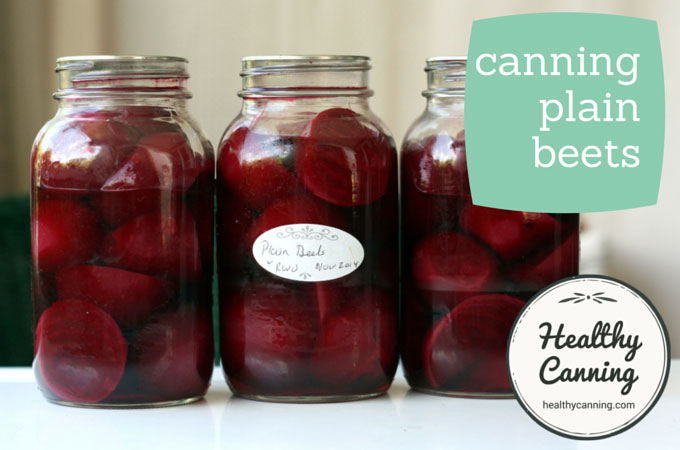
To ensure uniform texture and cooking times, large batches of beets should be sorted by size prior to preparation. Beets measuring less than 5 centimeters (2 inches) in diameter are ideal for canning whole, whereas larger specimens must be sliced or cubed. According to evaluation standards set by the National Center for Home Food Preservation (NCHFP), quality canned beets should display a uniform size and shape, a deep and even dark red color, and a sparkling clear cooking liquid free of cloudiness or sediment. Furthermore, roots larger than 7 centimeters (3 inches) in diameter should be avoided or thoroughly trimmed, as they frequently develop an undesirable fibrous texture.
Pre-Cooking and Thermal Requirements
Before packing, beets must undergo a preliminary cooking phase until their skins slip off easily. Food preservation specialists recommend leaving the taproots and approximately 2 to 5 centimeters (1 to 2 inches) of the stem attached during this initial boiling or steaming phase. This technique, in theory, minimizes "bleeding" and preserves color pigments, though significant color loss remains a normal characteristic of the thermal process.
An important thermal requirement dictates that pre-cooked beets must enter the jars while hot—ideally freshly heated—rather than cold. Home cooks are explicitly advised against plunging hot beets into ice water to ease handling, as cold produce introduced into jars can disrupt the thermal baseline required by USDA processing schedules. If beets cool down significantly during the peeling and dicing process, they must be briefly reheated, such as through a quick microwave cycle, prior to packing.
Salt may be added to individual jars strictly for seasoning purposes at a rate of one-half teaspoon per pint or one teaspoon per quart, though it plays no role in microbiological safety. A consistent headspace of 3 centimeters (1 inch) must be maintained across all jar sizes.

Official Processing Parameters for Pressure Canning
Once the hot beets are packed into clean half-litre (pint) or 1-litre (quart) jars and covered with fresh boiling water—maintaining the required 1-inch headspace—the jars must be sealed with two-piece metal lids and processed immediately in a pressure canner.
Processing times and pressure requirements vary based on canner type and geographic elevation:
- Half-litre (1 US pint) jars: Process for 30 minutes.
- 1-litre (1 US quart) jars: Process for 35 minutes.
For weighted-gauge pressure canners operating at altitudes of 0 to 300 meters (0 to 1,000 feet), maintain a pressure of 10 lbs (69 kPa). At altitudes exceeding 300 meters, weighted gauges must be increased to 15 lbs. For dial-gauge pressure canners operating at 0 to 300 meters, maintain 11 lbs (76 kPa), with mandatory upward adjustments required for higher elevations as specified in standard altitude conversion charts.
Managing Pigment Loss and Post-Processing Color Recovery
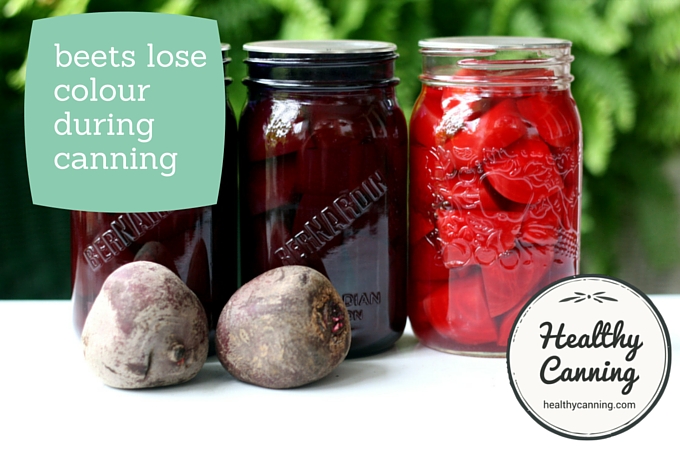
A common concern among home canners is the noticeable fading of red pigments during thermal processing. The primary coloring compounds in beets, known as betalains, are highly sensitive to elevated temperatures and can temporarily transform into colorless chemical structures when subjected to pressure canning conditions.
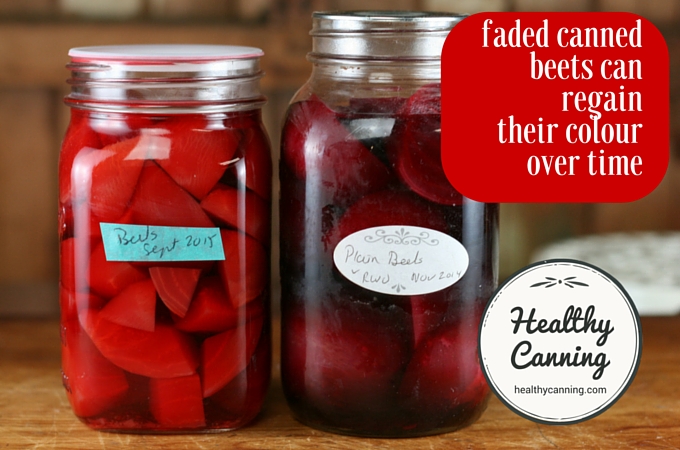
Agricultural extension specialists, including those at Penn State Extension, note that this chemical reaction is frequently reversible. The deep red coloration of the canned product often returns naturally after the jars have been stored in a dark, room-temperature environment for several days or weeks. To optimize visual appeal, certain heirloom cultivars—such as ‘Detroit Dark Red’ and the elongated ‘Formanova’ variety—are widely recommended by horticulturists for their superior pigment stability during thermal preservation.
Nutritional Profile and Culinary Applications
Beyond their aesthetic appeal, home-canned beets offer substantial nutritional value. A standard 250-gram (approximately 1-cup) serving of cooked, sliced plain beets contains approximately 124 kilocalories, nearly 30 grams of carbohydrates, 4 grams of protein, and roughly 3.6 grams of dietary fiber, alongside trace levels of sodium and fat.
The versatility of home-canned plain beets extends far beyond simple side dishes. Because they lack the heavy pickling brine associated with commercial pickled varieties, plain canned beets serve as an ideal foundational ingredient for traditional dishes such as eastern European borscht, creamy coconut-milk curries infused with spices and carrots, or elevated comfort foods like maple-roasted root medleys. By combining strict adherence to modern food safety protocols with traditional kitchen creativity, home canners can safely enjoy the rich flavors of the harvest throughout the entire year.