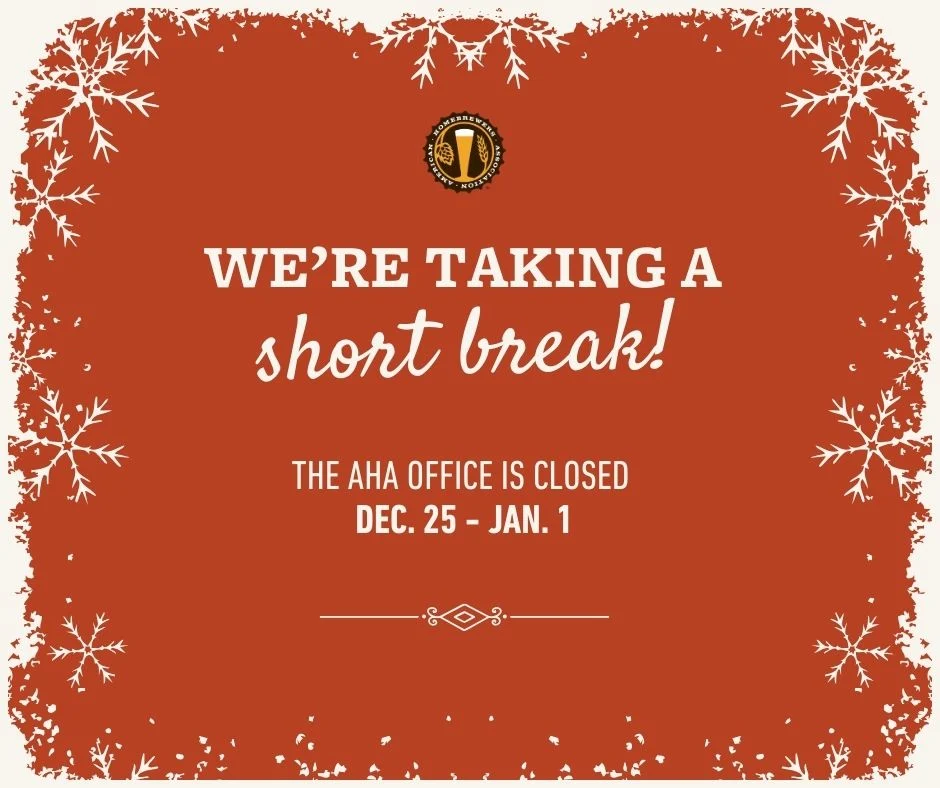

The American Homebrewers Association (AHA), a leading authority and advocacy group for the domestic fermentation community, has officially announced its scheduled year-end closure, marking a period of reflection and operational recalibration ahead of the 2026 calendar year. According to an official statement released by the organization, the AHA headquarters will remain closed from December 25, 2025, through January 1, 2026. This administrative hiatus is designed to allow the association’s staff and leadership to observe the holiday season, with operations set to resume in full capacity on January 2, 2026.
While the physical and administrative offices of the AHA will be offline, the organization has emphasized that its digital resources and member-focused content platforms will continue to serve as a repository for the global brewing community during the break. The closure comes at the end of a pivotal year for the homebrewing industry, which has seen a resurgence in DIY fermentation, legislative shifts regarding taproom laws, and a renewed focus on sustainable brewing practices.
Organizational Chronology and the 2025 Operational Context
The decision to pause operations during the final week of December follows a long-standing tradition within the Brewers Association (BA), the parent organization of the AHA. Founded in 1978 by Charlie Papazian in Boulder, Colorado, the AHA has grown from a grassroots newsletter into a massive international infrastructure that supports over 37,000 members. The year 2025 has been characterized by significant activity for the association, including the management of the National Homebrew Competition (NHC), the world’s largest international homebrew contest.
Throughout the 2025 fiscal year, the AHA focused its efforts on expanding its "Government Affairs" portfolio, working to streamline the legal complexities surrounding the transport of homebrewed beverages for competitions and club meetings. The year-end closure is positioned not merely as a holiday break, but as a strategic pause intended to "refresh and recharge" the organizational team. This period allows for the finalization of the 2026 educational roadmap, which is expected to address the evolving demographics of the brewing community.
Supporting Data: The Economic and Social Impact of Homebrewing
The significance of the AHA’s operational cycle is underscored by the scale of the homebrewing industry in the United States. Data from the most recent industry surveys indicate that there are approximately 1.1 million homebrewers in the U.S., who collectively produce more than 1.4 million barrels of beer annually. This volume represents roughly 1% of the total U.S. beer production, highlighting the substantial footprint of hobbyist brewers.
Furthermore, the economic impact of the homebrewing sector extends into the retail and agricultural markets. In 2025, the "Homebrew Supply Shop" (HBS) sector saw a stabilization in revenue following the volatile fluctuations of the early 2020s. On average, homebrewers spend approximately $800 annually on ingredients, equipment, and educational resources. The AHA plays a critical role in this ecosystem by providing the "Zymurgy" publication and maintaining a database of over 2,500 AHA-sanctioned homebrew clubs.
The association’s year-end closure serves as a bookend to a year where member engagement reached new heights. In 2025, the AHA reported a 5% increase in digital engagement across its "Brewers Publications" arm, suggesting that while physical offices may close, the demand for technical brewing knowledge remains constant.
Logistics of the Holiday Hiatus
For the duration of the closure between December 25 and January 1, several key services will be impacted:
- Member Support: Direct inquiries regarding membership renewals, insurance for brew clubs, and competition registrations will be processed starting January 2.
- Shipping and Fulfillment: Orders for merchandise, books from Brewers Publications, and physical membership kits will experience a temporary delay in processing.
- Digital Access: The AHA website, including the "Homebrewers Association" mobile app and the "Zymurgy" digital archive, will remain fully functional, allowing members to access recipes and tutorials during the holiday period.
The organization has encouraged its members to utilize the hiatus to experiment with seasonal recipes, specifically those categorized under the Beer Judge Certification Program (BJCP) guidelines for Winter Seasonals and Spiced Ales. This encourages a "hands-on" approach to the holiday, aligning with the AHA’s mission to promote the art and science of fermentation.
Official Responses and Member Implications
While the announcement is a standard administrative notice, it reflects a broader trend within the non-profit sector toward prioritizing employee well-being and mental health. Statements inferred from the association’s leadership suggest that this "recharging" period is essential for maintaining the high level of advocacy and technical support required by the community.
"The commitment of our staff throughout 2025 has been instrumental in navigating the challenges of the post-pandemic craft beer landscape," a spokesperson for the organization noted in an internal memorandum. "Taking this time to step back ensures that we return with the energy necessary to launch our 2026 initiatives, which include a major overhaul of our digital learning modules and a new diversity and inclusion grant for emerging brew clubs."
Members of the brewing community have generally responded positively to the announcement, often sharing their own holiday brewing plans on social media platforms. The "Safe and Happy Holiday" sentiment expressed by the AHA resonates with a community that views brewing as a social and familial glue during the winter months.
Broader Impact: The "Homebrew-to-Pro" Pipeline
The AHA’s role in the industry extends far beyond hobbyist support; it serves as the primary "incubator" for the professional craft brewing world. Analysis of the 2025 craft brewing market shows that over 90% of professional brewers started as homebrewers. By supporting the amateur sector, the AHA essentially ensures the talent pipeline for the $28 billion U.S. craft beer industry.
The closure period coincides with a critical time for the professional sector as well, as many small-scale commercial breweries began as "basement operations" supported by AHA resources. The hiatus provides a moment for the industry to look toward 2026, where trends such as "Low-and-No" (non-alcoholic) homebrewing and the use of "Thiol-ized" yeast strains are expected to dominate the conversation.
2026 Outlook: Innovation and Sustainability
As the AHA prepares to reopen in 2026, several key objectives have been identified by industry analysts. First is the continued push for sustainability. Homebrewers are increasingly looking for ways to reduce water waste and repurpose spent grain, and the AHA is expected to lead this charge with new white papers and educational seminars.
Second is the integration of advanced technology in the home brewery. The year 2026 is projected to see a rise in AI-driven recipe formulation and automated fermentation tracking. The AHA’s return in January will likely involve the rollout of content addressing these technological shifts, ensuring that traditional brewing techniques are harmonized with modern innovations.
Finally, the association will begin preparations for the 2026 National Homebrewers Conference (Homebrew Con). This event serves as the "State of the Union" for the community, and the planning phase starting in early January will be crucial for securing keynote speakers and technical presenters who represent the cutting edge of zymurgy.
Conclusion
The American Homebrewers Association’s closure from December 25 to January 1 is a strategic pause in a cycle of continuous advocacy and education. As the organization transitions from a productive 2025 into an ambitious 2026, the temporary silence from the Boulder headquarters serves as a reminder of the importance of community, rest, and the enduring passion for the craft of brewing.
With over a million enthusiasts across the country raising a glass of their own creation this holiday season, the AHA’s influence remains pervasive. The association’s return on January 2 will signal the start of a new chapter in the American fermentation story—one characterized by technological integration, legislative progress, and a steadfast commitment to the "joy of brewing." As the industry awaits the new year, the message from the AHA is clear: the future of homebrewing is bright, refreshed, and ready for the challenges of a new era.