
This seemingly innocuous comment, uttered by a friend, Anna, a highly competent legal professional renowned for her critical thinking and ability to discern superficial trends from genuine substance, unexpectedly illuminated a prevalent challenge in personal health and well-being. Anna, who had expressed a long-standing desire to lose approximately 15 pounds, found herself grappling with a profound sense of stagnation in her weight management journey. Her latest exploration into achieving this goal, as she shared, involved the acquisition of a new set of BPA-free food containers.
"Interesting. What inspired you to focus on that?" was the natural query.
"Well, I’ve been reading about how microplastics in food containers can mess up our hormones and cause weight gain," she explained, a conviction in her voice that belied a deeper incongruity. This revelation came shortly after Anna had candidly discussed her struggles with gym consistency, an increasing reliance on takeout meals, and a habit of sacrificing essential sleep for late-night "doom scrolling."
The juxtaposition was stark. When presented with suggestions regarding more consistent workouts or increased home meal preparation, Anna’s response was definitive: "Yeah, but I’ve tried that a thousand times. If it were that simple, it would have worked already."
Anna’s experience is far from isolated; it mirrors a widespread human tendency to overlook or postpone fundamental, albeit challenging, habit changes in favor of niche, often unproven, "magic bullet" solutions. Individuals frequently dedicate countless hours to researching optimal workout routines or the latest dietary fads, rather than simply engaging in the basic, known exercises already within their grasp. This phenomenon is further compounded by a pervasive "pause-button mentality," where action is deferred until a mythical future moment of perfect inspiration, motivation, or reduced busyness.
The Allure of the Quick Fix
The psychological underpinnings of this behavior are complex. The act of purchasing new health-related gear, be it specialized kitchenware or a popular supplement, provides an immediate, albeit superficial, sense of progress. Similarly, consuming a steady stream of online content—YouTube videos, articles, social media posts—about potential lifestyle modifications can create an illusion of proactive engagement. Waiting for the "right time" or the "perfect plan" offers a comforting, if ultimately unproductive, postponement of effort. However, genuine, sustainable change remains elusive until consistent, tangible action is taken.
Human ingenuity, while often beneficial, can also manifest in elaborate self-deception, allowing individuals to sidestep the unglamorous, often difficult, foundational actions necessary for meaningful transformation. This article delves into the psychological and environmental factors that contribute to this distraction from impactful action, offering insights into fostering honest, compassionate self-assessment and effective strategies for change.
The Unmet Fundamentals: A Public Health Crisis
The bedrock of good health is built upon a surprisingly simple set of behaviors:
- Regular Physical Activity: Ideally, 30 minutes of moderate-to-vigorous exercise daily, incorporating both aerobic and resistance training.
- Nutrient-Dense Diet: A diet primarily composed of whole or minimally processed foods, with an emphasis on balance. Experts suggest that if 80 percent of one’s diet derives from such sources, it constitutes an excellent foundation, allowing for occasional indulgences without derailing progress.
- Adequate Protein Intake: Sufficient protein is crucial for muscle maintenance, appetite regulation, and body recomposition goals. Recommendations typically range from 1.2 to 2.2 grams of protein per kilogram of body weight, often translating to 4-6 palm-sized portions of lean protein daily for most adults.
- Prioritized Sleep: Aiming for seven to eight hours of quality sleep per night is paramount. While sleep quality can be challenging to control, establishing consistent wake times and a relaxing pre-sleep routine can significantly contribute.
- Reduced Substance Consumption: Minimizing or avoiding excessive alcohol, illicit drugs, and tobacco products is a fundamental, though often unpopular, health imperative.
Beyond these five pillars, elements such as nurturing social relationships and effective stress management further contribute to holistic well-being. Yet, even the primary list represents an uncommonly achieved standard. Data from various public health studies consistently reveal alarmingly low adherence rates to these basic health behaviors. For instance, a notable statistic indicates that only approximately six percent of Americans consistently perform all five of these fundamental health behaviors. This implies that nearly 94 percent of the population struggles to meet these basic standards, underscoring a significant public health challenge.
These foundational behaviors are not merely theoretical ideals; they are empirically linked to a wide array of common health goals, from achieving a healthy body weight and enhancing athletic performance to extending lifespan and improving overall quality of life. The struggle to implement them consistently, therefore, has far-reaching implications for individual well-being and healthcare systems globally.
Understanding the Barriers to Basic Action
Several pervasive barriers prevent individuals from consistently engaging in these proven, fundamental health practices. These psychological and behavioral traps are common across demographics, affecting both individuals new to health pursuits and those with extensive knowledge.
Barrier #1: Ambition Overload and the Planning Fallacy
Many individuals, when faced with frustration or a desire for change, craft elaborate, idealistic plans for overhauling their lives. A common scenario involves declaring a radical transformation starting "Monday"—an hour of exercise daily, perfectly "clean" eating at every meal, and eight hours of sleep each night. This ambition often arises from a current baseline of irregular exercise, limited vegetable consumption, and late nights. The inherent problem is the sheer volume of change demanded simultaneously.
This tendency is rooted in cognitive biases, particularly the "planning fallacy," where individuals underestimate the time, energy, attention, and motivation required for future tasks. The immediate comfort derived from creating an overly ambitious plan, with its deferred start date, offers temporary relief without requiring immediate effort. However, these complex, idealized plans rarely integrate effectively into already busy and unpredictable lives. They often conceal numerous smaller, unforeseen tasks, leading to inevitable failure to execute. This cycle frequently results in self-blame, attributing failure to a lack of willpower or discipline, thereby reinforcing a narrative of inconsistency and impossibility. Such prophecies, sadly, often become self-fulfilling.
Barrier #2: The Quest for "Hardcore" or "Cutting-Edge" Solutions
A deeply ingrained belief system suggests that if basic health practices were truly effective, everyone would be healthy. This perspective posits that because widespread health issues persist, the "known" solutions—eating vegetables, sleeping eight hours, staying active—must be insufficient. Consequently, individuals seek out "hardcore," "industry-secret," or "cutting-edge" strategies, believing that only extraordinary measures can yield extraordinary results.
However, the reality, as evidenced by the aforementioned statistic of only six percent adherence to basic behaviors, is that most people are simply not implementing these fundamentals consistently and comprehensively. The efficacy of these basic behaviors is well-established; the challenge lies in their consistent execution.
Furthermore, the simplicity of these actions can be perceived as boring. The allure of novel diets, exotic supplements, or complex training regimens often stems from a desire for something more "interesting" or exciting, especially if previous attempts at basic changes felt unsatisfying or failed to meet unrealistic expectations. The promise of a "new outcome" or a "new self" through a cutting-edge approach is incredibly appealing.
The paradox is that most "hardcore," "secret," or "cutting-edge" strategies are often unsustainable, inaccessible, or simply ineffective (or unproven). They demand significant investment of effort, time, and money without guaranteeing a commensurate return, all while diverting attention from the reliable, proven methods that genuinely drive change.
Barrier #3: The Illusion of Perfection
The health and fitness industry frequently propagates the myth that achieving and maintaining optimal health demands perfection: an organic, plant-based diet, marathon-level fitness, and a rigorous morning routine involving meditation and journaling. This narrative creates an unattainable ideal, setting individuals up for disappointment.

The truth is, perfection is not a prerequisite for excellent health. While this realization can be a relief, it can also be a source of disappointment for those who aspire to a "perfect" self, believing it to be an attainable outcome with the right plan. "Perfect" health is, in essence, an illusion. Humans, regardless of their health status, experience illness, minor ailments, digestive issues, periods of low energy, and simply bad days. No one is immune to the vagaries of life, and accepting this inherent vulnerability can be unsettling.
It is often more comfortable to cling to the belief that a specific supplement or routine can confer immunity from uncomfortable human experiences. However, achieving one’s realistic "best self" necessitates accommodating one’s "worst self"—the part that prefers passive entertainment over exercise, or comfort food over a balanced meal. Life is inherently unpredictable: work demands intensify, family challenges arise, seasonal festivities influence eating habits. These myriad obstacles make sustained perfection impossible. Releasing the illusion of a perpetually energetic, disciplined, and ideally-choosing self is crucial. Instead, the focus must shift to supporting the needs and desires of one’s real self, with all its fluctuations and imperfections.
A Framework for Sustainable, Realistic Action
Understanding these barriers is the first step; the next is implementing strategies to overcome them. Here are four actionable steps to foster effective and realistic progress:
Step #1: Explore the "Why" Before the "How"
Before embarking on any change, it is crucial to delve into deeper motivations. This foundational introspection provides a more resilient drive than superficial desires. Asking probing questions such as:
- What truly matters to me about this change?
- What are the core values this change aligns with?
- What are the long-term consequences of not making this change?
- How will my life be different if I succeed?
Tools like "The 5 Whys" exercise, where one repeatedly asks "why" to uncover the root motivation, can be highly effective. A clear understanding of the "why" fosters a deeper, more sustainable commitment, enabling perseverance even when challenges arise.
Step #2: Prioritize the Most Effective Actions
The desire to "do all the things" is common, but effective change demands realistic prioritization. Sustainable progress involves:
- Identifying the most impactful actions relative to one’s goals.
- Integrating these actions into daily life without overwhelming the existing routine.
- Consistently executing these actions, even on challenging days.
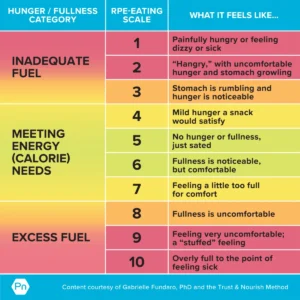
For health goals, core domains typically include movement, nutrition, and recovery. Instead of attempting a complete overhaul, identify a single, high-leverage skill within one domain. For example, within "Nutrition," focus on "Eating to satiety." Then, choose a specific, measurable daily action like "Record hunger and fullness levels before and after meals." This focused approach ensures that effort is directed toward behaviors with the highest return on investment.
Step #3: Define a Flexible Range of Action: The "Dial" Concept
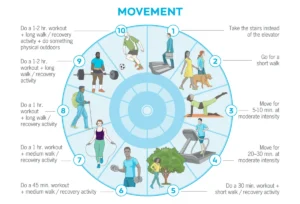
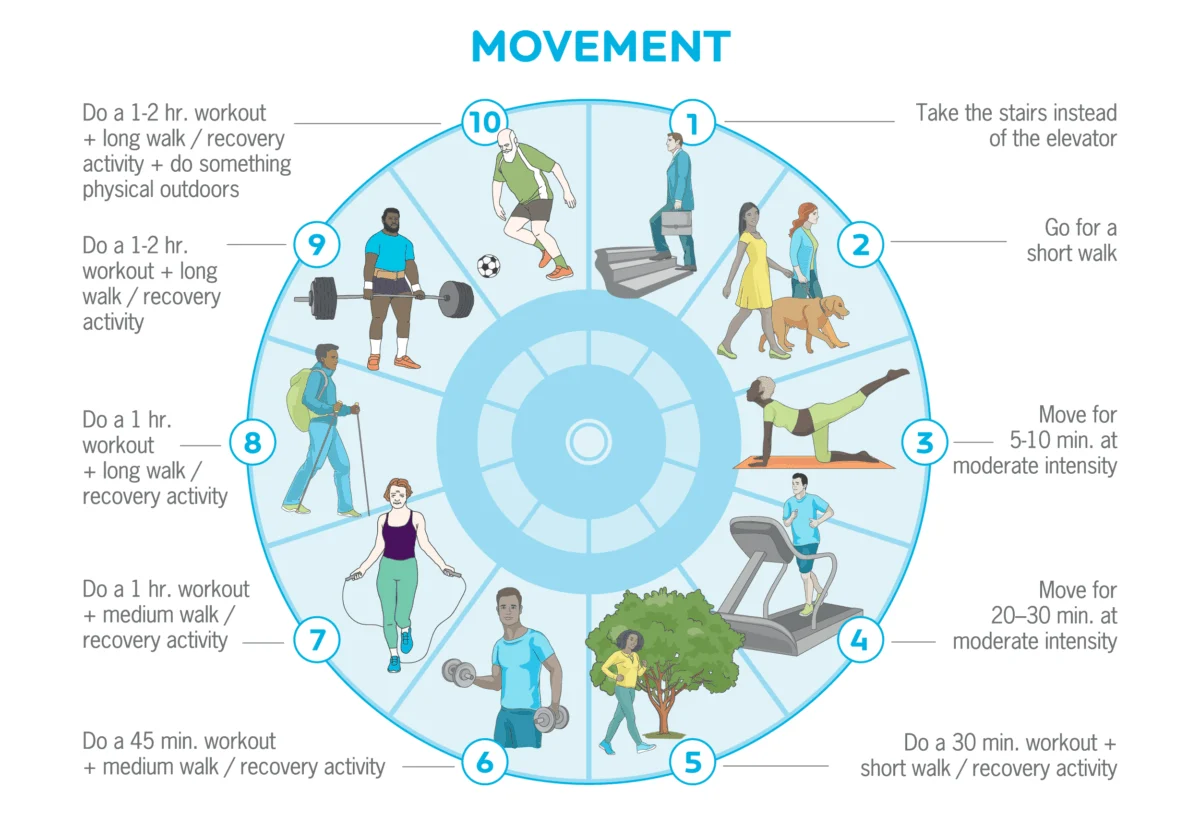
The notion of "pathetic goals," as some coaching experts suggest, offers a counterintuitive but powerful starting point for consistency. The challenge is to define the absolute minimum action one can realistically commit to, even on their worst day. This "floor" might be five minutes of walking, 10 push-ups, one extra portion of vegetables, or three conscious deep breaths before a meal. Nothing is too small if it represents some action.
Conversely, define the "ceiling"—the maximum, ideal effort one could exert on their best day. This might be an hour of intense gym work, two hours of comprehensive meal prep, or a 45-minute guided meditation.
With a defined "floor" and "ceiling," one establishes a flexible range of actions that can adapt to the unpredictable nature of real life. This paradigm shift reframes health habits not as an "on" or "off" switch, but as a "dial." When life is smooth, the dial can be turned up, allowing for peak performance. When challenges arise, the dial can be turned down to the minimum "floor" level. The critical insight is that any action within this range "counts" as success. Doing the bare minimum is not failure; it is succeeding within the context of a messy, beautiful, and authentic life.
Step #4: Create a Supportive Ecosystem
The environment plays a profoundly underestimated role in shaping behavior. Health and fitness professionals often benefit from ecosystems that naturally support healthy habits—working in gyms, having active social circles. For most individuals, however, such environments are not inherent. Therefore, intentionally building an "ecosystem that makes failing nearly impossible" is a powerful strategy.
Many people rely solely on willpower and good intentions, leading to self-blame when they inevitably falter. However, research, such as a review in Nature Reviews Psychology, highlights that "access" is a primary influencer of behavior. For instance, proximity to affordable, healthy food options correlates with better dietary habits, just as a long commute to a gym can deter exercise. While changing neighborhoods may be impractical, most individuals possess some control over their immediate environments.
Examples of environmental adjustments include a "kitchen makeover," where healthy foods are prepped, visible, and easily accessible, while less supportive items are removed or relegated to less convenient locations. This proactive structuring of one’s surroundings nudges desired behaviors to become the "obvious" choice. Evaluating one’s environment through questions like:
- What makes desired behaviors easier to perform?
- What makes undesired behaviors harder to perform?
- How can I leverage my social network to support my goals?
Investing energy in building such an ecosystem on the front end can significantly reduce the overall effort required for sustained behavioral change, yielding greater long-term dividends.
Embracing "C+ Effort" for Lasting Change
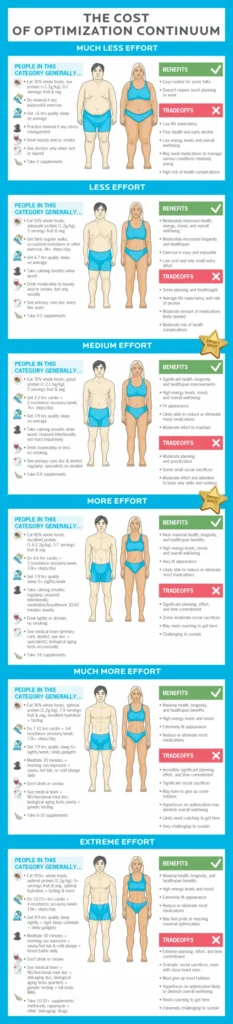
For many, particularly perfectionists or high-achievers, the concept of "C+ effort" can be jarring. However, the overarching theme of overcoming barriers to basic health action is the acceptance and integration of inherent human imperfection. Expecting perfection inevitably leads to failure or unsustainable bursts of effort followed by crashes.
Cultivating an attitude of compassion and acceptance towards one’s authentic self, acknowledging vulnerabilities, and working with them rather than constantly battling against them, is foundational. There will be periods of "A" grade performance in health and fitness, and these are to be celebrated. However, the goal is not to aim for C+; it is to recognize that when life demands it, dialing down effort to a C+ (or even lower, to the established "floor") is not a failure. It is a strategic adaptation, a testament to resilience and the ability to maintain consistency amidst life’s chaos.
Living a healthy, meaningful life is a continuous journey of striving for one’s best, tempered by the flexibility to accommodate mistakes, bad days, or challenging seasons. The surprising truth is that "good enough," consistently applied over the long term, often proves far more effective than sporadic attempts at perfection, ultimately leading to profound and lasting positive change.
References
Click here to view the information sources referenced in this article.
If you’re a coach, or you want to be…
You can help people build sustainable nutrition and lifestyle habits that will significantly improve their physical and mental health—while you make a great living doing what you love. We’ll show you how.
If you’d like to learn more, consider the PN Level 1 Nutrition Coaching Certification. (You can enroll now at a big discount.)