
The question of whether vegetable and seed oils are detrimental to health has ignited a fervent debate across social media platforms, from TikTok health gurus to mainstream bestseller lists. What began as a quiet discussion among nutritionists has exploded into a polarizing public discourse, with terms like "toxic sludge," "motor oil," and "the hateful eight" becoming common parlance among detractors. This widespread concern is largely fueled by the rise of niche dietary trends, such as the carnivore and ketogenic diets, which advocate for the elimination of plant-derived oils in favor of animal fats.
Historically, the merits of vegetable oils have been debated since their introduction into the marketplace over a century ago. However, the current intensity of the controversy is unprecedented, driven by claims that these oils are "the biggest cause of chronic disease that nobody knows about." The core argument against vegetable oils often posits a historical narrative: animal fats have been a staple of human diets for millennia, while vegetable fats are a relatively recent invention, emerging in the early 20th century. Critics suggest these oils were introduced by profit-driven companies seeking to market inexpensive, shelf-stable alternatives to traditional fats, often to unsuspecting consumers. This narrative frequently draws parallels to the margarine controversy, where a product initially promoted as a healthier alternative to butter was later found to contain harmful trans fats. Opponents argue that many vegetable oils are similarly insidious, potentially worse than butter, and linked to a spectrum of modern ailments including obesity, anxiety, depression, and inflammatory conditions like ulcerative colitis.
Conversely, a significant segment of the scientific and nutritional community maintains that vegetable oils are not only harmless but can be health-promoting, particularly when consumed as part of a balanced diet and used appropriately. They often contend that these oils are unequivocally better than butter due to their differing fatty acid profiles. This stark contrast in viewpoints leaves the public grappling with conflicting information, making it challenging to discern scientific consensus from sensationalized claims.
The reality, as with many complex nutrition topics, is far more nuanced than can be encapsulated in a viral social media post or a catchy meme. Understanding the role of vegetable oils in our diet requires a deeper dive into their composition, processing methods, and the broader context of modern eating patterns. This article aims to disentangle the science from the pseudoscience, providing an informed perspective on how to make judicious choices about the oils included in one’s diet.

Deconstructing Vegetable and Seed Oils: What Are They?
The terms "vegetable oils" and "seed oils" are often used interchangeably, referring to oils extracted from the seeds of plants. Common examples found in grocery aisles include corn oil, soybean oil, sunflower oil, safflower oil, cottonseed oil, grapeseed oil, and rice bran oil. It is crucial to distinguish these from other plant-based oils that are not typically categorized as "seed oils" in this debate. For instance, olive oil, avocado oil, palm oil, and coconut oil are derived from the fruit of their respective plants, not the seeds, and possess distinct fatty acid profiles and processing characteristics. This distinction is vital because the criticisms often leveled against "seed oils" specifically target those high in polyunsaturated fats (PUFAs) and those undergoing extensive industrial processing.
The Industrial Journey: How Vegetable Oils Are Processed
Unlike oils derived from naturally fatty fruits like olives or avocados, which can often be extracted through simple mechanical pressing, most vegetable oils originate from seeds with a comparatively low fat content. For example, a cup of green olives contains approximately 20 grams of fat, while a cup of corn has only about 2 grams. This disparity necessitates a complex, multi-step industrial process to efficiently extract the oil.
The typical processing journey for many conventional vegetable oils involves several stages:
- Crushing and Pre-Pressing: Seeds are cleaned, de-hulled, and then crushed or flaked to prepare them for oil extraction. Some seeds may undergo a preliminary mechanical pressing (expeller-pressing) to remove a portion of the oil.
- Solvent Extraction: To maximize oil yield, the crushed or pre-pressed seeds are typically treated with chemical solvents, most commonly hexane. Hexane is highly efficient at dissolving fats, allowing for nearly complete oil extraction. While manufacturers claim hexane is largely removed during subsequent processing, trace amounts can remain, raising concerns among some consumers and health advocates about potential residues.
- Degumming: This step removes phospholipids and other impurities that can cause cloudiness and reduce shelf life. Water or phosphoric acid is often used.
- Refining: The crude oil is treated with alkali (e.g., sodium hydroxide) to neutralize free fatty acids, improving taste and stability. This process also removes pigments and some beneficial compounds.
- Bleaching: Activated clays are used to absorb remaining pigments and impurities, resulting in a lighter-colored, more appealing oil.
- Deodorizing: The oil is steam-distilled under vacuum at high temperatures (typically 200-270°C) to remove volatile compounds responsible for undesirable odors and flavors. This final step yields a neutral-tasting, colorless, and odorless oil, which is highly desirable for food manufacturers but also strips away many of the plant’s natural antioxidants and health-promoting polyphenols.
Crucially, during this intensive processing, particularly the high-heat steps like deodorization, small amounts of unsaturated fats can be inadvertently transformed into trans fatty acids (also known as partially hydrogenated fats). This phenomenon also occurs when oils are subjected to prolonged high temperatures, such as in commercial deep fryers used repeatedly in restaurants. The U.S. Food and Drug Administration (FDA) recognized the health risks associated with trans fats, issuing a final determination in 2015 that partially hydrogenated oils (PHOs), the primary dietary source of artificial trans fats, were no longer "generally recognized as safe" (GRAS), effectively banning their addition to processed foods by 2018. While the levels of trans fats in modern refined vegetable oils are generally low and often below labeling thresholds, their historical presence and the potential for their formation during processing add to the debate surrounding these oils.
The intensive processing also renders these oils more susceptible to oxidation, especially polyunsaturated fatty acids. Oxidation can lead to the formation of harmful compounds that potentially contribute to inflammation and cellular damage in the body. While calling these processed oils "toxic" might be an exaggeration in a general sense, the loss of beneficial compounds and the creation of potentially harmful ones through industrial processing are valid scientific concerns that warrant careful consideration.

Dietary Guidance: Navigating the Oil Aisle
Major health organizations and nutrition experts offer nuanced guidance on cooking oils, often categorizing them based on their fatty acid composition, processing level, and scientific evidence supporting their health effects. Generally, the emphasis is on prioritizing minimally processed oils rich in monounsaturated fatty acids (MUFAs) and certain polyunsaturated fatty acids (PUFAs), while limiting highly refined oils and sources of saturated and trans fats.
Oils to "Eat More": Extra Virgin Olive Oil and Avocado Oil
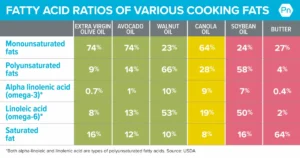
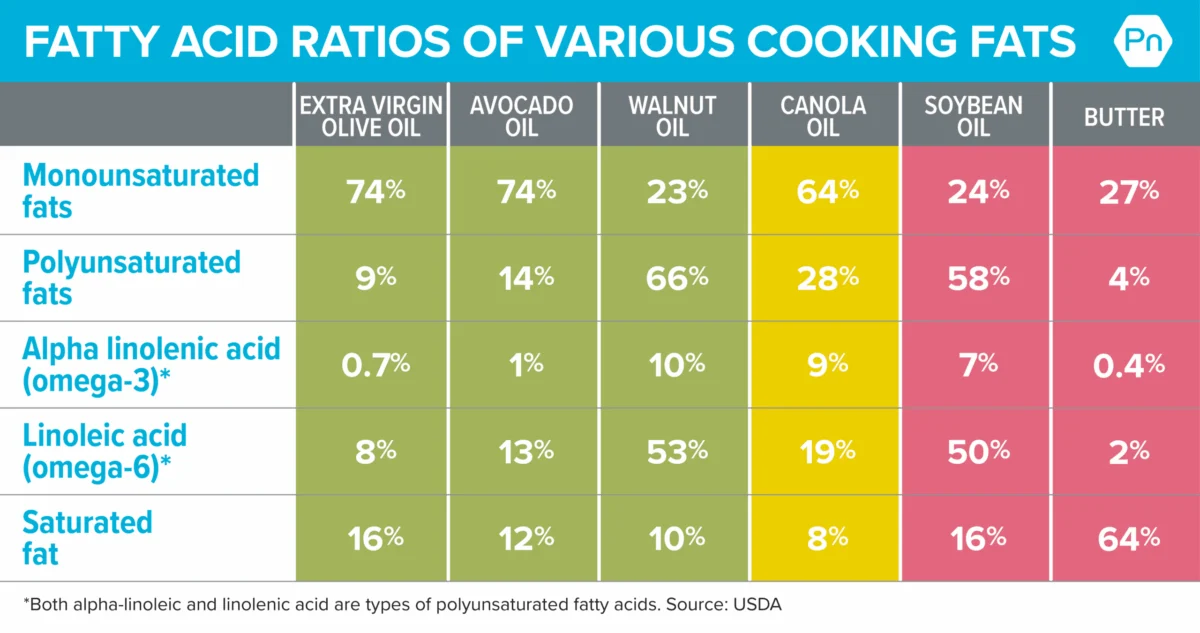
Extra virgin olive oil (EVOO) consistently ranks at the top of dietary recommendations, supported by an extensive body of research. EVOO is produced by simply grinding and mechanically pressing olives without heat or chemical solvents, preserving the fruit’s natural polyphenols and antioxidants. It is exceptionally rich in heart-healthy monounsaturated fatty acids. Studies, such as one involving over 22,000 adults in Southern Italy, have shown a significant inverse correlation between high olive oil consumption and all-cause mortality, suggesting a 20 percent lower risk of death over 13 years for those consuming more than two tablespoons daily compared to those consuming less than one. Further research links olive oil intake to a reduced risk of cardiovascular disease, stroke, certain cancers, type 2 diabetes, and Alzheimer’s disease. Its ability to reduce LDL ("bad") cholesterol, particularly when replacing saturated fats, further solidifies its health benefits.
Despite a historically perceived low smoke point (350-410°F), EVOO has demonstrated remarkable stability during cooking due to its high concentration of MUFAs and protective polyphenols. Research heating various oils to high temperatures found EVOO to be more stable than many others, including canola oil, in terms of oxidative degradation. Similarly, cold-pressed avocado oil is highly recommended. It shares a comparable fatty acid profile with EVOO, being rich in MUFAs and antioxidants, and boasts an even higher smoke point (up to 520°F for refined avocado oil), making it versatile for various cooking methods. Walnut oil, another