
Dough hydration, a fundamental concept in sourdough bread baking, transcends a mere numerical value found in recipes. It represents a dynamic interplay between the baker, the flour, and the environment, a nuanced conversation that profoundly influences the final loaf’s texture, crust, and crumb. This comprehensive guide delves into the intricacies of dough hydration, drawing from years of hands-on experience to equip bakers with the knowledge to master this critical element. Understanding hydration is often the key to unlocking consistently superior sourdough, transforming sticky dough struggles and dense loaves into triumphs of artisanal baking.
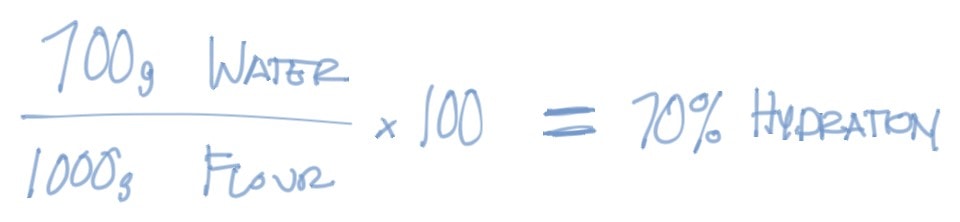
At its core, dough hydration is the ratio of water to flour, expressed as a percentage of the total flour weight. The calculation is straightforward: (weight of water / total weight of flour) * 100. For instance, a recipe calling for 1,000 grams of flour and 700 grams of water yields a 70% hydration dough. This percentage serves as an initial indicator for bakers, offering a preview of the dough’s behavior during the mixing process.
However, the seemingly simple percentage is, in reality, a guideline rather than an immutable rule. Flour, the primary ingredient, is not a static entity. Its absorption properties vary significantly based on its type, milling process, and even the specific batch. This inherent variability means that a recipe’s stated hydration may require adjustment based on the specific flour being used.
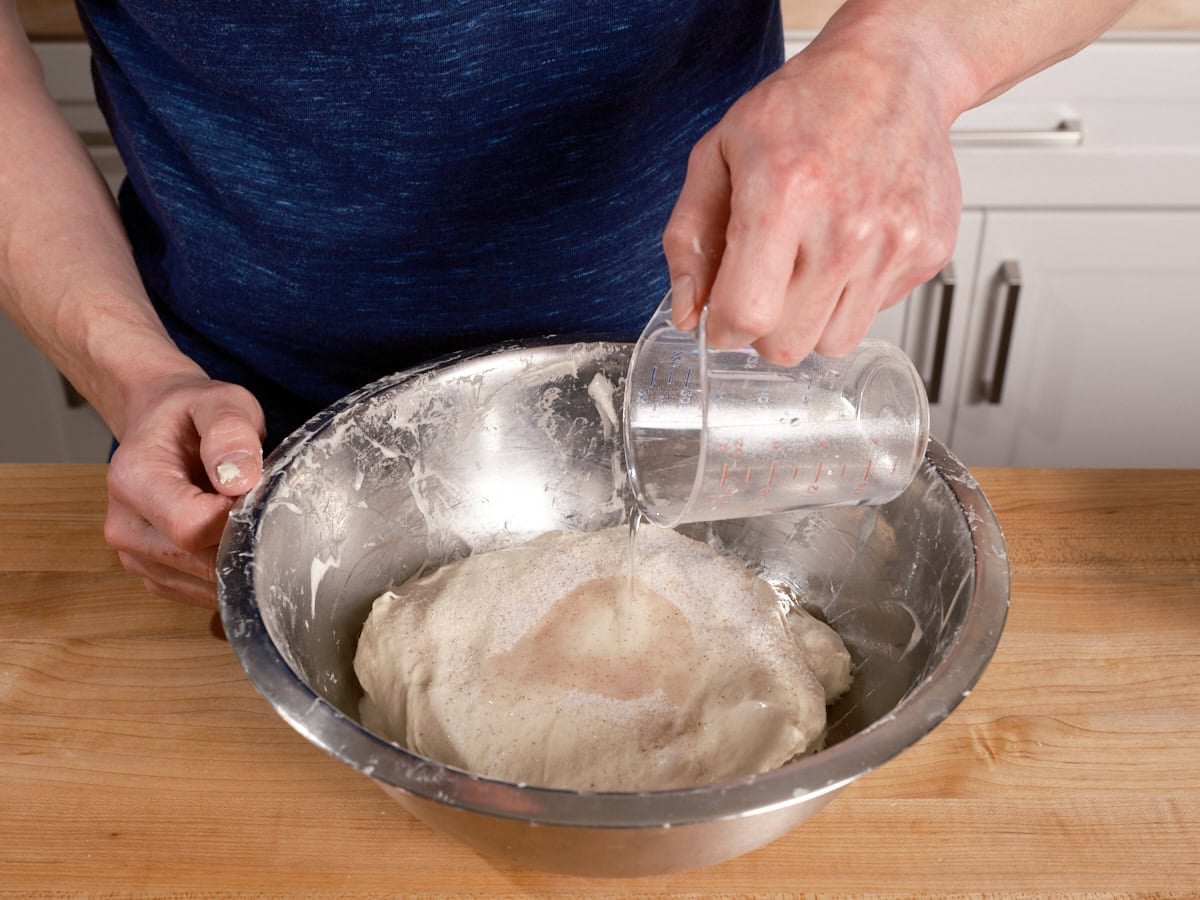
Beyond the flour itself, environmental factors also play a role, albeit often a less dramatic one than flour variations. While significant shifts in humidity and temperature can influence dough consistency, the flour’s inherent characteristics tend to be the more dominant influence. A dough that feels perfectly manageable on a dry day might exhibit increased tackiness on a humid, rainy afternoon, necessitating a slight modification in water content.
The Crucial Role of Hydration in Bread Characteristics
The significance of dough hydration lies in its direct impact on the final bread’s characteristics. Water is the transformative agent that converts dry flour into a living dough, capable of capturing the gases produced during fermentation. An insufficient amount of water results in a tight, resistant dough, leading to a dense, compact crumb. Conversely, an excessive amount of water can create a soupy, unmanageable mass that struggles to hold its structure.
The spectrum between these extremes allows for a diverse range of bread styles. Lower-hydration loaves, typically ranging from 60% to 68%, tend to exhibit a more substantial crust and a chewier texture. This is due to a less hydrated gluten network, which results in a tighter crumb structure. These loaves are often easier to handle and shape, making them a good starting point for novice bakers. Examples include many traditional European breads, certain types of pizza dough, and some enriched loaves where a firmer structure is desired.
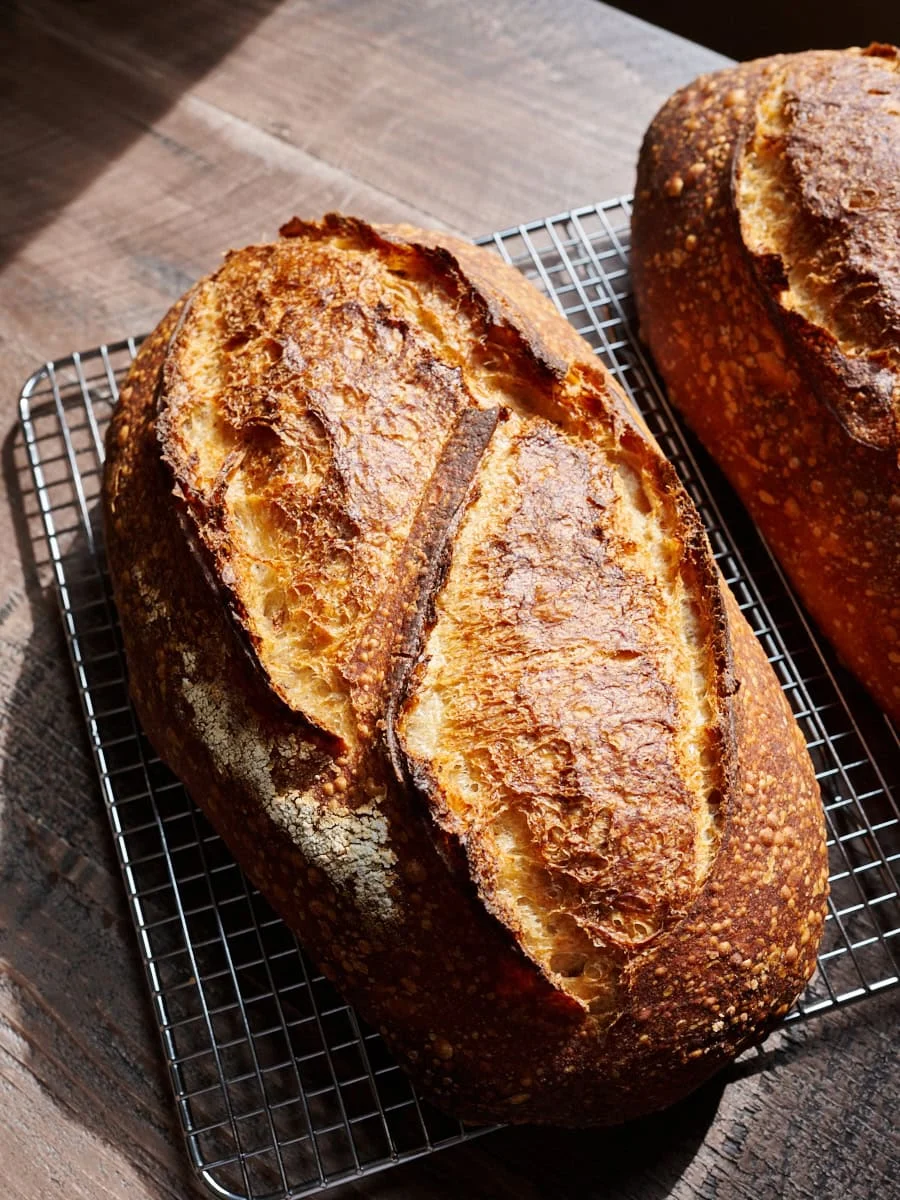
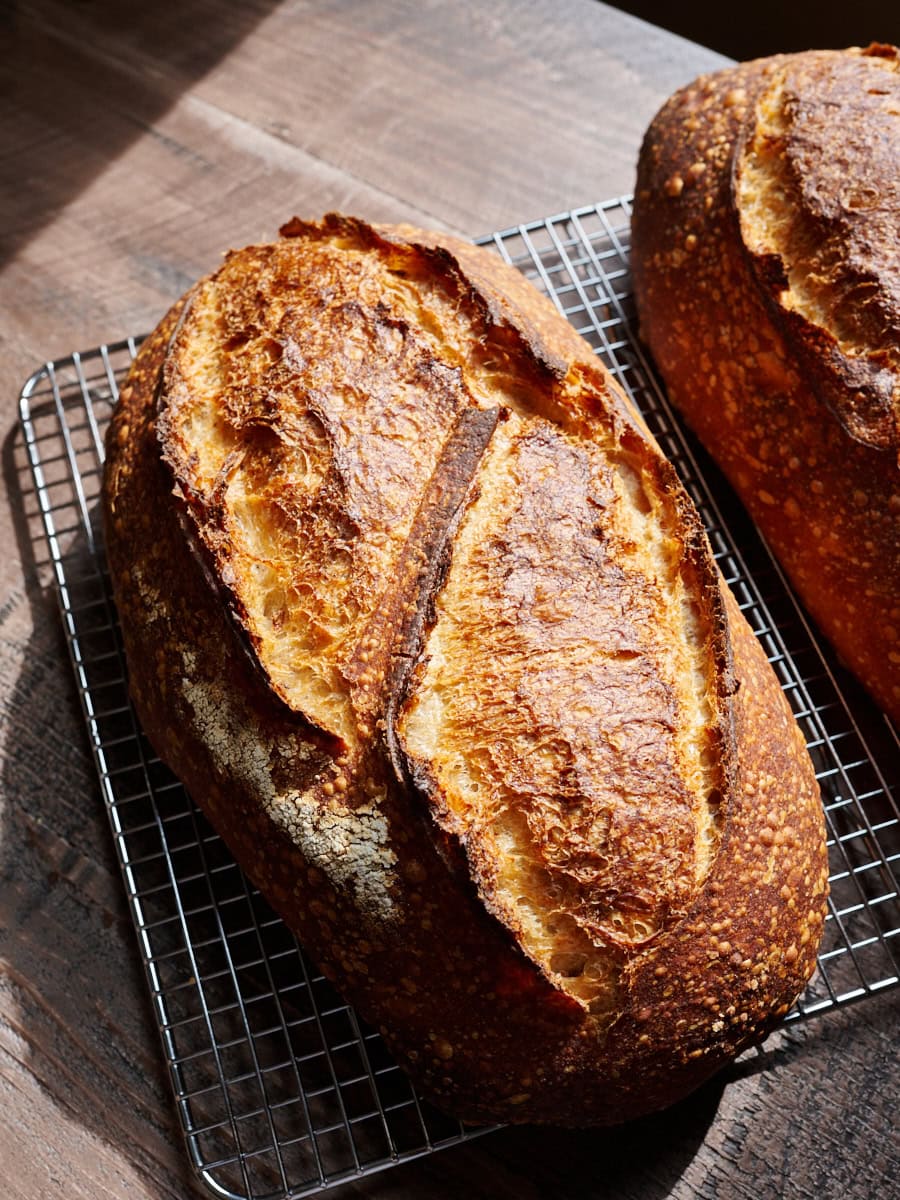
On the other hand, higher-hydration loaves, often falling between 75% and 85% and sometimes exceeding this range, are characterized by a more tender, almost custardy interior and a thinner, crisper crust. The increased water content allows for greater gas expansion during fermentation and baking, leading to a more open and airy crumb. These loaves, while requiring more skill in handling and shaping, can offer a luxurious mouthfeel. Examples include ciabatta, focaccia, and many artisanal sourdough loaves prized for their delicate crumb.
It is important to note that pushing hydration to extreme levels without a thorough understanding of the flour’s capabilities can lead to undesirable outcomes. Overly hydrated doughs can result in a gummy crumb, a loss of structure post-baking, and a faster staling rate. The goal is to achieve a hydration level that enhances the desired characteristics of the bread without compromising its volume, texture, or overall eating quality.
Understanding Dough Consistency: A Visual Guide
While hydration percentages provide a numerical framework, the true mastery of dough hydration comes from developing the ability to "read" the dough. This means understanding how it looks and feels at various stages. A dough that feels overly wet and slack at 70% hydration with one type of flour might feel perfectly firm with another.
Under-Hydrated Dough (~62% or less):
- Appearance: The dough appears dry, crumbly, and may resist cohesive formation. It will likely feel stiff and difficult to knead.
- Texture: Lacks elasticity, feels tough, and may show signs of tearing easily.
- Handling: Clumps together in large, stiff masses. It may not form a smooth ball and will feel heavy.
- Potential Outcomes: Leads to a dense, tight crumb with a thick, hard crust. Flavor development might be limited due to less efficient fermentation.
Properly Hydrated Dough (~68-75%):
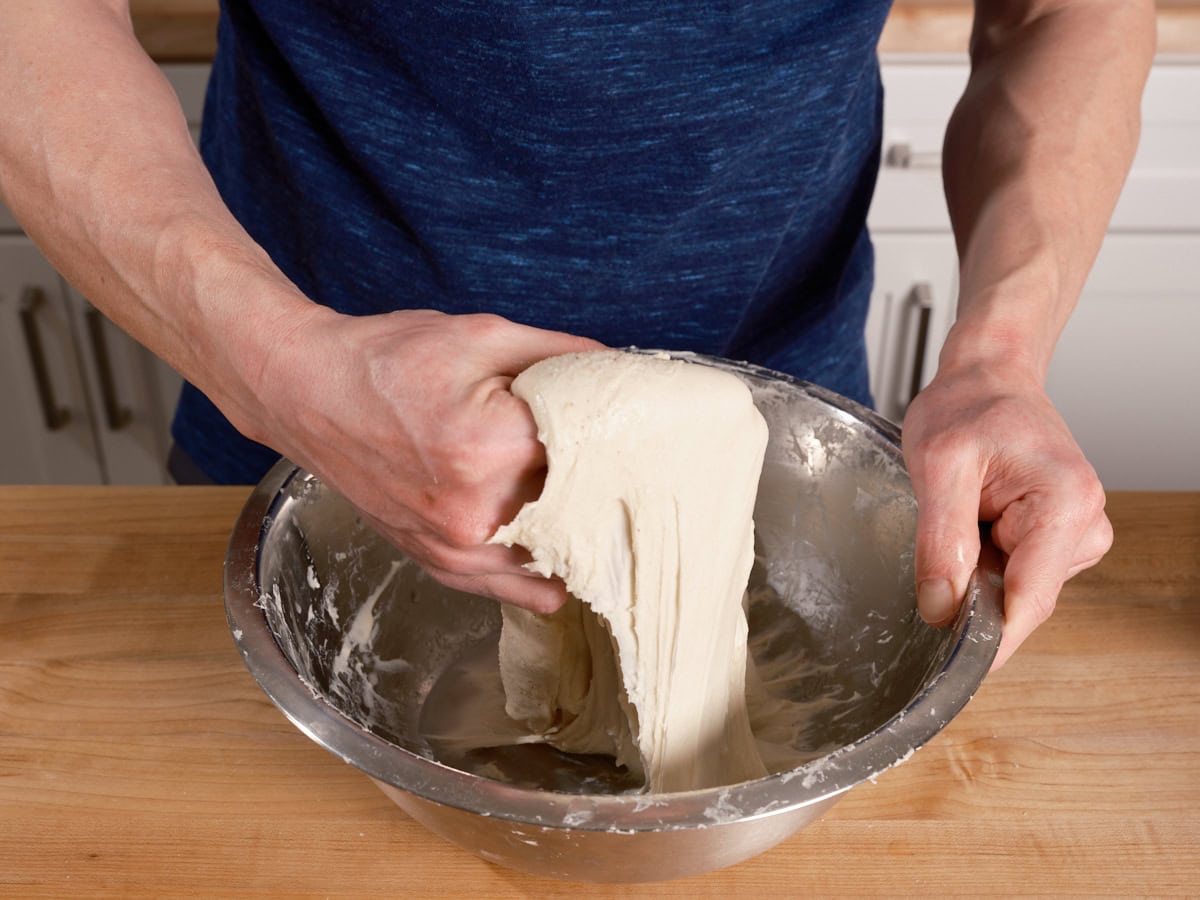
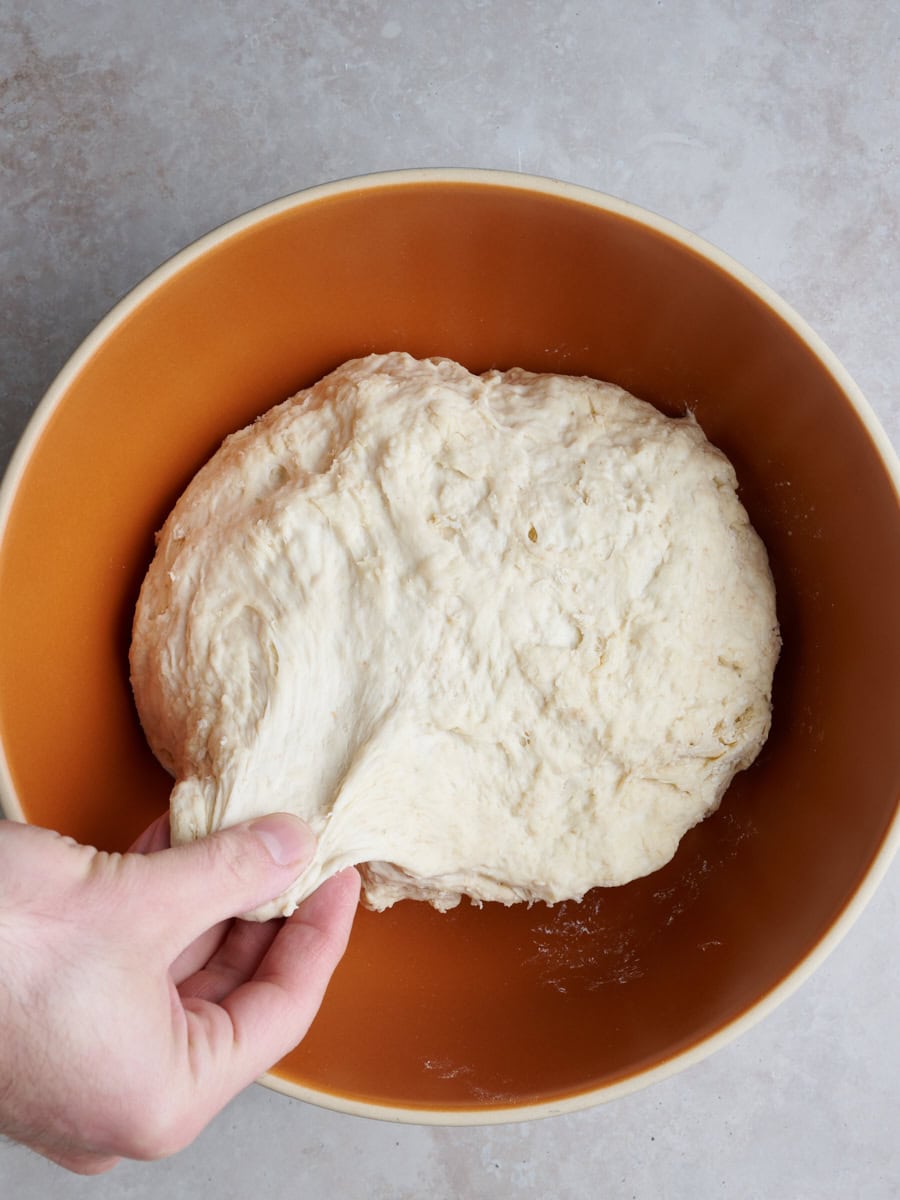
- Appearance: The dough is smooth, elastic, and may appear slightly tacky but should pull away cleanly from the bowl. It will feel alive and responsive.
- Texture: Exhibits good extensibility and elasticity, meaning it can be stretched without tearing and will spring back when gently poked.
- Handling: Forms a cohesive mass that is manageable, even if slightly sticky. It should be pliable and easy to shape.
- Potential Outcomes: This range typically yields a well-balanced loaf with a moderately open crumb, a tender interior, and a desirable crust. It offers a good balance of manageability and quality.
Over-Hydrated Dough (~75%+):
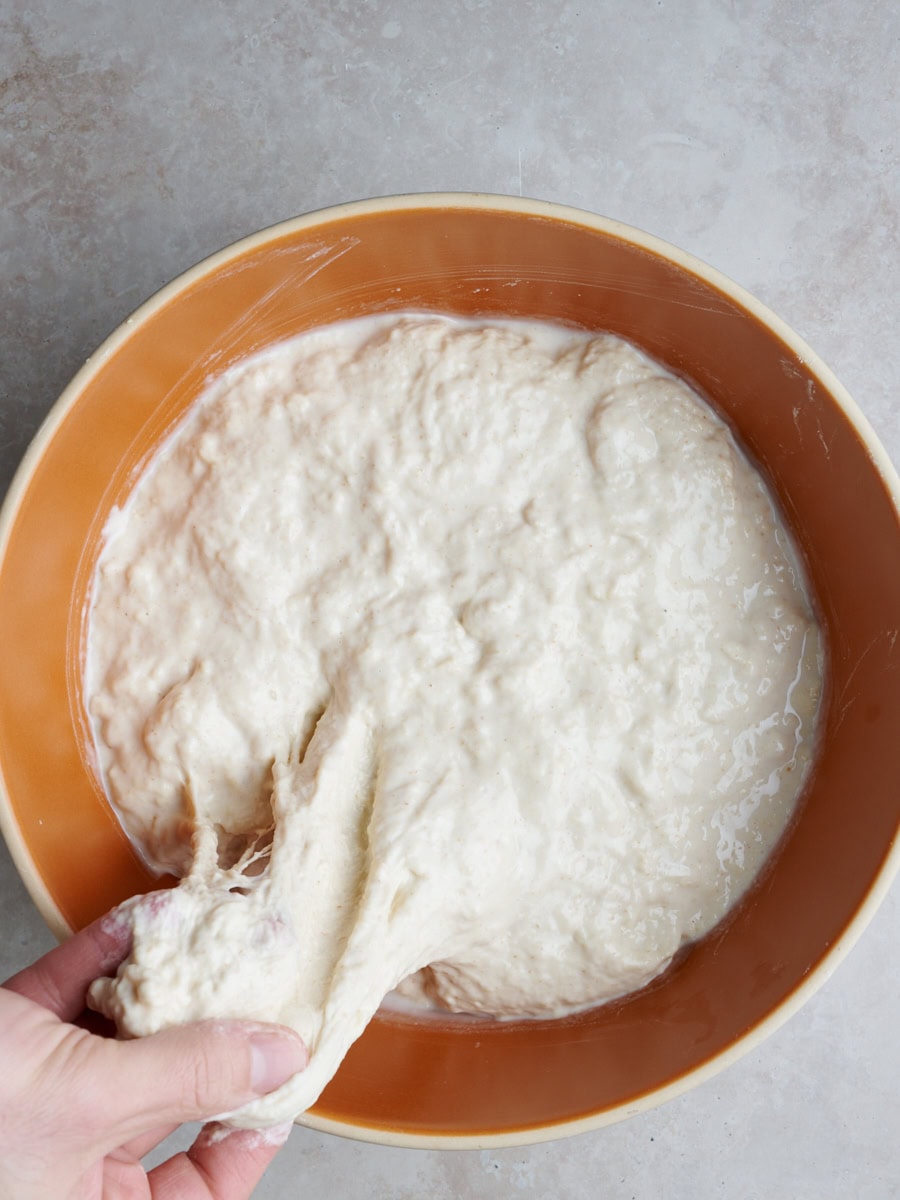
- Appearance: The dough appears very wet, slack, and may spread significantly. It will likely cling to the bowl and utensils.
- Texture: Extremely extensible but may lack significant elasticity. It can feel very fluid and difficult to control.
- Handling: Very sticky and challenging to shape without the aid of ample flour or specialized techniques. It may feel like a thick batter.
- Potential Outcomes: Can lead to a very open, airy crumb with a delicate crust. However, if hydration is too high, it can result in a gummy texture, a collapsed loaf, and a shorter shelf life.
Bassinage: The Technique of Phased Hydration
A technique that has significantly elevated the quality of sourdough bread is bassinage, often referred to as "double hydration." This method involves adding the total water in stages, rather than all at once, during the mixing process. Typically, 80-90% of the water is incorporated initially, allowing the flour to begin absorbing moisture and the gluten network to start developing. The remaining water is then added incrementally in the later stages of mixing.
This phased approach offers several distinct advantages. Firstly, it simplifies gluten development. Introducing all the water upfront, particularly in high-hydration recipes, can make it difficult to build a strong gluten matrix due to a lack of friction. By gradually incorporating the water, bakers can achieve higher hydration levels without excessively long mixing times or the risk of under-developing the dough.
Secondly, bassinage provides a crucial opportunity to assess dough strength. Holding back a portion of the water allows the baker to evaluate the dough’s consistency and determine if the remaining water should be added. If the dough feels excessively wet and slack, the reserved water can be omitted. Conversely, if the dough feels strong and capable of incorporating more liquid, the remaining water can be added slowly while mixing. This adaptive approach ensures optimal dough consistency for the specific flour and environmental conditions.
Factors Influencing Water Absorption
Several key factors dictate how much water a dough can absorb and requires for optimal development:
-
Flour Type and Protein Content: Flours with higher protein content (e.g., American bread flour, typically 12-14%) possess a greater capacity to absorb water and form a stronger gluten network. Lower-protein flours, common in other regions, may require reduced hydration to avoid an overly sticky and unmanageable dough. The protein content directly influences the dough’s ability to trap gases and retain moisture.
-
Whole Grain Flours: Whole wheat, rye, and other whole grain flours contain bran and germ, which are highly absorbent. Recipes with a significant proportion of these flours will necessitate higher hydration levels to achieve proper dough consistency. For example, a 50% whole wheat sourdough might comfortably handle 82% hydration, a level that would be challenging for a 100% white flour dough.
-
Freshly Milled Flour: Flour ground at home, even if sifted, tends to absorb more water than commercially aged flour. This increased hydration is often necessary to achieve the desired dough consistency.
-
Climate and Environment: Geographical location plays a role. High-altitude regions, often characterized by drier air, may require higher hydration percentages compared to humid, lower-altitude areas. Conversely, on particularly humid days, the flour may have already absorbed ambient moisture, potentially requiring a slight reduction in added water.
Troubleshooting Sticky Dough
Sticky dough is a common concern for many bakers, often stemming from issues with hydration or dough strength.
- Excessive Hydration: The most direct cause is simply adding too much water relative to the flour’s absorption capacity.
- Under-Developed Gluten: Insufficient mixing or kneading means the gluten network is not strong enough to bind the water effectively, leading to a slack, sticky dough.
- Flour Type: Certain flours, especially those with lower protein or specific milling characteristics, may naturally result in stickier doughs at a given hydration level.
- Temperature: Warmer temperatures can make dough feel stickier as enzymes become more active, breaking down starches and proteins.
- Lack of Practice: Developing an understanding of how dough should feel at different stages takes time and experience.
Managing High-Hydration Doughs
Working with high-hydration doughs requires specific strategies to maintain control and achieve desired results:
- Develop Gluten Strength: Employ techniques like stretch-and-folds, coil folds, or autolyse to build a robust gluten network capable of supporting the increased water content.
- Use Wet Hands or Tools: When handling sticky dough, lightly wetting your hands or using a bench scraper can prevent excessive sticking.
- Employ Plenty of Flour (Sparsely): For shaping, a light dusting of flour on the work surface and your hands can be helpful, but avoid over-flouring, which can alter the dough’s hydration.
- Embrace the Stickiness: Understand that high-hydration doughs will inherently be stickier than lower-hydration ones. Patience and gentle handling are key.
- Utilize Baking Surfaces: Parchment paper or a well-floured couche (a linen cloth for proofing) can aid in handling and transferring the dough.
Hydration Quick Reference Chart
| Hydration Level | Characteristics | Best For |
|---|---|---|
| 60-65% | Stiff, easy to handle, potentially thicker crust | Bagels, pretzels, pizza, some pan loaves |
| 65-70% | Balanced, manageable, good structure | Classic breads, beginner-friendly sourdough |
| 70-75% | Moderately open crumb, thin crust | Classic country loaves, baguettes |
| 75-80% | Requires longer mixing, tender crumb, skill needed | Ciabatta, focaccia, open-crumb loaves, sandwich loaves |
| 80%+ | Requires longer mixing, open crumb, custard-like | High-hydration loaves, challenging to shape |
Addressing Common Hydration Queries
Why can’t I just add more flour if my dough is too wet?
Adjusting flour directly impacts baker’s percentages, altering the ratios of all ingredients. Modifying water, conversely, specifically affects hydration without disrupting other ingredient proportions. While adding a small amount of flour as a last resort can save a completely unmanageable dough, it’s crucial to note this adjustment for future reference.

Does higher hydration mean a more open crumb?
Not necessarily. While higher hydration can contribute to an open crumb, it’s only one factor. Proper fermentation, effective shaping, and precise baking are equally critical. A well-executed 68% hydration dough can achieve a more open crumb than an 80% hydration dough that has been improperly fermented or shaped.
What hydration should a beginner start with?
A hydration level of 68-70% with a quality bread flour is an excellent starting point for beginners. This range offers a dough that is forgiving to handle while still yielding a high-quality loaf. As confidence grows, bakers can gradually experiment with higher hydration.
What is the ideal hydration for bread dough?
There is no single "ideal" hydration. The optimal level is contingent upon the specific flour being used and the desired characteristics of the final bread. Generally, bread doughs fall within the 60%-80% hydration range, but variations exist.
Cultivating Baker’s Intuition
Ultimately, mastering dough hydration is about cultivating "baker’s intuition" – the ability to perceive and respond to what the dough is communicating. Each bag of flour and every baking environment presents unique variables. The most accomplished bakers treat recipes as starting points for a dialogue with their ingredients.
The practice of keeping detailed baking notes is invaluable. Recording hydration levels, dough feel, environmental conditions, and final loaf outcomes over time fosters an intuitive understanding that transcends any written guide. This journey of observation and adaptation is where true mastery of sourdough baking lies.