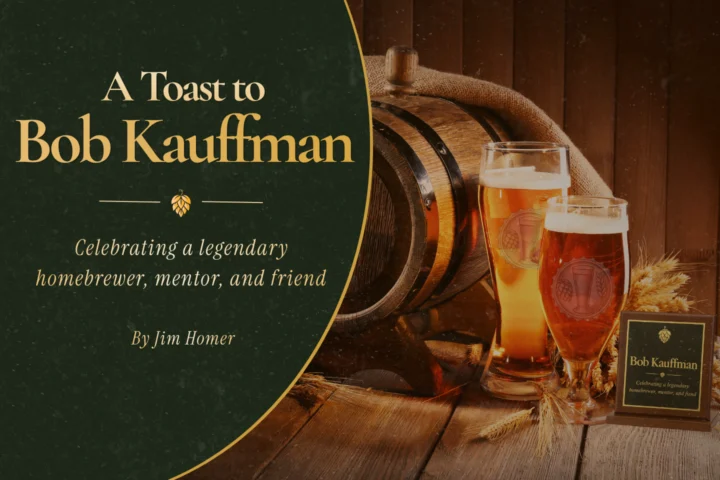

The American homebrewing community is mourning the loss of Bob Kauffman, a foundational figure in the hobby’s modern era, who passed away on Tuesday, April 28, at the age of 71. A resident of Boulder, Colorado, Kauffman was not only an accomplished brewer but a dedicated mentor, organizational leader, and a central pillar of the American Homebrewers Association (AHA). His contributions spanned decades, influencing the transition of homebrewing from a niche hobby into a sophisticated craft that serves as the bedrock of the American professional craft beer industry.
Kauffman’s death marks the end of an era for the Boulder-based "Hop Barley and the Alers" homebrew club and the national brewing scene. Known for his technical proficiency in all-grain brewing and his unassuming leadership style, Kauffman leaves behind a legacy defined by community service, educational mentorship, and an unwavering commitment to the "common homebrewer."
A Life Dedicated to the Craft of Brewing
Bob Kauffman’s journey into the world of fermentation began in earnest during the early 1990s, a period often cited as the "second wave" of the American craft beer revolution. Joining the Hop Barley and the Alers club in Boulder, he quickly distinguished himself through his pursuit of technical excellence. At a time when many hobbyists relied on malt extracts, Kauffman was an early adopter and advocate of all-grain brewing—a more complex process involving the mashing of malted grains to extract fermentable sugars.
His mastery of this process became a vehicle for mentorship. Jeff Griffith, currently a professional brewer at Twisted Pine Brewing in Boulder, credits Kauffman with launching his 21-year career. Griffith recalled that Kauffman once brought a lunch to his home specifically to spend the day teaching him the intricacies of all-grain brewing. This act of selfless education was a hallmark of Kauffman’s character. Similar sentiments were echoed by Coby Royer, another Boulder-based brewer, who described Kauffman as a "force in the homebrew scene" who was instrumental in helping newcomers navigate the steep learning curve of advanced brewing techniques.
The Evolution of All-Grain Brewing and the "Kitchen Floor Tripel"
One of the most enduring anecdotes of Kauffman’s brewing career involves the creation of his "Kitchen Floor Tripel." In the early stages of his all-grain experimentation, Kauffman was brewing a Belgian-style Tripel in his kitchen when a technical mishap occurred. A hose disconnected, causing the hot, sweet wort to spill across the floor rather than into the brew kettle.
In a display of resourcefulness that has since become legendary among his peers, Kauffman used clean terry-cloth towels to soak up the liquid from the floor, then wrung the towels back into the kettle to save the batch. Despite the unconventional "floor-hopping" method, the resulting beer was of such high quality that it won an award at a local competition. While Kauffman eventually refined the recipe to exclude the kitchen floor, the story remains a testament to the experimental and resilient spirit of the early homebrewing movement.
Julia Herz, the Executive Director of the AHA, noted that Kauffman’s technical influence extended to the equipment used by hobbyists today. She recalled "shadow brewing" at his home, where Kauffman advocated for the use of mechanical pumps in home systems. He famously remarked that pumps were necessary "so when I’m old I can still brew," highlighting his forward-thinking approach to making the hobby accessible across a lifetime.
Leadership within the American Homebrewers Association
Kauffman’s impact was not limited to the brew kettle; he was a significant figure in the organizational governance of the American Homebrewers Association. From 2008 to 2013, he served on the AHA Governing Committee, the precursor to the current AHA Board of Directors. This committee was responsible for setting the strategic direction of the association, which today represents more than 46,000 members globally.
During his tenure, Kauffman was known for his advocacy for grassroots club members. Crispy Frey, a member of the Homebrew Con Committee, described Kauffman as "gentle, deep, and quiet," noting that he had little interest in the politics of the industry. Instead, he focused on how the AHA could better provide resources for local clubs. Susan Ruud, a fellow committee member, remarked that while Kauffman was not a "huge talker," his insights were consistently guided by what was best for the community.
In 2007, Kauffman co-chaired the National Homebrewers Conference (now known as Homebrew Con) in Denver. This event is the largest annual gathering of homebrewers in the world, and the 2007 iteration is remembered as a pivotal moment for the association. Working alongside Jim Homer, Kauffman utilized his organizational skills to manage the logistics of a conference that serves as a primary educational and networking hub for thousands of enthusiasts.
Contributions to Judging and Professional Standards
Beyond his leadership roles, Kauffman was a fixture at the highest levels of beer competition. For many years, he served on the judging staff for the Great American Beer Festival (GABF) and the World Beer Cup. These competitions are among the most prestigious in the global brewing industry, requiring rigorous standards of organization and sensory analysis.
Kauffman served as a "table captain," a critical role that involves managing volunteers and ensuring the integrity of the blind-tasting process. Table captains are responsible for ensuring that beers are served at the correct temperature, in the correct order, and placed in properly numbered cups to prevent any bias among the judges. His precision in these roles helped maintain the high standards of the GABF, which evaluates thousands of entries from professional breweries across the United States.
Building the Boulder Brewing Community
As a long-time member and multi-term president of Hop Barley and the Alers, Kauffman was instrumental in shaping the culture of one of Colorado’s most influential homebrew clubs. He developed a system for sharing meeting responsibilities that is still in use today, ensuring that the burden of leadership and organization was distributed among members to foster a sense of shared ownership.
Janis Gross, a former National Homebrew Competition Director, emphasized that Kauffman’s greatest contribution was his ability to foster a sense of community. "He was a great club president, and he made excellent beer, but the best thing he did was to foster the brewing community," she stated. This sentiment was echoed by Charlie Papazian, the co-founder of the AHA and a giant in the brewing world, who simply stated, "He is a legend."
Broader Impact and Implications
The passing of Bob Kauffman highlights the vital role that homebrewers play in the broader ecosystem of the American beverage industry. Homebrewing was federally legalized in 1978, and since then, it has served as the R&D department for the craft beer revolution. Pioneers like Kauffman provided the education and community structure that allowed hobbyists to turn their passion into professional enterprises.
The transition of Jeff Griffith from a student of Kauffman’s to a professional brewer at Twisted Pine is a microcosm of a national trend. Many of the most successful craft breweries in the United States, including Sierra Nevada and Dogfish Head, began as homebrewing operations. By mentoring individuals and strengthening the AHA, Kauffman indirectly contributed to the economic and cultural boom of the craft beer industry, which now contributes tens of billions of dollars to the U.S. economy annually.
Furthermore, Kauffman’s focus on club resources and communal responsibility helped establish a blueprint for how hobbyist organizations can thrive. His "quiet leadership" and focus on the "common homebrewer" ensured that the hobby remained accessible and inclusive, even as it became increasingly technical and commercialized.
Final Tributes and Personal Legacy
Bob Kauffman’s legacy is carried on by his family, including his wife, Caroline, and his daughters, Angie and Crystal. However, his extended "brewing family" also feels the weight of his absence. From the poker games he hosted for club members to the "sly smile and devious twinkle" noted by fellow brewer Drew Beechum, Kauffman is remembered as a man of character who valued friendship as much as a well-crafted ale.
Denny Conn, an AHA Forum Moderator and prominent figure in the brewing community, perhaps summarized the collective feeling best: "If the world had more Bobs, it would be a better place." Fred Scheer, a fellow homebrewer, added a poignant addendum to that sentiment: "…and we would have more better beers."
As the homebrewing community continues to evolve, the standards set by Bob Kauffman—of mentorship, technical curiosity, and selfless service—remain the benchmark for the next generation of brewers. His life serves as a reminder that the heart of the craft beer movement is not found in industrial vats or corporate boardrooms, but in the kitchens and garages of dedicated individuals who brew for the love of the craft and the strength of the community.