
The American Homebrewers Association (AHA) has officially announced the release of the May/June 2026 edition of Zymurgy magazine, a publication that has served as the primary technical resource for the homebrewing community since its inception in 1978. The latest issue represents a significant pivot toward a more globalized perspective on fermentation, featuring in-depth reporting from brewing hubs in Turkey, Italy, Germany, and Ukraine. In addition to cultural explorations, the issue bridges the gap between hobbyist fermentation and high-level biotechnology, featuring a breakthrough report on the use of brewer’s yeast in medical vaccine production. This release includes 14 curated recipes, ranging from traditional European lagers to experimental hybrid ales, reinforcing the magazine’s role as a vital repository for both historical and modern brewing data.
The Global Recognition of Ukrainian Golden Ale
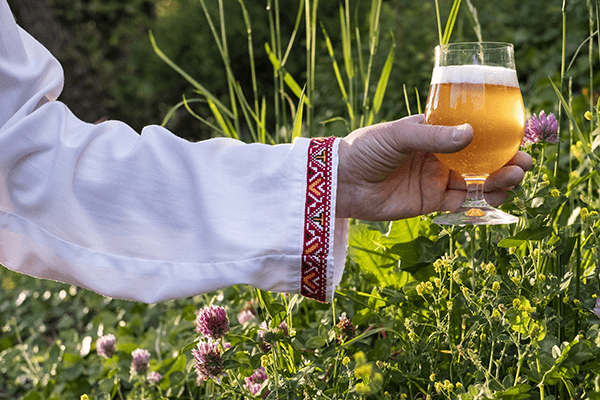
A central pillar of the May/June 2026 issue is the cover story authored by Lana Svitankova, a prominent figure in the international beer community. The feature focuses on the Ukrainian Golden Ale, a style that has been seeking formal classification within the Beer Judge Certification Program (BJCP) and the Brewers Association (BA) style guidelines. Svitankova provides a comprehensive analysis of the style, positioning it as a distinct entity that occupies the sensory space between a British Golden Ale and a Belgian Golden Strong Ale.

According to the technical specifications outlined in the article, Ukrainian Golden Ale is characterized by its slightly higher alcohol by volume (ABV) compared to its British counterparts, typically ranging from 6.0% to 7.5%. Unlike the Belgian variants, which often feature aggressive phenolic spice notes and high carbonation, the Ukrainian version emphasizes a smooth, malt-forward profile with a subtle honey-like sweetness and a restrained hop bitterness. The inclusion of this feature reflects a broader movement within the brewing industry to recognize regional styles from Eastern Europe, providing homebrewers with the historical context and technical parameters required to replicate these beers accurately.
Technical Precision in Continental European Styles
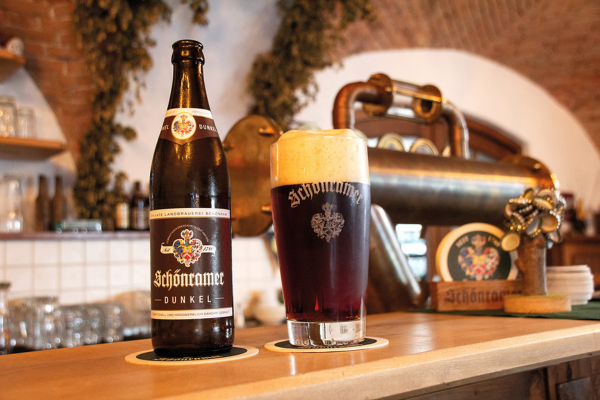
The May/June issue further investigates the nuances of traditional European brewing, with a specific focus on the German Dunkel and the Belgian Saison. The exploration of the German Dunkel emphasizes the technical challenge of balancing complex melanoidin-rich malt flavors with high drinkability. The report details the traditional decoction mashing techniques that define the style, explaining how the boiling of portions of the mash contributes to the deep, toasted bread crust aromas without introducing the acrid burnt notes associated with darker roasted grains.
Simultaneously, the issue features an instructional guide by Carlo Sesia, a gold medalist in the National Homebrew Competition (NHC). Sesia, based in Northern Italy, provides a masterclass on the Saison, a style traditionally associated with the farmhouses of Wallonia. His approach highlights the importance of fermentation temperature control and the selection of specific yeast strains to produce the characteristic ester and phenol profile of the style. By featuring a gold medalist’s methodology, Zymurgy provides its readers with validated data points that have been tested under rigorous competition standards.

Regional Innovation: The Tuscany Homebrewing Movement
The Italian brewing scene receives additional attention through a feature on the Homebrewers Fiorentini, a club based in the Tuscany region. This segment explores the concept of "terroir" in homebrewing, as local enthusiasts incorporate regional agricultural products into their fermentations. The use of grape must, a byproduct of Tuscany’s world-renowned wine industry, is highlighted as a primary adjunct. This practice aligns with the "Italian Grape Ale" (IGA) style, which was the first Italian-born style to be recognized by international judging organizations.
Beyond grape must, the Tuscan brewers are reported to be experimenting with local honey and wine-soaked oak staves to add complexity to their beers. This regional focus serves as a case study in how homebrewers can utilize local supply chains to create unique flavor profiles that cannot be replicated by commercial breweries operating on a larger, more standardized scale. The article provides a timeline of the club’s development, illustrating how organized homebrewing communities contribute to the cultural fabric of their respective regions.
The Intersection of Brewing and Biotechnology: Vaccine Production
One of the more unconventional features in the May/June 2026 issue is the story of Chris Buck, an American virologist and dedicated homebrewer. Buck has gained attention for his research into polyomaviruses, a group of viruses that can cause severe disease in immunocompromised individuals. The article details how Buck utilized Saccharomyces cerevisiae—the common brewer’s yeast found in nearly every homebrew shop—as a biological factory to produce vaccine components.
This intersection of zymurgy (the study of fermentation) and medical science underscores the versatility of yeast as a model organism. The report explains the process of genetic engineering required to prompt yeast cells to synthesize viral proteins, which can then be harvested for use in vaccines. This development has significant implications for the scientific community, as it demonstrates a cost-effective and scalable method for vaccine production using existing fermentation infrastructure. For the homebrewing audience, the story provides a profound look at the biological power of the organisms they manage during every brew day.
Leadership and Editorial Direction under Dave Carpenter
The May/June 2026 issue continues under the editorial leadership of Dave Carpenter, who has served as Editor-in-Chief since 2019. Carpenter’s background in both brewing and linguistics has shaped the magazine’s current trajectory, which favors high-level technical accuracy paired with narrative-driven journalism. Since taking the helm, Carpenter has overseen the digitization of the Zymurgy archives and the expansion of the magazine’s international correspondent network.
Industry analysts note that under the current editorial direction, Zymurgy has successfully navigated the changing landscape of the hobby. As the number of craft breweries has stabilized, the homebrewing community has shifted toward more sophisticated, science-based practices. The inclusion of 14 specific recipes in this issue—each accompanied by water chemistry profiles, fermentation schedules, and sensory targets—reflects the modern homebrewer’s demand for precision and replicability.
The Role of the American Homebrewers Association
The publication of this issue coincides with ongoing efforts by the American Homebrewers Association to bolster its membership through enhanced digital resources. The AHA, a division of the Brewers Association, remains the largest organization of its kind, representing tens of thousands of hobbyists globally. Membership benefits, as highlighted in the issue’s promotional materials, include access to the Zymurgy Online Preview and a vast database of award-winning recipes.
The AHA’s role extends beyond education; it is also a political and social advocate for the hobby. The association has been instrumental in the legalization of homebrewing across all 50 U.S. states and continues to work on legislative issues such as the ability of homebrewers to transport their products to competitions and festivals. The global focus of the May/June 2026 issue suggests that the AHA is increasingly looking to foster international cooperation among brewing enthusiasts, recognizing that the exchange of techniques and ingredients benefits the global craft beer ecosystem.
Broader Impact and Implications for the Brewing Industry
The content of the May/June 2026 issue of Zymurgy suggests several emerging trends in the broader beer industry. First, the emphasis on regional styles like Ukrainian Golden Ale and Italian-influenced Saisons indicates a growing fatigue with homogenized global styles. Consumers and hobbyists alike are seeking out "geographic authenticity," leading to a resurgence in styles that utilize local ingredients and traditional methods.

Second, the integration of scientific breakthroughs, such as Chris Buck’s vaccine research, highlights the professionalization of the homebrewing hobby. Many professional brewers began as homebrewers, and the technical standards promoted by Zymurgy often set the stage for commercial innovation. The magazine’s focus on yeast health, water chemistry, and fermentation kinetics ensures that the next generation of professional brewers enters the industry with a robust scientific foundation.
Finally, the continued relevance of Zymurgy in a digital-first world speaks to the enduring value of curated, peer-reviewed content. In an era of unverified online forums, the magazine’s commitment to "validated recipes" and expert analysis provides a level of reliability that remains highly valued by the community. As the May/June 2026 issue reaches subscribers, it reinforces the notion that homebrewing is not merely a hobby, but a sophisticated discipline that sits at the crossroads of history, culture, and cutting-edge science.