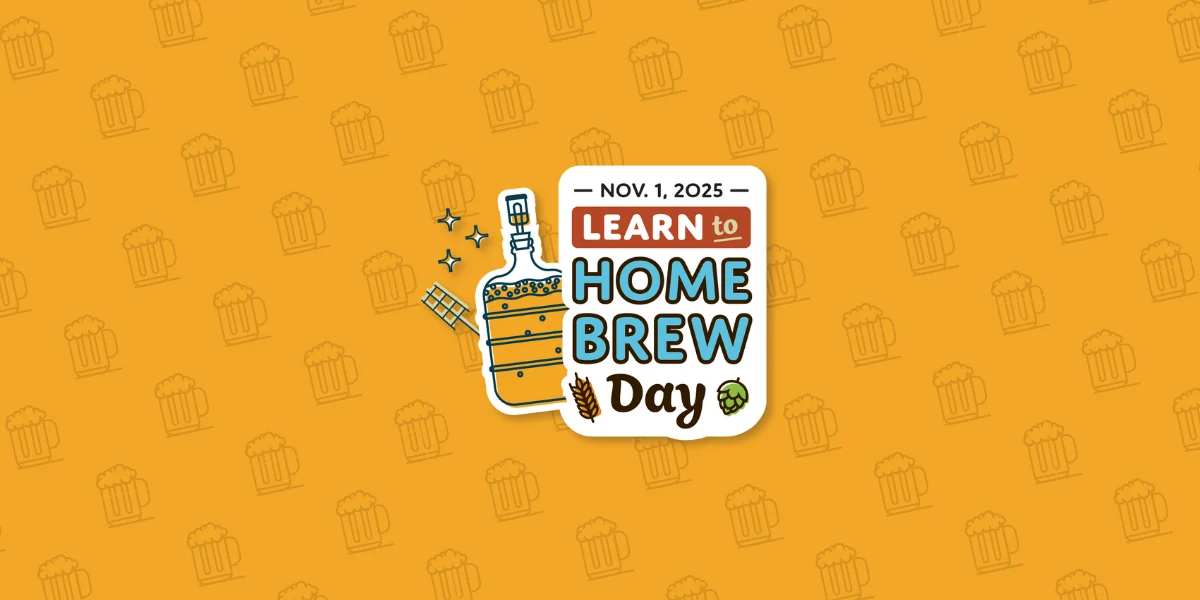

The American Homebrewers Association (AHA) has officially designated Saturday, November 1, 2025, as the annual "Learn to Homebrew Day," a global initiative designed to introduce newcomers to the craft of fermentation and celebrate the international community of amateur brewers. Since its inception in 1999, the event has served as a cornerstone of the hobby, encouraging seasoned practitioners to share their technical knowledge while providing a structured entry point for those interested in the science and art of making beer at home. This year’s celebration marks the 26th anniversary of the event, reinforcing the cultural and economic significance of a hobby that has served as the foundational precursor to the modern craft beer industry.
The event, which traditionally occurs on the first Saturday of November, invites beer enthusiasts, local homebrew supply shops, and organized clubs to host demonstrations and "brew-ins." By providing standardized recipes and educational resources, the AHA aims to demystify the brewing process, which involves complex biological and chemical reactions including enzymatic conversion, hop isomerization, and yeast metabolism. For 2025, the AHA has released two official recipes tailored to different skill levels, ensuring that both novices using malt extract and advanced brewers utilizing all-grain methods have a shared focal point for the day’s activities.
The Historical Context of Homebrewing Legalization and Advocacy
To understand the significance of Learn to Homebrew Day, one must examine the legislative history of the hobby in the United States. While brewing beer at home was a common domestic task for centuries, it was effectively criminalized during the Prohibition era. Even after the repeal of the 18th Amendment in 1933, a clerical error in the drafting of the 21st Amendment failed to include the word "beer" in the list of exempted homemade fermented beverages, which at the time only included wine.
It was not until 1978 that President Jimmy Carter signed H.R. 1337, which contained an amendment introduced by Senators Alan Cranston and Harrison Williams. This legislation legalized homebrewing at the federal level for personal or family use, allowing adults to produce up to 100 gallons per year for a single-adult household or 200 gallons for households with two or more adults. Following federal legalization, the American Homebrewers Association was founded by Charlie Papazian in Boulder, Colorado. Papazian, often cited as the "father of homebrewing," authored The Complete Joy of Homebrewing, a text that transformed the hobby from a clandestine activity into a rigorous culinary and scientific pursuit.
Despite federal approval, state-level legalization remained a patchwork of regulations for decades. It was only in 2013 that the final two states, Alabama and Mississippi, passed legislation to permit homebrewing, making the hobby legal in all 50 U.S. states. This legislative victory was largely the result of decades of advocacy by the AHA and local brewing coalitions, many of whom utilize Learn to Homebrew Day as a platform for continued education and community outreach.
Technical Scope and Educational Objectives
Learn to Homebrew Day is structured to address the steep learning curve often associated with the hobby. The brewing process is a multi-stage endeavor that requires precision in temperature control, sanitation, and ingredient measurement. The AHA’s 2025 initiative focuses on several core competencies:
- Sanitation and Hygiene: The most critical aspect of brewing is maintaining a sterile environment to prevent wild yeast or bacterial contamination. Educational sessions on November 1 will emphasize the use of food-grade sanitizers and the importance of "cold-side" cleanliness.
- The Mashing Process: For all-grain brewers, the event highlights the science of the mash, where crushed malted grains are soaked in hot water to activate enzymes (alpha and beta-amylase) that convert grain starches into fermentable sugars.
- Boiling and Hop Utilization: Participants learn about the "hot break" and the timing of hop additions. Early additions contribute bitterness through the isomerization of alpha acids, while late additions provide aroma and flavor through volatile oils.
- Fermentation Management: The event provides resources on pitch rates and temperature-controlled fermentation, which are vital for preventing off-flavors such as esters or fusel alcohols.
By offering two official recipes, the AHA provides a controlled environment for beginners. Typically, these recipes include a "SMaSH" (Single Malt and Single Hop) beer to teach ingredient profiles, or a classic style like an American Pale Ale or a Stout. These recipes are designed to be accessible, often utilizing the "extract with steeping grains" method, which allows newcomers to produce high-quality beer without the need for expensive all-grain equipment like mash tuns or sparging systems.
Economic and Industry Impact
The homebrewing hobby is more than a domestic pastime; it is a significant economic driver. According to data from the Brewers Association, the parent organization of the AHA, there are approximately 1.1 million homebrewers in the United States alone. These individuals produce an estimated 1.4 million barrels of beer annually, representing roughly 1% of the total U.S. beer production.
The economic footprint extends to the "Local Homebrew Shop" (LHBS) sector. These small businesses provide the raw materials—grains, hops, yeast, and water treatments—as well as the hardware required for the craft. Learn to Homebrew Day is a vital day for these retailers, often resulting in a surge of equipment kit sales and ingredient purchases. Furthermore, the homebrewing community serves as a primary research and development wing for the commercial craft beer industry. Iconic American breweries, including Sierra Nevada Brewing Co., Dogfish Head Craft Brewery, and Bell’s Brewery, were all founded by homebrewers who scaled their kitchen-counter experiments into multi-million-dollar enterprises.
Global Participation and Community Infrastructure
While the AHA is based in the United States, Learn to Homebrew Day has become a truly international phenomenon. Homebrew clubs in the United Kingdom, Australia, Brazil, and Japan participate in the November 1 festivities. The rise of digital forums and social media has allowed for "virtual brew days," where participants from different continents can share their progress in real-time, troubleshoot issues, and compare final results.
The community infrastructure is bolstered by over 2,000 registered homebrew clubs worldwide. These organizations provide a social framework for the hobby, hosting monthly meetings and internal competitions. On Learn to Homebrew Day, these clubs often set up "brewing stations" in public spaces, such as brewery parking lots or community centers, to provide live demonstrations to the public. This visibility is crucial for the hobby’s growth, as it moves brewing out of the basement and into the public eye, showcasing it as a sophisticated craft akin to artisanal cheesemaking or viticulture.
Analysis of Implications and Future Trends
The 2025 Learn to Homebrew Day arrives at a time of transition for the hobby. As the commercial craft beer market reaches a point of saturation in some regions, the homebrewing community is shifting its focus toward hyper-localism and technical innovation. Modern homebrewers are increasingly adopting professional-grade technology, such as electric "all-in-one" brewing systems, digital fermentation monitors, and pressure-fermentation vessels.
Furthermore, there is a growing emphasis on sustainability within the homebrewing community. The AHA has begun incorporating resources on water conservation, spent grain upcycling (using leftover malt for baking or composting), and energy-efficient boiling methods. Learn to Homebrew Day 2025 will likely see an increase in discussions regarding these practices, as hobbyists look to minimize their environmental footprint.
From a sociological perspective, the event reinforces the "maker movement" ethos—the desire to move away from mass-produced consumer goods in favor of handcrafted, personalized products. By teaching the public how to brew, the AHA is not just promoting a hobby; it is fostering a deeper appreciation for the complexities of the beverage industry and the science of food production.
Conclusion and Call to Action
As November 1, 2025, approaches, the American Homebrewers Association encourages participants to register their events on the official AHA website to help map the global reach of the celebration. The organization provides a variety of "Getting Started" guides, including checklists for equipment and step-by-step videos.
The enduring success of Learn to Homebrew Day lies in its ability to bridge the gap between curiosity and mastery. Whether a participant is curious about the history of a specific hop variety or simply wants to understand why their favorite beer tastes the way it does, the event offers a transparent and welcoming environment for exploration. As the AHA notes, the ultimate goal is to celebrate the "joy of making beer at home," a sentiment that has remained unchanged since 1999. By gathering ingredients, firing up kettles, and sharing the final product, the global homebrewing community continues to ensure that the ancient art of fermentation remains a vibrant and evolving part of modern culture.