
The human relationship with self-assessment has undergone a profound transformation, shifting from an innate, sensory-driven understanding to a meticulously quantified, technologically mediated experience. Today, sophisticated wearable devices and smartphone applications offer an unprecedented window into our physiological states and behavioral patterns, enabling individuals to monitor everything from heart rate variability and step counts to exercise intensity and sleep architecture—often from a single, sleek device worn continuously. This technological evolution presents a compelling bridge between our subjective perceptions of well-being and objective, measurable data points, fostering a new era of personal health management.
The Evolution of Self-Measurement: A Historical Perspective
The concept of self-tracking is not entirely novel. Early forms of personal measurement can be traced back centuries, with rudimentary pedometers designed as far back as the 17th century, and Leonardo da Vinci sketching concepts for mechanical counters. The 18th century saw the development of more practical mechanical pedometers, used primarily for estimating distance traveled. The late 20th century introduced digital pedometers, making step counting accessible to a broader public. However, the true revolution in personal health tracking began with the advent of accessible heart rate monitors in the 1970s and 80s, primarily for athletes.
The early 21st century marked an inflection point. With the proliferation of smartphones equipped with accelerometers and GPS, applications began to emerge that could track activity without dedicated hardware. The launch of devices like Fitbit in 2009 and the subsequent wave of activity bands, smartwatches (notably the Apple Watch in 2015), and specialized trackers like Oura Rings, democratized sophisticated physiological monitoring. This chronology highlights a rapid acceleration in the capability and pervasiveness of personal health technology, making it a ubiquitous tool in contemporary life.
Bridging the Subjective-Objective Divide
At its core, the promise of these modern devices lies in their ability to offer objective data that can either validate or challenge our subjective feelings. Human perception, while invaluable for qualitative experience, is inherently susceptible to biases and inaccuracies when it comes to precise quantification. For instance, an individual might feel they are maintaining a consistent caloric intake, only to discover through diligent tracking that hidden calories, such as those from condiments or small snacks, significantly alter their actual consumption. A frequently cited anecdote involves a colleague who meticulously tracked his diet, believing he was within a specific caloric window, only to find an additional 500 calories daily were attributable solely to barbecue sauce—a testament to the often-unconscious inaccuracies of self-assessment.
Conversely, some individuals exhibit an extraordinary capacity for self-assessment, though these are statistical outliers. The Canadian sprinter Ben Johnson was reportedly able to predict his 100-meter sprint times within a tenth of a second of the official stopwatch reading. Such cases, while remarkable, underscore the general human tendency to struggle with precise self-quantification. This raises critical questions for the average individual: How accurate are our internal assessments, and how can technology be wisely leveraged to enhance this accuracy, leading to more informed decisions about our health and well-being?
Accuracy and Efficacy of Tracking Technologies
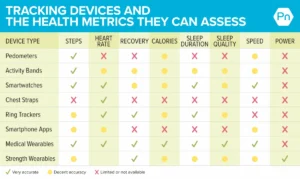
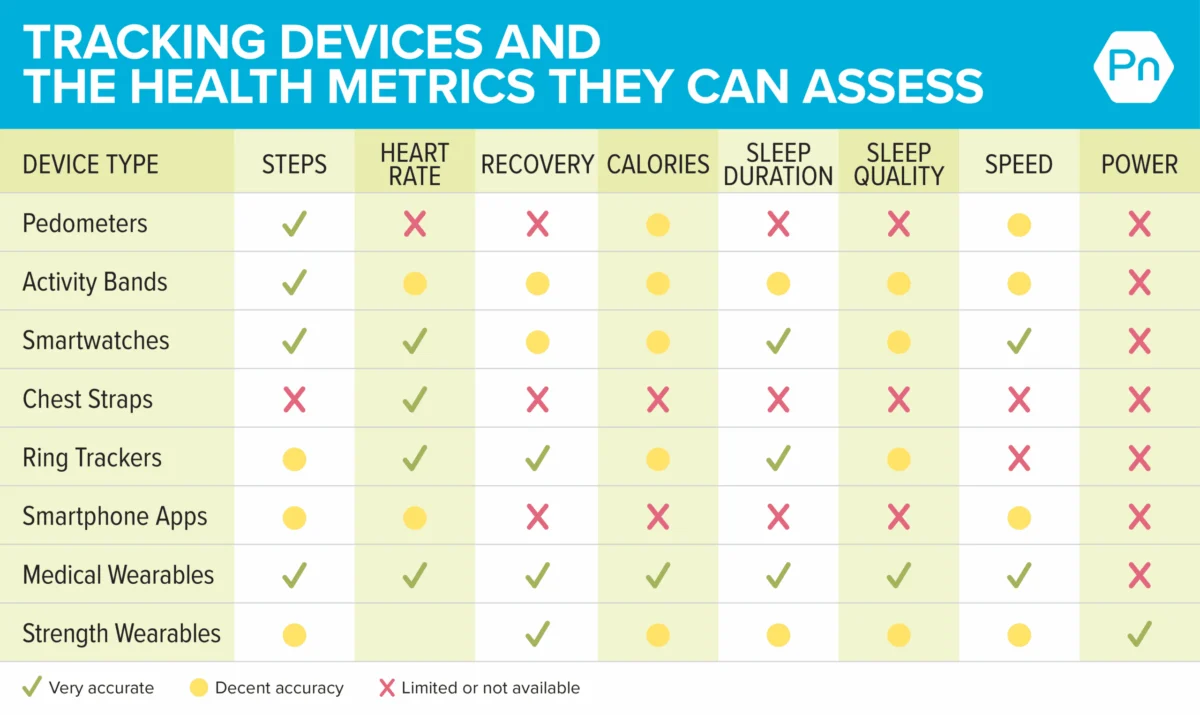
The reliability of health data trackers is not uniform. A significant factor in their utility is the quality of both hardware and software, alongside the complexity of the metric being measured. Metrics like heart rate and step count are generally considered highly reliable across a range of devices, supported by numerous studies validating their accuracy against clinical gold standards. However, other outputs, such as calories burned, movement velocity, or advanced recovery scores, often carry substantial margins for error due to the intricate algorithms and estimations involved. For example, while chest strap heart rate monitors remain the most accurate for cardiovascular data, optical sensors in wrist-worn devices have improved significantly but can still be influenced by factors like skin tone, movement, and fit.

The market for wearables continues its robust growth, with global shipments projected to reach hundreds of millions of units annually, indicating a widespread adoption. This prevalence, however, necessitates a critical understanding of what information is genuinely actionable and what might be misleading. Users and health professionals alike must discern between highly accurate, foundational data and more speculative, algorithm-derived insights.
The Paradox of Information: Finding the Sweet Spot
While data offers clarity, an excess of it can paradoxically hinder decision-making. This phenomenon, often described by computer scientists like Samantha Kleinberg, who studies decision-making, suggests that even a minor surplus of information can negatively impact our ability to make sound choices. This "inverted U-curve" relationship between information and decision-making highlights a critical sweet spot: too little data makes informed choices difficult, but too much leads to analysis paralysis.
Consider the common experience of attempting to choose a restaurant from hundreds of online reviews. What began as a simple desire for a good meal quickly devolves into overwhelming indecision. In the health and fitness sphere, where an ever-increasing array of devices and platforms promise more "science," "customization," and "complexity," navigating this information overload becomes an art. The crucial question then becomes: Does this tracking genuinely enhance my well-being and performance, or does it merely add noise?
When Tracking Empowers: Three Key Indicators
For tracking to be beneficial, it should align with specific psychological and behavioral outcomes. Experts identify several signs that indicate a positive and productive relationship with health tracking technology:
-
Reduced Stress and Validated Methods: Effective tracking can act as an external validator, reinforcing positive behaviors and reducing anxiety related to self-efficacy. For example, an individual skeptical about the benefits of "Zone 2" cardio, despite feeling the ease of the effort, might gain confidence from seeing their resting heart rate decrease and recovery times improve on their heart rate monitor. This objective data calibrates their subjective perception, fostering trust in the process. Conversely, if tracking consistently generates stress, particularly around metrics beyond immediate control (e.g., poor sleep scores for a new parent), it becomes counterproductive. The focus should always be on actionable insights, not on generating anxiety.
-
Enhanced Motivation and Ability through Clear Feedback: According to behavioral models, a behavior is most likely to occur when an individual possesses sufficient motivation and ability, coupled with a timely prompt. Fitness trackers excel at providing these prompts. A person might believe their evening glass of wine helps them relax and sleep, but objective sleep tracking data revealing poorer sleep quality on those nights can be a powerful, undeniable prompt for behavioral adjustment. This "once you see it, you can’t un-see it" effect leverages data to clarify choices and motivate change. However, tracking can be detrimental if it transforms an enjoyable activity into a rigid pursuit of numbers, leading to burnout and a diminished sense of intrinsic motivation, as seen in athletes who lose the joy of their sport due to an obsessive focus on performance metrics.
-
Deeper Self-Understanding: Tracking can illuminate personal patterns and potentials that are otherwise difficult to discern. Individuals who habitually "grind" might unknowingly inhibit their progress by overtraining, while those who underestimate their capacity might benefit from objective data pushing them to greater efforts. For instance, in high-intensity interval training (HIIT), heart rate data can personalize recovery periods, moving beyond generic estimates to reflect actual physiological needs. This allows for more efficient training, avoiding "junk volume" that accumulates fatigue without improving performance. The data acts as a mirror, reflecting one’s true physiological state and potential. The risk here lies in over-reliance, where individuals lose touch with their own internal signals—hunger, fullness, energy levels—becoming dependent on an app to dictate their body’s needs. A notable example is the "MyFitnessPal blackout" of 2019, where millions of users found themselves adrift without their caloric tracking app, highlighting a profound disconnect from internal cues.
Cultivating a Balanced Approach: Integrating Data with Embodied Wisdom

To truly harness the power of fitness trackers without falling prey to their potential pitfalls, a balanced approach is essential. This involves consciously integrating objective data with our innate sensory intelligence. While external goals like weight loss or performance benchmarks can be powerful motivators, an exclusive focus on these extrinsic factors can lead to demotivation during inevitable plateaus or regressions. Individuals who cultivate an awareness of intrinsic rewards—mindfulness, mastery, meaning, and the sheer enjoyment of the process—develop a more resilient and sustainable practice.
Here are three practical strategies for fostering this integrated self-assessment:
-
Prioritize Internal Check-ins: Before consulting any device, pause and engage in a subjective assessment. How do you feel? What are your perceived energy levels, recovery status, or effort during a workout? This deliberate act strengthens your proprioception and interoception—your body’s internal sensing systems. After forming your initial assessment, compare it with the objective data. Over time, this practice can significantly narrow the gap between your subjective feelings and the device’s readings, enhancing your intuitive understanding of your body. Regular app updates, which refine algorithms and datasets, also contribute to the predictive accuracy of the technology itself.
-
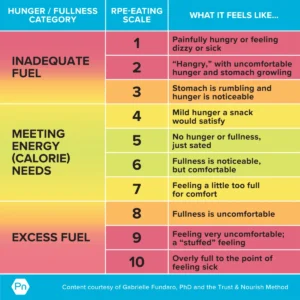
Develop Mental Shortcuts and Calibrate RPE: Coaches often ask clients to estimate their capacity (e.g., "reps in reserve"). While novices may be significantly off, consistent comparison with actual performance data, sometimes even guided by hypothetical scenarios (e.g., "how many more reps for a million dollars?"), can dramatically improve this self-assessment. The Rate of Perceived Exertion (RPE), a highly validated sensory-driven approach, benefits immensely from this calibration. By consciously mapping how a particular effort feels against objective measures like heart rate or power output, individuals can develop a reliable internal barometer that can sometimes stand in for or supplement technological readings.
-
Continuously Cultivate Sensory Awareness: Humans are equipped with an incredibly rich and complex network of sensory information, far beyond what any gadget can capture. This includes proprioception (sense of body position), interoception (sense of internal physiological states), nociception (sense of pain), and various tactile, thermal, and vestibular senses. This intricate system feeds into the nervous system’s powerful pattern-recognition capabilities. Regularly checking in with these internal signals—how a movement feels, the nuances of hunger or fullness, subtle shifts in energy—enriches your understanding of your body’s complex dynamics. By learning to calibrate these inherent senses with the precision of objective data, individuals can leverage the remarkable advancements in wearable technology while keeping their unique, embodied experience at the forefront of their health journey.
Broader Implications and Future Outlook
The widespread adoption of personal health trackers carries significant implications beyond individual well-being. From a public health perspective, aggregated, anonymized data could offer unprecedented insights into population-level activity patterns, sleep trends, and early indicators of health issues, potentially informing preventative strategies. However, this also raises critical ethical considerations regarding data privacy, security, and the potential for surveillance or misuse of highly personal physiological information.
The psychological impact extends to the potential for gamification to foster healthy habits, but also the risk of fostering obsessive tendencies or body image issues if the focus becomes solely on numerical optimization rather than holistic well-being. The future of this technology will likely see even greater integration of artificial intelligence for personalized insights, predictive analytics for health risks, and more sophisticated, non-invasive sensors. The challenge will be to ensure these advancements empower individuals to live healthier, more informed lives, rather than creating a generation dependent on external metrics, disconnected from their own innate wisdom. The ultimate goal remains to foster a symbiotic relationship between human intuition and technological precision, leading to genuinely improved health outcomes and a richer, more meaningful experience of one’s own body.