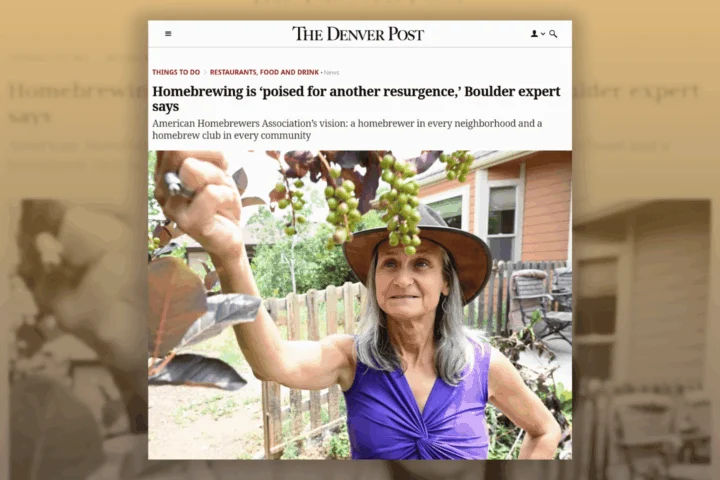

The American Homebrewers Association (AHA) has signaled a strategic shift toward hyper-local community engagement, a move highlighted by Executive Director Julia Herz in a comprehensive feature recently published by the Denver Post. The profile, released on October 10, serves as a significant marker for the organization as it navigates the post-pandemic landscape of the hobbyist fermentation industry. Herz, a veteran advocate for craft beer and independent brewing, used the platform to articulate a revitalized mission for the AHA: establishing a homebrewer in every neighborhood and a homebrew club in every community across the United States. This vision reflects a broader effort to reposition homebrewing not merely as a precursor to professional brewing, but as a vital pillar of local culture, agriculture, and social connectivity.
The Strategic Vision of the American Homebrewers Association
Under the leadership of Julia Herz, the AHA is pivoting toward a grassroots model that emphasizes the accessibility of fermentation. The "homebrewer in every neighborhood" initiative is designed to demystify the process of making beer, mead, and cider at home, moving it away from the perception of a complex, equipment-heavy laboratory science and toward its roots as a domestic art. Herz argues that the resurgence of homebrewing is imminent, driven by a modern desire for authenticity and a deeper connection to the ingredients used in daily consumption.
The AHA’s new vision is built on the premise that homebrewing acts as a social lubricant and a community builder. According to Herz, the act of brewing is inherently outward-facing; while the process may occur in a kitchen or garage, the end product is almost universally intended for sharing. This spirit of generosity is what the AHA aims to harness to grow its membership and influence. By fostering a "homebrew club in every community," the association seeks to create localized support networks where beginners can learn from experts, thereby lowering the barrier to entry for a hobby that has historically seen fluctuating participation rates.
Historical Context and the Evolution of Homebrewing in America
To understand the significance of Herz’s current mission, one must look at the trajectory of homebrewing in the United States. The hobby was effectively prohibited during the era of Prohibition and remained in a legal gray area for decades following its repeal. It was not until 1978 that President Jimmy Carter signed H.R. 1337, which included an amendment to federally legalize homebrewing for personal or family use. This legislative milestone led to the founding of the American Homebrewers Association in 1979 by Charlie Papazian, a figure widely regarded as the "godfather" of the movement.
Throughout the 1980s and 1990s, homebrewing served as the primary incubator for what would become the craft beer revolution. Many of the nation’s most successful independent breweries, including Sierra Nevada Brewing Co. and Boston Beer Company, were founded by individuals who began their journeys with five-gallon buckets in their home kitchens. However, as the craft beer industry matured and professional offerings became ubiquitous, the urgency to "make your own" beer began to wane.
The 2010s saw a plateau in homebrewing participation as consumers found an unprecedented variety of styles available at local liquor stores and taprooms. The COVID-19 pandemic provided a temporary spike in interest as home-bound individuals sought new DIY projects, but the subsequent return to normalcy and economic inflationary pressures have created a new set of challenges and opportunities. Herz’s "resurgence" theory posits that the current economic climate—where the cost of premium craft beer is rising—combined with a cultural shift toward "slow food" and artisanal crafts, makes this the ideal moment for a homebrewing comeback.
Data and Industry Trends: The Economic Impact of Fermentation
The homebrewing industry remains a significant, though often overlooked, segment of the broader beverage economy. According to data from the Brewers Association (the parent organization of the AHA), there are approximately 1.1 million homebrewers in the United States. These enthusiasts produce an estimated 1.4 million barrels of beer annually, representing roughly 1% of the total beer production in the country.
The economic footprint of homebrewing extends beyond the ingredients themselves. The industry supports a network of hundreds of local homebrew supply shops (LHBS), which serve as critical hubs for education and equipment. However, these small businesses have faced headwinds in recent years due to the rise of e-commerce and shifting consumer habits. The AHA’s focus on community clubs is, in part, a strategy to revitalize these local shops by driving foot traffic through club meetings and educational seminars.
Furthermore, the demographics of homebrewing are shifting. While the hobby has traditionally been dominated by a specific demographic, the AHA is reporting increased interest from younger, more diverse populations who are interested in fermentation beyond traditional ales and lagers. This includes a rise in home-produced mead, cider, and kombucha, reflecting a broader interest in the "joy of fermentation" that Herz champions.
Colorado as the Epicenter of the Movement
It is no coincidence that the Denver Post chose to feature Herz and the AHA. Colorado has long been the epicenter of the American craft beer and homebrewing world. The state is home to the Brewers Association and hosts the Great American Beer Festival (GABF), the largest ticketed beer festival in the country. The GABF itself grew out of the homebrewing movement, and the AHA National Homebrew Competition remains the world’s largest international homebrew competition.
In Colorado, homebrewing is more than a hobby; it is a significant part of the state’s identity. The state boasts one of the highest concentrations of homebrew clubs per capita, and the synergy between homebrewers and professional brewers in the region is a model for the rest of the country. Herz’s interview highlights that Colorado’s success is a template that the AHA hopes to replicate nationwide, using the state’s collaborative spirit as a benchmark for other communities.
Statements and Reactions from the Brewing Community
The industry has reacted positively to Herz’s renewed focus on community. While the Denver Post article focused on Herz’s personal narrative and the AHA’s mission, industry analysts suggest that this shift is necessary for the long-term health of the craft beer ecosystem.
"Homebrewers are the most educated consumers in the market," says one industry consultant. "They understand the value of quality ingredients and the labor-intensive process of brewing. By growing the homebrew community, the AHA is essentially cultivating a more sophisticated customer base for professional craft breweries as well."
Locally, homebrew club leaders in the Denver area have expressed support for the "club in every community" initiative. Many clubs saw a dip in active participation during the transition back to in-person events, and the AHA’s national backing provides a much-needed morale boost and a framework for recruitment. The emphasis on "sharing" the hobby resonates deeply with those who view brewing as a social activity rather than a solitary pursuit.
Broader Impact: Fermentation, Agriculture, and Sustainability
The AHA’s mission extends into the realms of agriculture and sustainability. Homebrewing connects individuals directly to the agricultural cycle of hops, barley, and yeast. Herz emphasizes that homebrewers are often the first to experiment with new hop varieties or locally sourced grains, acting as a "test kitchen" for the wider industry.
This connection to agriculture also fosters a greater sense of environmental stewardship. Homebrewers are inherently incentivized to care about water quality and the health of the soil that produces their ingredients. By encouraging a homebrewer in every neighborhood, the AHA is indirectly promoting a more localized and sustainable approach to consumption. The reduction in packaging waste and the elimination of transportation emissions associated with home-produced beverages contribute to a smaller carbon footprint compared to commercially produced alternatives.
The Role of the AHA in the Modern Era
The AHA continues to provide a suite of benefits designed to support this new vision. Membership offers access to Zymurgy magazine, a repository of validated recipes, and expert resources that cover the spectrum from beginner techniques to advanced fermentation science. More importantly, the AHA acts as a legislative advocate, working to ensure that the rights of homebrewers are protected at both the state and federal levels.
Recent legislative efforts have focused on allowing homebrewers to transport their creations to competitions and club meetings without running afoul of antiquated "open container" or distribution laws. These advocacy efforts are crucial for the "community" aspect of Herz’s vision to succeed, as they remove the legal barriers to the sharing and social interaction that define the hobby.
Conclusion and Future Implications
The feature in the Denver Post serves as a rallying cry for a hobby that is seeking to redefine itself in a changing world. Julia Herz’s leadership at the American Homebrewers Association marks a return to the core values of the movement: creativity, science, and, most importantly, connection. By focusing on the neighborhood and the local club, the AHA is betting on the idea that the future of fermentation is small-scale, personal, and deeply rooted in community.
As the AHA moves forward with its mission, the success of the "homebrewer in every neighborhood" initiative will likely be measured not just in membership numbers, but in the vibrancy of local fermentation cultures. If Herz’s prediction of a resurgence holds true, the next decade could see homebrewing transition from a niche hobby into a ubiquitous cultural practice, once again proving that some of the most significant innovations in the beverage industry begin in a simple five-gallon glass carboy. For the American Homebrewers Association, the path forward is clear: the art of fermentation is a gift best enjoyed when shared with one’s neighbor.