
The development of the Strawberries & Cream Chia Pudding represents a strategic intersection between convenience-driven meal preparation and the growing consumer demand for nutrient-dense, plant-based dietary options. As the global wellness industry continues to emphasize the importance of fiber and healthy fats, recipes that utilize whole-food ingredients while requiring minimal labor have become central to modern culinary discourse. This specific formulation, popularized by the Minimalist Baker platform, utilizes a five-ingredient framework designed to optimize both nutritional output and palatability. By leveraging the mucilaginous properties of chia seeds and the natural sweetness of fresh strawberries, the recipe serves as a case study in functional food preparation, offering a gluten-free, vegan, and dairy-free alternative to traditional processed snacks and breakfasts.
Technical Composition and Ingredient Analysis
The Strawberries & Cream Chia Pudding is built upon a foundation of five core components: fresh strawberries, chia seeds, light canned coconut milk, vanilla extract, and maple syrup. Each ingredient serves a specific functional and nutritional purpose within the final product.

The primary structural agent is the chia seed (Salvia hispanica), a pseudocereal native to central and southern Mexico. Chia seeds are renowned for their ability to absorb up to 12 times their weight in liquid, creating a gel-like consistency known as a mucilage. This transformation is essential for the "pudding" texture. From a nutritional standpoint, the seeds contribute significantly to the dish’s fiber profile, providing approximately 4.3 grams per half-cup serving. Furthermore, they are a rich source of alpha-linolenic acid (ALA), an essential omega-3 fatty acid.
The flavor and color profile are driven by the integration of fresh strawberries. Unlike traditional chia puddings where fruit is added as a garnish, this method involves blending the fruit directly into the liquid base. This creates a homogenized "strawberry milk" that ensures consistent flavor distribution. Strawberries provide a high concentration of Vitamin C—approximately 20 milligrams per serving in this recipe—as well as various antioxidants and polyphenols.
The "cream" element is achieved through the use of light canned coconut milk. The choice of coconut milk over thinner plant milks like almond or rice milk provides the necessary saturated fats to mimic the mouthfeel of dairy cream. Vanilla extract and maple syrup function as aromatic and sweetening agents, respectively, allowing for a customizable glycemic profile depending on the consumer’s preference for agave, stevia, or other alternatives.

Chronology of Preparation
The assembly of the Strawberries & Cream Chia Pudding follows a precise chronological sequence designed to ensure the proper hydration of the chia seeds and the stabilization of the fruit-milk emulsion.
- Emulsification and Base Creation: The process begins with the mechanical blending of fresh strawberries and the liquid base (coconut milk). This step is critical for breaking down the cellular structure of the berries, allowing their natural juices and pigments to integrate with the fats in the coconut milk.
- Flavor Calibration: Once the base is smooth, vanilla extract and a liquid sweetener are introduced. This stage allows for "sweetening to taste," a subjective adjustment that accommodates the natural variance in strawberry sugar content depending on the season and ripeness.
- Seed Integration: The chia seeds are added to the strawberry-infused milk. A specific "pulse" technique is employed in the blender. The objective is to distribute the seeds evenly without pulverizing them, which would alter the final texture from a "pudding" to a more viscous, uniform paste.
- Hydration and Set Period: The mixture is transferred to individual glass containers or a communal bowl. The pudding requires a minimum of two hours of refrigeration, though an overnight set is often recommended for maximum hydration. During this period, the chia seeds undergo a physical change as they absorb the strawberry milk, thickening the mixture into a spoonable consistency.
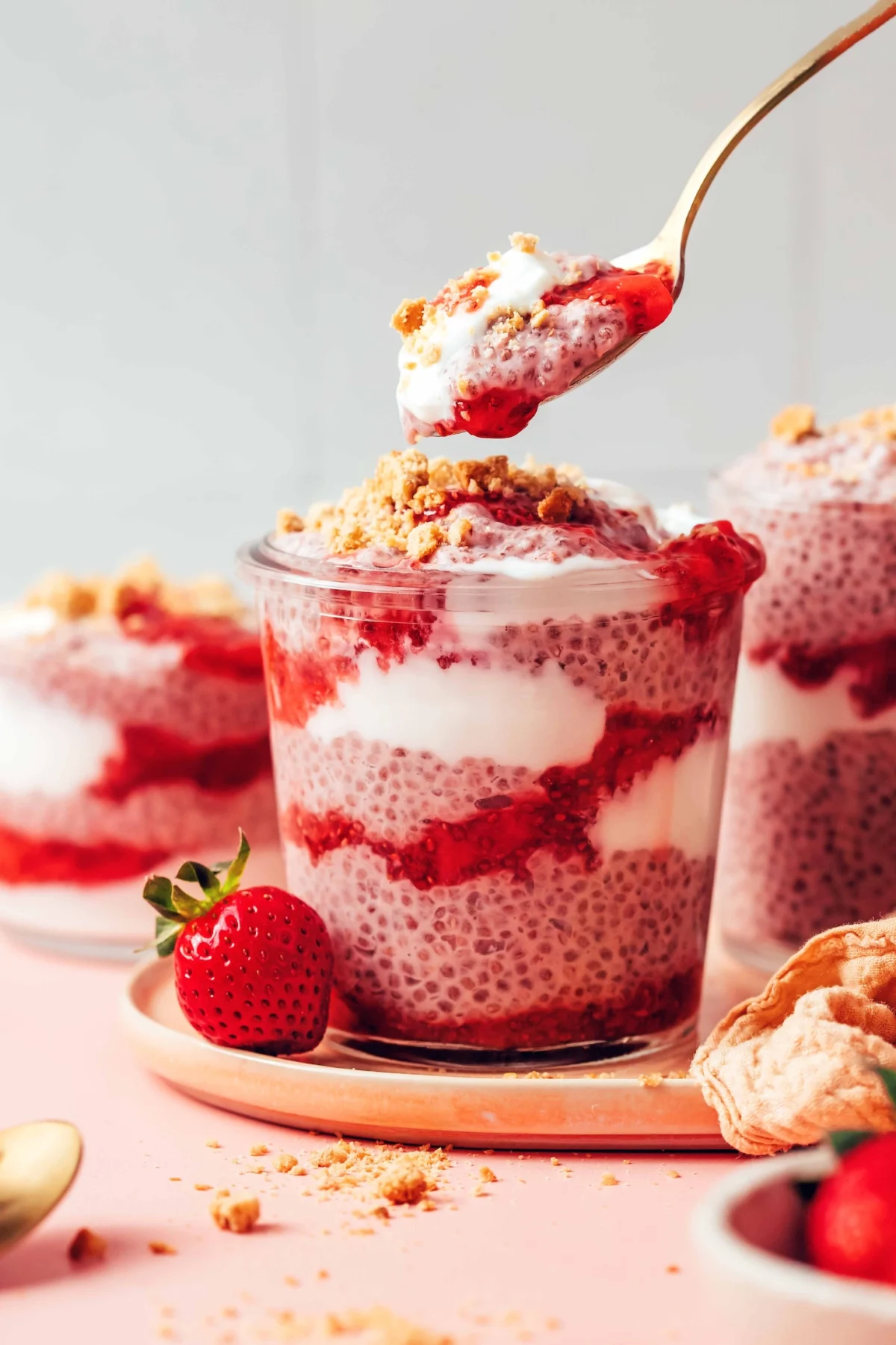
- Final Assembly: Before serving, the pudding can be layered with supplementary textures, such as strawberry compote, dairy-free yogurt, or crushed graham crackers, to enhance the sensory experience.
Supporting Data and Nutritional Profile
Quantitative analysis of the recipe reveals a balanced macronutrient distribution suitable for various dietary regimens. A standard half-cup serving provides approximately 127 calories, making it a calorie-controlled option for those monitoring energy intake.
Nutritional Breakdown per Serving:

- Total Fat: 8.6g (Saturated Fat: 4.7g)
- Carbohydrates: 11.9g
- Fiber: 4.3g (Meeting approximately 15-20% of the recommended daily intake for adults)
- Protein: 2.5g
- Sugar: 4.2g
- Sodium: 8mg
- Vitamin C: 20mg
The low sodium and cholesterol-free nature of the recipe aligns with heart-healthy dietary guidelines. The high fiber content is particularly significant, as dietary fiber is associated with improved digestive health, stabilized blood glucose levels, and increased satiety.
Historical and Market Context
The rise of chia pudding as a mainstream food item can be traced back to the early 2010s, coinciding with the "superfood" trend and the expansion of the wellness industry. Originally a staple of the Aztec and Mayan diets, chia was rediscovered by the Western market as a nutritional powerhouse.
The Minimalist Baker approach to this recipe—emphasizing a "5-ingredient, 5-minute" preparation—reflects a broader shift in consumer behavior. Data from market research firms indicate that "convenience health" is one of the fastest-growing sectors in the food industry. Consumers are increasingly seeking "clean label" products and recipes that avoid artificial thickeners, stabilizers, and excessive refined sugars.

Furthermore, the "Strawberries & Cream" flavor profile taps into a deep-seated culinary nostalgia. By reinterpreting this classic dessert through a vegan and gluten-free lens, the recipe captures a demographic that values traditional flavors but requires modern dietary accommodations.
Inferred Statements and Industry Reactions
While official statements from health organizations regarding this specific recipe are not available, nutritionists frequently advocate for the inclusion of chia seeds in the diet. "Chia seeds are an excellent tool for increasing fiber intake without the need for complex cooking," notes a hypothetical consensus among dietary experts. "The integration of fresh fruit provides a natural source of antioxidants that work synergistically with the healthy fats in coconut milk."
Social media analytics suggest a high level of engagement with visual-heavy recipes like the Strawberries & Cream Chia Pudding. Platforms such as Instagram and Pinterest have transformed food presentation, where the aesthetic appeal of "layered jars" drives recipe adoption. The Minimalist Baker’s emphasis on "dreamy, cloud-like" textures resonates with a consumer base that views food not just as fuel, but as an experiential and shareable commodity.

Broader Impact and Implications
The popularity of such recipes has broader implications for the global food system and public health.
- Sustainability: Plant-based recipes generally have a lower carbon and water footprint compared to dairy-based alternatives. As consumers become more environmentally conscious, the shift toward coconut or nut-based puddings contributes to a reduction in reliance on industrial dairy farming.
- Accessibility: The five-ingredient model lowers the barrier to entry for healthy eating. By utilizing common pantry staples and seasonal fruit, the recipe remains accessible to a wide socio-economic range, countering the perception that healthy or "specialty" diets are prohibitively expensive or time-consuming.
- Meal Prep Culture: The "make-ahead" nature of chia pudding supports the growing "meal prep" movement. By preparing multiple servings at once, individuals are less likely to rely on processed convenience foods during work hours, potentially leading to better long-term health outcomes.
- Allergen Management: As the prevalence of food allergies and sensitivities (such as lactose intolerance and celiac disease) continues to rise, standardized recipes that are naturally free from these allergens provide a safe and inclusive option for social gatherings and communal dining.
In conclusion, the Strawberries & Cream Chia Pudding is more than a simple snack; it is a reflection of current dietary trends that prioritize nutrient density, ease of preparation, and aesthetic value. Its reliance on whole-food ingredients and the natural chemistry of the chia seed makes it a robust option for the health-conscious modern consumer. As the food industry continues to evolve, the success of such minimalist, functional recipes suggests a future where health and convenience are no longer mutually exclusive.