
The past year has indelibly etched the concept of exponential growth into the global consciousness, primarily through the grim lens of the SARS-CoV-2 virus’s rapid spread. This phenomenon, where a quantity increases by a fixed percentage over a given period, is notoriously counterintuitive. It often manifests as a period of seemingly negligible change, followed by an abrupt, explosive surge, a pattern strikingly evident in the sudden skyrocketing of COVID-19 case numbers. This inherent deceptiveness is famously illustrated by the ancient "wheat and chessboard problem," where the number of grains of rice doubles on each successive square, leading to an unfathomable quantity by the final square – a stark demonstration of how quickly exponential growth can outpace linear expectations. Yet, amidst this somber context, another, more benign form of exponential growth quietly unfolded, providing solace and sustenance to millions confined to their homes: the rapid proliferation of Saccharomyces cerevisiae, common baker’s yeast. The global lockdowns, intended to curb viral transmission, inadvertently sparked a widespread resurgence in home baking, transforming a once-niche hobby into a mainstream activity and leading to unprecedented demand for yeast and flour worldwide.
The Microscopic Engine: Understanding Yeast and Exponential Reproduction
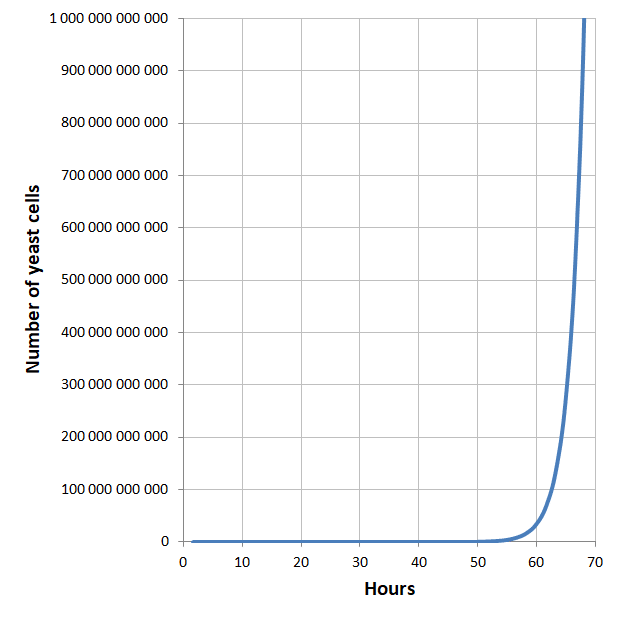
At the heart of this culinary revolution lies yeast, a single-celled microorganism vital for fermentation. Under optimal conditions – a plentiful supply of nutrients (sugars), an appropriate temperature (typically warm but not hot), and an initial presence of oxygen – a single yeast cell embarks on a remarkable journey of rapid reproduction. Through a process known as budding, a parent cell produces a smaller daughter cell, which then grows to full size and detaches, ready to repeat the cycle. The efficiency of this process is astounding: a typical yeast cell can complete its entire life cycle, growing and splitting into two, in approximately 100 minutes. This means that after another 100 minutes, those two cells become four, then eight, and so on, doubling their population roughly every hour and forty minutes.
The implications of such rapid, unchecked growth are profound. Starting from a single cell, the numbers quickly become astronomical. After just 24 hours, the initial cell would have multiplied into approximately 16,000 cells. By 48 hours, this figure escalates dramatically to an estimated 268 million cells. Before three full days have passed, the population can reach the staggering order of a trillion (1,000,000,000,000) yeast cells. To put this into perspective, a standard 50-gram piece of compressed fresh yeast, commonly found in commercial settings, contains roughly this many cells. This exponential proliferation is the engine behind commercial yeast production, where carefully controlled bioreactors maintain ideal conditions for a limited period to maximize yield. However, in the less controlled environment of a home bread dough, while still significant, the growth process is considerably slower due to fluctuating temperatures, limited oxygen, and diminishing nutrient availability as the yeast consumes sugars and produces alcohol and carbon dioxide.
Pandemic-Driven Baking: A Global Phenomenon and Supply Chain Strain
The onset of the COVID-19 pandemic and the subsequent enforcement of lockdowns across continents profoundly altered daily routines. With restaurants closed, social gatherings restricted, and commuting eliminated for many, individuals found themselves with unprecedented amounts of free time, particularly during evenings and weekends. This sudden shift created a fertile ground for the resurgence of home-based activities, with baking emerging as a primary coping mechanism and a source of comfort and productivity. The aroma of freshly baked bread became a symbol of resilience and domesticity in uncertain times.
Reports from various countries, mirroring the experience in Norway where yeast was "sold out for weeks and months on end," indicated a global surge in demand for baking staples. Supermarket shelves typically stocked with flour, yeast, and sugar were frequently bare. Data from market research firms globally supported these anecdotal observations. For instance, in the United States, sales of baking ingredients like flour and yeast saw double- and triple-digit percentage increases during the peak lockdown months of 2020 compared to the previous year. Similar trends were reported across Europe, Asia, and Australia, signaling a universal embrace of the baking hobby. This unprecedented demand placed immense pressure on supply chains, from agricultural producers to yeast manufacturers and retailers, many of whom struggled to keep pace with the sudden and sustained spike in consumption. Manufacturing facilities, often optimized for steady, predictable demand, faced challenges in rapidly scaling up production, leading to localized and even national shortages.
The psychological dimension of this baking boom cannot be overstated. Beyond the practical benefits of homemade food, baking offered a tangible sense of control and accomplishment in a world characterized by unpredictability. The rhythmic kneading, the patient waiting for dough to rise, and the transformative power of heat provided a therapeutic escape. For many, it was an opportunity to learn a new skill, engage children in a wholesome activity, or reconnect with traditional culinary practices passed down through generations. Online communities dedicated to baking flourished, with social media platforms becoming vibrant hubs for sharing recipes, troubleshooting tips, and showcasing homemade loaves and pastries.
Precision in the Kitchen: Maximizing Yeast Efficiency and Flavor
The scarcity of yeast, coupled with a newfound appreciation for the baking process, encouraged many home bakers to adopt more economical and patient approaches. A significant trend that emerged was the conscious decision to use significantly less instant dry yeast than traditionally recommended, compensating for the reduced quantity by allowing the dough to leaven for much longer periods. This method, often referred to as extended or long bulk fermentation, is not merely a compromise born of necessity but a technique revered by professional bakers for its profound impact on flavor and texture.
The science behind long fermentation is compelling. While yeast is responsible for producing the carbon dioxide that makes dough rise, extended fermentation allows other microbial communities, particularly lactic acid bacteria (LAB), to develop within the dough. These bacteria metabolize sugars and produce lactic and acetic acids, which impart complex, nuanced flavors – the characteristic tang often associated with sourdough, even in a yeast-leavened dough. Furthermore, longer fermentation times allow enzymes naturally present in flour to break down complex carbohydrates and proteins into simpler compounds, making the nutrients more accessible to the yeast and contributing to improved dough extensibility, better crust development, and a more open, airy crumb structure.
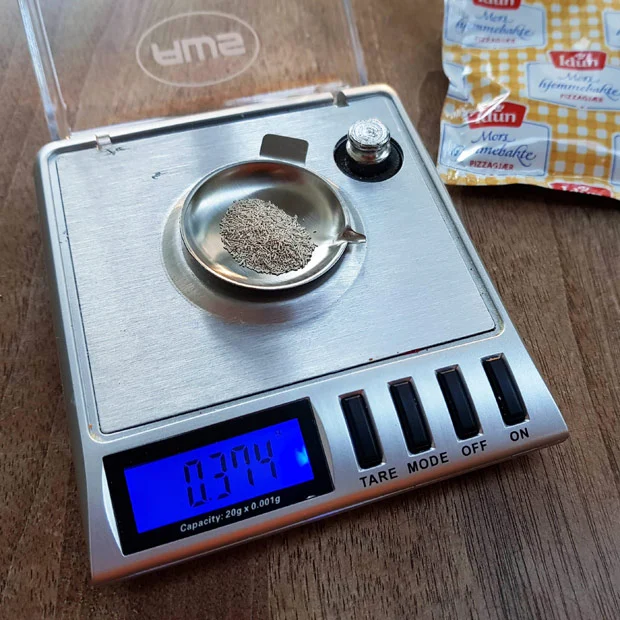
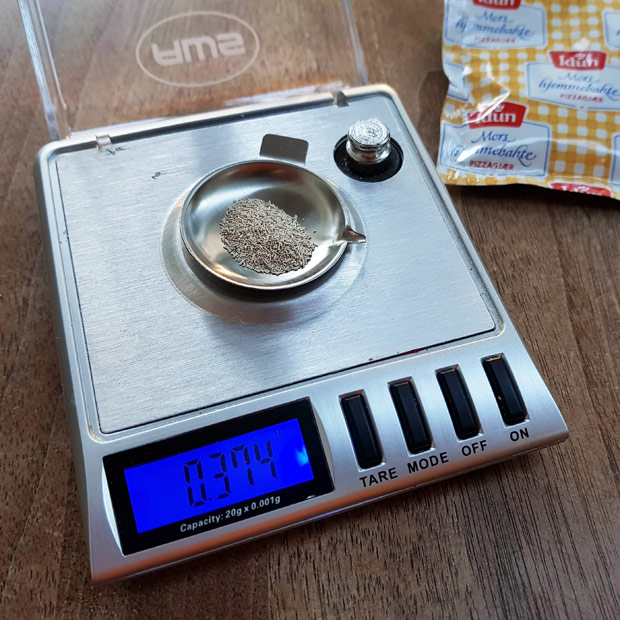
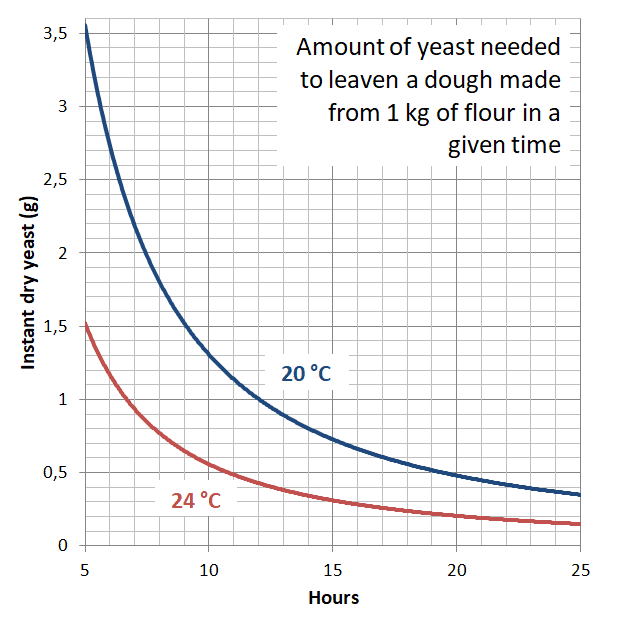
To successfully implement this "less yeast, more time" strategy, precision becomes paramount. Measuring minute quantities of instant dry yeast, especially when aiming for fractions of a gram, necessitates specialized equipment. Standard kitchen scales, often designed for larger quantities, lack the sensitivity required. This led to a surge in demand for digital balances with a 0.001-gram readout, once considered laboratory-grade or niche tools, now becoming indispensable for serious home bakers. These relatively inexpensive devices allow for accurate measurement of the tiny amounts of yeast needed. For example, as highlighted by expert calculations, a dough made with 1 kilogram of wheat flour might require as little as 0.48 grams of instant dry yeast if allowed to rise for 20 hours at a moderate room temperature of 20°C (68°F).
The growing sophistication of home baking was further supported by technological innovations. Mobile applications, such as PizzApp+ for Android, became invaluable tools for calculating precise ingredient ratios based on desired fermentation times, temperatures, and flour weights. These apps often allow users to select different types of leavening agents – fresh compressed yeast, active dry yeast, instant dry yeast, and even liquid or firm sourdoughs – providing tailored recommendations. By democratizing access to complex baking calculations, these digital aids empowered a new generation of bakers to experiment with longer fermentation, achieve professional-level results, and conserve precious yeast supplies.
Beyond Instant: Exploring the World of Leavening Agents
While instant dry yeast became the primary focus during the shortages, the broader world of leavening agents offers diverse options. Active dry yeast, which requires rehydration before use, and fresh compressed yeast, known for its rapid activity and shorter shelf life, are other common commercial forms. Each has its specific applications and benefits, influencing dough handling and final product characteristics.
For those seeking ultimate self-sufficiency and a deeper dive into microbial alchemy, sourdough became an increasingly popular alternative. Sourdough relies on a "starter" – a symbiotic culture of wild yeasts and lactic acid bacteria cultivated from flour and water. This method completely eliminates the need for commercial yeast, offering a unique flavor profile and the satisfaction of nurturing a living ingredient. However, maintaining a sourdough starter requires consistent feeding and attention, representing a greater commitment than simply opening a sachet of instant yeast. Despite the allure of sourdough’s artisanal qualities and self-reliance, the sheer convenience and reliability of instant dry yeast remain a powerful draw for many, particularly for quick baking projects or when time is a limiting factor.
Lasting Legacy: The Post-Pandemic Baking Landscape
The widespread embrace of home baking during the pandemic is unlikely to be a fleeting trend. The skills acquired, the joy discovered, and the health benefits of homemade food have cemented baking’s place in many households. Market analysts predict a sustained interest in home cooking and baking, albeit at a slightly reduced intensity compared to the peak lockdown periods. This shift has broader implications across several sectors.
The kitchen appliance market has seen a boost, with increased sales of stand mixers, bread makers, and, notably, precision scales. Ingredient suppliers are likely to continue adapting their supply chains to accommodate higher baseline demand for baking staples. There’s also a growing consumer awareness of food origins, fermentation processes, and the desire for healthier, less processed foods, all of which are fostered by home baking.
Culturally, the pandemic may have re-instilled a greater appreciation for traditional crafts and self-sufficiency. Baking, once viewed as a laborious chore or a niche pursuit, has been revitalized as a communal, creative, and comforting activity. The exponential growth of yeast, a microscopic marvel, not only provided a tangible lesson in biological power but also served as a quiet, steady force, leavening not just dough but also spirits during an unprecedented global crisis, leaving an enduring legacy on culinary habits and kitchen culture worldwide.