
The Evolution of Tahini in Modern Gastronomy
The integration of tahini into sweet applications is not a mere trend but a resurgence of ancient culinary practices adapted for Western palates. Historically, tahini, a paste made from toasted ground hulled sesame seeds, has been a staple of Middle Eastern and Mediterranean cuisines, primarily featured in savory dishes such as hummus and baba ghanoush. However, its high fat content and emulsifying properties make it an ideal substitute for butter or oils in baking.

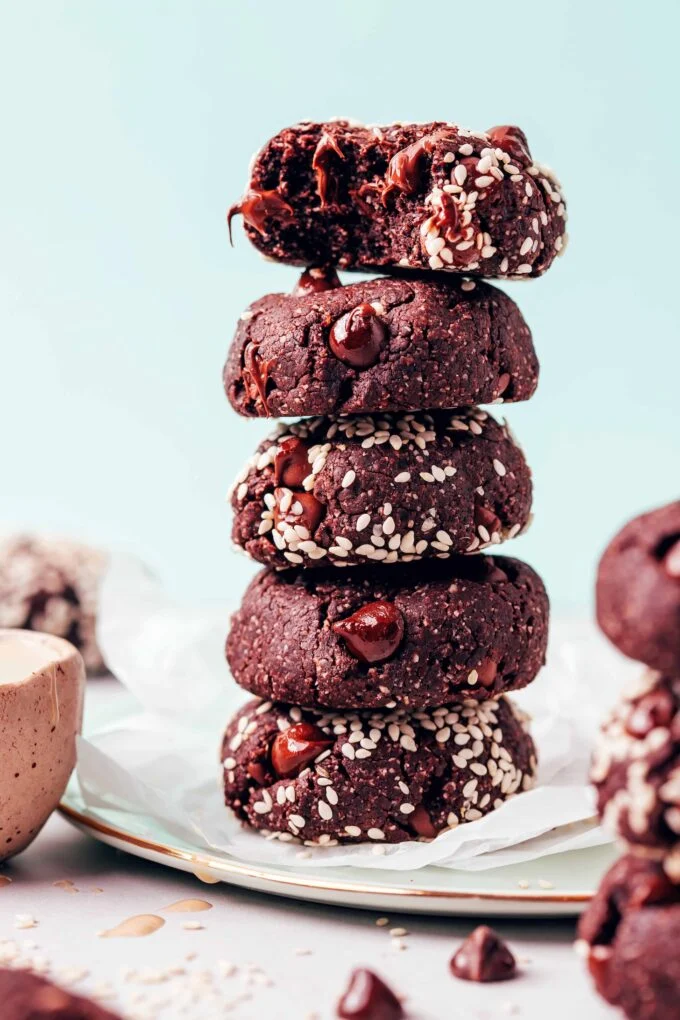
In the context of the Fudgy Chocolate Tahini Cookie, the tahini serves a dual purpose: it provides the necessary lipids for a moist, tender crumb and contributes a complex flavor profile that balances the sweetness of the maple syrup. Culinary analysts note that the rise of tahini in dessert recipes coincides with an increased consumer interest in "functional fats" and plant-based protein sources. With 5.2 grams of protein per serving, these cookies position themselves as more than just a treat; they are a dense, nutrient-providing snack that aligns with the "permissible indulgence" category of the food industry.
Chronology of Recipe Development and Preparation
The development of this specific chocolate variant was a direct response to the success of its predecessor, the "Easy Tahini Cookie." The transition from a standard tahini cookie to a double-chocolate version required a recalibration of dry-to-wet ratios to account for the hygroscopic nature of cocoa powder.

Phase 1: Emulsification and Flavor Balancing
The process begins with the combination of creamy tahini and maple syrup. When whisked, these two ingredients undergo a physical change, transforming into a viscous, caramel-like emulsion. This stage is critical for ensuring the structural integrity of the cookie without the use of eggs. The maple syrup acts as both a sweetener and a binding agent, while the tahini provides the base for the dough’s richness.
Phase 2: Incorporation of Dry Structural Elements
Following the emulsification, five dry ingredients are introduced: almond flour, tapioca starch, cocoa powder, baking soda, and sea salt. The use of almond flour provides a grain-free base rich in vitamin E and monounsaturated fats, while the tapioca starch acts as a vital texturizer. In gluten-free baking, tapioca starch is frequently employed to mimic the elasticity and "chew" typically provided by gluten. The addition of cocoa powder and baking soda facilitates the "pillowy" rise and the deep, fudgy color characteristic of a brownie.

Phase 3: Final Inclusion and Thermal Processing
The final step involves folding in semi-sweet chocolate chips, creating a "double chocolate" effect. The preparation time is optimized for the modern kitchen, requiring only 10 minutes of active labor. The baking process is conducted at a standard temperature, typically around 350°F (176°C), for approximately 10 minutes. A mandatory cooling period of five minutes follows, allowing the starches to set and ensuring the cookie maintains its "crisp on the outside, tender on the inside" texture.
Supporting Data and Nutritional Profile
A rigorous analysis of the nutritional data reveals that the Fudgy Chocolate Tahini Cookie is a calorie-dense, nutrient-rich alternative to traditional wheat-and-butter-based cookies. Each serving (one cookie) contains approximately 202 calories. The macronutrient breakdown is particularly relevant for those monitoring dietary intake:

- Protein: 5.2 g
- Total Fat: 12.9 g (with a significant portion coming from heart-healthy monounsaturated and polyunsaturated fats)
- Carbohydrates: 20.9 g
- Dietary Fiber: 3.3 g
- Sugar: 11.3 g
From a micronutrient perspective, the cookies provide 200 mg of potassium and 49 mg of calcium, largely attributed to the sesame seeds in the tahini and the almond flour. The sodium content is relatively moderate at 147 mg, serving primarily to enhance the chocolate flavors. This profile demonstrates that the recipe successfully maneuvers the difficult balance between being a decadent dessert and a source of legitimate nutritional value.
Market Context and Consumer Response
The release of this recipe has triggered a significant response within the digital culinary community. On platforms like Instagram, the hashtag #minimalistbaker serves as a repository for consumer-generated content, where home bakers document their results. Inferred reactions from these interactions suggest a high success rate, attributed to the recipe’s "one-bowl" simplicity.

Market researchers suggest that the "one-bowl" method is a major selling point for millennial and Gen Z consumers, who prioritize convenience and minimal cleanup. Furthermore, the "freezer-friendly" nature of the dough—which can be stored for up to two months—addresses the growing trend of "batch cooking" and "portion-controlled" snacking. By allowing consumers to bake single cookies on demand, the recipe caters to the lifestyle of single-person households and those practicing mindful eating.
Broader Impact on the Baking Industry
The Fudgy Chocolate Tahini Cookie is representative of a larger movement toward "inclusive baking." As the prevalence of gluten intolerance and celiac disease continues to rise, and as more consumers adopt veganism for ethical or environmental reasons, the demand for high-quality, allergen-friendly recipes has moved from a niche market to the mainstream.

The Shift to Plant-Based Fats
The reliance on tahini rather than butter or margarine signals a shift away from processed industrial oils and animal fats. This has implications for the supply chain, as sesame production becomes increasingly vital to the Western food market. Sesame is a relatively drought-tolerant crop, making it a more sustainable option in an era of climate uncertainty compared to the high water and land requirements of dairy farming.
The "Clean Label" Phenomenon
The eight-ingredient list is a hallmark of the "clean label" movement. Consumers are increasingly skeptical of long ingredient lists containing stabilizers, preservatives, and artificial flavors. By using recognizable, whole-food ingredients like almond flour and maple syrup, this recipe builds consumer trust and aligns with the transparency expected of modern food influencers and manufacturers.

Technical Analysis of Ingredient Synergy
To understand why this recipe succeeds where many gluten-free and vegan attempts fail, one must look at the chemical synergy of the ingredients.
- The Binding Power of Tahini: In the absence of eggs, the high protein and fat content of tahini, when mixed with a liquid sweetener like maple syrup, creates a stable matrix that holds the almond flour together.
- Starch Gelatinization: The tapioca starch undergoes gelatinization during the baking process. This provides the "stretch" and prevents the cookie from becoming overly crumbly—a common pitfall in almond flour-based recipes.
- Leavening Dynamics: The baking soda reacts with the slight acidity of the cocoa powder and the maple syrup, producing carbon dioxide bubbles that give the cookie its "pillowy" and "fudgy" interior.
Conclusion and Future Implications
The Fudgy Chocolate Tahini Cookie (1 Bowl!) is more than a simple recipe; it is a case study in modern culinary adaptation. It demonstrates how traditional ingredients like tahini can be repurposed to solve contemporary dietary challenges. As the food industry continues to evolve, the principles highlighted in this recipe—simplicity, nutritional density, and inclusivity—are likely to become the standard rather than the exception.

The success of such recipes also underscores the power of digital platforms in shaping global food trends. By providing accessible, high-quality instructions, culinary creators are empowering a new generation of home bakers to explore complex flavor profiles and healthier alternatives. The "brownie-cookie" hybrid, bolstered by the nutritional power of sesame and almonds, represents a sophisticated step forward in the quest for the perfect, universally enjoyable dessert. For the consumer, it offers a quick, 20-minute path to a satisfying treat; for the industry, it provides a blueprint for the future of sustainable, plant-based confectionery.