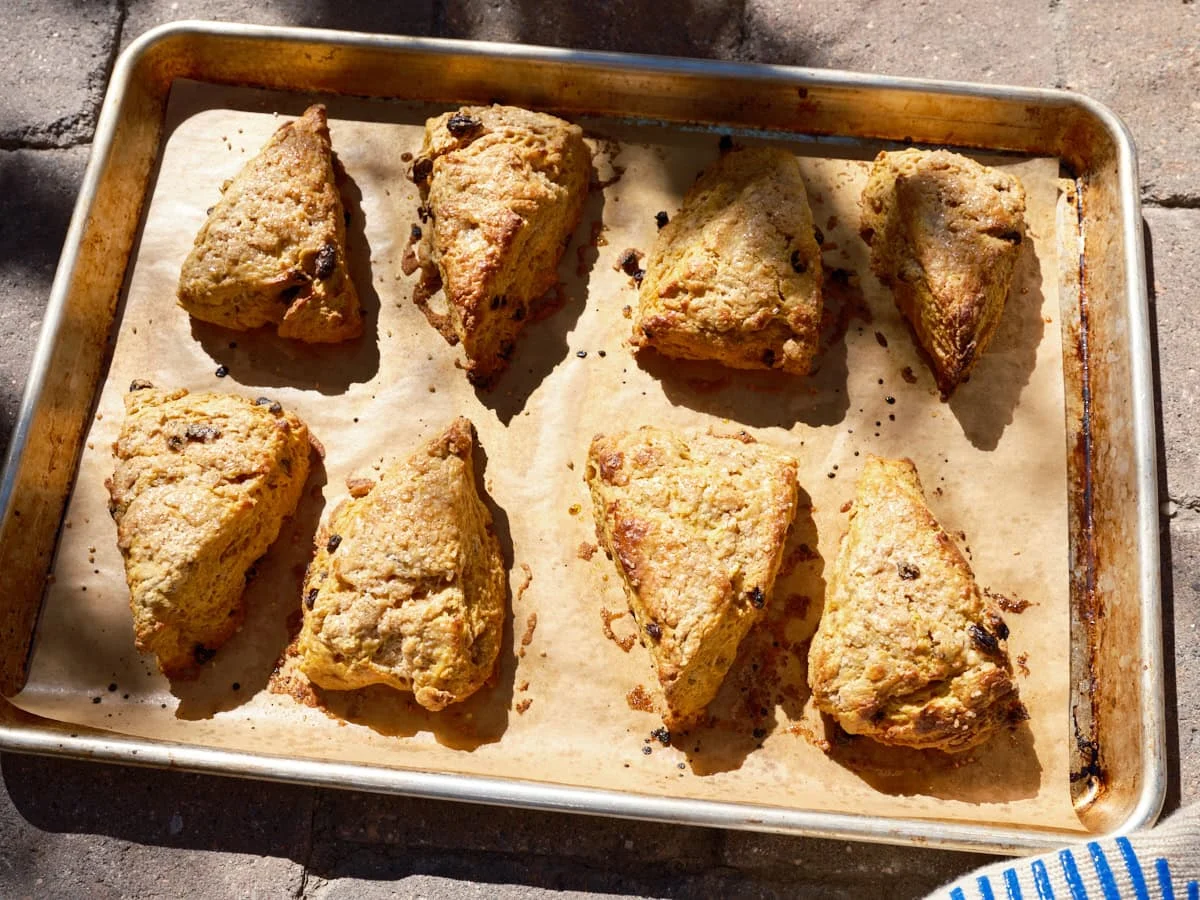

The intersection of seasonal baking and sourdough discard utilization has yielded a new benchmark in home pastry arts with the formal introduction of the Sourdough Einkorn Pumpkin Scone recipe. Developed through years of iterative testing by artisanal baking experts, this formulation addresses common structural challenges inherent to high-altitude and whole-grain baking. By strategically employing whole-grain einkorn flour, acidic buttermilk, and convection baking mechanics, professional and home bakers alike can achieve a pastry that successfully bridges the gap between the dense, dry texture of traditional British scones and the flaky tenderness of American biscuits.
Background Context and the Evolution of Discard Baking
The culinary movement toward sourdough discard utilization has grown exponentially over the past decade, driven by home cooks seeking to minimize food waste while maximizing the complex flavor profiles imparted by wild yeast fermentation. Sourdough discard—the portion of active starter removed during routine feeding cycles—introduces organic acids and complex proteins to baked goods. However, incorporating wet, acidic discard into traditional pastry doughs often presents technical hurdles, particularly regarding structural integrity, rise, and spread.
Historically, pumpkin-based baked goods suffer from excess moisture, which can inhibit proper structural development and lead to dense, gummy interiors. To counteract this, recipe developers have increasingly turned to ancient grains like einkorn—the earliest cultivated form of wheat—known for its distinct nutritional profile and nutty flavor. When combined with sourdough fermentation and precise thermal controls, these ingredients form the foundation of a structurally sound, highly flavorful seasonal pastry.
Chronology of Development and Iterative Testing
The creation of the sourdough pumpkin scone recipe was not an isolated culinary event but the result of a multi-year collaborative development process. Initial iterations relied on conventional heavy cream and all-purpose flour, yielding a standard, reliable product. However, as experimentation shifted toward whole-grain applications, bakers encountered significant challenges with gluten network stability, especially in high-altitude environments such as the high desert regions where atmospheric pressure accelerates liquid evaporation and alters leavening dynamics.
Over a multi-year timeline, developers systematically altered hydration ratios, fat content, and leavening agents. The transition from heavy cream to cultured buttermilk marked a turning point in the timeline, introducing vital acidity that relaxed the delicate gluten strands of whole-grain einkorn. Further refinement of oven mechanics—specifically the implementation of convection airflow during the initial baking phase—resolved longstanding issues with lateral spreading, allowing for a vertical, clean-cut rise that characterizes professional-grade scones.
Key Technical Elements: Flour Selection and Acid Balance
Achieving the ideal crumb structure in whole-grain baking requires a careful balance of protein content and enzymatic activity. Einkorn flour, while rich in micronutrients and flavor, possesses a weak gluten structure that can easily break down under excessive manipulation.
To mitigate this, the recipe utilizes buttermilk instead of traditional heavy cream. While heavy cream offers a high fat content (approximately 36%) that physically coats flour particles to create flakiness, buttermilk operates chemically. With a low pH (typically between 4.4 and 4.6), buttermilk interacts with the sourdough starter to tenderize the dough. This controlled acidity relaxes the einkorn proteins, allowing the pastry to trap steam effectively during baking without becoming tough or dense.
For bakers lacking access to einkorn flour, standardized substitutions include alternative ancient or heritage whole wheats such as Red Fife, Butler’s Gold, or Marquis. These varieties maintain the necessary earthy flavor profile required to balance the natural sweetness of the pumpkin puree. Furthermore, empirical testing confirms that pumpkin puree can be seamlessly substituted on a weight-for-weight basis with alternative root vegetable purees, including butternut squash and sweet potato, without altering the structural hydration of the dough.
Thermal Dynamics: The Role of Convection Baking
One of the primary structural defects in home-baked scones is excessive lateral spread, which results in flat, uniform pastries rather than tall, craggy specimens. Traditional static ovens often fail to set the outer perimeter of the dough quickly enough to contain the internal expansion driven by steam and chemical leaveners.
The implementation of convection baking addresses this thermodynamic challenge. By circulating heated air continuously throughout the oven cavity, convection delivers an intense, immediate thermal shock to the exterior of the unbaked scones. This rapid heat transfer instantly sets the outer crust within the first several minutes of the baking cycle, acting as a structural girdle that forces the expansion upward. For kitchens lacking a convection-equipped appliance, thermal emulation techniques—such as elevating the initial bake temperature by 25 degrees Fahrenheit—have proven effective in replicating this rapid crust-setting phenomenon.
Ingredient Flexibility and Dietary Adaptations
Modern baking formulations increasingly demand adaptability to accommodate regional ingredient availability and dietary restrictions. The sourdough pumpkin scone framework incorporates several approved substitutions:
- Dairy Alternatives: In the absence of commercial buttermilk, bakers can replicate the required acidity by combining 70 grams of whole milk with 5 grams (one teaspoon) of white vinegar or fresh lemon juice, resting the mixture for five minutes until curdling occurs. Alternatively, cultured kefir serves as a direct one-to-one replacement.
- Fruit Inclusions: While traditional recipes often call for raisins, formulation guidelines support substitutions such as dried currants, dried cranberries, or fresh and frozen blueberries, provided moisture levels are managed.
- Vegetable Purees: Standard pumpkin puree can be replaced by sweet potato or butternut squash puree at identical weights. For sweeter profiles, mashed banana or unsweetened applesauce at a 100-gram weight can be utilized, though adjustments to added sugars may be required.
Broader Industry Impact and Economic Implications
The refinement of sourdough discard recipes reflects a broader economic and cultural shift within the culinary arts. As consumer interest in sustainable food practices and fermentation science continues to expand, educational resources focused on waste reduction have gained prominence. By demonstrating how to successfully incorporate waste products—such as sourdough discard and seasonal vegetable purees—into high-value pastry applications, developers contribute to a more sustainable domestic food economy.
Furthermore, the emphasis on heritage and ancient grains supports agricultural biodiversity. As home bakers increasingly demand specialty wheats like einkorn and Red Fife, market incentives for small-scale grain farmers grow, fostering regional supply chains that contrast sharply with industrial monoculture.
Future Outlook and Related Applications
The technical principles established in the development of sourdough pumpkin scones—namely, the strategic use of acid-driven gluten relaxation and convection-assisted vertical rise—are expected to influence future recipe development across a range of quick-bread and pastry applications. Leftover puree and active starter methodologies derived from this research are already being integrated into related seasonal products, including sourdough pumpkin pancakes, fermented waffles, and enriched sandwich loaves.
Through rigorous testing, technical documentation, and an emphasis on foundational baking science, the evolution of discard-based pastry continues to move from trial-and-error home baking toward a precise, reproducible culinary discipline.