
Purchasing maple syrup in bulk quantities is a popular practice for households seeking both economic value and a continuous supply of this natural sweetener. However, without proper preservation techniques, bulk maple syrup is highly susceptible to mold colonization, fermentation, and premature spoilage. While commercial producers rely on standardized industrial packing methods governed by regional agricultural boards, home consumers face unique challenges when attempting to maintain the quality and safety of their supply over extended periods. Understanding the underlying chemistry of maple syrup—specifically its sugar concentration, water activity, and pH levels—is essential for determining whether an opened or unopened container belongs in the pantry, the refrigerator, or the deep freezer.

To comprehend how maple syrup behaves in storage, one must first look at how it is produced from raw agricultural sap. To legally qualify as pure maple syrup in North America, harvested tree sap must undergo a rigorous boiling process to drive out excess moisture, concentrating the natural sugars until the finished product meets strict density standards. According to the North American Maple Syrup Council, the correct density for maple syrup falls between 66° and 68° Brix, where one Brix unit equates to roughly one percent sugar content. If the finished syrup falls below 66° Brix, the moisture content is too high, making it vulnerable to rapid mold growth and alcoholic fermentation. Conversely, if the syrup exceeds 68° Brix, excess sugar will precipitate out of solution, forming unwanted crystallized sediment at the bottom of the storage container. Modern producers rely on precise tools such as hydrometers to measure these values accurately, whereas historical harvesting traditions often utilized visual indicators like "aproning" to gauge readiness. Regulatory bodies, including the United States Food and Drug Administration (FDA), note that maple syrup typically maintains an average pH level of 5.15. While a pH above 4.6 in anaerobic environments theoretically raises concerns regarding spore germination for pathogens like Clostridium botulinum, it is actually the exceptionally high sugar content and resulting low water activity that naturally stabilize the syrup and keep it safe from most biological hazards.
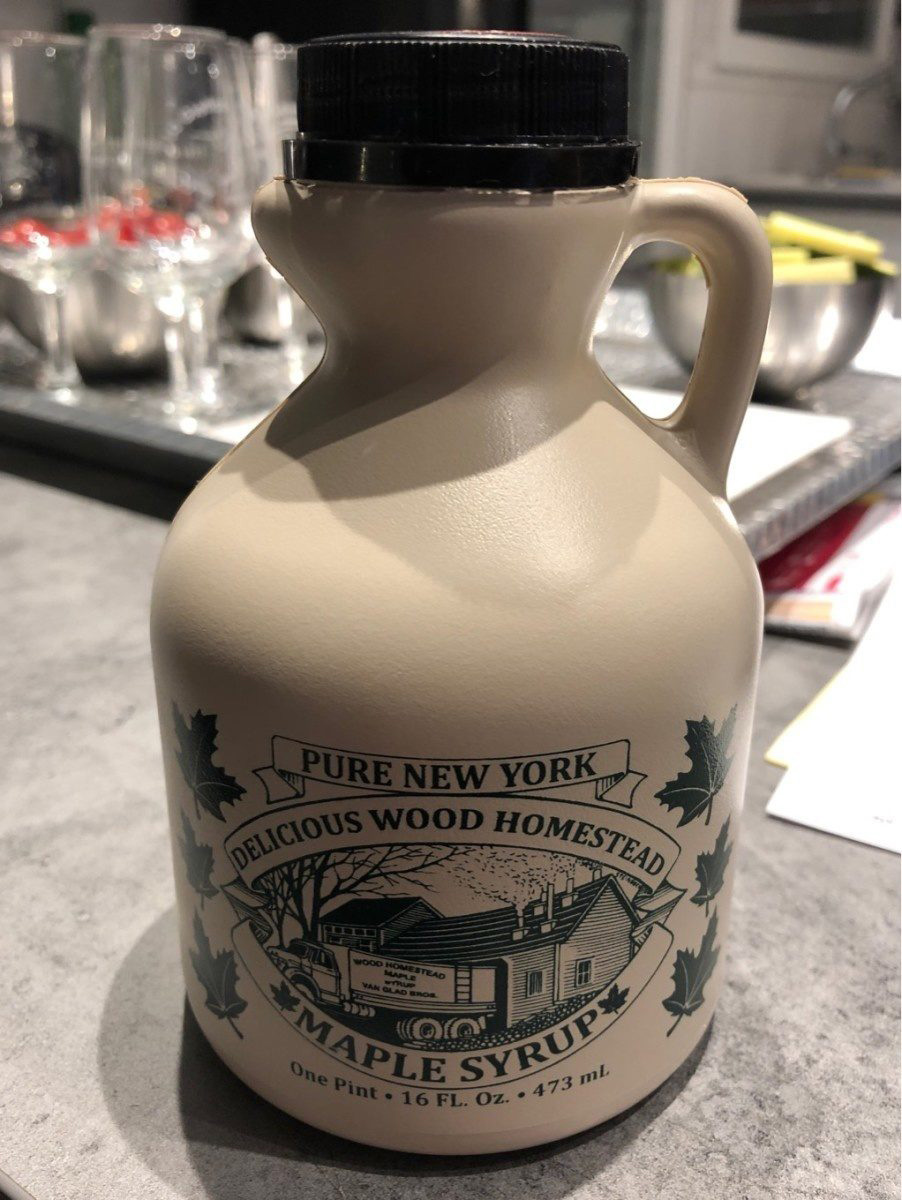
Shelf storage protocols for unopened commercial containers depend heavily on the type of packaging material utilized by the manufacturer. Unopened metal cans, heavy glass bottles, and squeeze-type plastic containers purchased directly from a store or sugar bush boast a remarkably long shelf life at normal ambient room temperatures in a pantry. However, an important exception applies to unopened beige or grey plastic jugs featuring traditional maple forestry motifs. According to the Quebec Maple Syrup Producers (QMSP) Association, laboratory tests have demonstrated that while these decorative jugs are aesthetically pleasing, certain plastic formulations fail to provide an airtight barrier against oxygen permeation. Consequently, the QMSP recommends storing unopened beige plastic jugs inside the refrigerator, even if their factory seals remain entirely intact, to prevent premature quality degradation.
Once a container of maple syrup is opened and its factory seal is broken, the rules of storage change dramatically. The moment air enters the vessel, the syrup is exposed to airborne mold spores, rendering room-temperature shelf storage unviable. Opened maple syrup must be transferred immediately to the refrigerator. The combination of cold refrigeration temperatures and inherently low water activity works synergistically to slow down or inhibit fungal development. Nevertheless, refrigeration is not a permanent preservation method; it merely suppresses mold growth temporarily. Households working slowly through a large volume of syrup over several months may still witness spoilage and surface mold accumulation over time. To avoid this, experts recommend keeping only a modest amount of syrup in the refrigerator for immediate daily use while transferring the remaining bulk supply to a more secure long-term preservation environment.
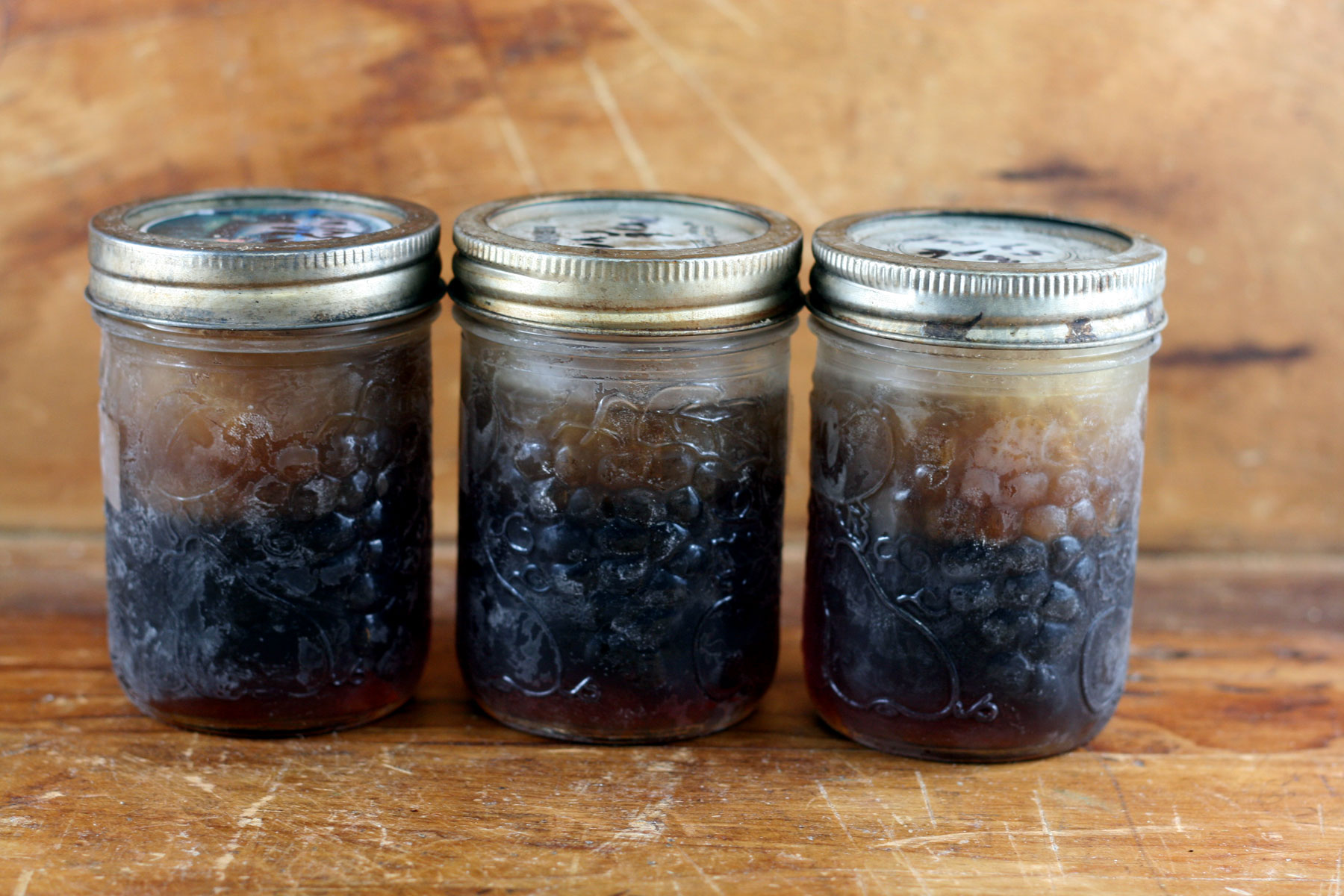
For long-term home preservation without quality loss, freezing is universally recognized as the preferred method by agricultural extension services and culinary experts alike. Freezing halts all mold growth completely by stripping fungal spores of the thermal warmth required for germination and proliferation. Because of its remarkably high sugar content, maple syrup will not freeze solid into a hard block inside a standard chest freezer or kitchen freezer unit. Instead, it transforms into a thick, viscous fluid possessing the consistency and texture of honey. Once thawed, the syrup seamlessly returns to its original liquid state without any structural damage to its flavor profile or nutritional composition. According to statements from the Vermont Maple Sugar Makers Association, home consumers can cycle maple syrup through freezing and thawing phases multiple times without safety concerns, provided the syrup is allowed to thaw completely and any surface condensation is thoroughly stirred back into the liquid.
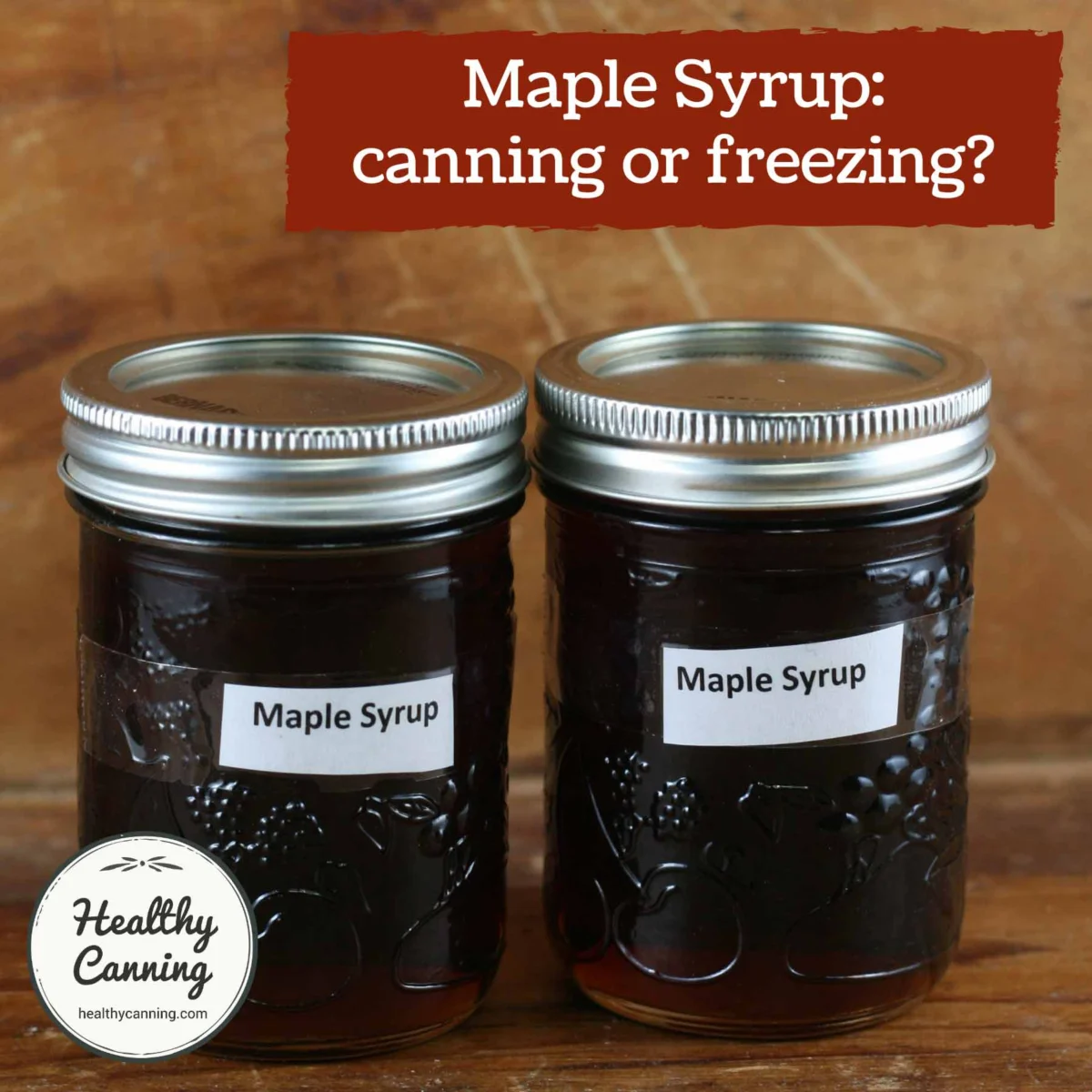
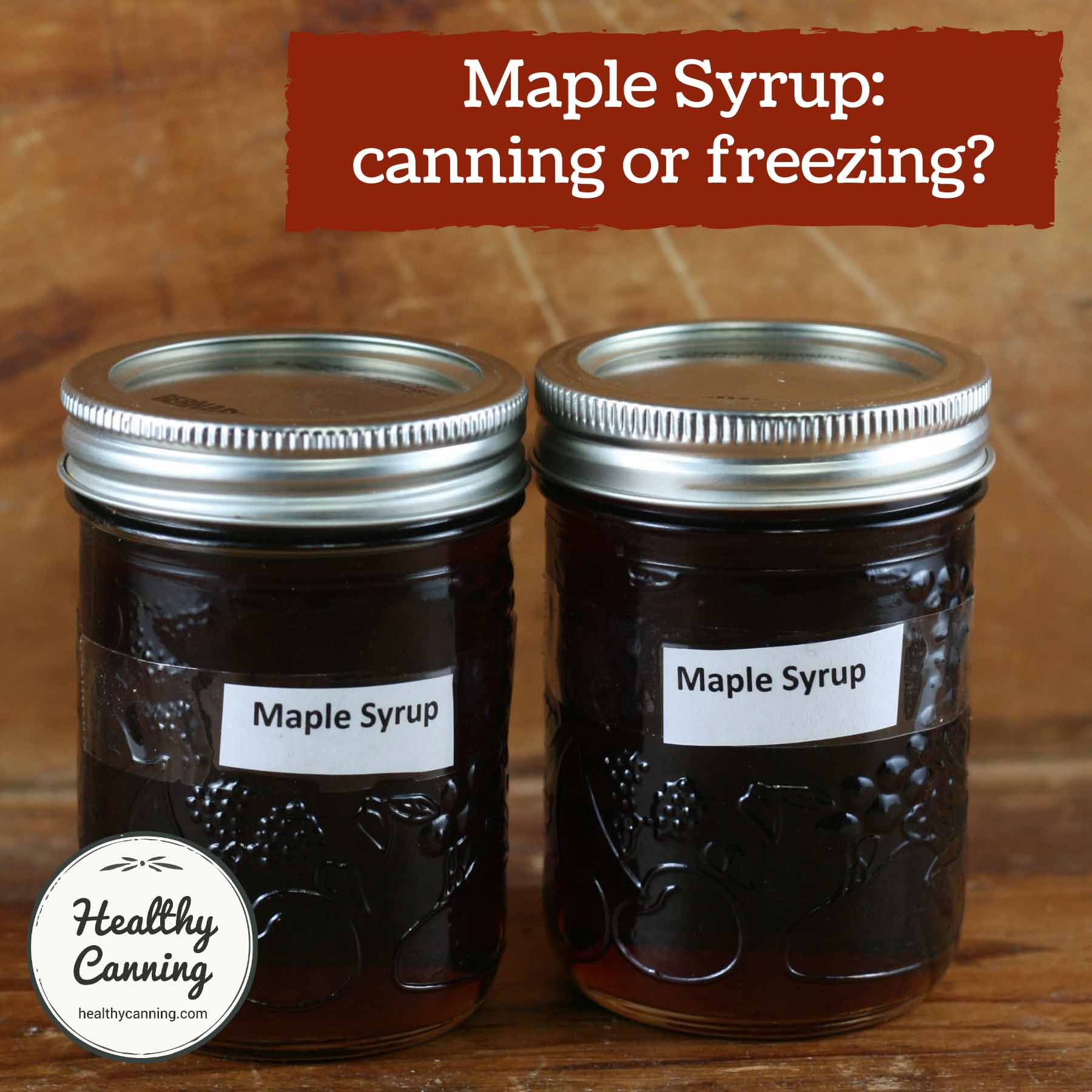
When preparing maple syrup for freezer storage, glass packaging is overwhelmingly preferred over metal or porous plastics. Metal containers risk rusting or imparting an unwelcome metallic taste to the sweetener, while certain plastics allow slow air infiltration that degrades flavor over extended durations. Clean glass Mason jars or freezer-safe glass containers are ideal. Crucially, there is no requirement to sterilize the glass jars or lids beforehand. Reusing the flat metal lids from previous home canning projects is completely acceptable for freezing purposes, and screw bands can be reused indefinitely. Agricultural extension offices from institutions such as Purdue University and Ohio State University emphasize the importance of leaving adequate headspace—typically one inch (2.5 cm)—at the top of glass jars to accommodate fluid expansion during the freezing process and prevent glass shattering. Jars should be sealed tightly and placed in the freezer immediately after filling. Thawing can be expedited safely by submerging the sealed jar in a basin of cool or lukewarm water, or by transferring a portion of the frozen syrup into a microwave-safe container for brief, intermittent heating intervals of 10 to 15 seconds. Extreme thermal shock—such as placing frozen glass jars directly into boiling water or a microwave—must be strictly avoided to prevent catastrophic container failure.
While freezing remains the gold standard for home preservation, some consumers attempt to replicate commercial preservation techniques by hot-packing or home-bottling bulk syrup into smaller glass jars for shelf storage. This process involves heating the syrup to temperatures ranging between 82°C and 85°C (180°F to 185°F)—and occasionally up to 90°C to 92°C (194°F to 197°F)—before pouring it into preheated jars, sealing them tightly, and inverting the containers for several minutes to allow the hot liquid to contact the inner lid surfaces and neutralize any airborne mold spores. However, agricultural authorities and university extension services generally advise against attempting to "home-can" or "recancel" maple syrup. The primary deterrent is not acute food safety risks, but rather severe degradation of product quality. Heating and re-bottling maple syrup frequently causes the product to darken significantly, alter its delicate flavor profile, and trigger the precipitation of dissolved minerals known as "sugar sand" or "niter." These mineral solids settle at the bottom of the container or create an unappealing cloudiness that necessitates specialized cloth re-filtration.
Furthermore, unlike true pressure canning or water-bath processing designed for high-moisture foods, home-bottling maple syrup does not create a strong, reliable vacuum seal or guarantee the complete destruction of heat-resistant fungal spores. Research conducted by agricultural extension programs, including studies at the University of Maine, has shown that certain resilient fungal strains can survive temperatures exceeding 82°C, and that small jars cool down much faster than industrial containers, sometimes dropping below lethal spore-killing thresholds before adequate thermal contact time is achieved. While commercial processors utilize precise thermal management, automated hot-packing lines, and rapid-cooling equipment to mitigate these issues—while simultaneously striving to avoid "stack burn," a condition where prolonged heat exposure darkens the syrup and ruins its grade—these controls are difficult for amateur cooks to replicate safely at home. Consequently, the consensus among food science professionals is to bypass the complexities and risks of home-bottling entirely. By relying on refrigeration for short-term supplies and deep-freezing for bulk quantities, consumers can ensure their pure maple syrup remains safe, flavorful, and mold-free for extended periods of time.