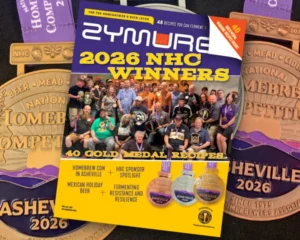

The art of craft brewing continues to thrive in local communities across the United States, reaching new heights of precision, creativity, and dedication. In the competitive landscape of amateur fermentation, few achievements carry the prestige and recognition of the National Homebrew Competition, an event administered annually by the American Homebrewers Association (AHA). During the highly anticipated final round of the 2026 competition, the craft beer community turned its attention to Leland, North Carolina, where local brewer Tony Hamric distinguished himself among the finest practitioners of the craft. As a proud member of the regional brewing collective Wort City Brewers, Hamric captured the gold medal in Category 22: Strong British Ale, prevailing over an exceptionally competitive field of 69 distinct entries from across the country.
This victory not only highlights Hamric’s meticulous approach to recipe formulation and execution within a challenging traditional beer style, but it also shines a spotlight on the burgeoning brewing culture within coastal North Carolina and the collaborative environment fostered by local homebrewing clubs.
The Road to the Podium: Understanding the National Homebrew Competition
To fully appreciate the magnitude of Tony Hamric’s achievement, it is necessary to examine the rigorous framework of the National Homebrew Competition. As the world’s largest international amateur beer competition, the event serves as the ultimate benchmark for homebrewers seeking validation for their craft. The competition operates through a multi-tiered evaluation system designed to ensure that only the most technically flawless and stylistically accurate beers ascend to the podium.
The process begins months in advance at the first-round level, where thousands of entries are submitted across dozens of distinct categories spanning ales, lagers, meads, and ciders. These entries are evaluated by panels of certified judges trained under the Beer Judge Certification Program (BJCP). Judges assess each submission based on aroma, appearance, flavor, mouthfeel, and overall impression, strictly comparing the beers against established style guidelines. Entries that achieve high scores at the regional level advance to the final round, where they face off against the best examples from across the globe.
Category 22, designated for Strong British Ales, is recognized by judges as a particularly demanding classification. This category encompasses traditional styles such as Old Ale, English Barleywine, and Wee Heavy (though Scottish ales have their own subcategories, strong variations often cross over in complexity). These beers are characterized by high original gravities, complex malt profiles featuring rich caramel, toffee, and biscuity notes, balanced hop bitterness, and significant alcohol warmth. Brewing a world-class Strong British Ale requires exceptional mastery of fermentation temperature control, yeast health, and ingredient selection, as any minor flaw or off-flavor is easily magnified by the beer’s sheer strength and depth. Outperforming 69 other meticulously crafted entries in this category demands a level of precision that separates hobbyists from master artisans.
A Community of Excellence: The Role of Wort City Brewers
Behind every successful homebrewer is often a supportive community of peers, mentors, and fellow enthusiasts who share knowledge, equipment, and constructive feedback. Tony Hamric’s triumph is deeply intertwined with his affiliation with Wort City Brewers, a vibrant homebrewing club based in North Carolina. Regional clubs play an indispensable role in the development of amateur brewing talent, serving as incubators for technical innovation and quality control.
Within organizations like Wort City Brewers, members regularly participate in club-only competitions, sensory evaluation panels, and collaborative brew sessions. These gatherings provide a critical feedback loop, allowing brewers to identify flaws in their batches, refine water chemistry adjustments, experiment with different grain bills, and optimize mash temperatures long before their recipes ever reach a national judging table. Hamric’s gold medal is a testament not only to his individual dedication and palate but also to the collaborative spirit and high standards upheld by the North Carolina homebrewing community, which has steadily earned a reputation for excellence on the national stage.
The Anatomy of a Champion: Brewing Strong British Ales

To secure a gold medal in the Strong British Ale category, a brewer must demonstrate a profound understanding of traditional British brewing ingredients and techniques. Unlike modern American craft styles that often rely on bold, fruit-forward hops, British ales traditionally emphasize malt complexity and yeast character.
The foundation of a successful Strong British Ale begins with the base malt. Traditional English pale ale malts, known for their slightly toasted, biscuity, and nutty flavor profiles, are typically employed. These are complemented by specialty malts such as crystal or caramel malts, which impart rich sweetness, deep amber-to-copper hues, and flavors reminiscent of toffee, dark fruit, and raisins. Some variations may incorporate adjuncts like invert sugar, a traditional British brewing sugar that contributes alcoholic strength and dry complexity without adding heavy body or harsh flavors.
Hop selection in British brewing is similarly understated yet deliberate. Varieties such as East Kent Goldings, Fuggles, and Challenger are favored for their earthy, herbal, floral, and slightly spicy aromatic qualities. These hops provide sufficient bitterness to balance the massive malt backbone without overpowering the delicate interplay of caramel and ester profiles produced by authentic English ale yeast strains.
Fermentation management represents the ultimate test for a brewer tackling Category 22. Traditional English ale yeasts produce distinct fruity esters—notes of plum, raisin, pear, or cherry—that contribute to the signature character of the style. However, managing the fermentation temperature is critical; allowing fermentation temperatures to rise too high can result in excessive higher alcohols (fusel alcohols) and solvent-like off-flavors that will immediately disqualify an entry in a high-level competition. Hamric’s ability to navigate these technical complexities and deliver a clean, harmonious, and deeply complex ale is what ultimately convinced the BJCP-certified judges to award him the gold.
Broader Implications for the Homebrewing Industry
The recognition earned by amateur brewers at events like the National Homebrew Competition extends far beyond personal accolades; it plays a vital role in shaping the broader commercial craft beer landscape. Historically, the homebrewing community has served as the primary research and development wing of the professional brewing industry. Countless commercial craft breweries operating today were founded by passionate homebrewers who cut their teeth perfecting recipes in their garages, basements, and kitchens before transitioning to professional scale.
Competitions such as the AHA’s annual event highlight emerging trends in ingredient utilization, fermentation science, and recipe design. When brewers like Tony Hamric demonstrate exceptional mastery of traditional European styles, it reinforces the enduring appeal of classic brewing traditions even as the broader market constantly explores experimental innovations like hazy IPAs and pastry stouts. Furthermore, the rigorous feedback provided by competition judges helps elevate the overall technical skill level of the homebrewing community, fostering a culture of continuous learning and quality improvement.
Looking Ahead: The Legacy of the 2026 Competition
As the results of the 2026 National Homebrew Competition Final Round are celebrated across the country, the recipes and achievements of medalists like Tony Hamric become part of the historical record of amateur brewing excellence. For aspiring brewers looking to replicate success or refine their own techniques, organizations like the American Homebrewers Association provide extensive resources, including access to a comprehensive database of medal-winning recipes, educational seminars, and technical guides.
Hamric’s victory in Category 22 serves as an inspiration to regional clubs throughout North Carolina and beyond, demonstrating that dedication, patience, and a commitment to mastering the fundamentals can yield world-class results. As the craft beverage community continues to evolve, the triumphs of passionate hobbyists ensure that the foundational art of brewing remains vibrant, innovative, and deeply rooted in community collaboration.