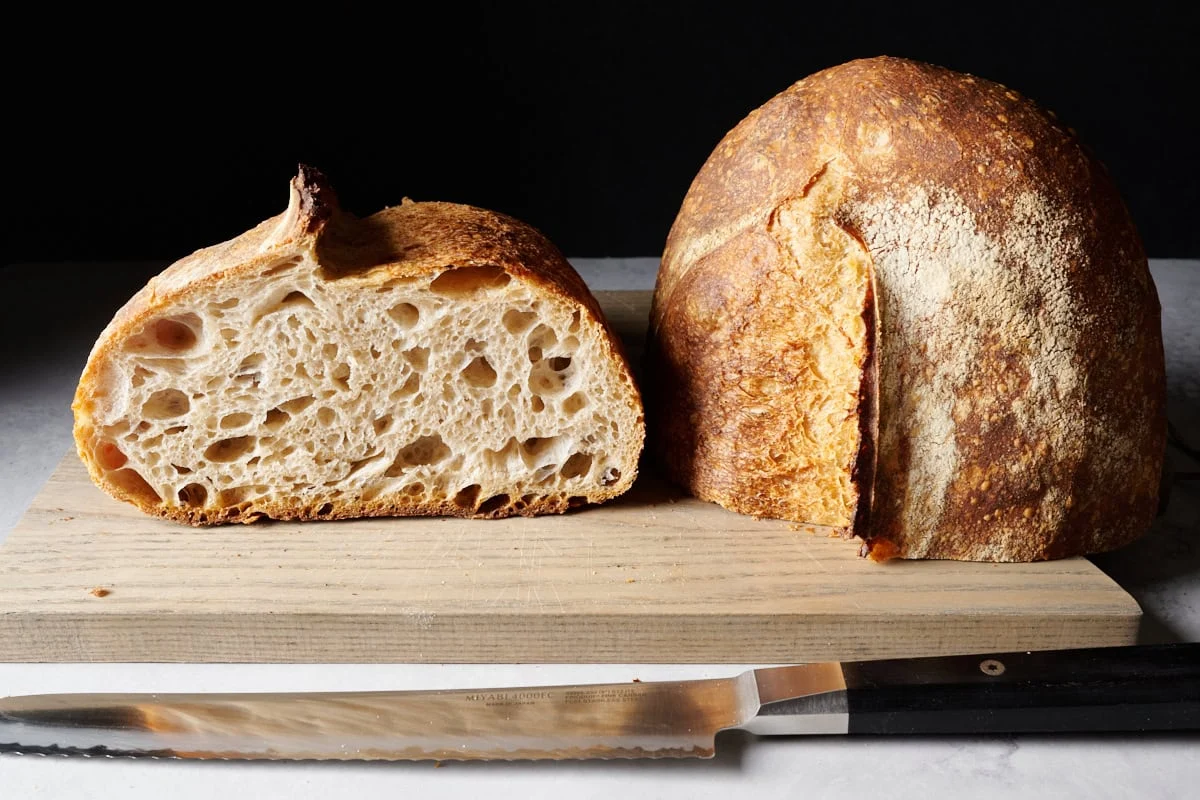

The pursuit of the ideal sourdough loaf often hinges on a single, highly debated culinary characteristic: acidity. For professional bakers and home enthusiasts alike, the question of how to regulate the sour tang of naturally leavened bread remains one of the most frequently encountered challenges in baking. While some consumers prefer an assertive, mouth-puckering bite that defines traditional artisanal sourdough, others lean toward a milder, more nuanced flavor profile where acidity merely acts as a background note to the rich complexity of fermented grain.
Extensive culinary research and years of empirical kitchen testing demonstrate that sourdough tang is not an arbitrary outcome of luck. Rather, it is the direct result of a complex biological conversation among time, temperature, and the living microorganisms housed within a sourdough starter. By systematically adjusting variables at nearly every stage of the breadmaking process, bakers can precisely dial in their loaves to match their desired flavor profiles.
The Biological Mechanisms of Sourdough Acidity
To understand how to manipulate the flavor of a loaf, one must first examine the chemical agents responsible for it. The characteristic tang of sourdough originates primarily from two organic acids synthesized during the fermentation cycle: lactic acid and acetic acid.
Lactic acid yields a smooth, mild, yogurt-like acidity. It is the gentler compound of the two, contributing a creamy depth that underpins well-balanced artisanal breads. In contrast, acetic acid is sharper and more pungent—sharing a chemical identity with common vinegar. This is the compound responsible for a sharp, aggressive bite. Because acetic acid possesses a significantly higher vapor pressure than lactic acid, it is also the only acid volatile enough to be detected directly by the human sense of smell. When a starter emits a pungent, vinegar-heavy aroma, acetic acid is actively dominating the micro-environment.
The bacteria responsible for these outputs, predominantly lactic acid bacteria (LAB), produce these acids in varying ratios dictated by their surrounding environment. Key environmental factors—specifically temperature, hydration levels, choice of flour, and starter maturity—govern the total volume of acid produced and dictate which acid species takes precedence.
Crucially, these microorganisms operate within strict biochemical boundaries. Bacteria are highly sensitive to pH levels. As fermentation progresses and bacteria synthesize acids, the pH of the dough drops. Eventually, this acidity reaches a threshold where bacterial activity slows significantly. This self-limiting phenomenon means that any baking practice allowing bacteria to function longer before hitting this pH floor—such as higher mineral buffering from whole grains, extended fermentation timelines, or optimal warmth—will ultimately yield a higher total acid concentration and a more intensely sour loaf.
Strategic Levers for Increasing Sourness
For bakers seeking to elevate the sharpness and tang of their finished bread, several methodological adjustments can be implemented throughout the preparation process.
Utilizing Over-Ripe Starters
A primary driver of increased acidity is the ripeness stage of the starter or levain. Introducing a starter that has moved past its absolute peak—characterized by a collapsed dome, a loose and frothy consistency, and a sharp, vinegary aroma—transfers a high concentration of pre-formed acids directly into the mixing bowl. When a culture has exhausted its immediate food supply, accumulated metabolic byproducts elevate the total acid load, carrying that assertive flavor profile through to the final baked product.
Extending Cold Fermentation (Retardation)
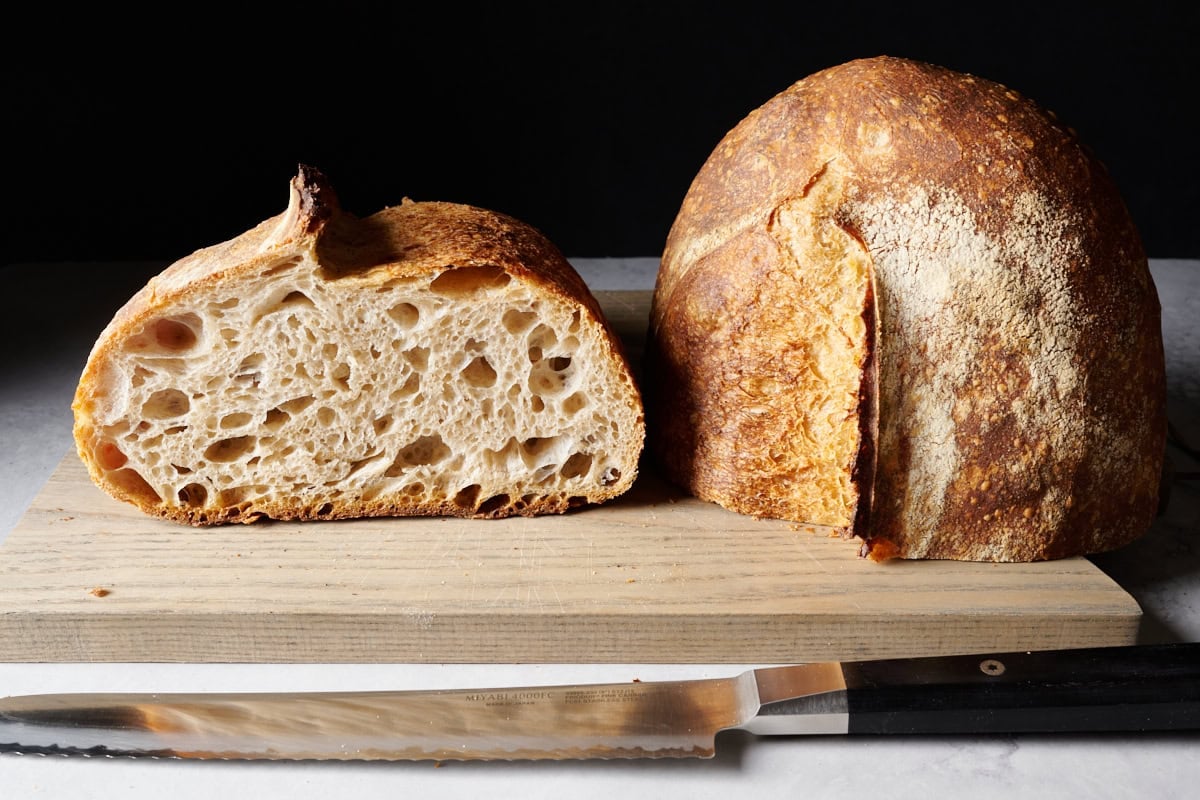
Cold retardation—placing shaped dough into refrigeration prior to baking—is widely recognized as the most reliable method for developing robust sourness. Low temperatures exert a differential impact on yeast versus bacteria: while both microbial populations slow down, yeast populations are inhibited less severely than lactic acid bacteria. Furthermore, cooler temperatures favor the enzymatic breakdown of starches into simple sugars that bacteria preferentially convert into acetic acid. Consequently, extending a cold proof from the standard 12 hours out to 24, 48, or even 72 hours results in a dual effect: a higher total volume of acid and a significant shift toward sharp acetic tang. The primary trade-off involves gluten degradation over extended refrigeration, which can compromise structural integrity and reduce oven spring if left unmonitored.
Employing Stiff Levains
The hydration level of the starter or levain acts as another critical control knob. Lower hydration rates—typically between 50% and 65%—slow bacterial activity relative to yeast in a manner similar to cold temperatures. When a stiff levain is given adequate time to ripen, these low-moisture conditions promote heightened acetic acid accumulation, resulting in a more pronounced bite.
Incorporating Whole Grains
The choice of flour fundamentally alters the buffering capacity of the dough. Whole-grain flours, particularly rye, possess high ash content, which translates to a rich concentration of natural minerals. These minerals act as an internal buffer system, absorbing synthesized acids and raising the ceiling on how much acid can accumulate before the pH drops enough to halt bacterial activity. Consequently, whole-wheat and rye loaves consistently display a more pronounced tang than those produced exclusively from refined white flour.
Managing Temperature and Inoculation Ratios
Fermenting dough at warmer ambient temperatures (78°F to 82°F) accelerates overall bacterial metabolism, maximizing total acid output, particularly in the lactic acid spectrum. Conversely, smaller levain percentages (utilizing only 10% to 15% pre-fermented flour) initiate fermentation at a higher pH, granting bacteria a longer runway to steadily accumulate acids before hitting the lower pH limit.
Methods for Reducing Sourness and Tang
Conversely, many bakers prefer a subtle, grain-forward profile where acidity remains in the background. Dialing back the sourness requires a deliberate inversion of the aforementioned techniques.
Maintaining a rigorous, frequent feeding schedule for the sourdough starter effectively dilutes accumulated acids before they can dominate the culture. Utilizing a levain at its absolute peak—when it is dome-shaped, bubbly, and smells pleasantly yeasty rather than aggressively vinegary—prevents excess acid transfer.
Furthermore, employing a "young" levain (harvested before reaching full peak maturity) prioritizes yeast activity over acid accumulation. Shortening or skipping the cold proof in favor of a room-temperature final proof, utilizing a high-hydration liquid levain (100% hydration), and selecting refined white flours with low ash content all contribute to a milder, less acidic crumb.
Industry Implications and Future Outlook
The growing consumer appreciation for artisanal sourdough has transformed baking from an intuitive folk art into a precise applied science. Understanding the biochemical pathways of lactic and acetic acid production empowers home bakers and commercial artisan bakeries alike to standardize their product lines, ensuring consistency in flavor profiles regardless of seasonal environmental fluctuations. As consumer palates continue to demand specialized flavor characteristics—ranging from buttery, mild boules to intensely tangy rustic loaves—the deliberate manipulation of time, temperature, and microbial ecology remains an indispensable skill in modern baking.