
The modern artisanal sourdough movement has long celebrated the alchemy of fermentation, hydration, and long cold retards. However, the foundational ingredient—wheat—remains largely detached from the consumer’s gaze within a centralized commodity supply chain. This dynamic shifted into sharp focus at the 2026 Grain Gathering, hosted from July 19 to 21 in Washington State’s Skagit Valley. Organized collaboratively by the Washington State University (WSU) Breadlab and the Washington State Department of Agriculture (WSDA), the event marked the first time the premier grain symposium had convened in eight years.
Operating under the guiding theme "Nourishing Communities," the three-day event drew a diverse cross-section of the agricultural and baking sectors. Attendees ranged from plant breeders and agronomists to commercial bakers and home enthusiasts. Central to the dialogue was a critical examination of the economic models, breeding practices, and distribution networks that dictate how grain travels from test plots to neighborhood ovens.
Main Facts of the 2026 Grain Gathering
The 2026 Grain Gathering served as an intensive forum for over a hundred professionals and practitioners dedicated to regional grain systems. Held in the agriculturally rich Skagit Valley, the event integrated theoretical discussions with hands-on demonstrations, ranging from wheat breeding walks to high-volume baking inside specialized mobile infrastructure.
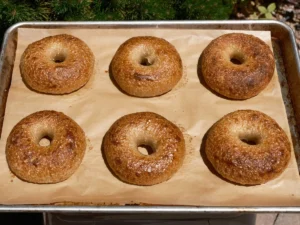
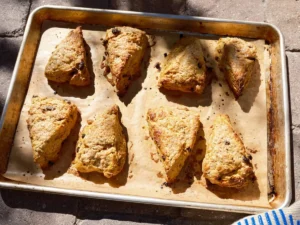
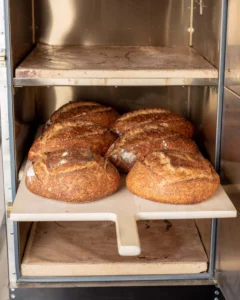
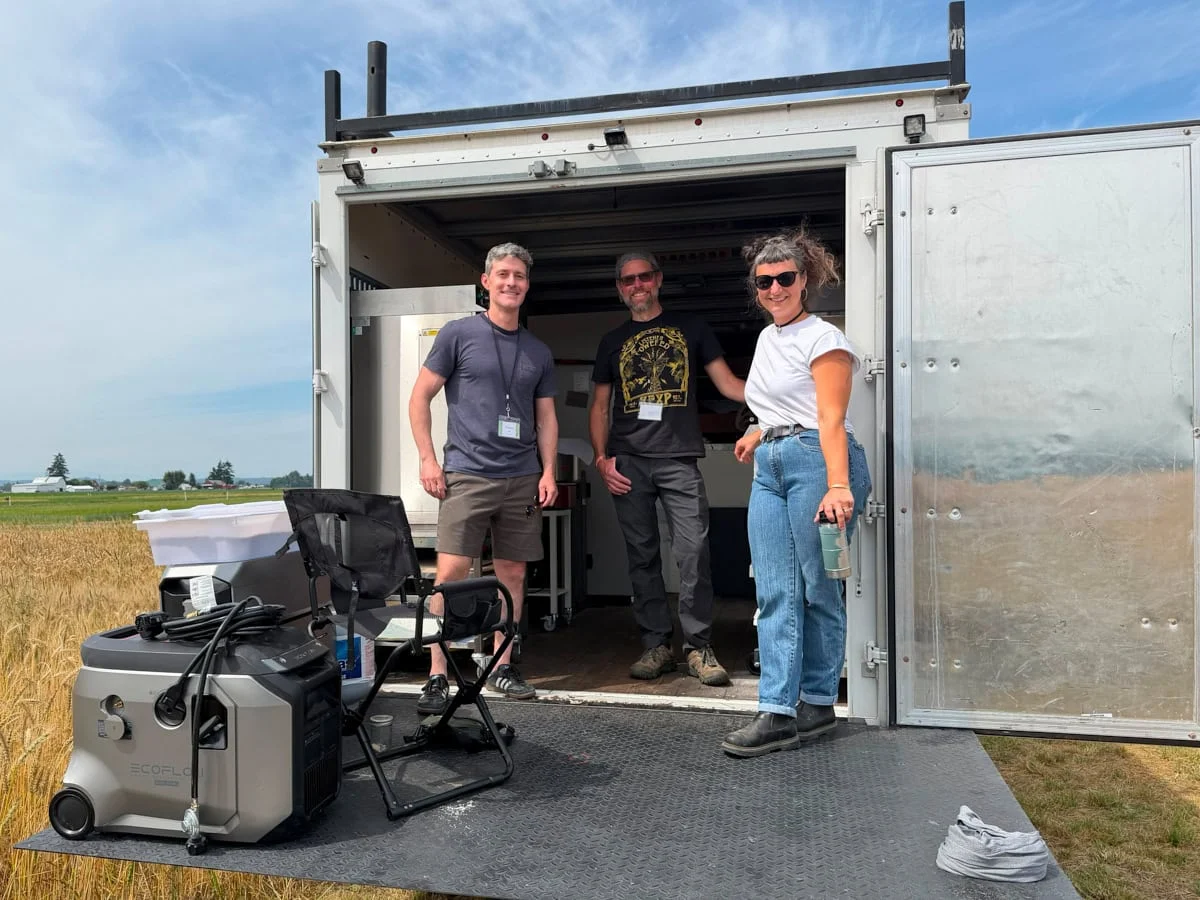
A primary attraction on the exhibition grounds was a custom-built mobile bakery and mill designed by California-based baker Marc Benoit. Constructed in the bed of a heavy-duty truck and powered entirely by a rooftop solar array, the vehicle housed a stone mill, a dough mixer, a workbench, and a commercial-grade RackMaster bread oven. Over the course of the weekend, Benoit—collaborating with fellow bakers Baylin Speidel and Thomas Vroom—utilized regionally sourced identity-preserved grains to produce scores of artisanal country loaves, large-format focaccia, baguettes, and bialys.
The operational success of the mobile unit underscored a growing technical shift within small-scale baking: the capacity to decentralize processing. By integrating milling directly at the point of baking, the mobile unit effectively eliminated traditional intermediate overhead costs, showcasing a functional model for localized value retention.
Chronology and Event Evolution
The itinerary for the 2026 Grain Gathering followed a structured three-day progression designed to bridge agricultural science with culinary execution.
Day One commenced with field-level examinations of experimental wheat populations managed by the WSU Breadlab. Researchers led tours through breeding plots, evaluating varieties such as Skagit 1109, Salish Blue, and Palouse Heritage Elwha River Spelt. These sessions emphasized the agronomic performance of populations bred explicitly for regional resilience rather than standardized industrial output.
Day Two transitioned from the field to the seminar tent and mobile production units. Masterclasses focused on technical baking metrics, including falling numbers—a measure of alpha-amylase enzyme activity crucial for crumb structure—as well as modern adaptations of sourdough mixing techniques. Concurrently, panel discussions addressed the economic realities of regional supply chains, featuring representatives from Cairnspring Mills and the Chimacum Valley Grainery.
Day Three synthesized the weekend’s observations through collaborative production sessions. Bakers utilized identity-preserved grains sourced from growers such as Moon Family Farms, processing hundreds of pounds of flour to feed event attendees. The gathering concluded with plenary sessions evaluating policy frameworks required to support regional grain economies and expand infrastructure for smallholder farmers.
Supporting Data and Economic Analysis
To understand the operational challenges of the contemporary grain economy, industry analysts point to the structural divide between commodity markets and identity-preserved supply chains. In the conventional commodity model, grain is aggregated into massive elevators, anonymizing the harvest and erasing geographic, varietal, and agricultural distinctions. While this system efficiently feeds domestic and international populations, it provides flat pricing that fails to reward sustainable soil management, carbon sequestration, or varietal diversity.
Conversely, artisanal sourdough loaves command retail prices ranging from six to twelve dollars per loaf. Yet, within standard supply chains, the primary producer—the farmer—frequently receives a negligible fraction of this retail value, with margins absorbed by intermediaries, large-scale millers, and distributors.
The mobile bakery model demonstrated at the Skagit Valley gathering bypasses these traditional bottlenecks. By shortening the chain of custody, the farmer’s name is preserved alongside the grain varietal on the final product. Economists note that when milling and baking infrastructure are localized, a significantly higher percentage of gross revenue remains within the rural community, providing a viable financial incentive for farmers to cultivate specialty and heritage grains.
Plant Breeding and Sensory Optimization
A recurring topic of discussion among agronomists and bakers was the historical trajectory of wheat breeding. For decades, commercial breeding programs have prioritized agronomic traits such as high yield, uniformity, disease resistance, and mechanical harvestability, often at the expense of intrinsic flavor and nutritional density.
The WSU Breadlab has challenged this paradigm by incorporating sensory evaluation directly into the breeding cycle. Under this methodology, experimental lines are not only tested for field performance but are immediately milled and baked into functional test loaves. This practice allows breeders to select cultivars that satisfy both the farmer’s demand for disease resistance and the baker’s requirement for extensibility, fermentation tolerance, and distinct flavor profiles.
Varieties highlighted during the gathering—including Salish Blue and specialized spelt populations—illustrate this dual-optimization approach. By focusing on regional adaptation, these grains thrive under specific climatic conditions without relying on heavy synthetic chemical inputs, altering the baseline flavor profile of the resulting flour.
Broader Impact and Industry Implications
The implications of the 2026 Grain Gathering extend beyond regional networking, offering a blueprint for decentralizing regional food economies. As consumer demand for transparency grows, the convergence of agricultural science and small-scale baking points toward several structural adjustments:
- Expansion of Regional Infrastructure: The visibility of mobile milling units and the success of regional millers like Cairnspring Mills suggest an increasing market viability for mid-scale, localized processing facilities that can bridge the gap between small farms and urban bakeries.
- Varietal Diversification in Baking: Commercial and home bakers are increasingly sourcing flour by specific varietal names rather than generic classifications (e.g., all-purpose or bread flour), elevating consumer awareness of agricultural biodiversity.
- Policy and Institutional Support: Discussions involving the WSDA highlighted the potential for institutional procurement policies—such as sourcing locally milled, identity-preserved grains for schools and public facilities—to stabilize regional grain markets.
The conclusion of the Skagit Valley gathering underscored a broader cultural shift within the baking community. By bridging the physical and economic distance between the wheat breeder, the farmer, the miller, and the baker, events of this scale demonstrate that the future of bread is increasingly tied to the ecological and economic health of the landscapes from which it originates.