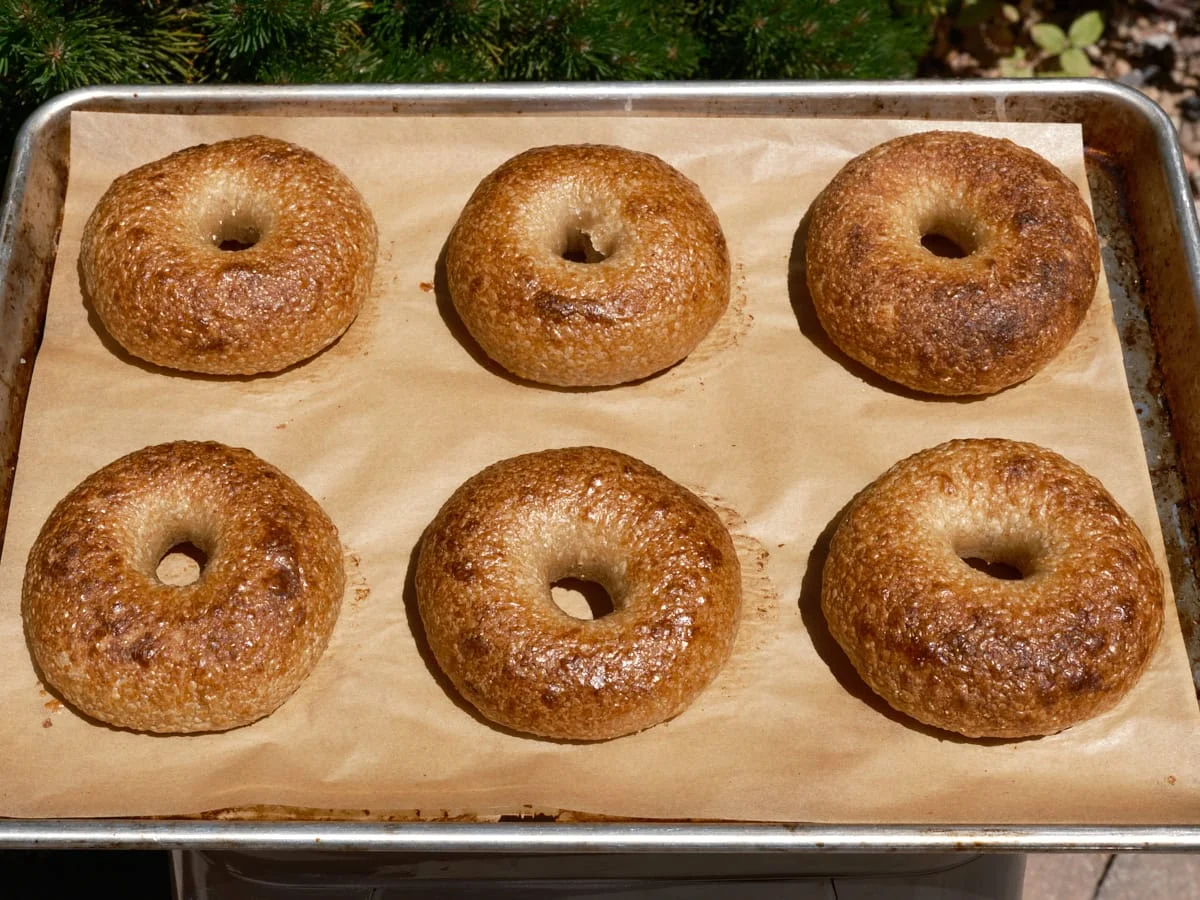

The landscape of modern artisanal baking is experiencing a quiet revolution, moving away from hyper-uniformity toward techniques that emphasize complex fermentation, hydration, and nuanced texture. For decades, the North American bagel market was defined almost exclusively by the dense, closed-crumb, and heavily chewy New York-style preparation. However, a new culinary movement—often referred to as the "new wave" style—has emerged in independent bakeries from Los Angeles to Portland, challenging traditional paradigms. Bakers are adopting methodologies borrowed from high-hydration hearth breads to produce bagels characterized by a glossy, blistered crust, an open and tender crumb, and a more delicate balance of flavors.
Central to this movement is a meticulous reworking of classic formulas, a process documented by master bakers and culinary researchers refining home-baking parameters. By experimenting with flour composition, preferment structures, and thermal baking environments, contemporary baking scientists and culinary practitioners have unlocked new methods to optimize crust caramelization and internal crumb structure without sacrificing structural integrity.
Chronology and Development of the New Wave Formula
The refinement of the new wave sourdough bagel did not happen overnight; it represents the culmination of multi-year empirical testing, variable isolation, and cross-collaboration within the professional baking community.
The developmental timeline began with an evaluation of flour profiles. Traditional formulas relied heavily on high-protein white flours to establish a rigid gluten network necessary for dense chewiness. The new wave iteration introduces a multifaceted flour blend: approximately 45 percent high-protein white flour (12% to 14% protein), 40 percent medium-protein white flour (such as artisan bakers’ craft flour), 10 percent whole wheat flour, and 5 percent whole rye flour. This specific amalgamation balances structural strength with enzymatic activity and nutritional complexity.
The second phase targeted the preferment, or levain. Traditional sourdough cultures often introduce a pronounced acidity that can overpower the subtle malt notes desired in a bagel. To mitigate excessive sourness while maintaining yeast viability, developers incorporated a small percentage of superfine caster sugar directly into the levain. This sweet starter strategy skews microbial activity toward yeast dominance, ensuring maximum oven spring with a cleaner, sweeter flavor profile.
The third phase involved mechanical adjustments to shaping and fermentation. Transitioning away from the labor-intensive rope-and-roll technique—which frequently fails under high-hydration parameters—bakers adopted the poke-and-stretch method. This technique involves punching a center hole directly into a pre-shaped dough ball and expanding it manually. Combined with an overnight cold fermentation (retardation) in commercial or domestic refrigeration units, this method enhances crust blistering and deepens flavor complexity through extended enzymatic breakdown.
Supporting Data and Technical Specifications
Achieving the characteristic new wave profile requires strict adherence to baker’s percentages, hydration targets, and thermodynamic management. The baseline formula is calibrated to yield twelve 130-gram units, accounting for processing loss with a total dough weight of 1,620 grams.
The hydration rate is maintained at 68 percent, significantly higher than traditional commercial bagel doughs, which hover between 50 and 55 percent hydration. This elevated moisture content necessitates a two-stage mixing process—utilizing an initial water addition followed by a secondary water incorporation (bassinage)—to develop the gluten matrix fully without compromising dough handling.
| Ingredient Category | Component Details | Baker’s Percentage |
|---|---|---|
| Flours | High-protein white flour (12-14%) | 45.0% |
| Medium-protein white flour | 40.0% | |
| Whole wheat flour | 10.0% | |
| Whole rye flour | 5.0% | |
| Liquids & Fats | Water (Total hydration) | 68.0% |
| Barley malt syrup / Honey | 2.5% | |
| Additives | Fine sea salt | 2.0% |
| Diastatic malt powder | 1.0% | |
| Superfine caster sugar (in levain) | 2.0% |
The inclusion of diastatic malt powder at 1 percent is a critical variable. Unlike non-diastatic barley malt syrup—which is utilized primarily for surface flavor and exterior browning during the boil—diastatic malt contains active enzymes that convert complex starches into simple sugars during fermentation. This biochemical transformation fuels microbial activity, enhances oven spring, and promotes delicate micro-blistering on the exterior skin.
Processing Methodology: From Bench to Hearth
The production cycle spans a structured multi-day timeline designed to maximize flavor precursor development:
- Levain Preparation (Day One, Evening): Medium-protein flour, water, caster sugar, and ripe sourdough starter are combined and left to ferment at ambient room temperatures (74°F to 76°F) for 12 to 14 hours.
- Mixing and Bulk Fermentation (Day Two, Morning): Ingredients are integrated via mechanical mixer or hand kneading, targeting a final dough temperature of 76°F to 78°F. Bulk fermentation proceeds for approximately three hours without mechanical intervention, relying on the robust gluten network established during mixing.
- Division and Shaping (Day Two, Midday): The dough is portioned into 130-gram segments, pre-shaped into tight spheres, and subjected to the poke-and-stretch method to form consistent 2-to-2.5-inch rings.
- Cold Retardation (Day Two to Three): Shaped units undergo an overnight cold proof in refrigerated environments, allowing organic acids and sugars to stabilize and concentrate.
- The Boil and Bake (Day Three, Morning): Following a two-hour ambient proof, the bagels are submerged for 20 to 25 seconds per side in a rolling boil solution consisting of water, barley malt syrup, and a small quantity of baking soda to elevate alkalinity. Baking is executed on a preheated baking steel at 500°F with managed steam injection, concluding with a temperature reduction to set the deep golden-brown crust.
Industry Perspectives and Expert Collaboration
The formalization of this recipe architecture is the result of peer-to-peer collaboration within the international baking community. Culinary developers frequently credit independent craft bakers—such as Portland-based artisan Josh Fairbanks—for stress-testing hydration limits, thermal thresholds, and boiling durations.
According to industry analysts, the willingness of master bakers to openly share precise hydration formulas and processing schedules reflects a broader shift in the culinary arts toward open-source knowledge sharing. This collaborative approach has accelerated the adoption of artisanal techniques among home bakers and small-scale commercial kitchens alike.
Broader Economic and Culinary Implications
The proliferation of new wave sourdough techniques highlights changing consumer preferences within the specialty food sector. Modern consumers increasingly prioritize transparency, ingredient integrity, and digestibility—qualities inherently supported by long-fermentation sourdough protocols.
Furthermore, the operational shift toward cold-retardation schedules offers distinct advantages for commercial bakeries, allowing production teams to decouple the labor-intensive shaping phase from the baking schedule. By optimizing workflow efficiency while simultaneously elevating product quality, the new wave baking movement has secured a permanent foothold in the contemporary culinary economy, signaling that even the most traditional food items remain open to reinvention through scientific inquiry and technical precision.