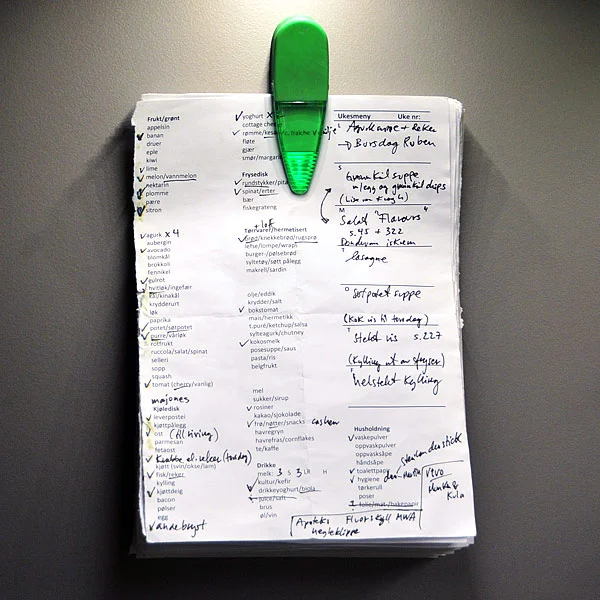

In an era dominated by hyper-specialized smartphone applications, artificial intelligence meal planners, and instantaneous delivery services, a quiet culinary counter-revolution is taking place at kitchen tables around the globe. While digital tools promise seamless organization, many households find themselves suffering from notification fatigue and decision paralysis. Enter the low-tech, high-efficiency master grocery list and weekly meal-planning system—a method that has recently resurfaced in public discourse as a vital countermeasure against modern domestic time scarcity.
Developed and refined over a six-year period by home cook and food science enthusiast Dr. Martin Lursen, this analog system challenges the contemporary reliance on digital grocery applications. By combining a static, master checklist organized by supermarket layouts with a compact, single-sheet A5 or legal-format weekly dinner menu, households can dramatically reduce shopping time, minimize food waste, and alleviate the cognitive load associated with daily meal preparation. As working families increasingly struggle to balance demanding professional careers with household management, structured meal planning has transitioned from a mundane chore into an essential strategy for lifestyle optimization.
The Anatomy of the Master Grocery List
At the core of this organizational strategy lies a fundamental shift in how households approach shopping. Rather than constructing a shopping list from scratch each week—a process that frequently leads to forgotten ingredients, impulse purchases, and multiple trips to the supermarket—proponents of the master list utilize a standardized template.
The master list is organized meticulously according to distinct food categories that mirror the physical architecture of a typical grocery store. Produce, dairy, meats, pantry staples, and frozen goods each occupy dedicated zones on the page. Instead of writing out items, the shopper simply reviews the master sheet and places checkmarks next to frequently purchased goods. Blank spaces are intentionally integrated into each category, allowing for specific brand names, precise quantities, or specialty items required for unique recipes that do not appear on the regular rotation.
According to retail consumer studies, shoppers who enter a supermarket without a structured list spend an average of 40 percent more time browsing aisles and purchase significantly more non-essential items than those equipped with a clear, categorized plan. By constraining the shopping trip to a once-a-week excursion guided by a master template, consumers establish a predictable routine that drastically curtails impulse buying.
Why Paper Outperforms Digital Applications in the Supermarket Environment
The proliferation of grocery list applications in app stores suggests a digital-first consensus, yet analog organization maintains distinct psychological and practical advantages. Consumer behavior analysts note that physical paper offers a cognitive clarity that glowing smartphone screens often fail to replicate.
An A5-sized piece of paper provides what usability experts call superior "spatial resolution." At a single glance, a shopper can survey the entire weekly menu alongside the complete inventory of needed groceries without scrolling, switching between tabs, or battling screen glare under harsh fluorescent supermarket lighting. Furthermore, paper is entirely immune to software updates, connectivity drops, dead batteries, and incoming text messages that frequently distract digital device users.
The tactile nature of paper also facilitates seamless family collaboration. A physical list resting on a refrigerator counter invites spontaneous annotations from all household members. Children, partners, and roommates can easily pencil in requested items, cross out depleted pantry staples, or add dietary notes. When completed, the paper list slips effortlessly into a coat pocket, remaining accessible while both hands are occupied navigating a shopping cart.
Furthermore, the physical archiving of these lists creates a tangible historical record. By retaining past weekly sheets—often printed in batches of ten to twenty—home cooks can evaluate seasonal eating habits, track grocery inflation over time, and adjust their master templates to reflect changing family dynamics, such as children growing older or dietary restrictions developing.
Background Context: The Global Rise of Tidsklemma and Modern Time Scarcity
The resurgence of interest in structured meal planning cannot be understood outside the context of modern lifestyle pressures. In Scandinavian sociology, a specific term has emerged to describe the pervasive feeling of rushing through life: tidsklemma, or the "time squeeze." While the term originated in Norway, its psychological framework resonates globally among dual-income households facing unprecedented professional and domestic demands.
Sociological data from labor and consumer research institutes indicate that the average working adult spends between 45 to 60 minutes daily pondering, preparing, and cleaning up after meals. When multiplied across a seven-day week, meal-related decisions consume a substantial portion of discretionary leisure time. Without a predetermined plan, individuals frequently experience decision fatigue by the late afternoon, leading to reliance on expensive, nutrient-poor convenience foods or impulsive restaurant dining.
Meal planning acts as a structural shield against tidsklemma. By centralizing the cognitive labor of cooking into a single, dedicated planning session—typically conducted on a weekend—households remove the daily burden of asking, "What’s for dinner?" This upfront organization converts a daily source of stress into a streamlined, predictable routine.
Flexibility Within Structure: Avoiding the Pitfalls of Rigid Meal Planning
A common criticism levied against rigid meal planning is that it strips spontaneity from the culinary experience, reducing cooking to a mechanical chore rather than a creative outlet. Culinary purists often argue that true cooking should be inspired by what looks freshest at the market or what the palate craves on any given day.
However, proponents of the master list system emphasize that planning and spontaneity are not mutually exclusive. Successful implementation of a weekly menu requires a built-in margin for flexibility. Families using this system routinely deviate from their written schedules when social opportunities arise. An unexpected dinner invitation from friends, for instance, supersedes the planned Tuesday night casserole without causing logistical friction. Similarly, evenings marked by profound physical exhaustion may appropriately conclude with takeout rather than home preparation.
The primary objective of the weekly plan is not to enforce totalitarian compliance in the kitchen, but rather to establish a reliable baseline. On standard evenings, the existence of a clear plan ensures that home-cooked meals are prepared efficiently, utilizing ingredients that are already on hand, thereby reducing food waste and grocery expenditures.
Integrating Recipes and Mapping the Weekly Menu
A distinctive feature of the optimized master list system is the integration of the weekly dinner menu directly onto the physical shopping sheet. Rather than maintaining a separate cookbook index or digital recipe collection, the meal plan is mapped out concisely alongside the grocery items.
For recipes derived from standard cookbooks, the menu notation often consists of little more than an abbreviated book title and a page number. Because frequent cooks rapidly develop familiarity with their culinary libraries, a simple numerical reference is sufficient to trigger complete recall of the recipe, ingredients, and preparation method.
By placing the weekly menu directly adjacent to the shopping list, the document serves a dual purpose inside the supermarket. A secondary glance at the menu while walking the aisles frequently acts as a cognitive trigger, reminding the shopper of specialized garnishes, fresh herbs, or specific condiments that might otherwise have been omitted from the generic grocery checklist.
Broader Economic and Environmental Implications
The adoption of structured master lists carries significant macroeconomic and environmental implications, particularly in the context of global food waste. According to environmental protection agencies, households are responsible for a staggering percentage of total post-harvest food waste, driven largely by over-purchasing, poor inventory management, and the spoilage of perishable goods.
When consumers shop without a master list, they frequently buy redundant items or fresh produce that fails to align with a cohesive weekly cooking strategy. Over time, these forgotten ingredients deteriorate in refrigerators and are ultimately discarded. By aligning the grocery list directly with a pre-calculated weekly menu, shoppers purchase precisely what is required to execute specific meals.
From an economic perspective, this precision translates into measurable household savings. With food inflation placing mounting pressure on family budgets, minimizing unnecessary grocery store expenditures provides immediate financial relief. Furthermore, reducing the frequency of supermarket visits from multiple trips per week to a single, consolidated excursion lowers individual transportation fuel consumption and carbon emissions associated with daily driving.
Public Access and Community Adaptation
Recognizing the universal applicability of this organizational model, creators of the system have made their foundational templates publicly available. Standardized document templates in Norwegian and English formats—compatible with both A4 and American legal paper sizes—can be downloaded online as word-processing files.
Because no two households possess identical dietary preferences, household sizes, or local supermarket layouts, the template is explicitly designed as a living document. Users are encouraged to customize categories, eliminate unneeded items, and continually revise their lists as their culinary tastes evolve.
As contemporary consumers continue to search for effective ways to reclaim their time and manage household resources amidst the pressures of modern life, the enduring viability of a simple piece of paper and a well-structured master list demonstrates that technological complexity is not always the answer to domestic efficiency.