The art of artisanal bread making has experienced a significant renaissance in recent years, driven by an increased consumer demand for nutrient-dense, whole-grain products and sustainable local agriculture. A notable development in this culinary movement involves the intersection of heritage grain milling and traditional sourdough fermentation. Professional baking instructors and artisanal millers are spearheading techniques that elevate humble flatbreads—specifically the traditional pita—into sophisticated, nutritionally robust components of the modern diet. This analytical overview explores the formulation, technique, nutritional implications, and broader culinary context of producing 100% whole-grain sourdough pita bread.
Background Context and Culinary Origins
The genesis of modern whole-grain sourdough flatbreads frequently traces back to collaborative educational workshops hosted by regional graineries. A prime example includes baking seminars conducted at specialized facilities such as the Chimacum Valley Grainery in Washington State. These educational events bring together professional bakers, artisanal millers, and home enthusiasts to explore the properties of freshly milled grains.
Historically, commercial pita production relies heavily on highly refined white flour, which yields a consistent, uniform pocket due to its high gluten strength and lack of coarse bran particles. However, the modern shift toward whole grains reflects a growing awareness of the nutritional deficits inherent in refined flours. Freshly milled whole grains—including specialized varieties like barley, spelt, triticale, and hard red or white wheat—retain the bran and germ layers. These components are rich in dietary fiber, B-vitamins, minerals, and essential fatty acids. Integrating these flours into a sourdough matrix presents distinct technical challenges due to the enzymatic activity and structural disruption caused by sharp bran flakes, requiring precise hydration and fermentation controls.
Formulation and Scientific Parameters
Creating a successful 100% whole-grain sourdough pita that achieves a reliable structural puff during baking demands strict adherence to baker’s percentages and thermal management. Unlike standard sandwich loaves, flatbreads relying on steam expansion to create an interior pocket require specific dough mechanics.
According to technical formulations developed for professional and advanced home baking, a standard batch yields ten 120-gram pita rounds, resulting in a total dough weight of approximately 1,320 grams. The structural and compositional parameters of this formula are defined as follows:
- Total Dough Weight: 1,320 grams
- Prefermented Flour Ratio: 9.5%
- Levain Inclusion: 22.0% of total flour weight
- Hydration Level: 84.0%
- Final Yield: Ten units, approximately 120 grams each
The formula utilizes 699 grams of 100% whole wheat bread flour (such as freshly milled regional varieties), supplemented by 14 grams of extra-virgin olive oil for structural tenderness, 14 grams of fine sea salt, and a split hydration model totaling 587 grams of water to manage the high absorption capacity of whole grains. A minimal inoculation of 7 grams of mature sourdough starter is used to initiate the overnight levain, ensuring that the fermentation timeline remains manageable while preventing excessive acid accumulation that could degrade the delicate whole-wheat gluten matrix.
Chronology and Baking Schedule
To accommodate both commercial production timelines and the schedules of home bakers, the process is structured around a precise chronological framework. This schedule balances extended enzymatic breakdown with strict temperature controls to optimize flavor and texture.
Phase 1: Levain Preparation (9:00 PM – Overnight)
The process begins the evening before mixing. Sixty-six grams of whole wheat flour are combined with an equal weight of water (66 grams) and inoculated with 7 grams of ripe 100% hydration sourdough starter. This mixture is maintained at a controlled ambient temperature of 74°F to 76°F (23°C to 24°C) to ripen overnight. This step initiates wild yeast activity and lactic acid bacteria development without inducing excessive proteolysis.
Phase 2: Dough Mixing (9:00 AM)
The main dough is assembled by combining the remaining whole wheat flour (632 grams), the ripe levain (139 grams), fine sea salt (14 grams), olive oil (14 grams), and the primary fraction of water (Water 1, 437 grams). Mixing can be executed via a commercial spiral mixer or manually through intensive hand-kneading. A secondary water addition (Water 2, 84 grams) is incorporated gradually during the kneading phase to ensure maximum hydration of the dense bran particles without tearing the developing gluten network. The target final dough temperature is strictly maintained between 77°F and 78°F (25°C to 26°C).
Phase 3: Bulk Fermentation (9:30 AM – 12:30 PM)
The bulk fermentation phase spans three hours at a warm ambient temperature of 74°F to 76°F. To build structural integrity in the absence of refined white flour, two sets of physical stretches and folds are administered at thirty-minute intervals during the first hour. This mechanical manipulation aligns the gluten strands, increases gas retention, and promotes a uniform crumb structure.
Phase 4: Division and Shaping (12:30 PM)
Upon completing bulk fermentation—characterized by an approximate 25% increase in volume and a smooth, aerated texture—the dough is gently extracted onto a lightly floured work surface. A bench knife is utilized to divide the mass into ten uniform 120-gram portions. Each portion is pre-shaped into a tight spherical ball to establish surface tension, then rested briefly before final proofing.
Phase 5: Final Proofing (1:00 PM – 2:00 PM)
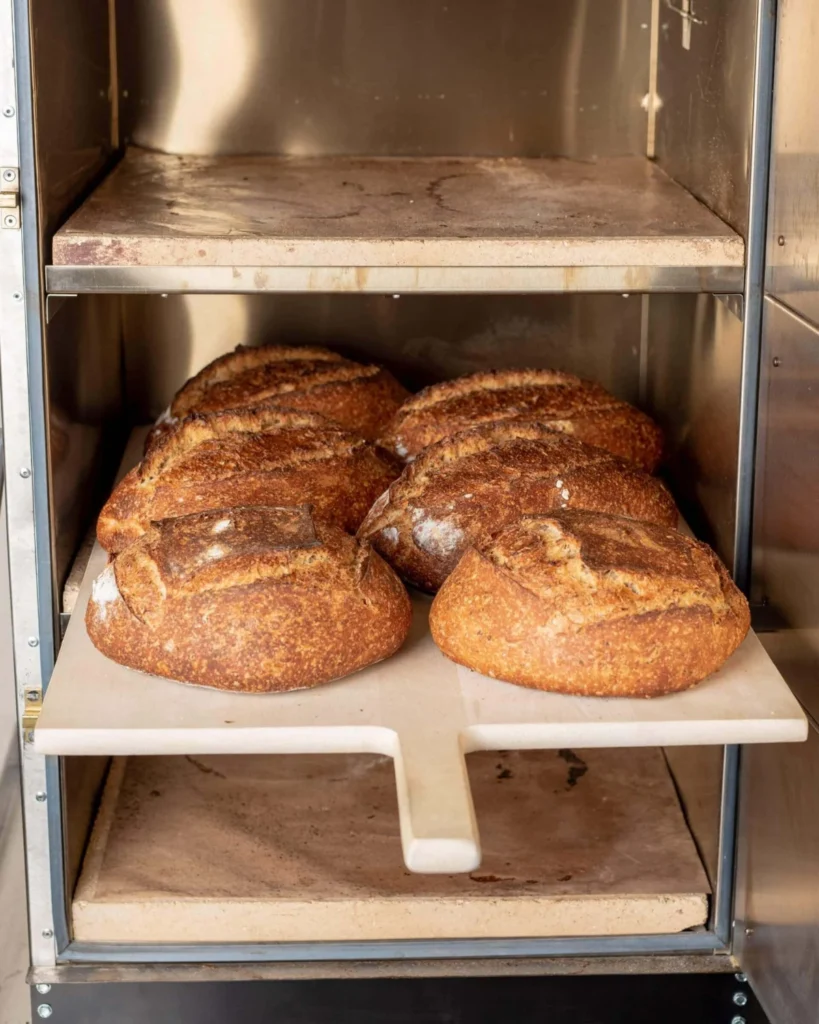
The shaped dough balls are arranged on a floured baking sheet, covered to prevent surface desiccation, and allowed to proof for one hour. Concurrently, the baking environment is preheated to its maximum capacity—typically 550°F (290°C)—equipped with a heavy baking steel or stone to facilitate rapid bottom-heat transfer.
Phase 6: Rolling and Baking (2:00 PM Onward)
The final stages require precision. Each proofed dough ball is flattened and rolled out to a uniform thickness of approximately one-eighth of an inch and a diameter of seven inches. Excessive pressure during rolling must be avoided to prevent compression of the internal air pockets. The flattened disc is rapidly transferred via a pizza peel onto the preheated baking steel. The extreme thermal shock converts internal moisture into steam almost instantly, causing the dough to balloon into a hollow pocket within one to two minutes. The pita is briefly flipped to ensure even cooking before being transferred to a covered container to retain its soft, pliable texture.
Technical Analysis: Troubleshooting the Pita Puff
Achieving a consistent, hollow pocket in whole-grain flatbreads presents distinct thermodynamic challenges. Food science analysis identifies several primary factors influencing whether a pita successfully puffs during high-heat baking:
- Dough Thickness Uniformity: If the dough is rolled unevenly—thicker in the center and thinner at the edges, or vice versa—the steam generated during baking will escape through the path of least resistance, resulting in partial deflation or asymmetric bubbles resembling flatbreads like naan. An optimal thickness of 1/8 inch is critical.
- Thermal Mass and Oven Temperature: A low baking temperature or an insufficiently heated baking surface fails to vaporize internal moisture rapidly enough. The steam must outpace the structural setting of the gluten network; otherwise, the bread bakes through solidly without forming a pocket.
- Surface Desiccation: Allowing the dough balls to form a dry outer skin during the final proofing stage seals the surface prematurely, preventing the uniform expansion necessary for proper puffing. Appropriate covering techniques are mandatory during proofing.
- Fermentation Window: Over-fermented whole wheat dough suffers from degraded gluten strength due to endogenous enzyme activity. If allowed to over-proof, the dough loses its gas-retention capacity, forming large, irregular surface blisters rather than a singular, unified interior cavity.
Nutritional Implications and Broader Culinary Impact
The integration of 100% whole-grain flours within a traditional sourdough fermentation process yields measurable nutritional benefits compared to commercially produced white pita bread. Sourdough fermentation introduces organic acids—primarily lactic acid—which significantly lower the pH of the dough. This acidic environment activates endogenous phytases, enzymes naturally present in the bran of cereal grains. Phytases effectively break down phytic acid, an anti-nutrient that binds to essential minerals such as iron, zinc, and magnesium, thereby enhancing the bioavailability of these micronutrients.
Furthermore, the presence of intact dietary fiber from the wheat bran slows the rate of carbohydrate digestion and glucose absorption, resulting in a lower glycemic index compared to refined grain alternatives. This metabolic response supports sustained energy levels and contributes to improved glycemic control.
Conclusion
The resurgence of interest in whole-grain sourdough baking highlights a broader cultural shift toward intentional, nutrient-dense food production. By bridging traditional fermentation methods with modern technical parameters, bakers can successfully process 100% whole-wheat and heritage grain flours into soft, highly digestible, and structurally sound flatbreads. As artisanal techniques continue to evolve, the incorporation of locally milled grains into staple items like pita bread demonstrates that traditional agricultural knowledge and nutritional science can successfully intersect in the modern professional and domestic kitchen.