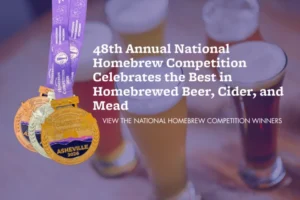

The American Homebrewers Association (AHA) has officially announced the return of the National Homebrew Competition (NHC) for 2026, marking the 48th iteration of what remains the most significant and competitively dense homebrewing event in the world. This upcoming cycle represents a pivotal moment for the organization, as it is the first full competition cycle conducted since the AHA transitioned to an independent operational structure in July 2025. With a legacy spanning nearly five decades and a cumulative history of over 170,000 entries judged since its inception in 1979, the NHC continues to serve as the definitive benchmark for amateur zymurgy, encompassing beer, cider, and mead.
The 2026 competition is expected to draw thousands of entries from across the globe, submitted by hobbyists ranging from novice brewers to seasoned fermenters who utilize the competition as a stepping stone toward professional careers in the craft beverage industry. Supported by the Beer Judge Certification Program (BJCP), the NHC provides a rigorous, multi-stage evaluation process that offers participants detailed sensory feedback and technical analysis from some of the most qualified judges in the international brewing community.
Historical Context and the Evolution of the NHC
The National Homebrew Competition was established in 1979, a year after President Jimmy Carter signed H.R. 1337 into law, which legalized homebrewing at the federal level in the United States. Founded by Charlie Papazian and the nascent American Homebrewers Association, the first competition was a modest affair compared to the modern spectacle, yet it laid the groundwork for the explosion of the American craft beer movement. Over the subsequent 47 years, the NHC has evolved in tandem with the industry, expanding its categories to reflect changing consumer tastes and advancements in brewing technology.
The milestone of 170,000 total entries highlights the sheer scale of the NHC’s impact. On average, the competition processes thousands of bottles annually, requiring a massive logistical network of regional judging sites and a final round that often coincides with Homebrew Con, the AHA’s annual conference. The competition has historically been the primary venue where classic styles are preserved and experimental techniques—such as the early use of extreme hopping, barrel-aging, and wild fermentation—are refined before entering the commercial mainstream.
The 2025 Independence and Organizational Restructuring
The 2026 NHC is particularly noteworthy due to the internal reorganization of the American Homebrewers Association. In July 2025, the AHA moved to an independent status, a strategic shift designed to provide the organization with greater autonomy in its mission to advocate for the homebrewing community. This transition led to the formation of the AHA Founding Board and an Events Committee, comprised of volunteer member leaders and a dedicated staff focused exclusively on the needs of amateur brewers.
According to internal reports, this new era of independence is intended to streamline the competition process and enhance the member experience. The 2026 NHC is the first major litmus test for this new governance model. The Founding Board has emphasized that while the organization is under new management, the core tenets of the competition—blind judging, adherence to style guidelines, and the provision of constructive feedback—remain the top priorities. The collaboration with the Beer Judge Certification Program (BJCP) remains a cornerstone of the event, ensuring that every entry is evaluated by individuals who have passed rigorous examinations in beer styles, brewing chemistry, and sensory flaws.
The Competitive Framework: From Regional Rounds to the Final Table
The structure of the 2026 NHC follows a proven two-tier format designed to manage the high volume of entries while maintaining the highest standards of judging integrity. The process begins with the First Round, where entries are shipped to various regional sites across the United States. These sites are staffed by BJCP-certified judges and professional brewers who evaluate entries based on the BJCP Style Guidelines, which cover dozens of categories ranging from Standard American Beer to Specialty Fruit Mead.
Entries that excel in the regional rounds—typically those receiving "Gold," "Silver," or "Bronze" designations—advance to the Final Round. The Final Round is the pinnacle of the competition, where the best of each category are judged against one another to determine the "Gold Medal" winners and, ultimately, the "Homebrewer of the Year," "Cidermaker of the Year," and "Meadmaker of the Year."
The 2026 competition will continue to emphasize three primary pillars of fermentation:
- Beer: Spanning traditional European lagers, historical ales, and modern American interpretations.
- Cider: Including standard styles made from apples and perries made from pears, as well as specialty botanical and spiced variations.
- Mead: Covering traditional honey-based ferments, melomels (fruit meads), and metheglins (spiced meads).
Technical Requirements and Participant Preparation
As the competition prepares for its February 2026 registration launch, the AHA has released preliminary guidance for prospective entrants. Success in the NHC requires more than just a high-quality recipe; it demands meticulous attention to the logistics of competition. Professional-level feedback is only possible if the samples arrive in peak condition.
Entrants are encouraged to begin their brewing schedules well in advance, particularly for styles that require extended aging, such as high-gravity stouts, sour ales, or traditional meads. Conversely, for hop-forward styles like India Pale Ale (IPA), timing is critical to ensure that volatile aromatics are preserved during the shipping and storage phases. The AHA recommends that participants focus on:
- Sanitation: The primary cause of entry disqualification or poor scoring remains unintended infection or "off-flavors" resulting from brewhouse hygiene issues.
- Packaging: Proper bottling techniques, including minimizing dissolved oxygen and ensuring secure capping, are vital for entries that may sit in a warehouse for several weeks before judging.
- Style Accuracy: Participants must decide whether to brew a beer that perfectly fits a specific BJCP category or to enter a "Specialty" category where they must provide a detailed description of their intent.
Data and Economic Impact of Homebrewing
The NHC is more than a trophy hunt; it is a significant economic driver within the $28 billion U.S. craft beer industry. Data from the AHA indicates that a substantial percentage of professional craft brewery owners and head brewers began their careers as NHC competitors. The competition serves as an informal R&D lab for the industry.
Furthermore, the homebrewing hobby supports a robust ecosystem of retail "homebrew shops," equipment manufacturers, and ingredient suppliers (maltsters, hop growers, and yeast labs). Events like the NHC stimulate sales of high-quality ingredients and specialized hardware, such as conical fermenters and temperature-control systems. The 170,000 entries judged over the years represent millions of dollars in consumer spending on raw materials and shipping services, reinforcing the hobby’s status as a serious pillar of the broader beverage economy.
Official Timeline and Upcoming Milestones
While the full details of the 2026 National Homebrew Competition are slated for release in February, the AHA has established a preliminary timeline to help members prepare. The upcoming announcement in February will include:
- Registration Dates: The window during which brewers must claim their entry slots.
- Shipping and Drop-off Deadlines: Specific dates for each regional site to receive entries.
- Category List: Any updates to the competitive categories based on the latest BJCP guidelines.
- Judging Locations: The cities and venues that will host the First Round evaluations.
- Final Round Hotel Information: Logistics for the culminating event, which attracts hundreds of attendees.
The AHA has also signaled an increase in volunteer opportunities. The NHC relies on hundreds of "stewards" and administrative volunteers to manage the sorting, labeling, and serving of entries. These roles are often filled by local homebrew club members, providing them with a behind-the-scenes look at the judging process.
Analysis of Implications: A Community Reclaiming Its Identity
The transition of the AHA to an independent entity and the subsequent launch of the 2026 NHC suggests a "return to roots" for the organization. For several years, the AHA operated under the umbrella of larger industry trade groups. The move to independence in 2025 was viewed by many in the community as a way to refocus on the grassroots level of the hobby.
By empowering a Founding Board and an Events Committee composed of actual practitioners of the craft, the AHA is signaling that the 2026 NHC will be designed "by homebrewers, for homebrewers." This shift is expected to address long-standing feedback regarding category organization and the speed of feedback delivery. If successful, the 2026 NHC could see a resurgence in entry numbers, which had seen slight fluctuations during the post-pandemic years.
Furthermore, the continued partnership with the BJCP ensures that the NHC remains the "gold standard" of objective evaluation. In an era where social media "check-ins" often prioritize hype over technical quality, the NHC provides a necessary counter-balance, rewarding brewers who can produce clean, technically sound, and stylistically accurate beverages.
Conclusion
The 2026 National Homebrew Competition stands as a testament to the enduring appeal of home fermentation and the resilience of the American Homebrewers Association. As the organization embarks on its 48th year of competition under a new, independent banner, the stakes for participants have never been higher. With the promise of comprehensive feedback, prestigious awards, and a place in brewing history, the NHC remains the ultimate destination for those who seek to master the art and science of the brew. Further updates expected in February will provide the specific roadmap for the thousands of competitors currently preparing their kettles and fermenters for a run at the 2026 titles.