
The American Homebrewers Association (AHA) has officially released the May/June 2026 edition of Zymurgy magazine, a publication that has served as the primary resource for the homebrewing community since its inception in 1978. This latest issue signals a significant shift toward a more international perspective, moving beyond traditional American craft styles to explore the deep-seated fermentation cultures of Europe and Western Asia. With a curated selection of 14 recipes and deep-dive features into the technical nuances of regional specialties, the issue emphasizes the maturation of the global homebrewing movement. From the emergence of Ukrainian Golden Ale as a distinct style to the application of brewer’s yeast in medical virology, the May/June issue illustrates the dual nature of modern homebrewing as both a culinary art and a rigorous scientific discipline.
The Rise of Ukrainian Golden Ale and Style Recognition
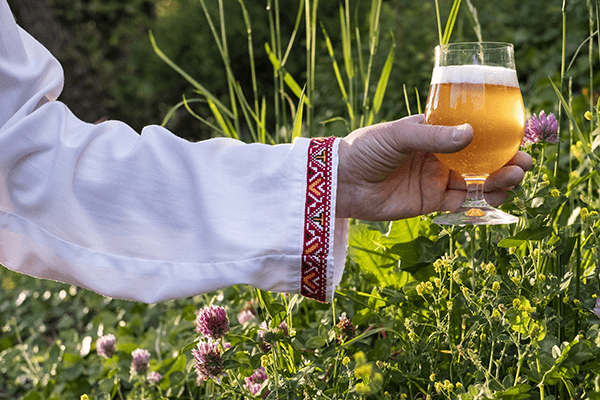
The cover story of the May/June 2026 issue, authored by Lana Svitankova, focuses on the Ukrainian Golden Ale. This feature represents a critical moment in the taxonomy of beer styles. Historically, Golden Ales have been categorized under British or Belgian umbrellas, but Svitankova argues for the distinct identity of the Ukrainian variant. Characterized by a strength that exceeds the standard British Golden Ale but remains more approachable than a Belgian Golden Strong Ale, the Ukrainian Golden Ale is noted for its unique malt profile and specific yeast attenuation.

The inclusion of this style in Zymurgy reflects a broader trend within the Beer Judge Certification Program (BJCP) and the Brewers Association to recognize regional variations that have developed independently over decades. Svitankova, a prominent voice in the Eastern European beer scene, provides technical specifications that suggest the style typically sits between 6% and 7.5% alcohol by volume (ABV), often featuring a slightly sweet finish and a floral hop aroma. The article serves not only as a brewing guide but as a cultural document, tracing the beer’s evolution in the context of Ukraine’s growing craft beer independence.
Exploring the European Heartland: Dunkels and Saisons
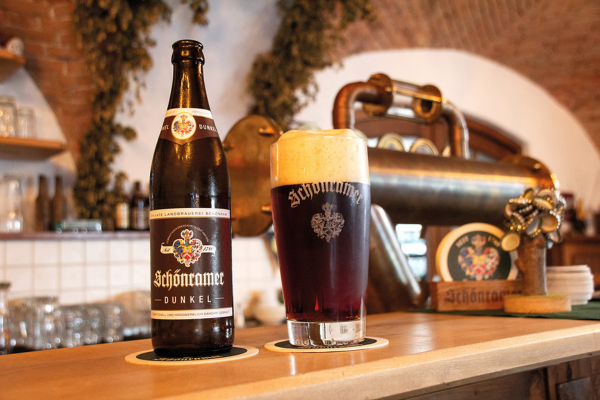
The issue continues its European exploration with a technical analysis of the German Dunkel. Often overshadowed by the global popularity of the Pilsner or the seasonal obsession with Märzen, the Dunkel remains a cornerstone of Bavarian brewing. The May/June feature explores the "secret" to achieving the perfect balance of rich, melanoidin-heavy maltiness without the astringency often associated with darker grains. It emphasizes the importance of decoction mashing—a traditional German technique where a portion of the mash is boiled and returned to the main vessel—to develop the complex toasted notes essential to the style.
Complementing this is a feature by Carlo Sesia, a gold medalist in the National Homebrew Competition. Sesia provides a masterclass on the Saison, specifically through the lens of Northern Italian brewing. While the Saison is quintessentially Belgian, Sesia illustrates how the style’s inherent flexibility allows for regional interpretation. His approach emphasizes the "intricate process" of temperature control during fermentation, which is vital for managing the spicy phenols and fruity esters that define the style. By showcasing an Italian brewer’s mastery of a Belgian style, Zymurgy highlights the borderless nature of modern homebrewing expertise.

Terroir in the Fermenter: The Tuscany Case Study
The concept of "terroir"—the environmental factors that affect a crop’s phenotype—is usually reserved for wine, but the May/June issue applies it to beer through a feature on the Homebrewers Fiorentini. This homebrew club based in Florence, Italy, has gained attention for its integration of hyper-local ingredients into traditional ale frameworks.
The article details how members utilize grape must, local honey, and wine-soaked oak barrels to create beers that are uniquely Tuscan. This reflects a significant trend in the "Italian Grape Ale" (IGA) category, which was the first Italian style to be officially recognized in global competitions. The use of grape must as a fermentable sugar source bridges the gap between viticulture and brewing, a logical evolution for a region with millennia of winemaking history. For the homebrewer, this feature provides a roadmap for utilizing local agriculture to create a sense of place in their final product.
The Intersection of Brewing and Biotechnology: The Vaccine Beer
Perhaps the most unconventional feature in this issue is the story of American virologist and homebrewer Chris Buck. In a remarkable intersection of hobby and profession, Buck discovered a methodology for using Saccharomyces cerevisiae—standard brewer’s yeast—to produce vaccines for polyomaviruses. Polyomaviruses are a group of DNA viruses that can cause various diseases in humans, particularly in immunocompromised individuals.
The technical core of the story revolves around the yeast’s ability to act as a "bio-factory." By inserting specific genetic sequences into the yeast, Buck was able to trigger the production of viral proteins that can be harvested and used in vaccine development. This highlights the sophisticated level of scientific literacy within the homebrewing community. The "Vaccine Beer" project underscores a fundamental truth about fermentation: the same biological processes used to create a refreshing beverage are the foundations of modern life-saving biotechnology.
Chronology and Context: The Evolution of Zymurgy
To understand the significance of the May/June 2026 issue, one must look at the timeline of Zymurgy and the American Homebrewers Association.
- 1978: Charlie Papazian founds the AHA and publishes the first issue of Zymurgy. At the time, homebrewing was barely legal in the United States, following the signing of H.R. 1337 by President Jimmy Carter.
- 1980s-1990s: Zymurgy becomes the primary vehicle for the dissemination of brewing science, helping to spark the American craft beer revolution.
- 2010s: The magazine shifts toward digital integration while maintaining its print legacy, focusing on the professionalization of the hobby.
- 2020-2025: A global pandemic leads to a massive surge in home fermentation interest. The AHA reports a diversification of its membership, with increased participation from international brewers.
- 2026: The current issue represents a "post-geographic" era of brewing, where styles from Ukraine and Italy are treated with the same technical rigor as traditional American IPAs.
Official Response and Editorial Direction
Dave Carpenter, the Editor-in-Chief of Zymurgy, has steered the publication toward this more global and scientific approach. Carpenter, who began his brewing journey in 2009, has emphasized that the magazine must evolve alongside its readership. "The modern homebrewer is no longer just someone making beer in a plastic bucket in their garage," an AHA spokesperson noted during the issue’s announcement. "They are often citizen scientists, historians, and culinary innovators."
The inclusion of 14 tested and validated recipes in this issue is a response to the community’s demand for high-quality, reproducible data. In an era of infinite online information, the AHA positions Zymurgy as the "vetted" alternative, where recipes are peer-reviewed and tested by experts before publication.
Broader Impact and Industry Implications
The themes explored in the May/June 2026 issue have implications that extend beyond the hobbyist’s kitchen. The recognition of Ukrainian Golden Ale, for instance, provides a template for how other emerging beer cultures—such as those in South America and Southeast Asia—might seek formal recognition for their indigenous styles. This diversification of the "official" beer style guidelines encourages biodiversity in the global beer market, pushing back against the homogenization of styles.
Furthermore, the "Vaccine Beer" feature points toward a future where the boundaries between home laboratories and home breweries continue to blur. As CRISPR technology and synthetic biology become more accessible, the homebrewing community may find itself at the forefront of "bio-hacking" and small-scale pharmaceutical production.

Finally, the focus on Tuscan ingredients reinforces the "slow beer" movement, encouraging brewers to look at their immediate surroundings for inspiration. This reduces the carbon footprint associated with importing hops and malts from across the globe and fosters a stronger connection between the brewer and the local ecosystem.
The May/June 2026 issue of Zymurgy stands as a testament to the enduring relevance of fermentation. Whether it is through the preservation of ancient German traditions, the formalization of new Ukrainian styles, or the cutting-edge application of yeast in virology, the magazine continues to document the profound impact that a simple mixture of water, malt, hops, and yeast can have on the world. As the American Homebrewers Association looks toward its 50th anniversary in 2028, this issue serves as a bridge between the hobby’s humble beginnings and its increasingly sophisticated future.