
The American Homebrewers Association (AHA) has released the May/June 2026 edition of Zymurgy magazine, marking a significant milestone in the publication’s history by bridging the gap between ancient fermentation traditions and cutting-edge biotechnological applications. This latest installment provides an extensive survey of international brewing landscapes, featuring in-depth technical analysis of emerging styles such as Ukrainian Golden Ale, the regional nuances of Italian craft brewing, and a groundbreaking report on the use of brewer’s yeast in the development of life-saving vaccines. As the craft brewing industry continues to evolve toward a more globalized and scientifically integrated model, this issue serves as a critical resource for both amateur enthusiasts and professional zymologists.
The Rise of Ukrainian Golden Ale: A New Style on the Global Stage
A primary focus of the May/June 2026 issue is the formal exploration of Ukrainian Golden Ale, a style that has spent years in the periphery of international competitions but is now securing its place in the official canon of beer styles. Lana Svitankova, a prominent voice in the Eastern European brewing community, provides the cover story, detailing the specific organoleptic properties that distinguish this ale from its British and Belgian counterparts.

Technically situated between the lighter, more hop-forward British Golden Ale and the high-gravity, ester-driven Belgian Golden Strong Ale, the Ukrainian variant is characterized by a robust malt backbone, often featuring a distinct sweetness that does not veer into cloying territory. According to Svitankova, the style typically ranges from 6.0% to 7.5% alcohol by volume (ABV). The historical context of this style is rooted in the early 21st-century brewing revival in Ukraine, where local brewers sought to create a "national" ale that utilized high-quality local malts and balanced them with a sophisticated hop profile.
The inclusion of Ukrainian Golden Ale in Zymurgy reflects a broader trend within the Beer Judge Certification Program (BJCP) and the Brewers Association to recognize regional specialties that have achieved cultural and commercial maturity. This recognition is not merely academic; it provides homebrewers with the technical parameters—such as specific gravity ranges, bitterness units (IBUs), and color standards (SRM)—required to replicate the style accurately in a controlled environment.
Italian Craft Movements: Regionality and Innovation
The issue further expands its international scope by examining the burgeoning homebrew culture in Italy. While Italy is traditionally associated with viticulture, the last two decades have seen a meteoric rise in "Birra Artigianale." The magazine highlights the work of Carlo Sesia, a gold medalist in the National Homebrew Competition, who provides a masterclass on brewing Belgian-style Saisons in Northern Italy. Sesia’s approach emphasizes the importance of fermentation temperature control and the selection of yeast strains that can produce the requisite peppery and fruity phenols without producing off-flavors.

Complementing this technical guide is a feature on the Homebrewers Fiorentini, a club based in Tuscany. This group represents a growing movement of brewers who integrate local "terroir" into their recipes. By utilizing ingredients native to the Tuscan region—such as grape must from Sangiovese vineyards, local chestnut honey, and oak chips soaked in regional wines—these brewers are blurring the lines between traditional beer and Oenobeers (Italian Grape Ales). This section of the magazine underscores the importance of regional identity in modern brewing, suggesting that the future of the craft lies in the integration of local agricultural products.
Historical Preservation: The Technical Complexity of German Dunkel
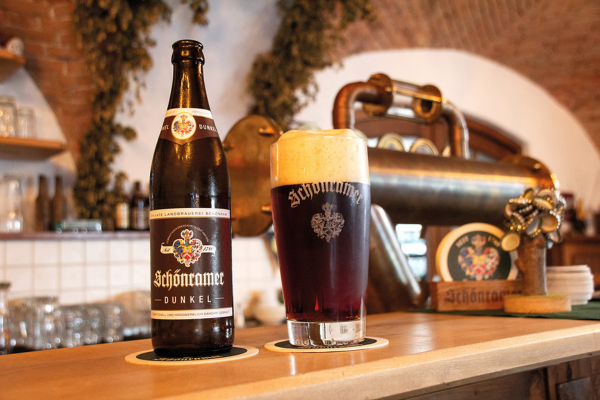
Shifting from innovation to preservation, the May/June issue revisits the German Dunkel. Often overshadowed by the global dominance of the Pilsner, the Dunkel remains the foundational lager of Bavaria. The technical challenge of the Dunkel lies in its malt complexity. Brewers must balance rich, toasted notes of bread crust and chocolate with a clean, lager finish that ensures high drinkability.
The article explores the traditional decoction mashing process—a method involving boiling a portion of the mash to promote Maillard reactions—which many modern homebrewers have abandoned in favor of simpler infusion mashes. However, Zymurgy argues that to achieve the authentic depth of a Munich Dunkel, these historical techniques remain superior. The issue provides data on malt selection, specifically the use of Munich malt as a base, and the necessity of using noble hops like Hallertauer Mittelfrüh to provide a subtle, floral bitterness that does not compete with the malt profile.

Biotechnology and Brewing: The "Vaccine Beer" Breakthrough
In perhaps the most significant departure from traditional brewing content, the issue features a report on the work of American virologist and homebrewer Chris Buck. Buck has successfully demonstrated a method for using Saccharomyces cerevisiae—standard brewer’s yeast—as a bioreactor to produce vaccines for polyomaviruses. This group of viruses includes pathogens that can cause severe disease in immunocompromised individuals.
This intersection of zymurgy and biotechnology highlights the versatility of yeast as a model organism. For decades, yeast has been used in the production of insulin and other pharmaceuticals, but Buck’s research brings this technology into the purview of the homebrewing community. The article explains how the same cellular machinery that converts sugars into ethanol and carbon dioxide can be "reprogrammed" via genetic engineering to express viral proteins that form the basis of vaccines. While homebrewers are not expected to produce pharmaceuticals in their kitchens, the inclusion of this research serves to elevate the scientific literacy of the brewing community and highlights the critical role of fermentation science in global health.
Supporting Data and Industry Trends
The May/June 2026 issue arrives at a time of stabilization for the homebrewing hobby. Data from the American Homebrewers Association suggests that while the initial "boom" of the 2010s has leveled off, the sophistication of the average homebrewer has increased significantly.
Key statistics supporting this trend include:
- Equipment Sophistication: An estimated 45% of AHA members now utilize all-grain brewing systems with digital temperature control, a 15% increase from a decade ago.
- Style Diversity: The number of unique beer styles entered into the National Homebrew Competition has grown by 20%, with "Experimental" and "Historical" categories seeing the highest rates of growth.
- Global Participation: The AHA has seen a 12% increase in international memberships, particularly in Eastern Europe and South America, correlating with the magazine’s increased focus on global styles.
These data points indicate that homebrewing is transitioning from a casual hobby into a rigorous technical pursuit, where participants are as interested in the chemistry of water profiles and the genetics of yeast as they are in the final beverage.
Chronology of Zymurgy and the American Homebrewers Association
To understand the context of this issue, one must look at the history of the AHA. Founded in 1978 by Charlie Papazian in Boulder, Colorado, the AHA was established shortly after President Jimmy Carter signed H.R. 1337, which legalized homebrewing at the federal level. Zymurgy was launched that same year as the association’s flagship publication.

Over the past nearly five decades, Zymurgy has documented the evolution of the craft beer revolution. In the 1980s, the magazine focused on the basics of sanitation and malt extract brewing. In the 1990s and 2000s, it led the charge in popularizing hop-forward IPAs and wood-aged sours. The 2026 issue represents the "Third Wave" of homebrewing journalism: a focus on global inclusivity, technical precision, and the application of fermentation science to broader human challenges.
Broader Impact and Implications for the Beverage Industry
The insights provided in this issue of Zymurgy have implications that extend far beyond the basement workshop. The commercial craft brewing industry has historically relied on homebrewers as a "Research and Development" wing. Styles that are now ubiquitous, such as the New England IPA or the Pastry Stout, often find their footing in homebrew clubs before being scaled for commercial production.
By highlighting Ukrainian Golden Ale and Italian Grape Ales, Zymurgy is signaling to commercial brewers where the next market opportunities may lie. Furthermore, the focus on scientific breakthroughs like "Vaccine Beer" reinforces the legitimacy of fermentation science as a vital academic and industrial discipline. As climate change affects hop yields and barley quality, the technical knowledge shared in these pages regarding ingredient substitution and fermentation efficiency will become increasingly vital for the survival of the brewing industry at large.
Conclusion and Future Outlook
The May/June 2026 issue of Zymurgy, under the editorial leadership of Dave Carpenter, continues to uphold the magazine’s reputation as the "journal of record" for the homebrewing community. By combining 14 diverse recipes with high-level reporting on international styles and biotechnological innovation, the publication ensures that its readers are well-equipped to navigate the complexities of modern fermentation.
As the AHA continues to advocate for the rights of homebrewers and the promotion of brewing education, the role of Zymurgy remains central to its mission. The magazine not only preserves the history of brewing but also actively shapes its future, proving that the simple act of fermenting sugar into alcohol remains one of humanity’s most versatile and enduring scientific endeavors. Whether through the lens of a Ukrainian ale or a life-saving vaccine, the message of the 2026 issue is clear: the potential of yeast is limited only by the imagination and technical skill of the brewer.